


How Virtual Events Help Brands Launch Products and Drive Sales in 2026


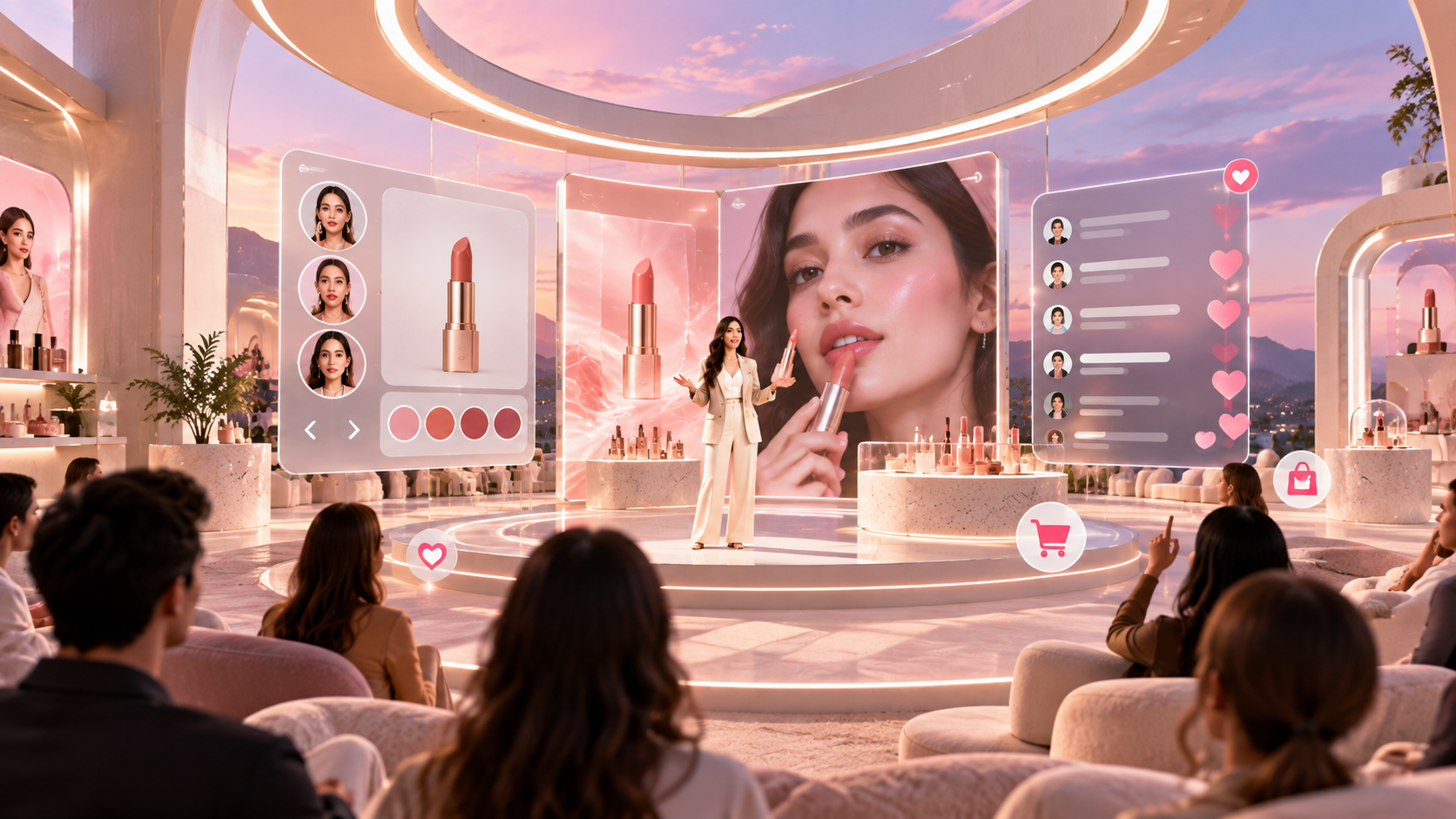
A virtual product launch event is a branded, interactive 3D environment where a brand introduces a new product to a live remote audience, combines real-time demonstration with direct purchase capability, and concentrates buying intent into a single moment.
For brand and e-commerce managers evaluating the format, the commercial case is grounded in conversion data: live shopping events convert at 9 to 30 percent, compared with 2 to 3 percent for standard e-commerce, according to McKinsey and eMarketer research for 2026.
The format has moved from experimental to mainstream. US brands broadcast over 8 million hours of live shopping content in 2024, and viewers who actively engage with a live event convert at 2.4 times the rate of passive viewers. Virtual events built around 3D immersive environments take this a step further by giving attendees an interactive brand space to move through, not just a video to watch.
What Is a Virtual Event in Ecommerce?
A virtual event in ecommerce is a scheduled, live digital experience hosted inside a branded online environment where audiences can interact with products, participate in demonstrations, and make purchases in real time.
This is distinct from a pre-recorded brand video or a live social media stream in one important way: the environment itself is interactive. Rather than watching a presenter speak to camera, attendees can navigate a 3D branded space, inspect products from multiple angles, trigger try-on experiences, and respond to time-limited offers, all within the same session.
For brand managers, a virtual event sits at the intersection of marketing activation and direct commerce. It is both a launch moment and a sales channel. The event creates urgency; the 3D environment delivers product understanding; the integrated checkout converts that understanding into revenue.
Virtual events also accumulate data across the session. Dwell time by zone, product interaction rates, and purchase behavior during the event give marketing teams a precise picture of which products drove the most engagement, which influencer segments converted best, and what messaging landed. That data is not available from a static campaign.
Common Use Cases
Product Launches
A virtual product launch event gives a new product its own branded world at launch, rather than placing it inside an existing digital storefront where it competes with everything else the brand sells.
Consider a beauty brand launching a new fragrance line. Rather than a standard product detail page going live at midnight, the brand hosts a virtual product launch event inside a purpose-built 3D space designed around the fragrance's campaign creative, complete with a narrated walkthrough from the creative director, real-time virtual try-on for complementary makeup products, and a launch-window exclusive offer that expires when the event closes. Press, loyalty customers, and influencer partners are invited to the same environment simultaneously, across every time zone, with no venue constraint.
The result is a launch that generates direct revenue, produces shareable content, and collects first-party engagement data, all from a single event build. That is the commercial case for the virtual product launch event format over a press release, a social post, or a traditional e-commerce page update.
Influencer-Led Demos
Influencer-led virtual events place a creator or brand ambassador inside the 3D environment as the host. Attendees follow the influencer through the space, watch live product demonstrations, interact via chat or polls, and purchase products surfaced by the host in real time.
The conversion mechanics of this format are well established. Viewers who interact with a live commerce event convert at 2.4 times the rate of passive viewers, and 76 percent of livestream viewers who actively engage go on to make a purchase. The influencer-led format drives that interaction by giving the host a navigable space rather than a static backdrop, which makes the session feel more like a guided tour than a broadcast.
For brands working with multiple influencer partners across different markets, separate event sessions can be hosted using the same 3D environment with different hosts. The brand space stays consistent; the audience and presenting voice change by region or segment.
Exclusive Sales Events
Exclusive virtual sales events are time-limited commerce events restricted to a defined audience: loyalty members, early-access subscribers, wholesale buyers, or press. Access is gated by invitation, and the event window is short, typically 24 to 72 hours.
The combination of exclusivity and scarcity is the primary conversion driver. Attendees know the access window is finite and that the offer is not available in the standard storefront. The 3D immersive environment reinforces the premium nature of the event in a way that a discount code emailed to a mailing list cannot. The brand controls the atmosphere, the product presentation, and the narrative around the event, not the platform.
For brands managing both wholesale and direct-to-consumer channels, a separate exclusive event for trade buyers inside the same virtual environment infrastructure avoids channel conflict while maintaining a distinct buyer experience for each audience.
How Virtual Events Work (Technical Overview)
A virtual event hosted inside a 3D immersive environment is delivered via a URL. Attendees access it on a mobile device, desktop, or tablet without downloading an app. VR headset access is available for brands targeting audiences with compatible hardware, though it is not required for most retail activations.
The environment is built as a navigable 3D space. Attendees move through branded zones, interact with products rendered as real-time 3D models, trigger try-on experiences or 360-degree views, and respond to live prompts from a host. Chat, polls, and Q&A functions keep the session interactive without requiring additional platforms.
Product catalogue integration means that items presented during the event are connected to the brand's existing checkout infrastructure. A purchase made inside the virtual environment follows the same payment and fulfilment flow as a standard e-commerce transaction. There is no separate checkout for the event; the branded environment is a front end layered over the existing commercial stack.
The event session generates analytics across the duration: unique visitors, time spent per zone, product interactions, conversion events, and drop-off points. Post-event, this data is available via the platform dashboard and can be connected to CRM and analytics tools for further segmentation and follow-up.
Events are hosted inside the same platform infrastructure as GlamAR's permanent virtual store and virtual pop-up shop products. A brand that has already built a virtual store can run a launch event inside that environment with campaign-specific dressing, or commission a separate event environment for a one-off activation.
Why Virtual Events Drive Engagement and Urgency
Physical retail and live events create purchase urgency through scarcity and atmosphere. A product is in front of you; other people are looking at it; the store will close. Virtual events replicate this dynamic without requiring a physical presence from anyone.
The mechanism is the session window. An event that runs for two hours on a Tuesday evening, with a launch offer that expires when it closes, concentrates demand in the same way a physical drop event does. Attendees who join know the window is finite. Brands that communicate this effectively in pre-event marketing create the same queue mentality online that physical drops generate at retail.
The interactive 3D environment adds a second layer that a standard live video stream cannot. Attendees in a navigable space spend more time with the brand than those watching a broadcast. Virtual event attendees spend on average 27 percent longer in online experiences compared with in-person events, and 92 percent prefer interacting with product demos over passive viewing. A 3D environment built around a specific product range gives those preferences something to act on.
The third driver is social proof within the session. When attendees can see that other people are interacting with a product, asking questions, and purchasing, the behavioral signal reinforces their own buying intent. This is the same mechanism that makes physical retail compelling, replicated through real-time participation data surfaced in the event UI.
How to Plan a Virtual Product Launch
1. Define the event objective precisely
A virtual product launch event can be optimised for revenue within the session, press coverage and earned media, loyalty programme engagement, or first-party data collection. These objectives require different guest lists, different event structures, and different follow-up strategies. Decide which one is primary before anything else is scoped.
2. Build the product asset set first
Every product featured in the event needs a high-quality 3D model before the event environment is built. 3D model creation from physical samples or photography takes time and is the longest-lead element of the process. Start this before any other production begins.
3. Select and brief the event host early
Whether the host is an internal brand spokesperson, a creative director, or an external influencer, their role inside the 3D environment needs to be scripted and rehearsed in advance. The host drives dwell time and conversion. A poorly briefed host in a well-built environment will underperform a well-briefed host in a simpler space.
4. Set the access model and guest list
Decide whether the event is open registration, invitation-only, or tiered (press first, then loyalty members, then general access). The access model determines your pre-event marketing strategy and the complexity of your registration flow.
5. Plan the checkout integration before the build
The event environment needs to connect to your existing payment and fulfilment infrastructure before launch day. Confirm the integration path with your platform provider early. A broken checkout during a live event is not recoverable.
6. Define your traffic and pre-event marketing plan
Virtual events have no physical footfall. Attendance comes from email, owned social channels, influencer pre-promotion, and paid media. Build the marketing plan in parallel with the event production, not after it.
7. Set measurement criteria in advance
Decide what success looks like before the event runs: revenue within the session window, unique visitors, average dwell time, add-to-cart rate, and post-event email captures. Having these benchmarks set before launch makes the post-event debrief actionable rather than retrospective.
How GlamAR Supports Virtual Events
GlamAR's virtual immersive experience solution supports product launches, influencer-led demos, and exclusive sales events inside fully interactive, customisable 3D branded environments.
The confirmed capabilities relevant to event planning include: a fully interactive virtual environment accessible on mobile, desktop, tablet, and VR headset with no app download required; real-time 3D product visualisation so attendees can examine and interact with products during the event; time and cost efficiency relative to physical event production; and an analytics dashboard that captures engagement and behavioural data across the session.
The platform supports integration with CRM tools, analytics dashboards, and product catalogues, meaning the event environment connects to the brand's existing commercial infrastructure rather than sitting as a standalone activation. This integration is what makes it possible to attribute revenue and engagement data from the event back to specific products, segments, and channels.
For brands evaluating how a virtual event fits into a broader immersive commerce strategy, GlamAR's related formats cover different moments in the marketing calendar. The virtual store is the permanent always-on presence; the virtual pop-up shop is the campaign-specific temporary activation; the virtual event is the scheduled live moment. Each serves a different role and all three can use the same 3D environment infrastructure and product asset set.
For brands that want to understand the platform infrastructure underlying all three formats, the 3D virtual store builder guide gives a useful technical overview before scoping a conversation with the team.
Conclusion
The case for the virtual product launch event format in 2026 is commercial, not experimental. Live and interactive virtual events convert at up to ten times the rate of standard e-commerce, generate first-party engagement data that static campaigns cannot produce, and remove the geographic and logistical constraints that limit who can host a high-quality physical launch.
The brands that see results plan the format as a full campaign discipline: product assets built ahead of the environment, checkout integration confirmed before launch, and traffic strategy developed in parallel with the event production, not as an afterthought.
Talk to the GlamAR team to scope a virtual product launch event for your brand, or explore the virtual immersive experience solution page to see the confirmed platform capabilities.
The platform supports large concurrent audiences without the capacity constraints of a physical venue. There is no limit on geography: attendees from different markets join the same environment simultaneously. For events with specific registration caps or tiered access models, those are set at the brand level in the event configuration rather than being a platform limit. Confirm your expected audience size during the scoping conversation so the environment is tested at the relevant load before launch.
A URL and a device with a browser. No app download or software installation is required. The environment runs on mobile, desktop, and tablet. VR headset access is available for brands who want to offer it, but it is not required for attendance. This zero-install access model is important for live events: any friction in the entry flow reduces attendance and conversion.
Virtual events eliminate the venue hire, build-out, logistics, staffing, and geographic travel costs that make physical launches expensive. Research puts traditional in-person events at around 47 percent more expensive than their virtual equivalents on a per-attendee basis. GlamAR's virtual event pricing depends on the scope of the environment, the number of products featured, and the integration requirements. The most practical step is a scoping call with the team to align the brief with a cost structure.
Yes. The virtual environment connects to the brand's existing e-commerce checkout. A purchase made inside the event follows the same payment and fulfilment flow as any other transaction on the brand's platform. There is no separate event-specific checkout system to set up. Confirm the integration path with GlamAR during the build phase so the checkout is tested before the event goes live.
The platform dashboard captures engagement and behavioural data across the session: unique visitors, dwell time by zone, product interaction rates, add-to-cart events, and purchase conversion. This data can be connected to CRM tools and external analytics platforms for post-event segmentation and follow-up. The data is available to the brand, not just a platform-level aggregate, so you can attribute specific outcomes to specific products or segments.
The 3D environment can be fully designed around a campaign's creative direction: spatial layout, lighting, materials, signage, product placement, and interactive zones are all configurable. The environment runs under the brand's identity with no platform branding visible to attendees. The scope of customisation is agreed during the briefing phase. 3D assets created for the event can be reused in the brand's permanent virtual store or future activations.
Entdecken Sie, wie AR, VR und 3D das Umsatzwachstum im Jahr 2026 vorantreiben können
Vereinbaren Sie einen Anruf mit unserem Team

.avif)