
How 3D Product Technology is Revolutionizing E-commerce


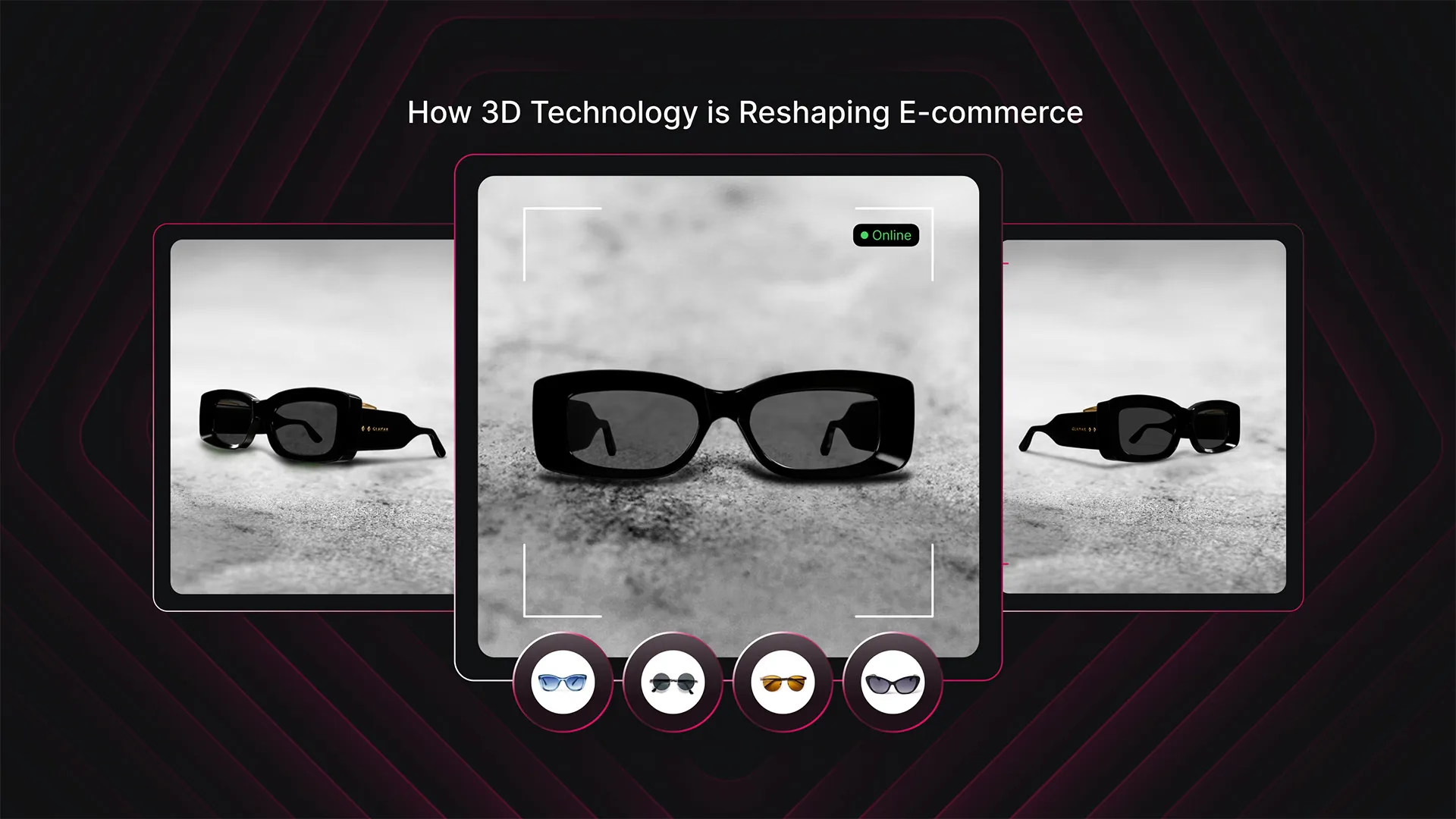
As e-commerce continues to surge, competition among online retailers is becoming increasingly intense. To capture the attention and loyalty of consumers, brands are seeking new ways to enhance the online shopping experience, bridging the gap between digital and physical interactions. One of the most transformative advancements in recent years is 3D technology, which is rapidly reshaping e-commerce by delivering immersive, interactive experiences that make online shopping more engaging and realistic than ever before.
From 3D product modeling to augmented and virtual reality integrations, 3D technology is changing how consumers shop, explore, and interact with products online. This article explores the impact of 3D technology on e-commerce, including its benefits, applications, and the future possibilities it holds for online retail.


What is 3D Technology in E-commerce?
3D technology creates digital models that replicate the depth, detail, and dimensionality of real-world objects, allowing for lifelike, interactive representations in a virtual space. Through techniques like 3D modeling, rendering, and scanning, 3D technology enables users to view, rotate, zoom in on, and sometimes even interact with these models, as if they were physically present.
Commonly used in industries like e-commerce, gaming, healthcare, architecture, and entertainment, 3D technology can power applications like virtual product try-ons, immersive simulations, and enhanced design and visualization tools.
Some Popular Forms of 3D Technology in E-commerce Include:
3D Product Creation
3D product creation involves designing lifelike, three-dimensional digital representations of products. These models allow customers to interact with and explore the product from all angles, offering an immersive and detailed view that static images can’t provide.
3D Photography
3D photography captures products in three-dimensional images, adding depth and perspective. This approach helps businesses showcase their products in a more realistic and engaging manner, enhancing the online shopping experience.
360° Product Views
360° product views give customers a complete, interactive look at a product by enabling them to rotate it and examine it from all angles. This feature boosts user engagement and provides a comprehensive understanding of the product, helping to drive purchasing decisions.
Product Configurator
A product configurator is an interactive tool that allows customers to personalize a product according to their preferences—selecting features, colors, and sizes in real-time. This customizability enhances user satisfaction and offers a more tailored shopping experience.
Augmented Reality (AR)
Augmented Reality (AR) overlays digital images or information onto the real world through smartphones or AR-enabled devices. For businesses, AR enhances customer experiences by allowing users to visualize products in their actual environment before making a purchase decision.
Virtual Reality (VR)
Virtual Reality (VR) immerses users in a fully digital environment, often using VR headsets. This technology is commonly used in virtual stores or product explorations, where users can interact with products in a completely simulated space, offering an innovative and engaging shopping experience.
These technologies are revolutionizing the way businesses engage with their customers, offering immersive and interactive experiences that enhance product understanding, drive engagement, and ultimately, increase sales. By integrating these solutions into your business model, you can stay ahead of the curve and deliver exceptional digital experiences that meet the evolving expectations of today’s consumers.
Why Businesses Must Shift to 3D?
In today’s digital shopping landscape, consumer expectations have evolved far beyond traditional images. Here’s why businesses now need 3D technology:
Demand for Realistic Product Visualization
Shoppers want to see exactly what they're purchasing, with realistic, detailed views that static images can’t deliver. With 3D, customers feel more informed and confident in their choices, especially when buying high-value items.
Rising Importance of Interactive Shopping Experiences
Customers now seek an immersive, interactive experience that mirrors in-store browsing. 3D allows them to explore products dynamically, transforming the passive browsing experience into an engaging, hands-on exploration.
Shift to Omnichannel and AR Compatibility
As AR-enabled devices and apps become more mainstream, 3D content is essential for businesses that want to connect with customers across all touchpoints, from websites to AR applications.
Need for Competitive Differentiation
With more brands moving online, 3D technology has become a critical tool for standing out. 3D models offer a unique, memorable shopping experience that gives brands an edge in a crowded marketplace.
Increasing Customer Expectations for Personalization
Today’s shoppers not only want to view products in 3D but also to personalize them. From custom color selection to modular configurations, 3D technology supports the growing trend of product customization, which static visuals cannot achieve.
Benefits of 3D Technology in E-commerce
The advantages of 3D technology in e-commerce go beyond simply showcasing products; they enhance the overall customer experience, leading to higher satisfaction, increased engagement, and potentially higher sales. Here are some of the key benefits:
Enhanced Product Visualization
This capability gives customers a more accurate understanding of the product, increasing their confidence and reducing the possibility of returns. As per the Deloitte report, 61% of shoppers prefer retailers with AR experiences, and 3D visualization enhances this effect by providing even more product accuracy.
Improved Customer Engagement and Satisfaction
Customers spend more time interacting with 3D models, rotating and zooming in on products, and this interactivity builds excitement around the shopping process.
Increased Conversion Rates and Reduced Return Rates
With 3D technology allowing for more accurate visualization, customers are less likely to return products due to unmet expectations. According to Shopify reports, conversion rates can increase by up to 45% with 3D and AR experiences and that 3D models can reduce returns by up to 30%.
Greater Personalization and Customization Options
This customization is highly appealing, as it allows shoppers to create a product that’s tailored to their personal preferences.
Building Brand Loyalty and Differentiation
By integrating 3D technology, brands can establish themselves as forward-thinking and customer-focused, which helps build trust and loyalty among shoppers.
“A study by Shopify reveals that e-commerce stores that incorporate 3D virtual stores usually witness a 94% increase in sales. Furthermore, 40% of consumers are willing to spend more on 3D e-commerce immersive experiences.”
Applications of 3D Technology in E-commerce
With the growing adoption of 3D technology, many industries are finding innovative ways to apply it to their online stores. Here are some examples of how different sectors are using 3D in e-commerce:
Fashion and Apparel
Virtual fitting rooms allow customers to “try on” clothing virtually, ensuring a better fit before purchase. This reduces returns due to sizing issues, a major problem in online fashion retail.
Furniture and Home Decor
Retailers like IKEA and Wayfair use AR and 3D modeling to help customers visualize furniture in their homes. By using a smartphone camera, customers can see how a piece will look in their space, making it easier to decide if it suits their decor.
Beauty and Makeup
Makeup brands like Sephora and L’Oréal offer AR features that let customers test products virtually, giving them a realistic preview of how different shades will look on their skin tone.
Automotive
Car manufacturers and dealerships use 3D technology to offer virtual test drives and allow customers to configure vehicles with preferred colors, interiors, and features.
Real Estate
In the real estate sector, VR tours and 3D property walkthroughs enable prospective buyers to explore homes remotely, giving them a realistic view without needing to physically visit multiple properties.
The Future of 3D Technology in E-commerce
As technology continues to advance, the potential applications for 3D technology in e-commerce are vast. Here are a few trends we may see in the future:
Virtual Showrooms and Stores
Brands may increasingly invest in creating fully immersive virtual stores where customers can browse and shop as they would in a physical location. H&M's purpose was to always look for ways to innovate and explore new opportunities, the brand is exclusively opened its first virtual showroom experience. Spearheaded by H&M beyond - H&M’s opened innovation retail lab based in Berlin – the brand created a pioneering virtual showroom environment, in which invitees can experience campaigns and collections in a unique way. The virtual space starts as a pilot and is a place where we build and maintain relationships with media, celebrities, influencers and stylists. A selection of special collections is presented – Studio, Innovation Stories and Collaborations – starting with the 5th Innovation Stories campaign ‘Cherish Waste’.
Artificial Intelligence and Personalization
Combining AI with 3D technology could enable retailers to offer even more personalized experiences, suggesting products based on user preferences and history.
Augmented Reality for Enhanced Shopping Experiences
AR is likely to become more accessible and prevalent, allowing consumers to use their devices to instantly visualize products in real-world environments.
Sustainable Shopping Practices
3D technology can help reduce returns and production waste, making e-commerce more sustainable. For example, virtual try-ons and product previews reduce the need for overproduction and can help minimize the environmental impact.
How GlamAR Helps Businesses Scale with Powerful 3D Solutions
GlamAR is at the forefront of transforming e-commerce by offering a complete suite of 3D solutions under one platform. From interactive product configurators to immersive 3D viewers, GlamAR enables e-commerce businesses to create engaging, personalized shopping experiences that captivate customers and drive results.
Our powerful platform provides everything businesses need to enhance their online presence, from creating photorealistic 3D models to implementing cutting-edge AR experiences. By integrating these tools, brands can offer their customers a seamless, interactive journey—from exploring products from every angle to customizing them in real-time.
How 3D Modeling Works: A Step-by-Step Guide
Creating 3D models transforms traditional product visuals into interactive, lifelike digital replicas that customers can explore from every angle. Here’s an overview of how 3D modeling works, from concept to ready-for-market assets:
Upload Your References
To begin, the designer or AI system needs high-quality reference materials. This includes product images from multiple angles, measurements, and other key details. If you already have existing 3D files or design elements, those can also be uploaded to help streamline the process.
Model Creation with AI and Design Tools
Once the materials are uploaded, the modeling process starts. Using a blend of AI-driven algorithms and manual design expertise, images are analyzed, mapped, and converted into a 3D structure.
Adding Texture and Detail
Next, textures like colors, finishes, and materials are added to give the model realism. Lighting and shading are applied to enhance details, so the 3D model looks true-to-life and visually appealing on-screen.
Quality Assurance
Every 3D model goes through a thorough quality check to ensure it meets design standards and accurately represents the product. The model’s integrity is reviewed, checking for details, textures, and seamless user interaction.
Ready for Publishing
Once finalized, the model is optimized for use across digital channels. It’s available for download in various file formats and is ready to be used in e-commerce sites, augmented reality applications, or marketing campaigns.
Grow Your Business with the Power of 3D
3D technology is transforming the e-commerce landscape, bridging the gap between physical and digital shopping experiences, and offering consumers a more interactive, informative way to shop online. As brands adopt and innovate with 3D tools, we can expect a future where online shopping becomes increasingly immersive, personalized, and efficient. By embracing 3D technology, e-commerce businesses are not only enhancing customer satisfaction but also positioning themselves for a future that prioritizes experience, customization, and sustainability.
Ready to transform your e-commerce experience with immersive 3D solutions?
Discover how GlamAR’s powerful platform can help you engage customers, drive conversions, and stay ahead of the curve. Contact us today to get started!










