
How to create a 3D product image for businesses


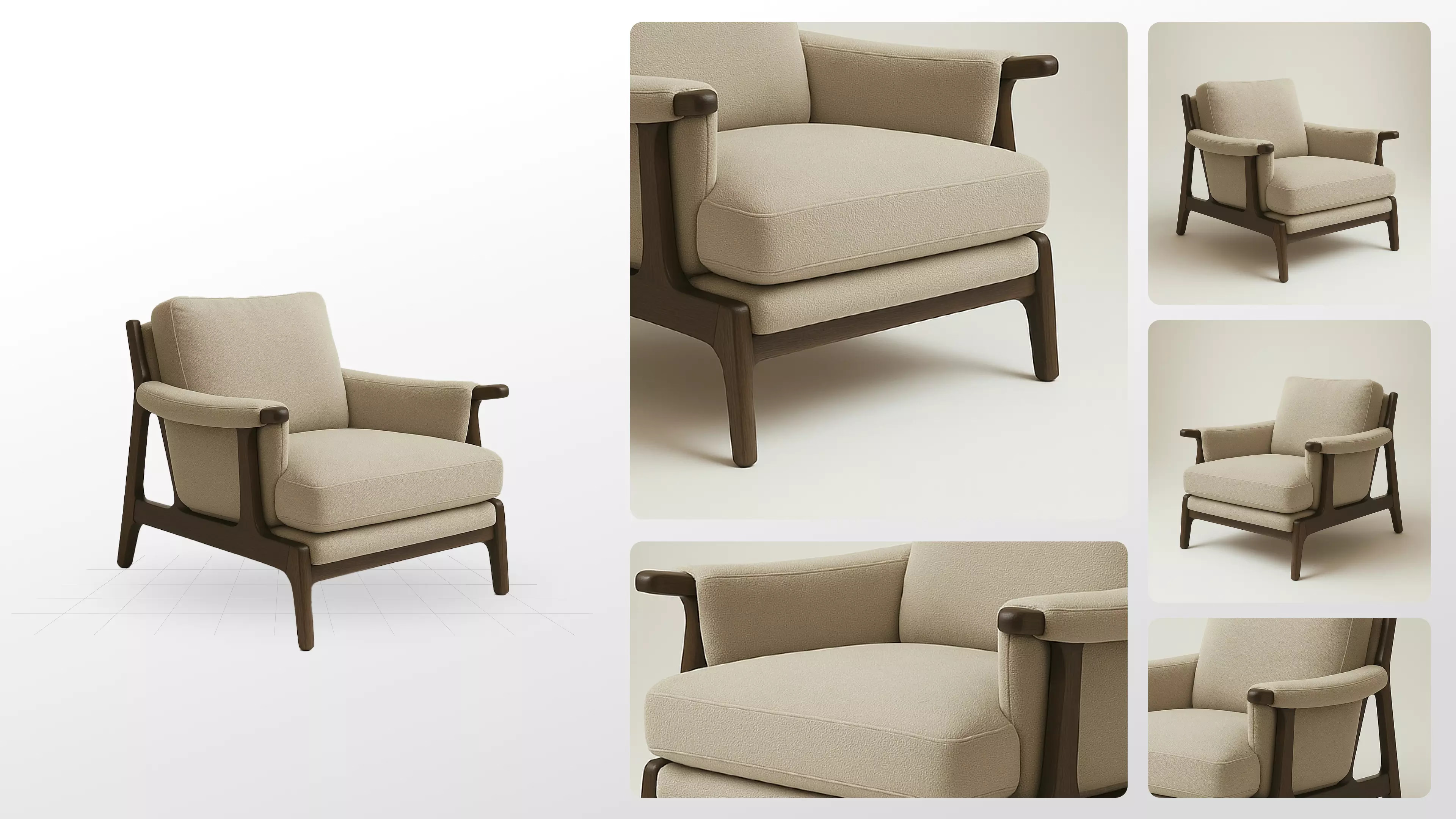
3D product images have transformed how companies interact with consumers. Over a third of website customers now examine for longer than 30 seconds, and 82% use 3D images. Imagine your consumers experiencing the privilege of having a closer and more natural view of your products before making a purchase decision. What do you think will happen? Of course, your brand sales will increase.
In fact, research shows that brand sales rise by 94% when they replace 3D images with standard images or videos. Additionally, businesses using 3D product images are seeing more interaction, fewer returns, and more satisfied customers. This led to an increase in the number of people purchasing online globally, especially in underdeveloped areas.
By 2025, the overall market for 3D modeling is projected to be $5.63 billion. Any business trying to stay competitive in the digital market needs to know that 3D product images are vital and never meant to be underrated. I will be showing you the essence of 3D product images and how to create one for your product. Let’s get started.


What is a 3D product image?
A 3D product image is a technology that enables consumers to examine a product from every aspect, zoom in for a closer look, or even view it in several colors, sizes, or styles. Unlike flat 2D photos, 3D images help consumers to virtually shop with a real-world experience. Some companies even went further to design virtual showrooms where consumers can stroll around and interact with their created 3D product images exactly as they would in a physical store. This brought about a degree of realism that makes shopping more interesting and immersive for customers.
According to a Shopify news analysis, those with 3D and augmented reality experiences have a 94% higher conversion rate than those lacking similar technologies. Today, businesses from furniture to fashion to electronics to automotive are employing 3D product graphics. 3D product images will make your consumers more sure of their decisions, which reduces returns and increases satisfaction.
Truly, when choosing a product, 95% of consumers said they would rather have an interactive 3D experience than still photographs or product films. Also, 3D product images are becoming a necessary tool for companies to stand out and offer a better shopping experience for customers. This is because it can close the distance between your traditional storefronts and your digital platforms by providing a means of rotating, customizing, and exploring objects online.
3D image vs 3D model: key differences
A 3D product image is a two-dimensional visual produced from a three-dimensional model. It lets your consumers zoom in, view an object from several viewpoints, or investigate it in several styles. The 3D image of your product should have the following features:
- Be interactive or stationary.
- Reflecting the quality and appearance of your product.
- Have a more comprehensive perspective than simple 2D images.
Conversely, a 3D model is the digital construction of a thing developed in three dimensions. It covers geometry, depth, textiles, and occasionally physics data of your physical product. Multiple 3D photos, movies, AR experiences, and even virtual reality settings may be produced with a 3D model. Consider the model as the "blueprint." One approach to highlighting that blueprint is via a 3D image.
The key difference lies in their goals:
- For marketing and sales, a 3D image shows a final look.
- However, design, production, simulation, and digital asset development all benefit from a 3D model.
Moreover, platforms like GlamAR run augmented reality previews, virtual tours, and product configurators on 3D models for interested businesses. Concurrently, 3D product photos will enable your company to develop more dynamic and realistic product websites to enhance consumer confidence. Studies have shown that interactive 3D visualizations raise online conversion rates by up to 40% over conventional flat pictures.
Benefits of 3D product images for online shopping
There are certain actual improvements that 3D product photos will bring to your store. Your consumers will engage with your offerings exactly as in a physical store. This will offer your consumers greater confidence and added excitement to purchasing. Personally, using 3D graphics for online buying has helped me observe the following main advantages.
1. Product visualization
When you started using 3D product photos, the first thing you would notice was how lifelike everything seemed. Your customers could view the object from every aspect, rather than only speculating from a flat picture.
They could turn it about, enlarge it, and get a real feeling of shape, texture, and scale. This had a significant effect, particularly on furniture, clothes, and electronics. It helps to mimic the in-store experience from their screens.
2. Increase engagement
It has been said that customers can stay on product pages without getting tangible results for a noticeably long length of time. But once you include 3D images of your products, people will stop scrolling and begin interacting.
Threekit claims that users of sites with 3D and AR spend up to 200% more time than those without. It became evident that a product attracts more attention if it feels "real." More contacts suggested they were considering a purchase, not only window browsing.
3. Increase conversion rate
Once you included 3D images, conversations soared. People decided faster and with more assurance. They could see exactly what they were purchasing, so it was no longer simply speculation.
Brands employing 3D and AR images have recorded up to "94% higher conversion rates," according to Shopify. That meant, to you, less uncertainty and more checkouts. It also meant fewer individuals were hesitant to leave their carts at the last minute.
4. Reduce return rate
Returns used to be a hardship. People might claim the object did not fit their expectations or looked unlike the photo. However, you will get a few complaints once you start using 3D images.
Before making a purchase, consumers might inspect the item closely. They knew what to anticipate. Threekit claims that 3D images may lower return rates by as much as 35%. That relieved tension and saved money and time.
5. Versatility
The most beautiful thing is the various uses for 3D images. Your website, AR previews, online marketing, and even virtual try-on tools may all be housed under one model.
You can avoid paying fresh photographers each time by using duplicate 3D files across several campaigns and platforms. Furthermore, with a few changes, you can offer the same product in other colors or settings without starting from scratch.

How to integrate 3D images into your website
Adding 3D images to your website can completely change how shoppers connect with your products. You don’t need to be a tech expert to get started. Here’s a simple path to follow if you want to create, polish, and upload 3D visuals that look professional and drive better engagement.
1. Select your preferred 3D modeling software
You have to choose the appropriate 3D modeling tool first of all. You may use programs like Blender or Autodesk Maya if you want complete control and sophisticated capabilities. For easier jobs, web-based solutions like Vectary or GlamAR also do well. Your product category, skill level, and design complexity will all affect your options.
2. Put together your reference resources
A decent three-dimensional picture cannot be created without solid reference material. Get technical drawings, the best images, or product specs. If you are modeling, you want to provide the designer or yourself with the finest starting point. With more data you gather right now, your final three-dimensional product photos will be more realistic and accurate.
3. Create 3D product models
The actual work is now in progress. Using the chosen program and reference materials, create a complete three-dimensional model of your product. Pay close attention to elements, including color, texture, and scale. This step allows you to make every curve, surface, and feature so that consumers find them exactly as intended. Recall that a polished model builds online trust.
4. Perfect your 3D product image process
After you have the 3D model, it's time to shine it. Incorporate realistic shadows, lighting effects, and an appropriate backdrop. Check your 3D views on tablets and smartphones. No matter how consumers are browsing, you want your items to seem clean and appealing. Strong initial impressions come from a well-calibrated 3D picture.
5. Using a 3D product viewer to export
After the images are perfect, export your model from a 3D viewer. These viewers enable your clients to interact with, rotate, and zoom in on your goods online. Platforms let you include 3D graphics in your business. This increases buying confidence and allows consumers to look at every side.
Use cases of 3D product images across industries
Presently, 3D images of products are used in many different fields. When people shop online, brands use 3D images to show buyers the whole product, which makes them more confident before they buy. In this section, I am going to show you examples of industries that can use 3D images for their products.
- Fashion stores like GoFynd partner with GlamAR to enhance customer engagement using 3D tech to show how clothes fit, look, and feel more accurately than they could with regular pictures.
- In advertising, 3D imagery creates dynamic campaigns that catch more attention and drive engagement.
- Marketing teams are also leveraging 3D to create personalized experiences where customers can interact with products virtually.
- Even sectors like automotive and real estate use 3D rendering to simulate vehicles and property tours.
The shopping journey becomes more realistic because your customers can view products through 3D capabilities that allow zooming and rotational control from all directions. Most importantly, companies that embrace 3D visuals offer customers a deeper and more interactive experience.
Challenges in creating 3D product images
Adding 3D images to your business will sound exciting at first. But when you get into it, you quickly learn that it comes with a few tough spots. Here are some challenges you might have had to face along the way.
1. Mastering complex software
You will realize that not every 3D modeling tool is beginner-friendly. The 3D modeling software programs Blender and Maya offer extensive menu systems with many features that initially made them complicated to use. Learning how to create realistic surfaces, lighting, and textures took time. Without basic design knowledge, it’s easy to make mistakes that hurt the final image quality.
2. Creating high-quality reference materials
Building a strong 3D model starts with great references. You might struggle when you don't have clear photos or technical drawings of my products. Even small missing details made the 3D versions look off. Getting professional-grade photos from every angle turned out to be essential to creating models that felt real and trustworthy.
3. Balancing quality and loading speed
Your website performance might degrade after you have uploaded heavyweight 3D files with high resolution. The delay in loading 3D images may cause customers to depart from the website before viewing the product. That means you needed to learn optimization and compression techniques that produced 3D files without compromising image quality.
4. Keeping costs under control
The acquisition of skilled 3D artists, together with the purchase of quality software licenses and proper tools, results in quick and substantial financial expenses. Before implementation, you need to calculate the costs of rendering firms and cloud storage needed for managing heavy 3D files. Hence, you need to develop budget planning skills and methods to find budget-friendly solutions while preserving overall quality.
5. Making it compatible across devices
I am always confused when I see how some 3D images look different on phones, tablets, and computers. What looked crisp on a laptop sometimes appeared blurry or broken on mobile. You need to test on many devices and adjust the settings until the visuals are smooth everywhere.
Cross-platform optimization is not optional if you want a professional online store. Though certain challenges come with integrating 3D images into your website as a business owner, GlamAR will give you seamless and suitable experiences every time.
Future of 3D product image creation for businesses
More and more people are using 3D printing to make products. Companies aren't just putting things on show; they're creating whole digital experiences out of it. This is where things are going.
1. Greater integration with augmented reality (AR)
A lot more companies are going to mix 3D pictures with AR features. Customers only need their phones to place an item in their real-world area. Shopify says that items with augmented reality material have a 94% higher sale rate than items without it. With more people using AR, 3D images will not be lovely anymore.
2. Faster 3D content creation with AI
Already, AI is speeding up and lowering the cost of 3D modeling. AI-powered tools can now make detailed 3D models of products in much less time than they used to. Forbes says that using AI to make 3D models could cut the cost of making things by up to 70%. I believe businesses that invest in AI tools will have a major advantage.
3. Personalization through interactive 3D configurators
The future will not be just about seeing products from every angle. It will be about customers examining their products visually. Personalization trends are pushing brands to use 3D configurators that allow shoppers to customize colors, textures, and even materials before buying. Research from Threekit shows that 83% of buyers point to product imagery as the most influential factor in purchasing decisions.
4. More web-based, mobile-optimized 3D tools
Right now, one challenge is that many 3D experiences require heavy files. That is changing. Future 3D platforms are shifting toward lightweight, web-based tools that load quickly on mobile devices. According to VNTANA, brands using optimized 3D models reduce page load time by 90%, leading to higher engagement and lower bounce rates. Making 3D content mobile-friendly will no longer be optional.
5. Expansion into new industries
E-commerce, fashion, and furniture brands have already embraced 3D imaging. But sectors like healthcare, education, and real estate are catching up. A report by Grand View research predicts that the global 3D rendering market will reach $9.61 billion by 2030, fueled by growing use across industries. 3D product images will transform virtual learning, medical training, property tours, and more in the future.
Why choose GlamAR for your 3D solutions?
With our meticulous 3D modeling, our team at GlamAR will make it simple for companies to bring their products to life. Our team will transform your basic sketches or product images into interactive digital models that are eventually prepared for e-commerce operations, promotional advertisements, and augmented reality applications.
Most importantly, our 3D experts' updated technical capabilities help them create precise digital duplicates that work between web platforms and mobile applications. GlamAR will provide customers with a complete 3D service package.
Furthermore, we exist to supply businesses with 3D product visualization solutions while offering 360-degree view functionalities and augmented reality solutions that allow potential buyers to try products in their real setting before purchase.
Through its solutions, GlamAR will help to build your consumer trust, which will lead to better marketplace positions in competitive markets. Also, increase customer interaction with your business products.
Conclusion
Today's market environment has experienced a new reality through 3D product images as they transform business-customer interactions. The advantages become readily apparent, from higher involvement to lower product returns. Many companies within different industries now deploy 3D visual content to build more authentic and reliable e-commerce experiences for their customers.










