
AR in furniture retail


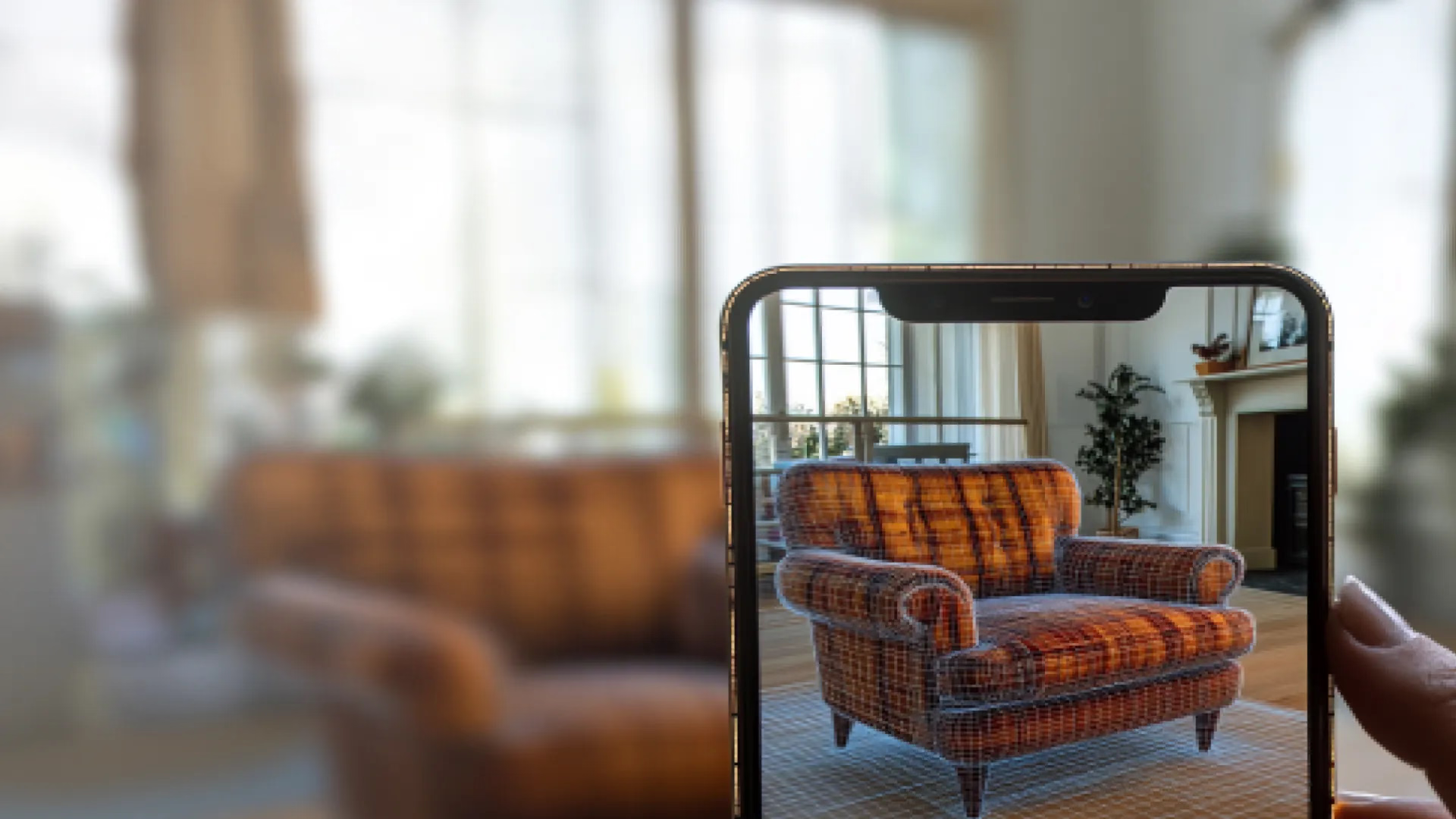
How augmented reality is changing the furniture industry
Augmented Reality (AR) is reshaping how consumers shop for furniture, merging the physical and digital worlds to create a seamless shopping experience. This article dives deep into how AR is helping furniture brands solve customer pain points, its benefits, and examples of brands leveraging this technology successfully.
What is AR for furniture brands?
AR overlays virtual 3D objects onto real-world environments, allowing users to interact with these objects through their smartphones, tablets, or AR glasses. For furniture brands, AR means enabling customers to visualize furniture in their own homes before buying, reducing uncertainty and improving decision-making.
How it Works:
- Customers scan their room using their device’s camera.
- The AR tool places a 3D model of the furniture in the scanned space.
- Customers can rotate, resize, and customize the furniture to fit their preferences.
Challenges faced by furniture brands
Limited In-Store Space
Showrooms can’t display every product. Customers miss out on options, especially large pieces. Solution: AR apps like IKEA’s let customers explore entire catalogs virtually, maximizing choice without physical constraints.
Visualization Issues
It’s hard to picture furniture at home, leading to hesitation. Example: Wayfair faced high dissatisfaction before launching its AR “View in Room” feature, which helps customers preview furniture in their spaces and boosts confidence.
High Return Rates
Furniture returns can hit 28% due to size or style mismatches, impacting costs and loyalty. Solution: AR ensures accurate visualizations, reducing returns by helping buyers make better-informed decisions.
Competing in E-Commerce
Online shopping lacks tactile experience. AR bridges this gap, offering immersive “try-before-you-buy” tools. As giants like Amazon adopt AR, traditional brands can leverage it to stay competitive.


Benefits of AR in the furniture industry
Improved customer experience and confidence
- Visualization Clarity: AR allows customers to see how a product will fit and look in their real environment, solving the common issue of size and style misjudgment. This feature is especially crucial for furniture, where dimensions and aesthetics significantly impact the buying decision.
- Enhanced Personalization: Through AR, customers can modify colors, materials, and designs in real-time to match their preferences. This creates a more personalized and engaging shopping experience.
- Convenience: Shoppers can try furniture options virtually at home without needing to visit showrooms, making the process more convenient.
Reduction in return rates
- Furniture returns are costly and time-consuming for retailers due to logistics and handling fees. AR minimizes returns by helping customers make informed decisions, ensuring the product fits their space and style expectations.
- Studies show that businesses leveraging AR have reduced their return rates by up to 30%. (Source-Cylindo Blog & Virtual Reality Reporter )
Boost in sales and conversions
- AR drives higher customer engagement and confidence, which directly impacts sales. Retailers like IKEA and Wayfair reported significant increases in conversion rates post-AR implementation. With AR, the average time spent on product pages increases, giving customers a chance to explore products more thoroughly, leading to higher likelihood of purchase.
Cost-Effective virtual showrooms
- AR reduces the dependency on large physical showrooms, allowing brands to showcase their entire catalog virtually. This approach is particularly beneficial for smaller retailers with space constraints.
- Retailers like Ashley Furniture have adopted AR kiosks in stores to provide a hybrid experience, combining the benefits of digital and in-store shopping
(Source -Virtual Reality Reporter )
Eco-friendly solutions
- By reducing the need for physical prototypes and sample furniture, AR promotes sustainability. Brands can reduce their carbon footprint and manufacturing waste, aligning with eco-conscious consumer preferences.
Competitive differentiation
- Brands that adopt AR gain a technological edge over competitors. AR has become a critical factor for attracting tech-savvy millennials and Gen Z customers, who value immersive and interactive experiences.
Enhanced marketing opportunities
- Interactive Ads: AR allows brands to create engaging advertisements where customers can "try before they buy" directly through social media platforms or websites.
- Social Media Buzz: AR features on platforms like Instagram or Snapchat enable brands to create viral campaigns, increasing brand visibility and customer interaction
Data-driven insights
- AR tools collect valuable customer data, such as preferences, behavior, and interaction patterns. This information helps brands optimize their offerings, refine marketing strategies, and improve user experience.
How furniture brands can use AR
AR mobile apps:
Brands like IKEA and Wayfair offer apps that let customers virtually “place” furniture in their rooms.
WebAR:
WebAR eliminates the need for downloading apps by allowing customers to access AR tools directly from their browsers.
AR for customization:
Tools like Houzz’s AR feature allow customers to try different colors, materials, and styles to see what suits their space best
In-Store AR kiosks:
Retailers like Ashley Furniture offer AR-powered kiosks, letting customers explore their entire inventory virtually.
AR Marketing campaigns:
Engaging social media campaigns use AR filters to promote furniture and create buzz.
Success stories of brands using AR
IKEA
IKEA is a pioneer in leveraging AR to improve customer experience and operational efficiency. In 2017, IKEA launched its IKEA Place app, allowing users to virtually place furniture in their homes using AR.
Implementation details:
- The app uses Apple’s ARKit and provides a catalog of 3,200+ products in 3D.
- Items are scaled at 98% accuracy to give users a true sense of size and fit.
- Customers can change angles, move furniture, and try different setups in real time.
Results achieved:
- Higher Engagement: IKEA Place has significantly increased customer interaction with their digital catalog.
- Reduced Returns: AR helped customers make better decisions, lowering product returns. Although specific figures are not public, IKEA’s spokesperson noted an improvement in customer satisfaction metrics
- Increased Sales: IKEA reported a rise in app-based conversions, particularly in the U.S. and Europe, where AR adoption is higher
Houzz
Huozz, a platform for home renovation and design, integrated AR into its app with the "View in My Room" feature. This tool allows users to place furniture and décor items in their spaces through AR visualization.
Implementation details:
- Houzz’s app provides real-time AR functionality, showcasing furniture in 3D.
- Users can adjust dimensions, colors, and orientations.
- The app’s focus on photorealistic rendering ensures accuracy in visual representation.
Results achieved:
- Increase in Purchase Likelihood: Houzz found that customers who used the AR tool were 11 times more likely to make a purchase compared to those who didn’t
- Enhanced User Experience: The AR feature was highlighted as a significant contributor to Houzz’s app becoming one of the top-rated tools in its category.
- Competitive Advantage: The feature helped Houzz differentiate itself from competitors like Wayfair and Amazon.
Ashley furniture
Ashley Furniture, one of the largest furniture manufacturers and retailers globally, leveraged augmented reality (AR) to significantly enhance customer engagement and boost sales. Their AR initiatives included integrating 3D visualization and AR technology into their e-commerce platform and launching AR advertising campaigns.
Implementation:
Ashley introduced an AR-enabled app that allowed customers to place 3D models of furniture items into their real-life spaces using their smartphones. This helped customers visualize furniture dimensions and aesthetics in their homes before making a purchase
They partnered with Verizon Media and Merkle to develop AR ads. These ads, integrated into platforms like Yahoo Mail, let users interact with Ashley's furniture virtually. This offered a seamless shopping experience for mobile users
Results achieved:
The AR campaign delivered significant engagement, doubling click-through rates compared to traditional advertisements.
Ashley reported increased consumer satisfaction due to the ability to visualize products in home environments, addressing a major pain point in online furniture shopping
Key takeaways:
AR not only improved customer confidence in purchasing but also contributed to brand loyalty by providing an immersive and practical shopping experience.
Ashley’s case underscores the value of integrating AR into both advertising and product visualization to bridge the gap between online and physical retail.
Conclusion
Augmented Reality is proving to be a game-changer for furniture brands, enhancing customer experiences and addressing key pain points. By adopting AR, brands can improve sales, reduce returns, and create a lasting impact on their customers. For businesses in this competitive industry, investing in AR technology is no longer optional it’s a necessity.










