
Come la mobilia di AR può tagliare i ritorni per i negozi online


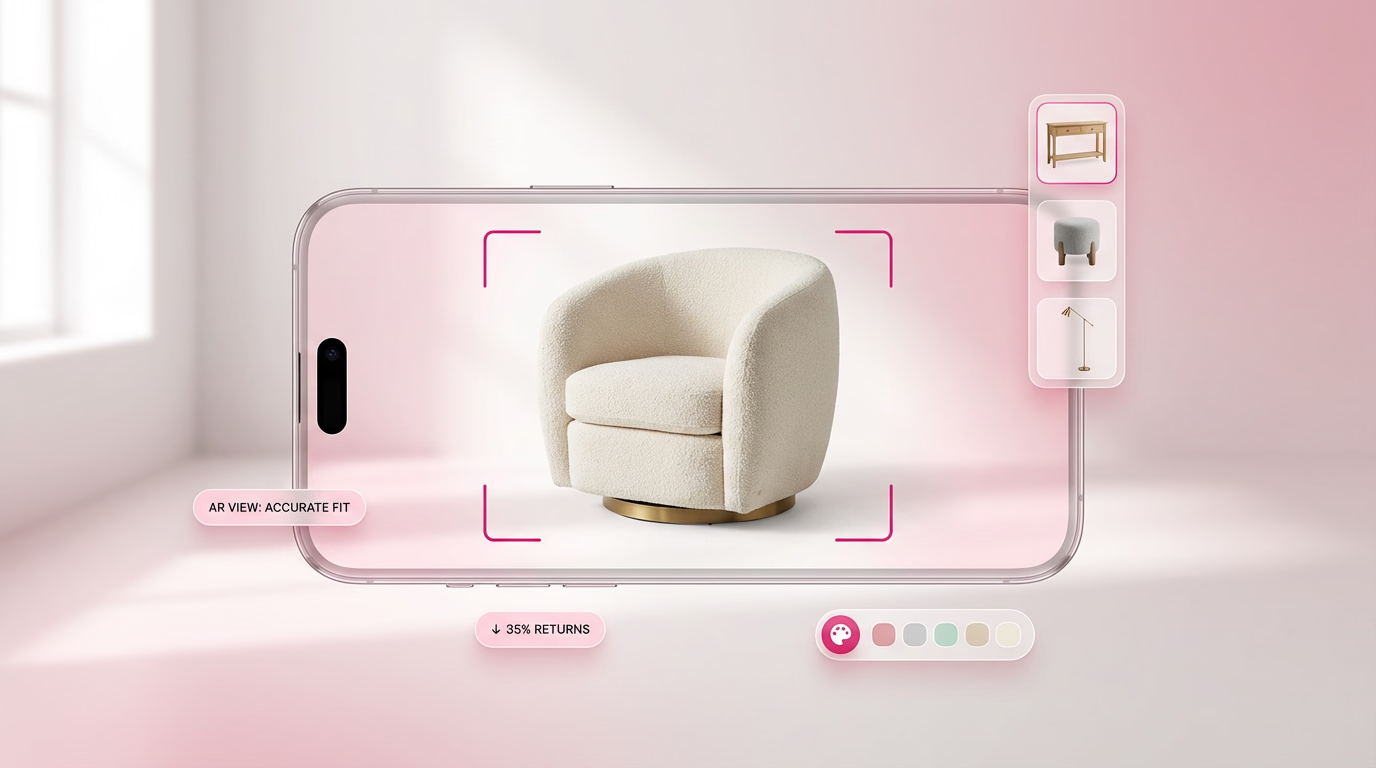
Did you know that about 20-30% of online furniture buys get returned? Imagine cutting those numbers way down by letting shoppers see how stuff looks in their home before they hit "buy." Augmented Reality (AR) furniture placement is doing exactly that. With AR, online shops can slash returns, boost customer happiness, and make shopping way faster.
Glance at the Role of AR in Retail
AR is shaking up retail, giving shoppers cool new ways to check out products. In online furniture shopping, AR lets folks drop virtual furniture right into their homes. It connects the dots between browsing online and shopping in person, making the experience way more engaging.
- GlamAR
- Best used for: Furniture, fashion, jewelry
- Standout features: Virtual try-on, AI skin analysis, 3D viewer
- IKEA Place
- Best used for: Home furnishings
- Standout features: Realistic room rendering, easy-to-use app
- Wayfair
- Best used for: Home decor
- Standout features: 3D room planner, product visualization
What is AR Furniture Placement, and What are Its Key Features?
AR furniture placement lets you see how a piece would look in your room using your phone or tablet. It's like having a virtual interior designer. Key features? Here they are:
- Real-time Visualization: Check out products in your space before buying. Helps you see if it fits and looks right.
- Accurate Measurements: Get the dimensions spot on. AR apps come with tools that help nail the perfect fit in your space.
- Easy User Experience: Super simple to use, so shopping is fun and interactive. Great AR apps have user-friendly interfaces that are a breeze to figure out.
- Customizable Options: Change up colors, sizes, styles instantly. This lets you try different looks without needing a bunch of samples.
- Interactive Interaction: Rotate and check out products from every angle.
But watch out for some common traps:
- Ignoring User Feedback: Not listening to users can lead to bad designs and poor functionality, making for a bad experience.
- Overcomplicating Interfaces: A too-complex interface can turn people off and stop them from using the tech fully.
- Neglecting Compatibility: If it's not compatible with different devices, it can limit who can use the app and how well it works.
- Inadequate Testing: Not testing enough before launching can mean bugs and glitches mess up the experience.
AR Furniture Placement Tools Comparison
Let's compare some top AR furniture placement tools:
- GlamAR
- Best Used For: Furniture, fashion, jewelry
- Standout Features: Virtual try-on, AI skin analysis, 3D viewer
- IKEA Place
- Best Used For: Home furnishings
- Standout Features: Realistic room rendering, easy-to-use app
- Wayfair
- Best Used For: Home decor
- Standout Features: 3D room planner, product visualization
Tips to Select an AR Furniture Placement Tool
Picking the right AR tool really matters for success:
- Integration: Make sure it fits smoothly with what you already have. Compatibility with current systems means fewer headaches.
- User Experience: Easy to navigate and simple to use is a must. A friendly interface gets people interested.
- Customization Options: Look for tools with lots of customization features. This can really boost user happiness and brand loyalty.
- Cost: Check the pricing to make sure it matches your budget. Think about both initial setup and ongoing costs.
- Customer Support: Good support can be super helpful for solving problems and getting the most out of the tool.
How Does GlamAR's Solution Help with Reducing Returns?
At GlamAR, we offer top-notch AR solutions that help cut down on returns by making shopping more engaging. Our 3D viewer and AR try-on tech let customers see and interact with products before buying, leading to smarter decisions. With our tools, brands can upgrade their online game, make customers happier, and cut return rates. Explore our AR solutions to see how they can work for your brand. Our platform is easy to use and fits well with existing systems, making it a win for both users and businesses.
Brands that are Using AR Furniture Placement
Lots of top brands are using AR furniture placement with great results:
- Wayfair: They're known for using AR to make online shopping better, which makes customers happier. Their tools let users customize and visualize a wide range of options.
- IKEA: They led the way in AR for furniture shopping with their app, IKEA Place. Its realistic room views and user-friendly design make it a standout.
- GlamAR Clients: Various brands use our solutions to cut returns and boost sales. Our tools' flexibility and scalability fit many business needs.
The Future of AR in Retail
The future of AR in retail looks huge, with tech getting better and better for more integration and features. As AR goes mainstream, expect cooler stuff like better real-time data, smarter AI personalization, and more widespread use across retail sectors. Retailers who jump on AR early will likely see big benefits, like more loyal customers and higher sales. As tech grows, AR will keep changing how we interact with products, offering more ways to customize and engage.
Conclusion
AR furniture placement isn't just a fad; it's a smart way to cut returns and improve shopping. By bringing AR into your store, you give customers a unique, fun way to shop, leading to happier customers and fewer returns. Ready to level up your online store? Check out our blog for more insights and see how GlamAR can transform your business. Embracing AR now sets your brand up for future success as consumer expectations keep changing.










