
How to use an API for digital skin analysis?


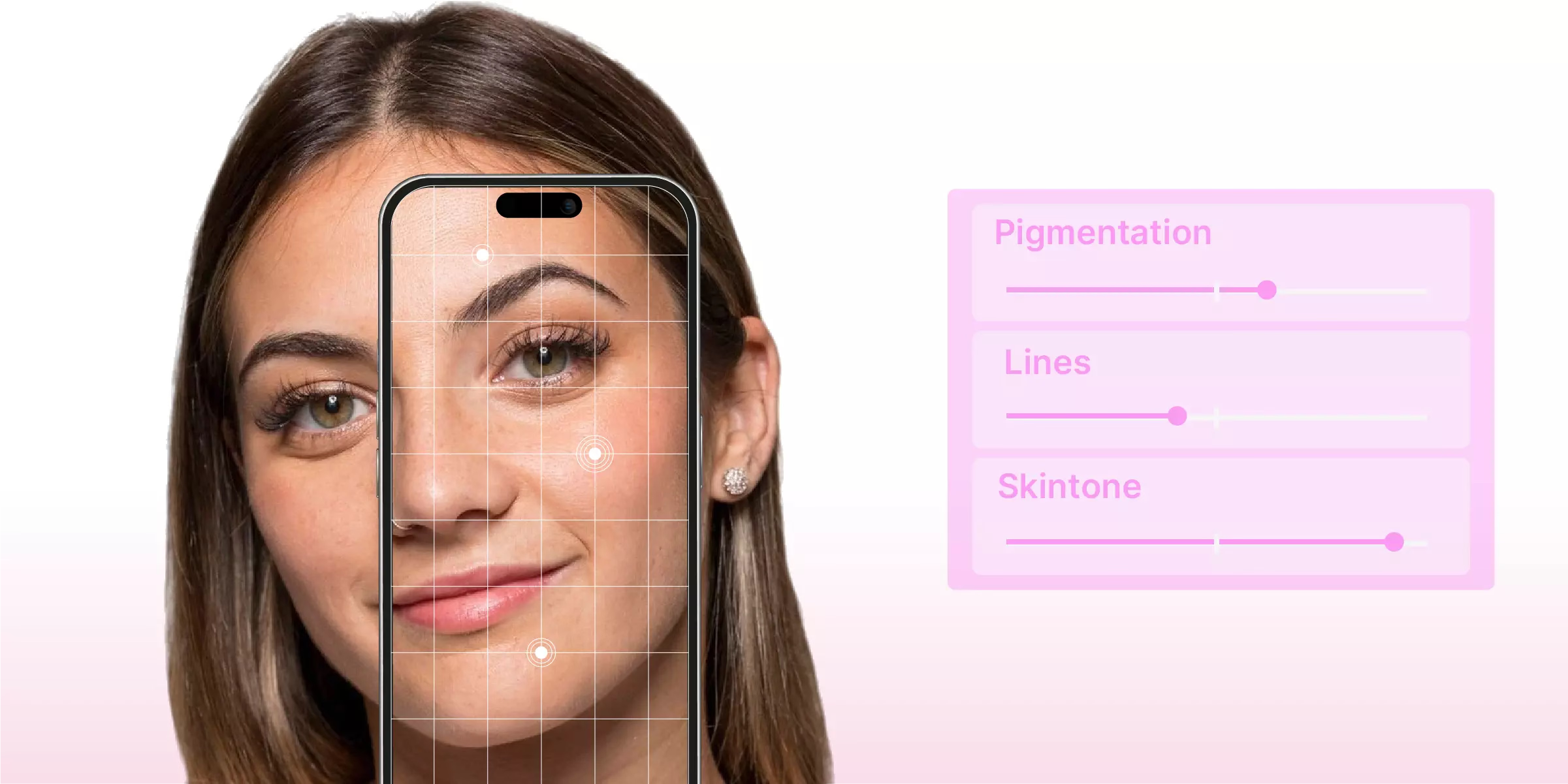
Building and following a skincare routine is more than just a trend, as it helps users to understand their skin condition, type, and tone, enabling them to choose the best-suited product for their skin. Therefore, before building a complete skincare routine, it is important for users to have appropriate knowledge about their skin and affected areas, which can be done by using a skin analysis tool.
A skin analysis tool is an AI-based online tool that allows users to study more about their skin conditions and helps them select the best products according to their needs and requirements. It helps users to analyze multiple skin issues, such as pigmentation, wrinkles, pores, acne, and more, due to which the skin analysis systems market is expected to grow at a CAGR of 9.5% and will reach $2.37 billion in 2029.
Using a skin analysis tool will help brands in multiple ways, such as increasing user engagement, boosting sales and conversions, reducing returns, and improving the online shopping experience, which will enable e-commerce businesses to build stronger relationships and generate more revenue. However, studying its working, features, uses, and benefits is a must because it will help a brand to unlock its potential and will help it to provide its customers with immersive experiences.
Therefore, in this blog, I will provide you with detailed information on how a skin analysis works, along with its benefits, role, and more, which will help various dermatologists, aestheticians, and skincare professionals to provide their clients with detailed information.


What is a skin analysis API?
A skin analysis API is an online tool that allows e-commerce brands and companies to integrate the skin analysis feature into their platform via minimal coding. By using the skin analysis API, brands can help their customers generate a comprehensive skin analysis report, which includes information about acne, pores, eye bags, dark circles, and texture, providing them with personalized product suggestions.
It helps brands to reduce the development time and cost by providing them with a ready-to-use API, helping them to provide users with an engaging experience. Developers can integrate the skin analysis API into beauty platforms, skincare apps, or dermatology tools, which will help professionals to gain detailed insights about the user's skin health and guide them with the best treatment options.
Why does digital skin analysis matter, and what is the role of API in skincare technology?
With the introduction of artificial intelligence technology in the skincare domain, the skincare industry has seen lots of innovation and features that have helped businesses attract more customers and increase their revenue. One of the most exciting technologies that the skincare industry has seen is skin analysis, which helps users to understand their skin condition and concerns, providing them with personalized product recommendations.
Users can perform skin analysis in both online and offline ways; however, performing digital skin analysis provides them with the accessibility to conduct an analysis anytime and anywhere. Therefore, in this section, I will provide you with information about the importance of a digital skin analysis and the role of API in helping brands build strong customer relationships.
Importance of digital skin analysis
- Personalized recommendations: It provides users with tailored recommendations according to their skin analysis report, which will help them treat different skin concerns, such as wrinkles, pores, and acne, by using the best alternatives.
- Early disease detection: It helps users to understand the affected skin areas by enabling them to detect different skin diseases and concerns at an early stage, which will allow them to consult with an expert in a timely manner and receive appropriate treatment.
- Data-driven insights: It provides users with objective, consistent, and accurate evaluations of multiple skin parameters, which will offer them a clear and precise understanding of skin health compared to traditional self-assessment.
- Increases accessibility: It allows users to perform a skin analysis by reducing the need for expensive clinical tests to study skin health and understand the affected areas, by giving them the accessibility to analyze their skin anytime and anywhere.
Role of API in skincare technology
- Seamless integration: It helps brands to integrate the skin analysis tool into their e-commerce platform without requiring any development time and cost, which will provide their customers with a similar experience across browsers, apps, and gadgets.
- Scalability: It helps businesses to reach a wider audience by helping them to deploy a professional-grade AI skin analyzer into their e-commerce platform at a wider scale without any need for extensive technical infrastructure.
- Data exchange: It enables brands to communicate among different applications and software, which will help them to share data and build a smooth flow of information for both users and businesses during the skin analysis.

Introduction to GlamAR’s skin analysis API, its features, and benefits

GlamAR is a leading beauty and makeup solution provider that helps brands build strong customer relationships and provide them with an enhanced online shopping experience. It provides brands with multiple solutions, including virtual try-on, a skin analysis tool, and a 360-degree viewer, which will help them keep their customers engaged by offering them real-time visualizations of products.
One of its most useful tools for beauty and makeup brands is an AI skin analysis tool that allows users to analyze their skin texture, type, tone, and condition with the help of artificial intelligence algorithms, and provides them with personalized recommendations. It evaluates more than 14 skin health and beauty metrics to provide users with a comprehensive evaluation of 150+ unique multidimensional facial biomarkers.
It helps brands to increase conversion rates and customer retention by 4 times because it provides their customers with personalized product recommendations depending on individual needs and requirements. It also helps e-commerce sellers in reducing the product return rate because it increases customer satisfaction during online purchases and decreases their uncertainty towards product selection.
Features
- Seamless integration: It provides brands with seamless integration that enables them to integrate the software into their e-commerce platform, offering their customers an engaging and seamless experience across different devices.
- In-depth metric analysis: It analyzes more than 14 skin health and beauty metrics and uses 94 algorithms to recommend suitable products, helping brands to increase user customer retention and satisfaction by fostering customer loyalty.
- Personalized recommendations: It helps brands to provide their customers with tailored suggestions according to their skin condition and concerns, which will enable them to understand their skin issues and treat them with the best-suited alternatives.
Benefits
- Reduced returns: It helps brands to increase customer loyalty and satisfaction during online shopping by providing them with personalized recommendations, which will reduce the product return rate up to 62% by decreasing their uncertainty towards the product.
- Boosts conversions: It increases customer retention and conversion rate by 4 times because it provides users with real-time visualization of products during online shopping, helping brands attract more customers and providing them with better experiences.
- Fuel business growth: It provides brands with data-driven insights on customer preferences and choices, which will help them to understand their target audience and make smarter decisions to accelerate their business growth and revenue.


How to use GlamAR’s skin analysis API?

In the previous section, I provided you with detailed information on a leading skin analysis API provider, GlamAR, which helps e-commerce brands to provide their customers with enhanced experiences.
I also provided you with information on its features and benefits, which will give you a clear understanding of the API provider. In this section, I will tell you how to integrate the GlamAR skin analysis API into your e-commerce platform in an easier and sustainable way.
1. Contact the GlamAR team
First, you have to contact their sales team to get the GlamAR skin analysis API to understand their features, benefits, and offerings, which you can schedule by filling out your details in their contact form.
2. Get Access Key for API
After telling you about the skin analysis features, the team will provide you with a PixelBin Token or Access Key that you can use to access the API by logging into your PixelBin account.
3. Log in to the PixelBin account
After logging in to your PixelBin account, you need to access the GlamAR API from the dashboard to get your skin analysis API, where you can upload models, manage SKUs, and configure domain access.
4. Review the documentation
Once you get access to the GlamAR account, study the documentation properly to understand the technical requirements, and study the request format and response sheet.
5. Integrate the API
After that, integrate the API into your e-commerce platform by authenticating the API and implementing the skin analysis functionality into your app, website, or platform.
6. Launch and scale
Once the integration is complete, test the tool and then make it live while monitoring the usage of the tool in a timely manner to analyze its performance and working.
Conclusion
With the help of digital skin analysis APIs, the skincare industry has seen a revolution by providing users with a combination of advanced AI, real-time assessment, and actionable insights. By integrating skin analysis API, brands and developers can provide an instant and professional-grade assessment to users, helping them understand their skin concerns and providing them with tailored recommendations at scale.
By using these versatile APIs, professionals can streamline consultations, enable progress tracking, and enhance product matching, all while ensuring secure, privacy-compliant data handling. By adopting skin analysis technology, businesses have unlocked new levels of engagement and trust by delivering scientifically backed experiences that help them to build loyalty and drive growth in today’s data-driven beauty landscape.










