
Virtual Jewelry Try-On for Online Retailers: Enhance Customer Experience and Increase Sales


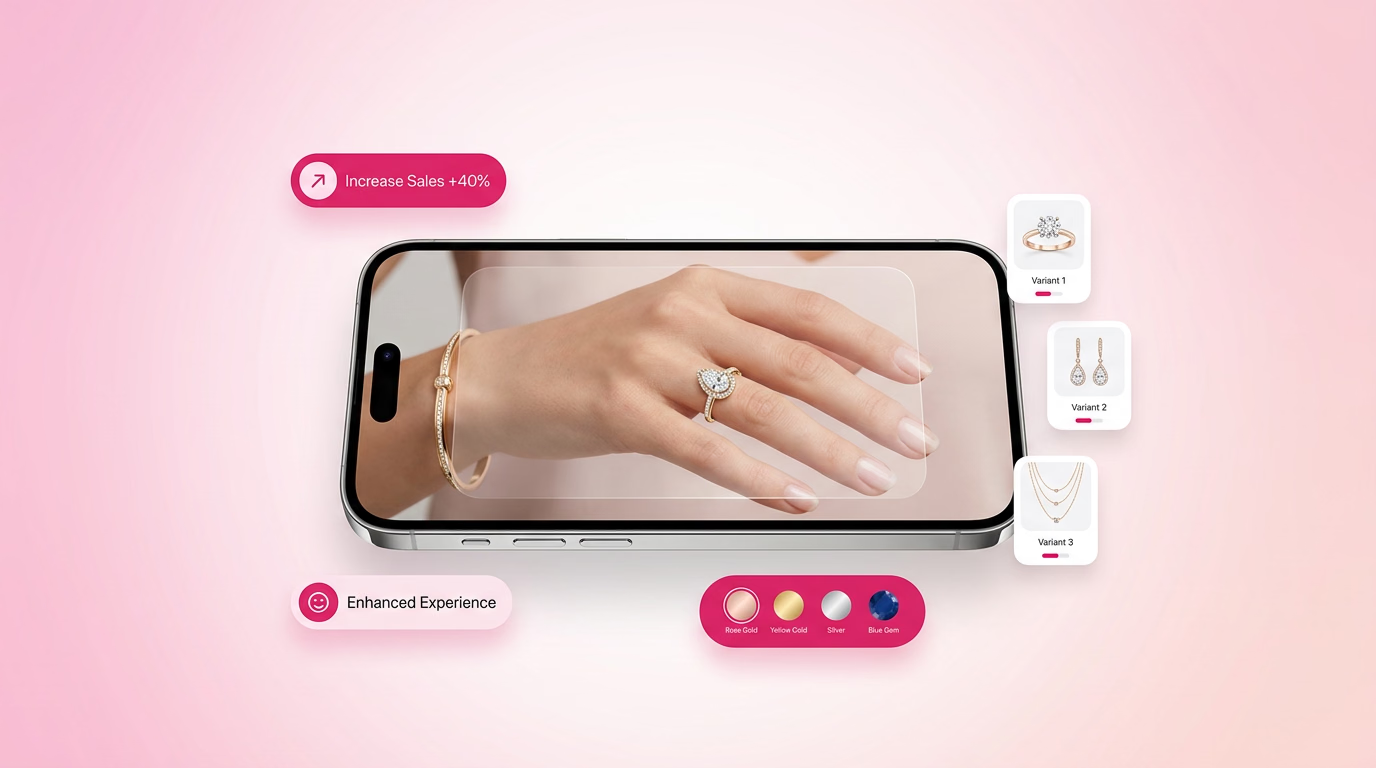
Virtual jewelry try-ons are changing the way we shop online, giving retailers a way to catch customer interest and cut down on return rates. Thanks to augmented reality (AR) and virtual reality (VR), shoppers can now see how jewelry looks on them before they buy, making shopping more interactive and personal. This tech is not just making customers happier but also proving to be a real asset for online retailers.
What is virtual jewelry try-on, and what are its key features?
Real-Time Visualization
Virtual jewelry try-on is a creative technology that lets customers see how jewelry items will look on them using AR and VR technologies. It offers retailers a digital way to display their products online interactively. Key features include:
- Real-time visualization: Customers can see how jewelry fits and looks in real time using their device's camera.
- 3D model integration: High-quality 3D models boost the realism of the try-on experience.
- Omnichannel capability: seamless integration across online and offline channels.
- Customization options: Allows personalized adjustments to jewelry pieces.
- Analytics support: Provides data on customer preferences and interaction.
Customization and Analytics
For example, a major online retailer using virtual try-on tools saw a 35% increase in sales conversion and significantly fewer returns, showing technology's impact in retail.
Benefits of virtual jewelry try-on for online retailers
Reduced Return Rates
- Reduced return rates: By letting customers virtually try on jewelry, retailers can significantly lower the number of returns. Customers are more likely to be satisfied with a purchase they have visually confirmed to suit them.
- Increased conversion rates: Customers are more likely to complete a purchase when they are confident about how the product will look on them.
- Enhanced customer satisfaction: Personalized shopping experiences help build trust and loyalty among customers.
- Competitive edge: Offering a virtual try-on service distinguishes brands in a crowded market.
- Data-driven insights: Retailers can gather valuable data on customer preferences and behaviors, allowing for more targeted marketing strategies.
Enhanced Customer Satisfaction
For example, a jewelry brand using virtual try-on technology reported a 40% decrease in returns, crediting this success to the enhanced assurance customers felt when visualizing their purchases before checkout.
Top virtual jewelry try-on providers
1. GlamAR
GlamAR provides a complete suite of virtual try-on solutions designed for jewelry retailers. Their platform seamlessly integrates AR technology with e-commerce, offering an engaging shopping experience that increases customer interest and cuts down on return rates.
Best used for: Full virtual try-on solutions for jewelry.
- Standout features:
- 3D model creation
- Real-time AR try-on
- Omnichannel integration
An example of GlamAR's impact is a leading jewelry retailer that saw customer interaction on product pages increase by 50% after integrating their technology.
3. Camweara
Camweara's lightweight and real-time AR solutions are ideal for jewelry, eyewear, and apparel brands. Their platform provides precise PD detection and is known for its ease of use and quick implementation.
Best used for: Jewelry, eyewear, apparel.
- Standout features:
- Real-time AR
- Lightweight
- PD detection
A mid-sized eyewear company saw a 25% rise in customer interest after adopting Camweara's solutions, which made the shopping process smoother.
Common Mistakes in Implementing Virtual Jewelry Try-On
Poor Integration with Existing Platforms
One common mistake is not ensuring seamless integration with existing e-commerce platforms. This can create a fragmented user experience, which might frustrate customers and reduce the technology's effectiveness.
Ignoring Customer Feedback
Another pitfall is failing to incorporate customer feedback into the virtual try-on experience. Retailers should actively seek and use customer input to refine and improve the technology, ensuring it meets user expectations.
Underestimating the Importance of Quality Models
Finally, using low-quality 3D models can significantly lessen the realism and effectiveness of virtual try-ons. Retailers should invest in high-quality modeling to provide a true-to-life representation of products, building trust and satisfaction among users.
How to Choose the Right Virtual Jewelry Try-On Solution
Assessing Provider Capabilities
When selecting a virtual try-on provider, assess their capabilities in terms of technology, support, and customization options. It's key to choose a provider whose strengths align with your brand's needs.
Evaluating Cost vs. Value
Consider the cost of the solution relative to the value it brings. Look for scalable solutions that offer tangible benefits, such as increased sales and customer satisfaction, to ensure a worthy investment.
Checking Customer Support
Reliable customer support is essential for a smooth implementation and ongoing maintenance. Select a provider with a strong support system to help address any issues that arise quickly and effectively.
Real-World Results of Virtual Jewelry Try-On Implementation
Success in the Jewelry Sector
Retailers who have adopted virtual try-on have seen significant improvements. For instance, a leading jewelry brand reported a 50% reduction in return rates and a 70% increase in customer satisfaction scores within the first year of implementation.
Impact on Fashion Retailers
Fashion retailers have also benefited greatly. A global fashion house integrated virtual try-on technology, resulting in a 60% higher conversion rate and a twofold increase in online interaction within six months.
Small Business Growth
Small businesses have not been left behind. A local boutique jewelry store saw a 30% rise in online traffic and a 20% increase in sales, showing that virtual try-on technology can benefit businesses of all sizes.
Different industries / use cases
Beauty and Fashion
Virtual jewelry try-on solutions can be customized for various industries, offering unique benefits and applications:
- Jewelry: Provide an opportunity to try on rings, necklaces, and bracelets virtually.
For example, eyewear companies have integrated virtual try-ons to allow customers to select frames that suit their face shape, resulting in a more satisfying shopping experience.
Tips to select the right virtual jewelry try-on solution
Technology Integration
Choosing the right virtual try-on solution requires careful consideration of several factors:
- Ensure the solution integrates smoothly with your existing e-commerce platform.
- User experience: Prioritize solutions that offer an intuitive and engaging user interface.
- Customization options: Look for platforms that allow for easy customization to fit your brand's unique needs.
- Analytics capabilities: Select solutions that provide strong analytics to inform marketing and sales strategies.
Also, consider the scalability of the solution to accommodate future growth and evolving customer demands.
How does GlamAR's virtual jewelry try-on help retailers?
seamless integration
GlamAR's virtual jewelry try-on solutions stand out because they integrate smoothly with existing e-commerce platforms, providing an engaging and realistic shopping experience. With features like 3D model creation and real-time AR try-on, GlamAR helps brands improve customer satisfaction and cut return rates.
Enhanced Customer Interaction
GlamAR's solutions are trusted by numerous retail brands due to their 360° product viewers, which let customers interact with products like never before. By integrating GlamAR's technology, brands can expect to see a significant increase in customer interaction and sales. Retailers using GlamAR have reported a 40% reduction in customer service inquiries related to product dissatisfaction, highlighting the technology's role in enhancing clarity and confidence in purchase decisions.
How to integrate virtual jewelry try-on solutions
Identifying Needs and Choosing Providers
Integrating virtual jewelry try-on solutions can be straightforward with the right approach:
- Identify your needs: Determine the specific features and capabilities your brand requires.
- Choose a provider: Select a solution that aligns with your business goals and integrates with your platform.
Implementation and Testing
- Implementation: Work with your chosen provider to install the solution on your e-commerce site.
- Testing and optimization: Conduct thorough testing to ensure functionality and make necessary adjustments.
- Launch and promote: Once optimized, launch the solution to your customers and promote it through marketing channels.
Throughout the integration process, maintain open communication with your provider to address any challenges promptly and efficiently. For more insights, check out our blog on omnichannel jewelry retail.
Conclusion
The integration of virtual jewelry try-on technology is a powerful tool for online retailers looking to improve customer experience and boost sales. By choosing the right provider and integrating smoothly into your e-commerce platform, you can provide an engaging, personalized shopping experience that reduces returns and increases satisfaction. To explore how GlamAR's solutions can work for your brand, visit our solutions page.
Overall, embracing virtual try-on technology positions retailers to meet the evolving demands of the digital marketplace, ensuring they remain competitive and relevant in a fast-changing industry.










