Al skin analysis for skin elasticity


Personalized skin report

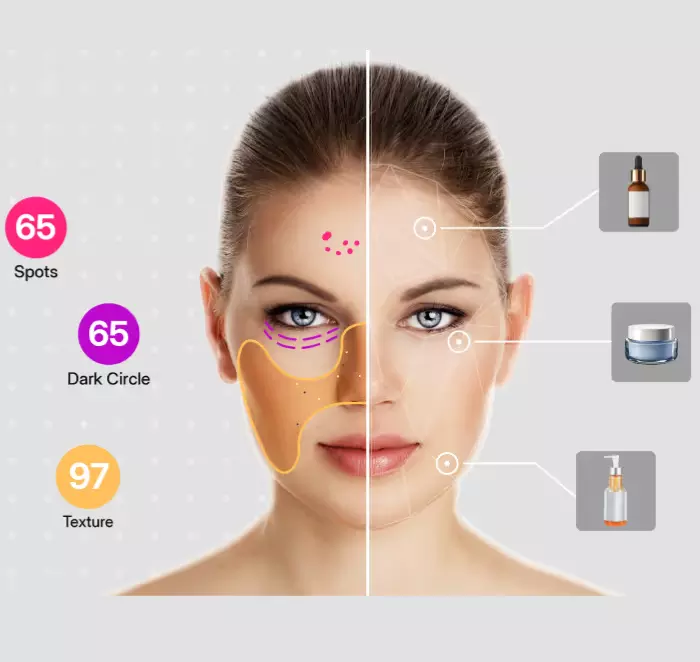

Irregularities in skin textures
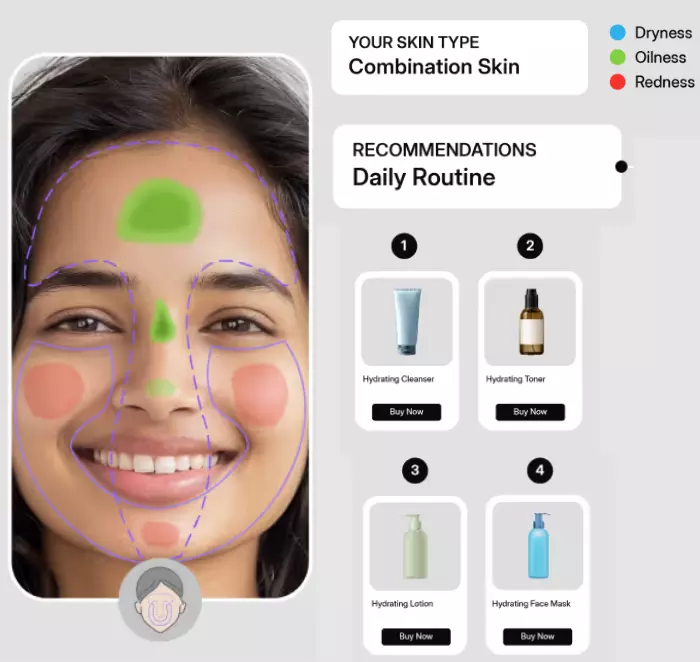
Recommends personalized skincare products
Frequently asked questions
An Al skin analysis for skin elasticity is a digital tool that helps skin care brands to determine and evaluate skin elasticity. It helps brands or individuals to detect skin firmness, skin wrinkle depth, skin sagging area, and skin texture. AI analysis for skin elasticity also helps brands be accurate in their skin analyses and skincare recommendations.
Al skin analysis for skin elasticity thrives on quality uploaded images. Images are uploaded to be scanned for analysis. The AI results can be less accurate if the image uploaded is of lower quality. Images uploaded should not be filtered or blurry. The image recipient also should not be in makeup.
AI skin analysis for skin elasticity is a modern tool that has gone through different tests and, if well prompted, will generate accurate results. However, the level of accuracy varies by skin tone, model available, training dataset and lighting. It has high image resolution analysis and provides reliable cosmetic insight. It helps skincare brands to make informed and precise decisions regarding their customers' skin treatment.
An AI skin analysis for skin elasticity does not just analyze the current result of skin elasticity; it also uses the result to analyze and predict the future trajectory of skin elasticity. It can scan the ageing patterns and visual indicators that can lead to the severity of skin elasticity as time goes on.
Some AI skin analysis tools for skin elasticity can recommend skincare products and give suggestions on treatment methodologies. It can recommend hydrating moisturizers, retinoids, and sunscreens, among others. It recommends personalized skin care products based on the degree of skin elasticity.
An Al skin analysis for skin elasticity can effectively analyze all skin types and tones. But it might not really be consistent with darker skin. Its analysis focuses on skin texture and structure, not skin color. It will also analyse based on the skin texture and structure.
This depends. Some AI skin analysis tools can detect skin wrinkles separately from skin elasticity issues, while some can only detect visual cues or indicators that can result in skin elasticity. Basically, the majority of these tools focus on skin texture, skin volume sagging, contour shift, and pore changes. AI skin analysis for skin elasticity does not estimate wrinkles as elasticity issues.
Instead of the tactile appeal, the skin analysis for skin elasticity focuses on skin texture, lighting, wrinkle patterns, and facial contour shift to measure skin elasticity. It also thrives on quality uploaded images to properly analyze the skin elasticity.
An AI analysis for skin elasticity can detect early loss of elasticity, as it may not be visible to human eyes. Due to high-level detail scanning, early loss of elasticity can easily be detected.
Some AI skin analysis tools can help users save scans locally. Through this, users can compare and contrast both the previous and present scans to determine the progress or changes in skin elasticity as the treatments go on. And some other AI skin analysis enables customers to track the effectiveness of skincare products on the dashboard. Brands can also measure the progress and impact of their service through the Al skin analysis analytics feature.
Discover how AR, VR and 3D can drive revenue growth in 2026
Schedule a call with our team

.avif)