
12 Best AR Ring Try-On SDKs for Jewelry Brands in 2026


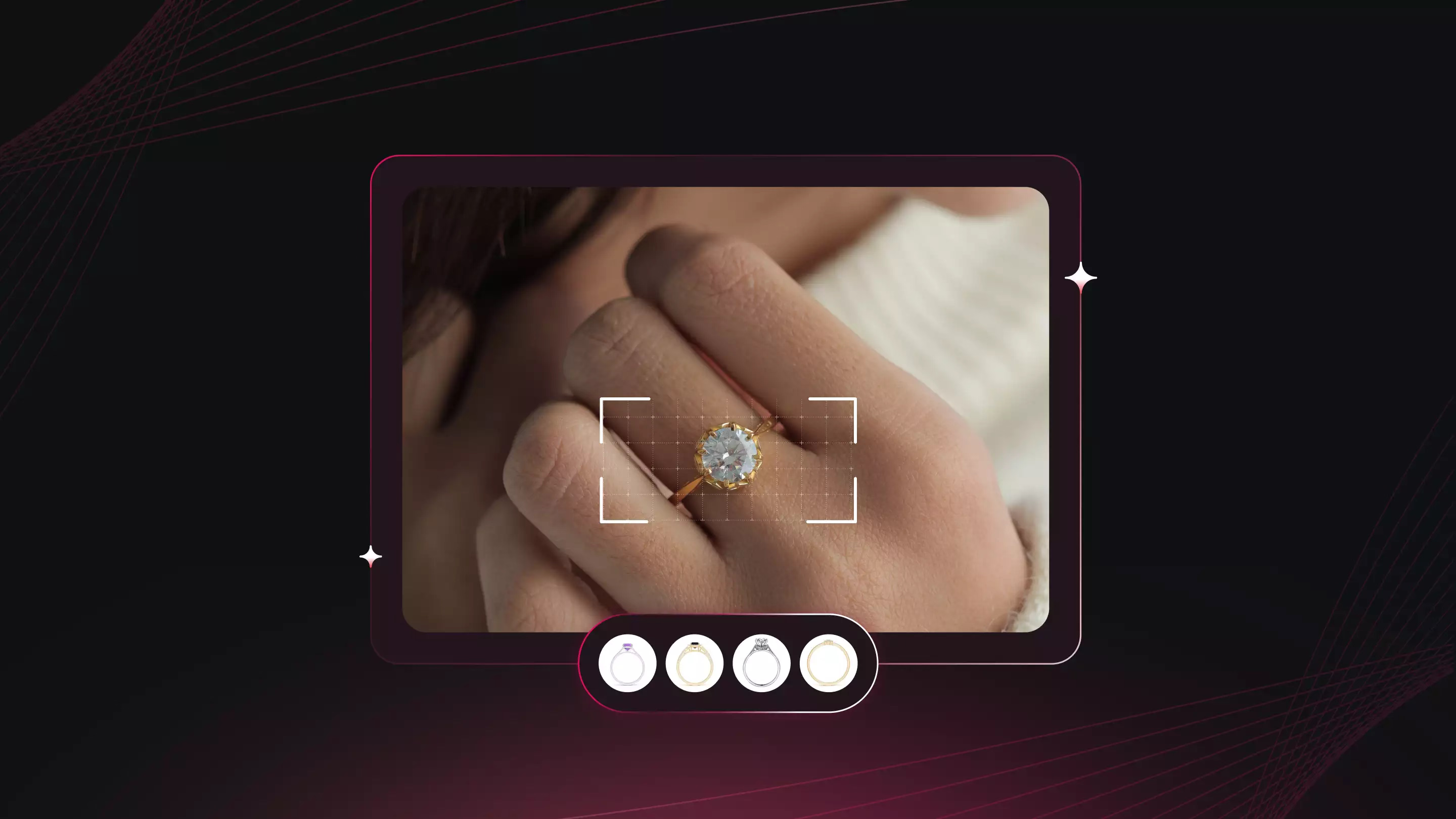
Jewelry brands have 12 AR ring try-on SDKs to evaluate for embedding into an existing website, app, or in-store display. Below is a comparison of each on ring sizing and fit accuracy, hand-tracking quality, integration method, platform support, and pricing, since those five factors determine whether a tool performs reliably on your own catalog rather than how convincing a vendor's demo looks.
Tangiblee, one of the vendors compared below, has published its own data showing jewelry and watch shoppers who engage with its virtual try-on tools converting at 3.8 times the rate of those who don't, with virtual try-on specifically driving a 284.7 percent conversion rate uplift and a 9.74 percent increase in average order value. That figure is a useful benchmark for the mechanism this category is built around, though it reflects one vendor's own client base and should be validated against your own catalog rather than assumed as a universal outcome.
This guide is written for the person deciding which SDK to license for a jewelry brand's own storefront, not for a shopper trying on a ring for their own browsing. The evaluation criteria below reflect what actually determines whether a vendor fits your business, not which one produces the most visually polished demo video, since a ring try-on experience that looks convincing in a controlled showcase can behave very differently once real customers, on real devices, start using it.
What Is AR Ring Try-On, and How Does It Work?
AR ring try-on uses hand detection and tracking to map a 3D ring model onto a customer's own hand in real time, through a live camera feed, an uploaded photo, or a model view, letting a shopper see a specific design at accurate scale before buying. The technical core is hand tracking, identifying finger position, orientation, and size well enough that a ring renders convincingly as the hand moves rather than drifting or floating.
This is a harder tracking problem than it might appear. A hand is smaller than a face, moves more unpredictably, and offers fewer stable reference points, which is why hand-tracking quality varies more between vendors in this category than face-tracking quality does for makeup or eyewear try-on. A brand evaluating this space should treat tracking stability as the first filter, not a secondary feature to check after comparing rendering style.
Beyond tracking, the quality of the underlying 3D ring model matters just as much. A model built to inaccurate proportions will render convincingly in terms of tracking while still misrepresenting the actual product, which is a failure mode worth checking separately from tracking accuracy itself during any vendor evaluation.
Why Sizing and Fit Accuracy Matter Most for Ring Try-On
A ring that looks right in a try-on session but arrives the wrong size produces exactly the kind of return a visualization tool is supposed to prevent. Unlike a bracelet or necklace, where a slightly loose or tight fit is often tolerable, a ring either fits a specific finger circumference or it doesn't, which makes sizing accuracy a more binary, higher-stakes feature in this category than in most other jewelry try-on use cases.
This is also where a pure visualization tool and a combined sizing-and-try-on tool diverge in actual value. A tool that only renders a ring's appearance addresses style uncertainty but leaves sizing unresolved. A tool that pairs try-on with an accurate sizing method addresses both failure modes that drive ring returns, which is worth weighing heavily when comparing the vendors below.
Jewelry ecommerce overall carries a return rate modestly above the general ecommerce average, and sizing issues are commonly cited as a leading driver of that gap specifically for rings. A brand that treats try-on purely as a style-visualization feature, without a genuine sizing component, is addressing only part of the problem that actually drives returns in this category, which is worth keeping in mind while comparing the twelve vendors below on their respective sizing capabilities.
The 12 Best AR Ring Try-On SDKs Compared
The table below reflects each provider's primary positioning based on its own stated features, since several vendors span more than one capability and could reasonably appear under multiple headings.
1. GlamAR
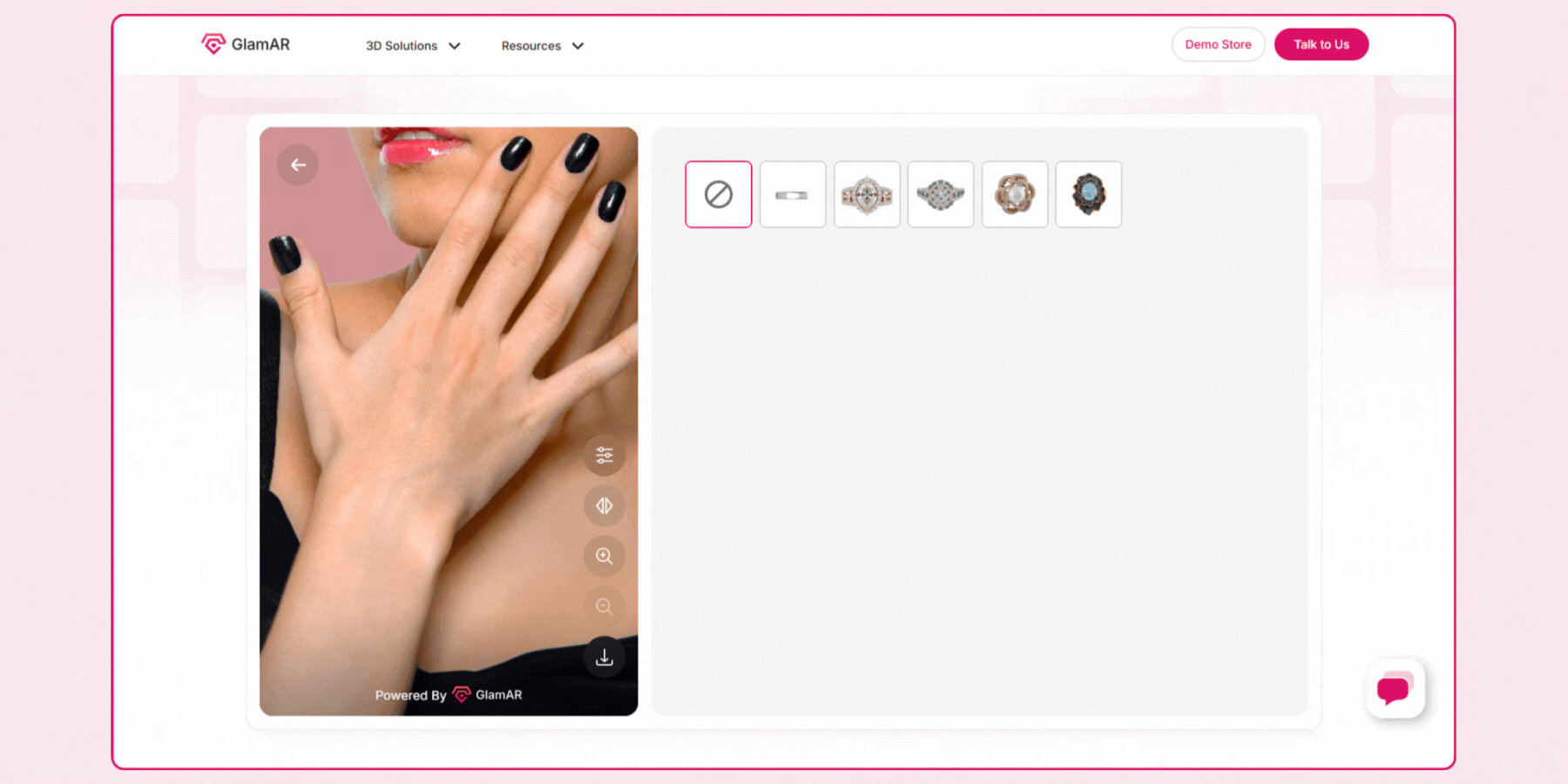
GlamAR's ring try-on SDK lets a customer position a ring precisely on their chosen finger and adjust scale to match their own hand, with a slider-based comparison view and the ability to save a look for later reference. Onboarding follows a three-step flow, uploading your product catalog to the GlamAR console, integrating the SDK into your site or app, and previewing before going live, which typically runs in a matter of days once product assets are ready.
It works across any device with a camera and an internet connection, including web and native mobile, and a GlamAR Flutter SDK is also published and maintained for teams building on that framework specifically. Because the same platform extends to earrings, necklaces, and bracelets, a brand selling across multiple jewelry categories can deploy one vendor relationship rather than separate integrations per product type. Review the ring virtual try-on solution directly for current platform and catalog specifics.
For a brand weighing GlamAR specifically against a single-purpose ring try-on tool, the practical case is this category breadth: a jewelry brand selling multiple accessory types can extend the same vendor relationship, the same catalog pipeline, and the same analytics dashboard across every category it sells rather than managing separate contracts and separate technical integrations per product line.
Features:
- Compatible solution: GlamAR works on websites, Android, and iOS devices. So, you can easily add its AR features to your existing app or web-based platform.
- Ring try-on: Consumers can try on different rings using a photo or live camera mode from their devices. It gives an automatic and accurate ring placement. Besides, customers can manually position and scale the ring on their preferred finger. They can use a slider to compare the look and download it for future use.
- 3D visualization: Using this software solution, you can allow your shoppers to view, rotate, and examine the ring from various angles. With its 3D rendering technology, you can present your products realistically, just like the physical ones. It enhances customers’ confidence in shopping and reduces return rates.


2. Trillion

Trillion is positioned around 3D viewer functionality specifically, letting a shopper examine a ring design from multiple angles rather than focusing purely on hand-based try-on. A brand evaluating Trillion should confirm directly what licensing and integration options are actually available, since public documentation on its commercial terms is less extensive than some other vendors on this list, and request a live demo against your own catalog before assuming feature parity with the more established SDKs here. A 3D viewer alone, without hand-based try-on, addresses product detail and craftsmanship presentation rather than the sizing and fit uncertainty covered earlier in this guide, which is worth factoring into whether it meets your actual goals for the feature.
Features:
- Multi-platform compatibility: It enables your customers to use the virtual try-on option from any device or browser they prefer. It works on mobile devices, laptops, desktops, and tablets.
- 3D viewer: You can present your products from every angle on your ecommerce website. Trillion’s 3D viewer allows consumers to change the position of the ring and experience the 3D model. They can see the real size, shape, and design features of rings through any of their devices.
- Custom solutions: Luxury brands let shoppers customize the features of diamond rings, such as the color and shape of the diamond. They can engrave text on the ring and view it through 3D and AR try-on.
Drawbacks:
- No manual or automatic adjustment tool is available.
- You can try rings only on your ring finger if you get into the website dashboard. It is mandatory to log in with your business email if you want to try rings on other fingers.
3. MirrAR
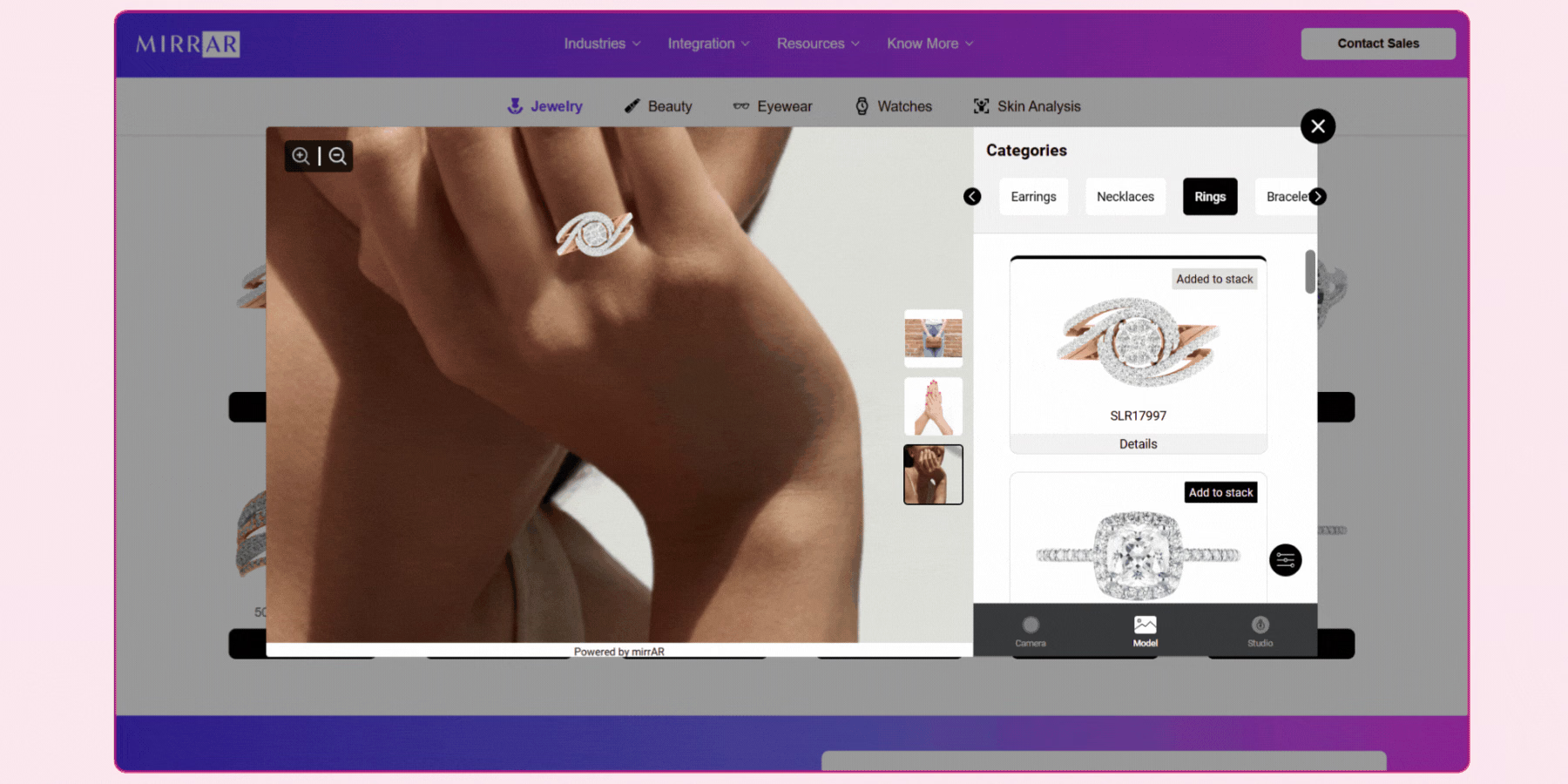
MirrAR delivers ring try-on as a web-based AR experience with no app download required, running across desktop, tablet, and mobile from one integration, and its broader catalog spans rings, necklaces, bracelets, and earrings from the same underlying platform. Its tracking is built around detecting hand landmarks specifically, which is the detail that determines whether a ring renders at the actual joint position a shopper intends to wear it rather than a generic estimated spot.
A brand evaluating MirrAR specifically for accessibility should confirm its device and browser compatibility range directly, since broad accessibility is its stated strength and worth validating against your own traffic's actual device mix. Its multi-category catalog support is also worth noting for a brand wanting one vendor across its full jewelry assortment rather than a ring-only solution.
Features:
- Ring try-on solution: MirrAR allows your customers to try on different rings from anywhere, using the camera of their devices. After trying on, they can save and share the image on social media.
- Accurate outcome: The AR try-on software can accurately detect the anatomical features of a particular body part and offer realistic ring placement with your customer’s finger. Simulated motion physics, rigid body dynamics, and occlusion handling ensure your 3D rings look and move naturally within your branded applications.
- Accessibility: Without installing your company’s app, consumers can access its virtual try-on tools to experiment with how the rings would look on them in real-time. They can use the AR features through every browser or mobile device.
Drawbacks:
- You need to log in with your brand name and work email to try the AR ring try-on demo.
4. Camweara
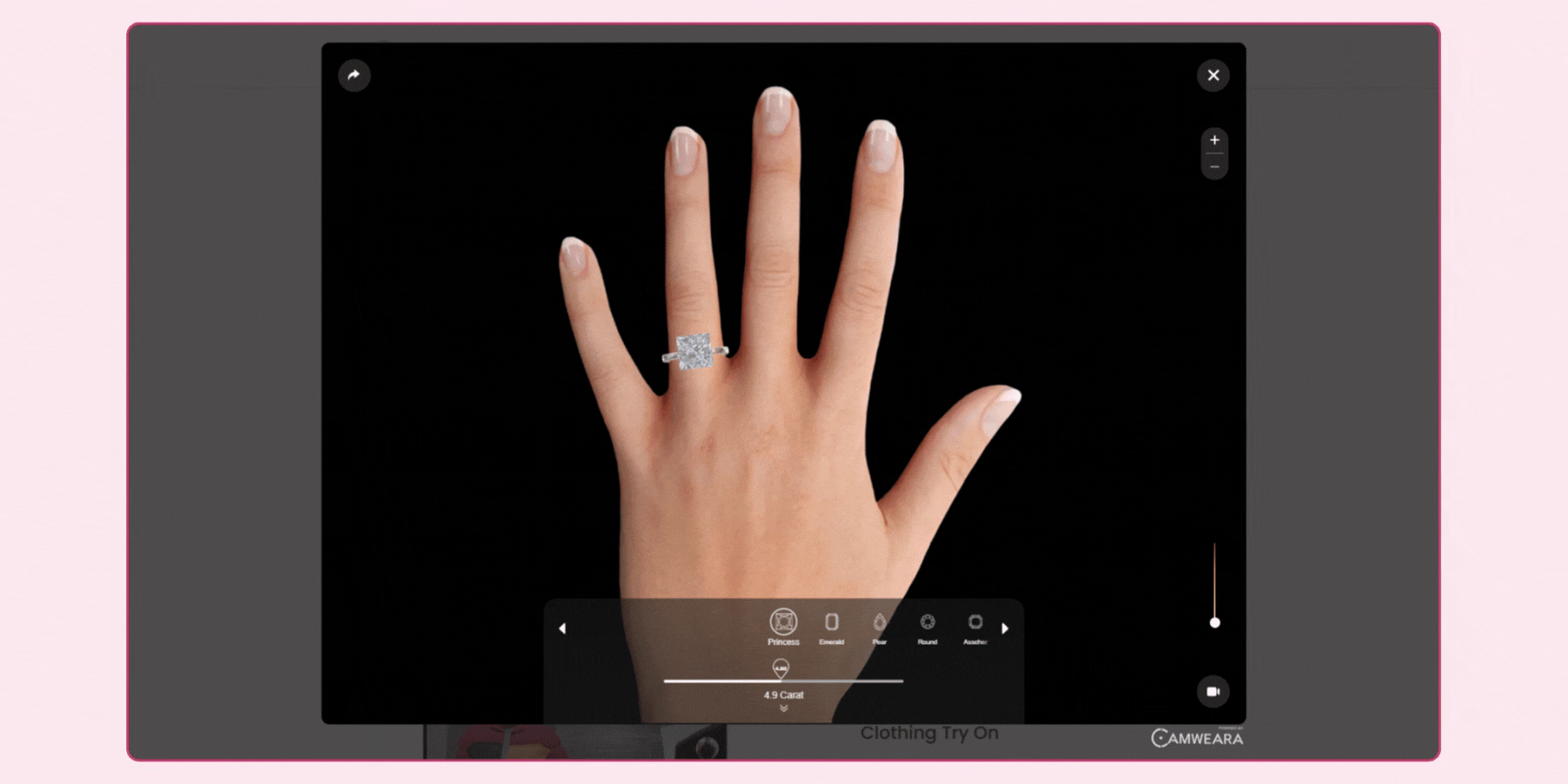
Camweara pairs its try-on experience with a merchandising-facing dashboard, reporting which products get tried on most and where customers drop off, which matters for a brand wanting the feature to inform catalog decisions rather than functioning purely as a customer-facing add-on. Its onboarding dashboard specifically flags catalog items missing a try-on asset, which helps a brand track rollout progress across a large SKU count.
A brand evaluating Camweara should confirm how granular its reporting actually is, basic session counts versus detailed per-product engagement data, since the depth of that reporting layer varies meaningfully across vendors in this category. For a brand needing to build an internal business case for the investment, this analytics depth can matter as much as the try-on rendering itself, since it's what lets a merchandising team demonstrate the feature's actual impact rather than treating it as a purely cosmetic addition.
Features:
- Dashboard assistance: Unlike many other platforms, Camweara's dashboard helps brand owners track the impact of VTO on their sales. Using its in-depth analytics, you can get to know the number of users, button clicks, and top-tried products.
- Accuracy: Camweara ensures precise accuracy in try-on results for Android and iOS devices, under both day and night lighting conditions.
- Ring try-on: Online shoppers can test and try rings on a live video. Otherwise, they can upload a photo to experience if the ring suits them. Consumers can flip through their fingers to try on a ring on each finger.
Drawbacks:
- You can avail yourself of a custom subscription plan from Camweara based on the app or website traffic of your enterprise.
5. Makeup AR by Perfect Corp
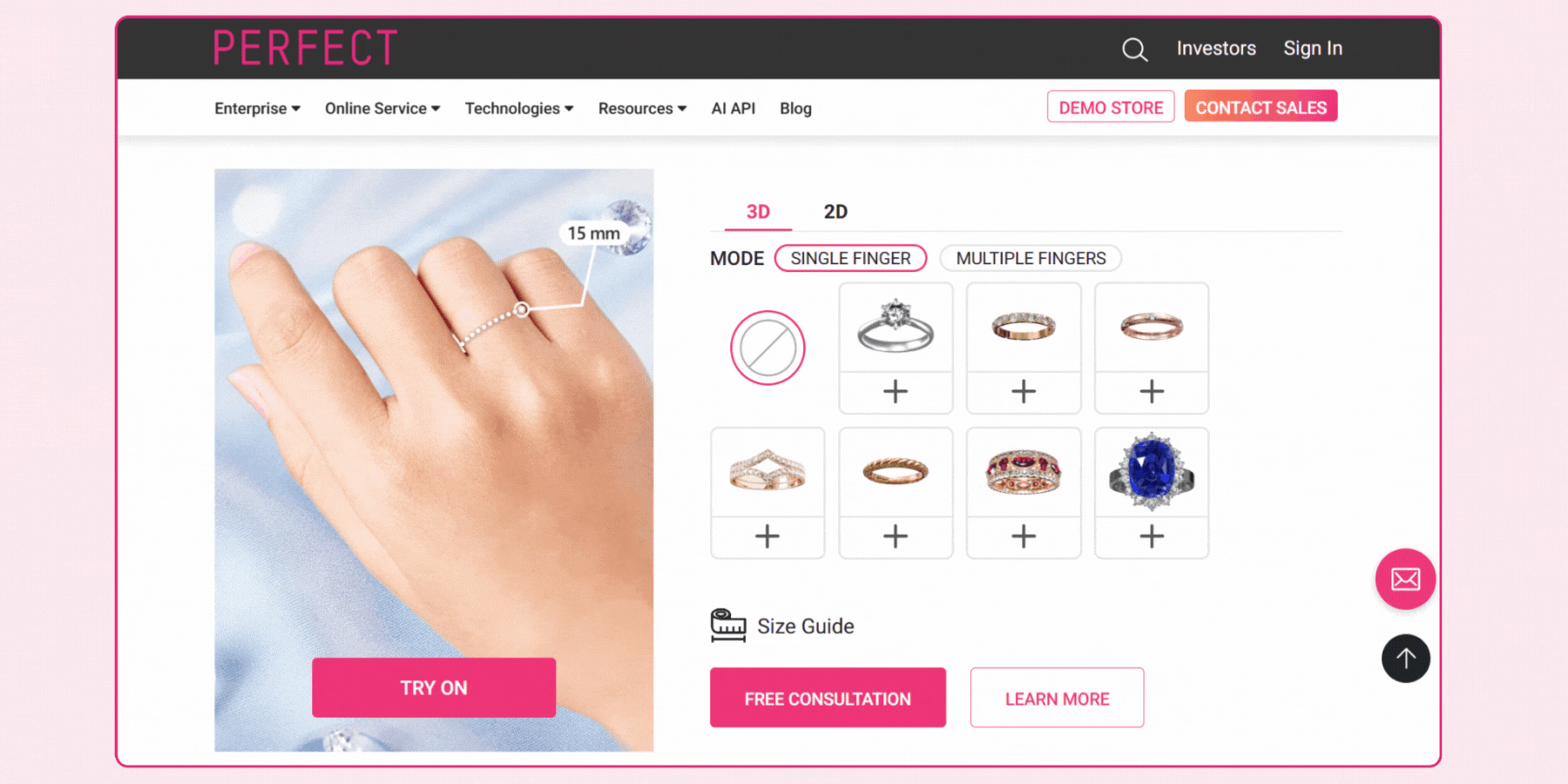
Perfect Corp's ring try-on includes an online sizing tool alongside multi-finger try-on, letting a shopper compare a design across different fingers in one session rather than a single fixed placement. This combination of sizing and visualization addresses both failure modes covered earlier in this guide, style uncertainty and fit uncertainty, from one integrated flow.
Perfect Corp's broader footprint across beauty and fashion technology is a reasonable signal of platform maturity, though its enterprise-oriented sales process is worth factoring into your evaluation timeline if your brand is smaller than its typical flagship clients. A smaller brand should confirm pricing scales down proportionally rather than assuming its enterprise feature set comes only at an enterprise-level cost.
Features:
- Ring try-on in 3D: Customers can use their phone’s camera to try on single or multi-finger rings in 3D or 2D. They can test various styles and designs of rings to mix and match with other accessories to create a customized look.
- Online ring sizer: It is an accurate and convenient ring measurement tool. Let your shoppers use it to measure their rings and the size of their fingers without a measuring tape. Thus, they will get a perfect fit for their rings. It will help them shop online with confidence and reduce the tendency to return.
- Auto-detection technology: It can detect the right ring size for the consumer’s particular finger automatically and give a real-time experience. Most AR platforms don’t provide this advanced feature for engagement ring try-ons.
Drawbacks:
- The ring size conversion table does not cover every country’s sizing standard.
6. TINT by Banuba
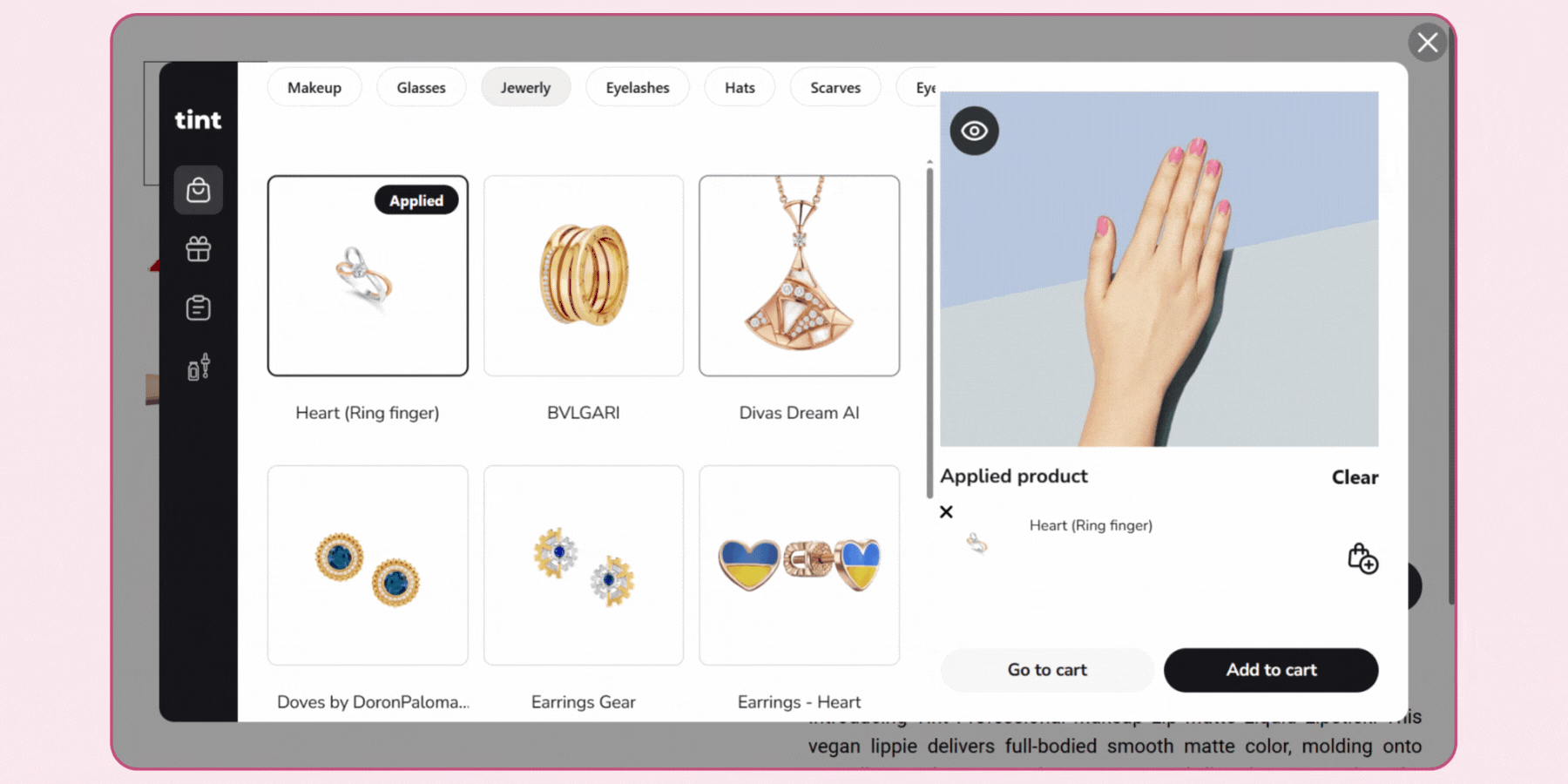
TINT focuses specifically on hand-tracking technology, Banuba's core strength across its broader AR portfolio, with tracking built to stay stable through natural hand movement and a range of lighting conditions. For a brand prioritizing tracking stability above all else, since a ring that drifts or jitters undermines trust in the entire feature, TINT's narrower focus on getting this one technical piece right is worth weighing against a broader but potentially less specialized competitor.
Licensing is tiered by usage and customization scope, and a brand should confirm branding and interface customization options directly, since these vary by plan. Banuba's broader track record across other AR categories, including beauty and video effects, is also worth weighing as a general indicator of production maturity, even though TINT itself is the specific product relevant to ring try-on.
Features:
- Hand tracking in 3D: It automatically and accurately detects and captures hand movements in 3D. The technology effectively works in different lighting conditions. It can recognize male and female hands, as well as right and left hands. Consumers can control it with hand gestures. It ensures accuracy in ring fitting.
- Realistic ring try-on: Your customers can try on rings using your phone or desktop camera. The rings look real and move with their hands, so it feels like you are wearing them. It offers a fun and interactive experience that allows you to see how different rings look on you in real-time.
- Omnichannel platform: You can use the ring try-on on various platforms, including your phone, a Mac or Windows computer, websites, and Unity apps.
Drawbacks:
- You need to log in with your business email to get the free trial.
7. Kivisense
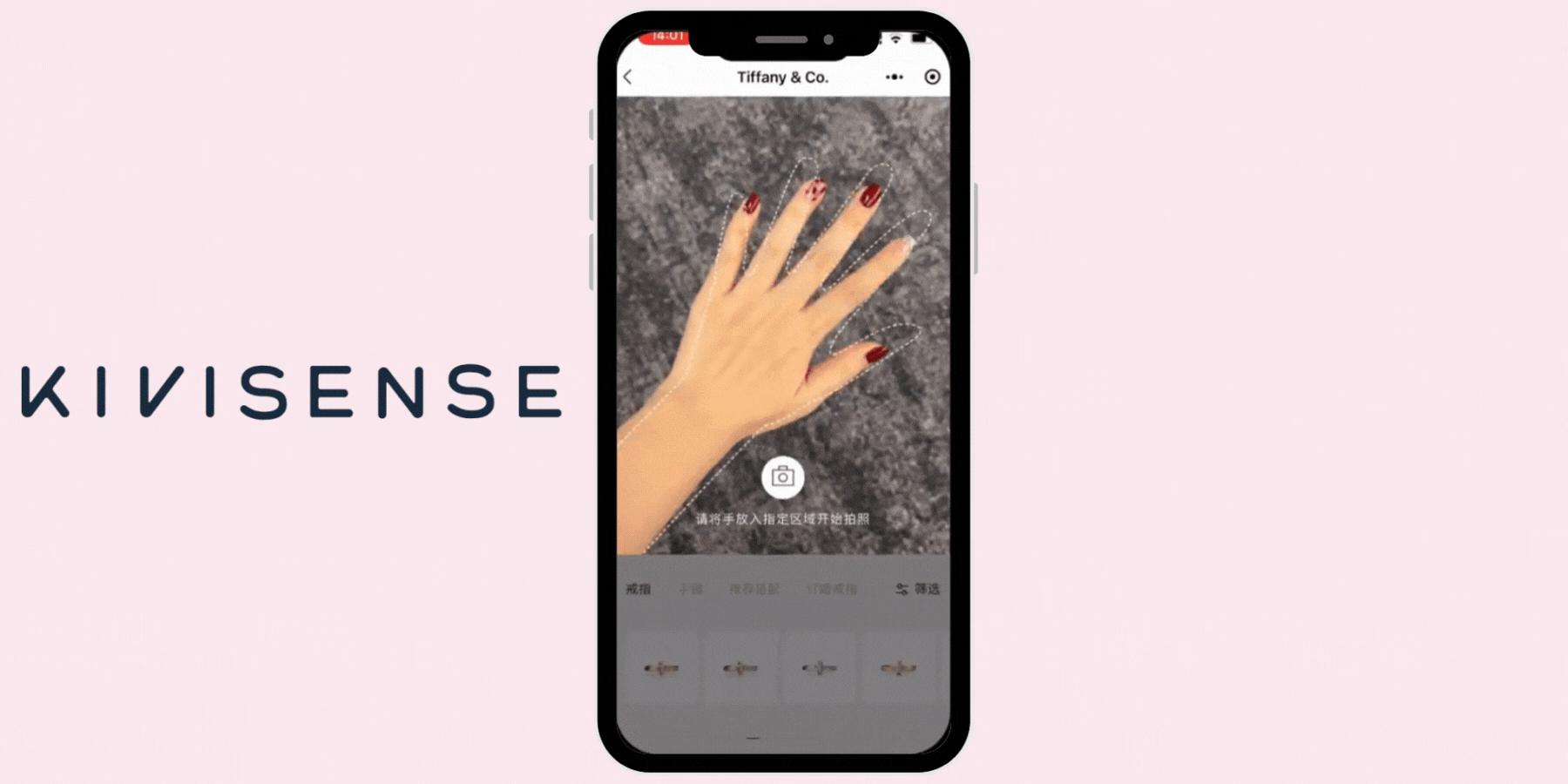
Kivisense combines web and mobile try-on with a physical AR smart mirror product, aimed at a jewelry brand wanting consistent try-on technology across both an ecommerce site and physical retail locations rather than treating the two as separate systems. For a brand with a retail footprint specifically, confirming how catalog data syncs between the online and in-store versions is worth doing directly, since separate systems requiring duplicate SKU management undercut much of the operational benefit an omnichannel platform is meant to provide.
Its physical hardware component also introduces a different evaluation dimension than the purely software vendors on this list, since a brand needs to budget for in-store installation and maintenance alongside the usual software licensing considerations.
Features:
- Cross-platform try-on: It operates on any camera-equipped device, including desktops, mobile devices, and tablets. Your customers can try rings from their mobile or web platforms.
- 3D solutions: Your customers can experience a real-time effect with advanced 3D solutions for gems. It can simulate real-world lighting, material reflections, and complex details of every gem. AR ring try-on can adapt in real-time to the consumer’s movements and provide an accurate outcome.
- AR try-on mirror: AR in-store try-on mirror can capture the genuine measurements of different body parts of your customer. Using it, you can showcase diverse designs of rings without stuffing your inventory. It ensures that no customer is disappointed by product shortages.
Drawbacks:
- You need to request and fill out the form to receive a free demo.
8. Keyideas
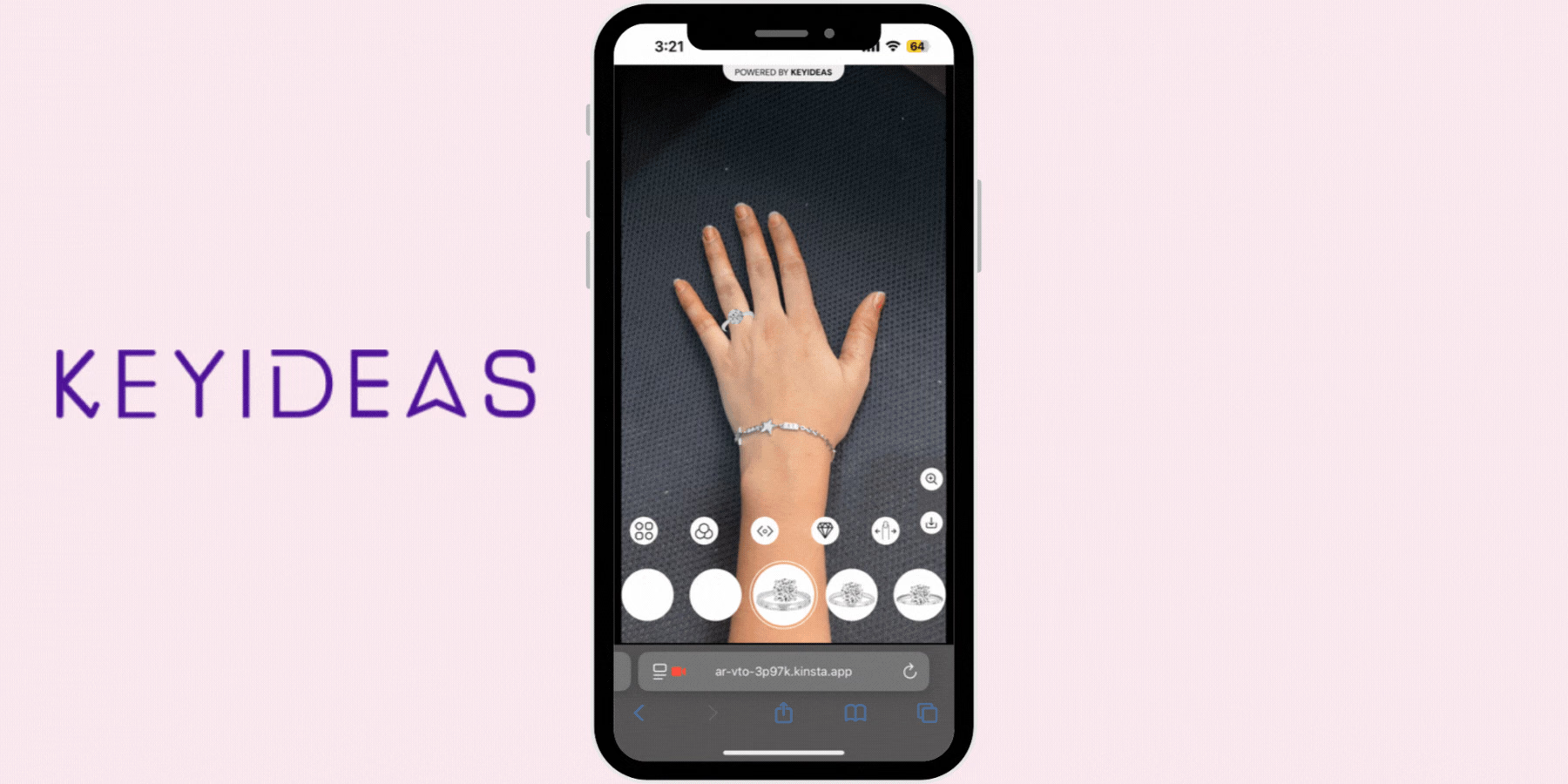
Keyideas operates more as a custom development partner than a packaged, off-the-shelf SDK, building tailored try-on solutions to a brand's specific requirements rather than offering a standard, self-service integration path. This is worth understanding clearly before evaluation, since a custom build generally means a longer timeline and higher upfront cost than licensing an existing SDK, in exchange for more tailored functionality than a standardized product typically offers. A brand with a genuinely unusual requirement, not well served by any standardized SDK on this list, is the clearest candidate for this kind of custom development path.
Features:
- AR ring try-on in 3D: Online shoppers can try rings and check how they would look if they use this software for e-commerce. The technology ensures the accurate placement of rings on fingers and follows hand movements while trying them on. After testing and trying, consumers can download the image for future purchase.
- Customized shopping solution: Your customers can choose between wedding and engagement diamond rings while trying them on. They even select the diamond shape and carat size during the experimentation. They can also place rings automatically on any finger except the thumb.
- User-friendly software: Unlike other software SDKs, it is easy to use and compatible with all desktop and mobile devices. Jewelry brand owners can easily add this to their e-commerce platform.
Drawbacks:
- Its finger-specific ring try-on is limited to four fingers, excluding the thumb.
9. Plushvie
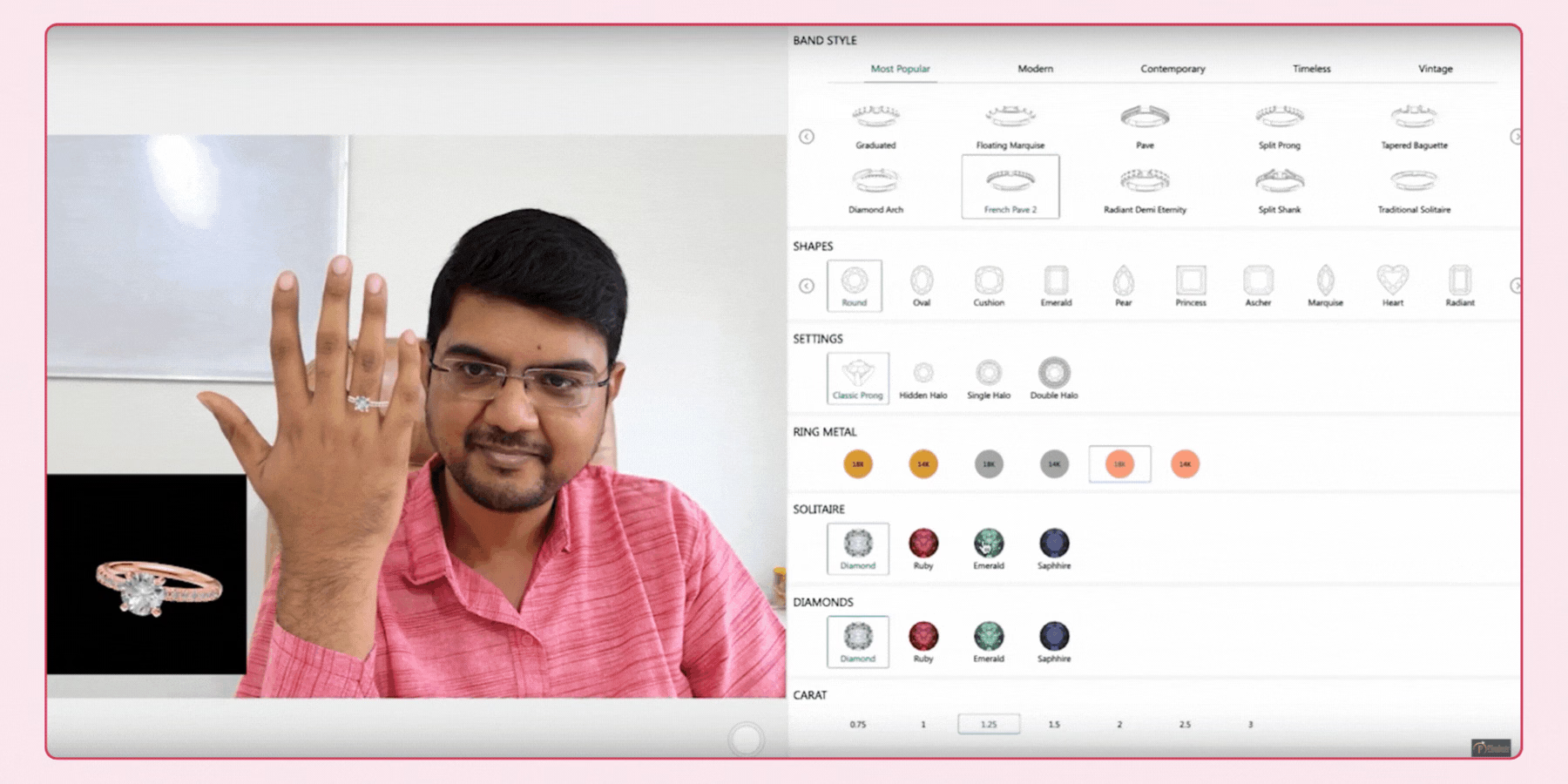
Plushvie focuses on high-fidelity rendering aimed specifically at luxury jewelry brands, where material and finish accuracy, how a specific metal or stone catches light, carries more weight in the purchase decision than it does for a lower-price fashion jewelry line. A brand in the luxury segment specifically should request a demo against its own most detail-heavy pieces before assuming a general demo catalog represents how the platform will handle its specific materials. The cost of achieving this level of rendering fidelity is also worth confirming upfront, since higher-fidelity rendering generally carries a corresponding premium over a more generic, lower-detail try-on experience.
Features:
- Ring try-on solution: Let your online shoppers try on a wide range of rings in real-time. They can compare two rings to select the one that suits them best. They can adjust the rings on their fingers and get the right fit instantly.
- Real-time hand tracking: With AI technology, this software can accurately track hand movements in real-time. Also, it can adapt to any rotation of hands in 3D space with accuracy and speed efficiency.
- AR video conferencing: It allows you to connect with your global customers with jitter-free AR video conferencing. Now, they can experience your products from anywhere in the world.
Drawbacks:
- You need to book a slot on the calendar for a free demo try-on. According to their available time slot, you can schedule a call via PlushMeet.
10. YITEC
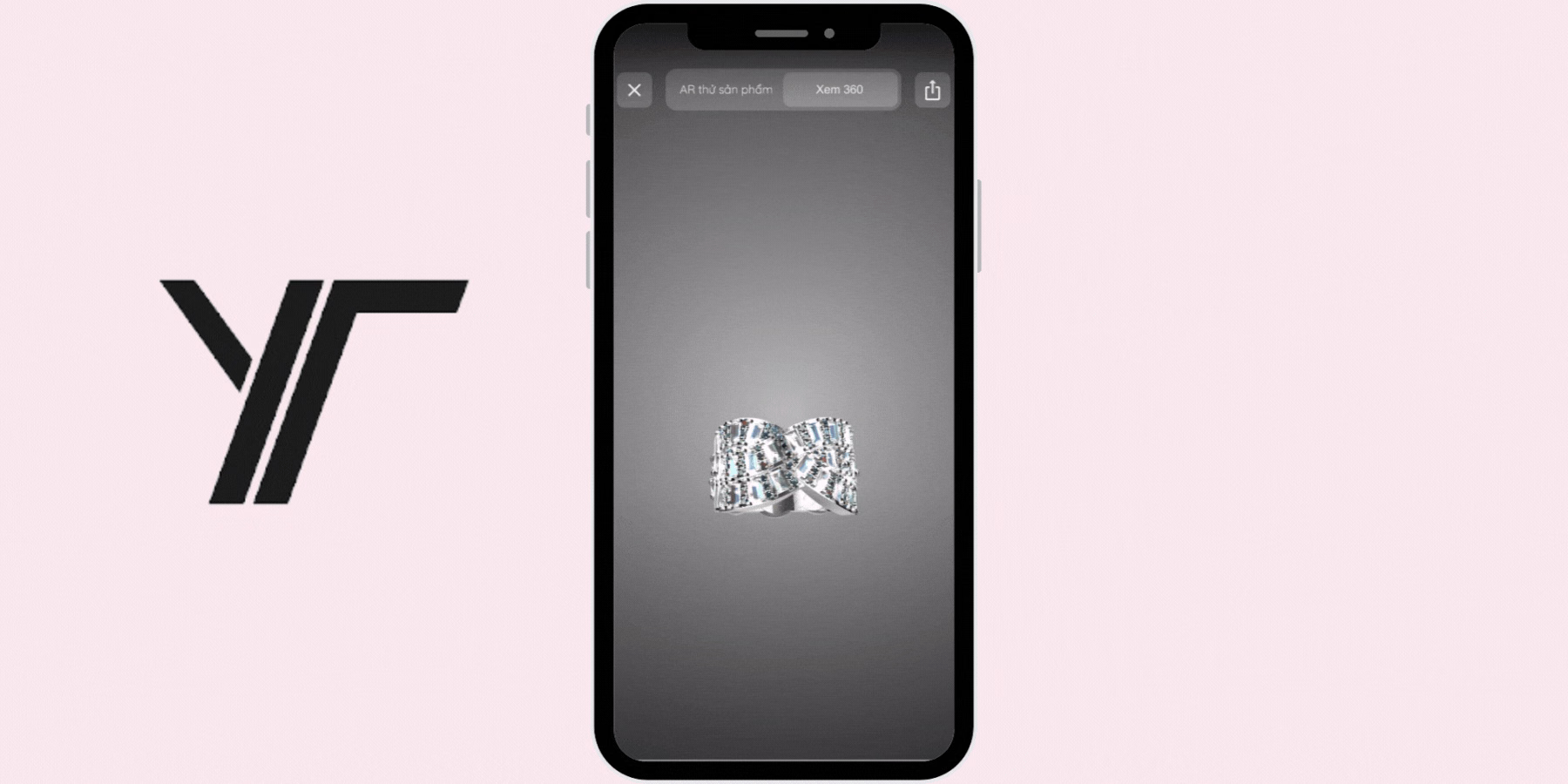
YITEC is positioned around 3D try-on capability, and as with Trillion, a brand should request specifics on licensing terms, integration method, and platform support directly during evaluation, since detailed public documentation is less extensive than some of the more established vendors on this list. A direct demo against your own catalog is the most reliable way to evaluate this vendor fairly rather than relying on limited public material alone.
Features:
- Ring try-on: Jewelry retailers offer AR experiences to their online shoppers, using the software. Customers can now try on a variety of rings from the comfort of home without visiting physical stores. They can see the rings in 3D through their smartphone cameras.
- Hand-tracking technology: Creating a custom math algorithm, YITEC ensures smooth hand movement tracking. It will display the ring on the finger accurately with 3D rotation.
- 3D engine: As a 3D development framework, Unity allows YITEC to create multi-platform 3D mobile applications.
Drawbacks:
- It is exclusively designed for iOS versions. Android and other devices can’t access its AR solutions.
11. Vossle
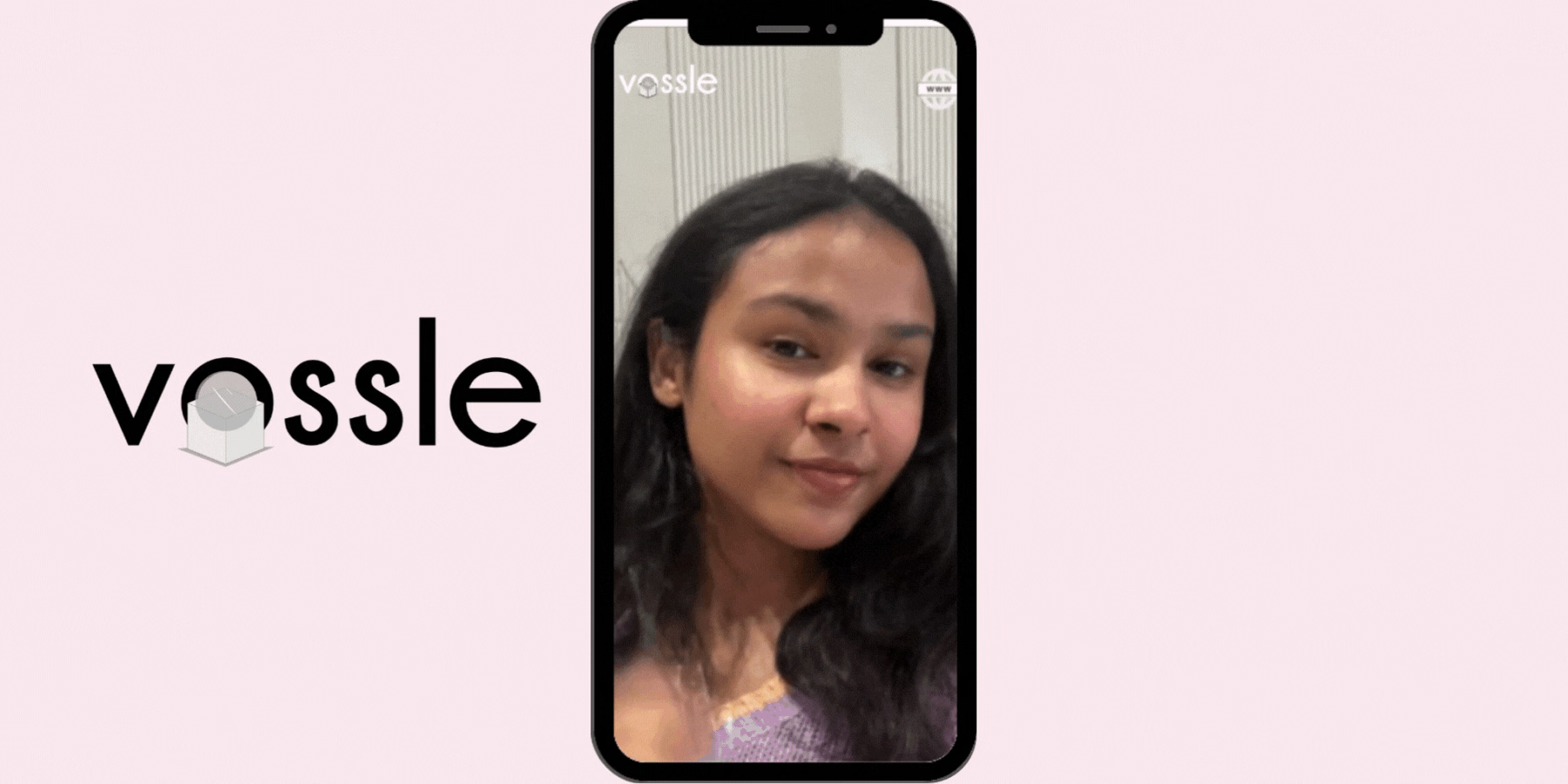
Vossle is a no-code, browser-based WebAR platform, letting a brand build an AR try-on experience without requiring a customer to install a separate app and without necessarily requiring deep in-house development resources to configure. This no-code positioning is a genuine advantage for a smaller brand without dedicated engineering capacity, though a brand wanting deep custom behavior beyond the platform's configuration options should confirm those limits directly before assuming full flexibility. A no-code platform generally trades some depth of customization for a faster, lower-cost path to launch, which is a reasonable tradeoff for a brand prioritizing speed over a fully bespoke experience.
Features:
- Inline AR: It lets you integrate AR experiences directly into your business website. It will allow your customers to use it straight from your website without taking any further steps like installing apps or scanning QR codes.
- 3D try-on: It offers try-on solutions for luxury jewelry products, such as engagement rings. Your customers can visualize and experience digital trials of rings with real-time effects. For this, you need to upload 3D models of rings in GLB format, and the software will create AR-based ring try-on experiences.
- Customized solution: Consumers will get expert recommendations according to their personal style and preferences. Since the software supports factors like aesthetic designs, gemstone size and cut, metal type, etc, your customers can choose unique rings, complementing their personality.
Drawbacks:
- Virtual ring try-on is accessible only through a smartphone or tablet.
- You need to sign up to get its AR solutions for your business.
- Not all premium features are available in the free plan of Vossle.
12. Tangiblee
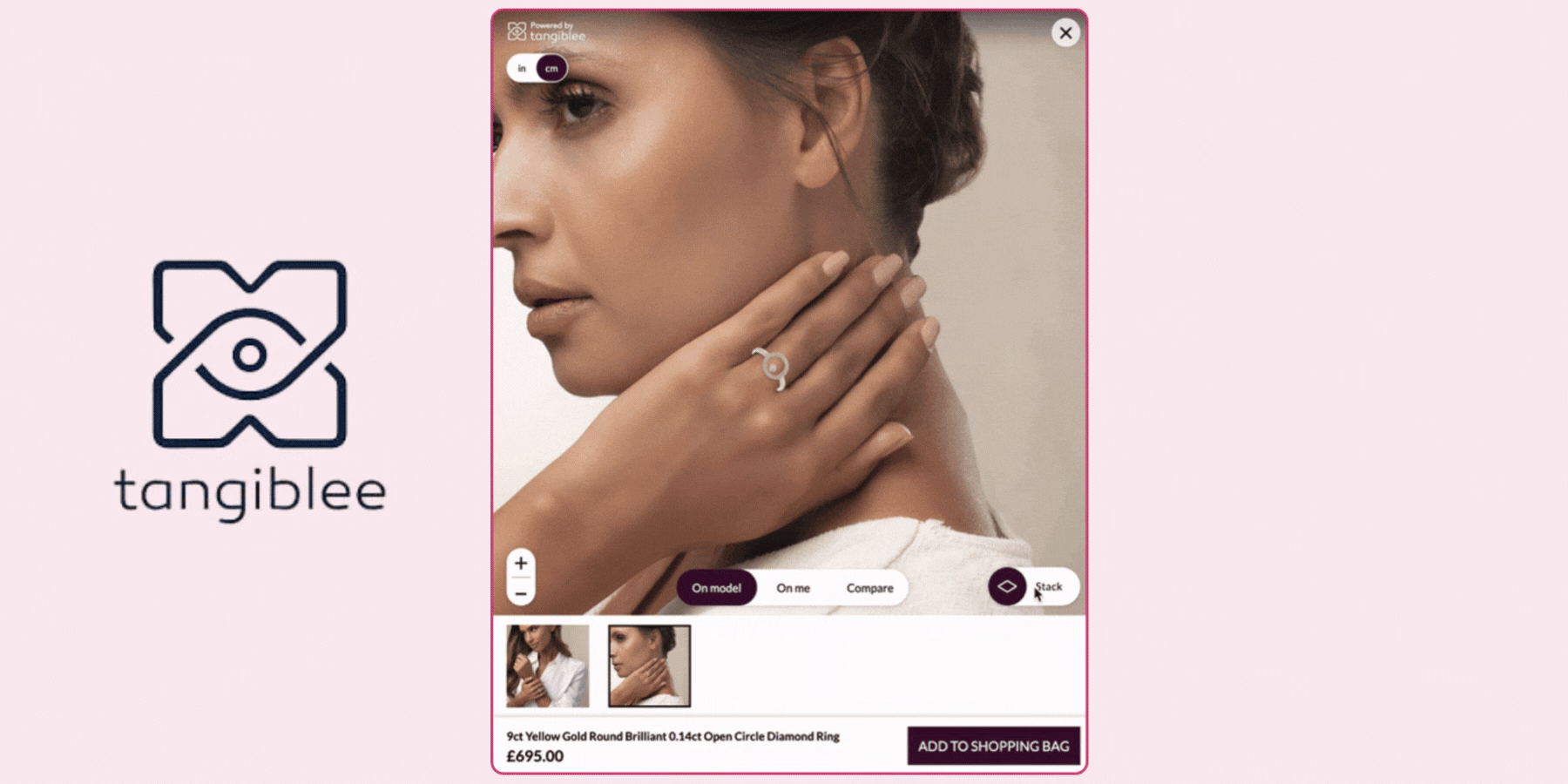
Tangiblee supports multi-product stacking, letting a shopper combine a ring with other pieces, a bracelet or a second ring, in one try-on view, which is a useful feature for a brand wanting to encourage a multi-item purchase rather than a single SKU sale. Its published conversion data, cited earlier in this guide, is specific to its own jewelry and watch clients and is worth treating as a benchmark to validate against your own catalog rather than a guaranteed outcome. Its willingness to publish detailed, specific performance figures, rather than vague marketing claims, is itself worth noting as a positive signal when comparing vendor transparency across this list.
Features:
- Ring try-on solution: Tangiblee allows online shoppers to take a 4-second recording to view and try on your entire collection of rings in real-time 3D. The hands-free experience lets them zoom, swap SKUs, and share their try-on experience with others. They can also build their own ring stack, then try it on and add it to the cart for purchase.
- Cross-device try-on: Using this software, jewelry retailers can allow their shoppers to take a photo on their phone and have it auto-sync to a desktop for an interactive and personalized shopping experience.
- Multi-category stacking: It offers jewelry stacking through which shoppers can view multiple rings on their fingers. They can move them around to find an ideal placement and combination. It promotes cross-selling by providing consumers a scope to purchase multiple products within one experience.
Drawbacks:
- You need to submit a form to get a 15-minute live demo of Tangiblee’s AR try-on.
- Its multi-SKU bundling option is only supported by Salesforce and Shopify e-commerce platforms.

Other platforms that you can explore
Apart from the best 12 AR ring try-on software SDK, there are many other solutions that I could conceivably test. So, I have rounded up some of the popular software SDKs that didn’t quite fit my list but are worth looking at.
- Quytech: It is a B2B e-commerce app development company that provides solutions for businesses. It offers customized AR try-on solutions for your customers, allowing them to try on rings or other jewelry from anywhere. This AR application allows me to select rings based on their metal type, size, shape, carat, setting, and other features.
- Textronics: It is a leading software solution provider for retailers. Its ‘Try On’ technology allows shoppers to select and try on rings and other jewelry items from the comfort of their own space. This software solution is easily integrated into your online platform. I have experienced a device-friendly try-on session and received real-time visualization of the rings.
- Queppelin: It is an AI-based try-on platform. Queppelin offers easy-to-use try-on experiences for online shoppers with a single scan. Jewelry brand owners can add this AR solution to their platform with an AR plugin or other options. I found both options: app-based and web-based AR for real-time 3D ring try-on.
- Zakeke: This AI tool is designed for e-commerce. It transforms static jewelry products into realistic ones with the help of 3D, AR, and VTO solutions. I have experimented with its AR ring try-on solutions without installing any apps. It offers real-time 3D models with accurate virtual try-on fitting on a live video.
Popular brands that are using the AR Ring Try-on Software SDK
The AR software market is blooming day by day. Numerous jewellery companies have integrated with AR try-on to enable better customer experience strategies. Here, I have shortlisted some jewelry brands that have adopted and used AR Ring try-on for their business:
1. Candere
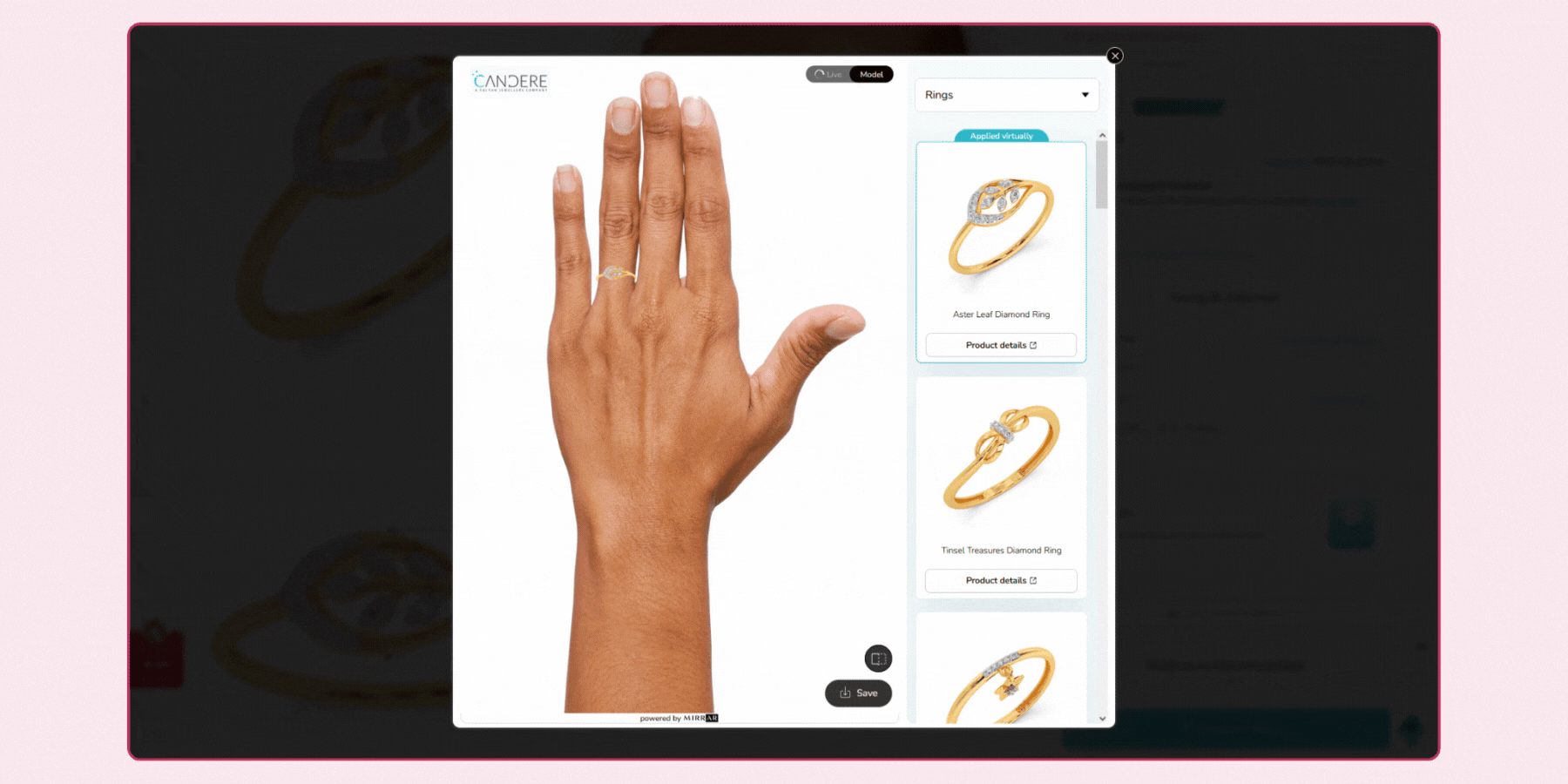
Candere by Kalyan Jewellers has launched AR try-on for jewelry. The Virtual Try-on feature enables customers to try on different jewellery pieces. They can view a variety of rings with a simple click on the camera icon.
The realistic visualization of rings helps them make informed purchasing decisions. I have noticed that this try-on feature works actively 24/7. Additionally, the feature of sharing try-on images enables them to receive feedback from their family and friends.
2. PRMAL
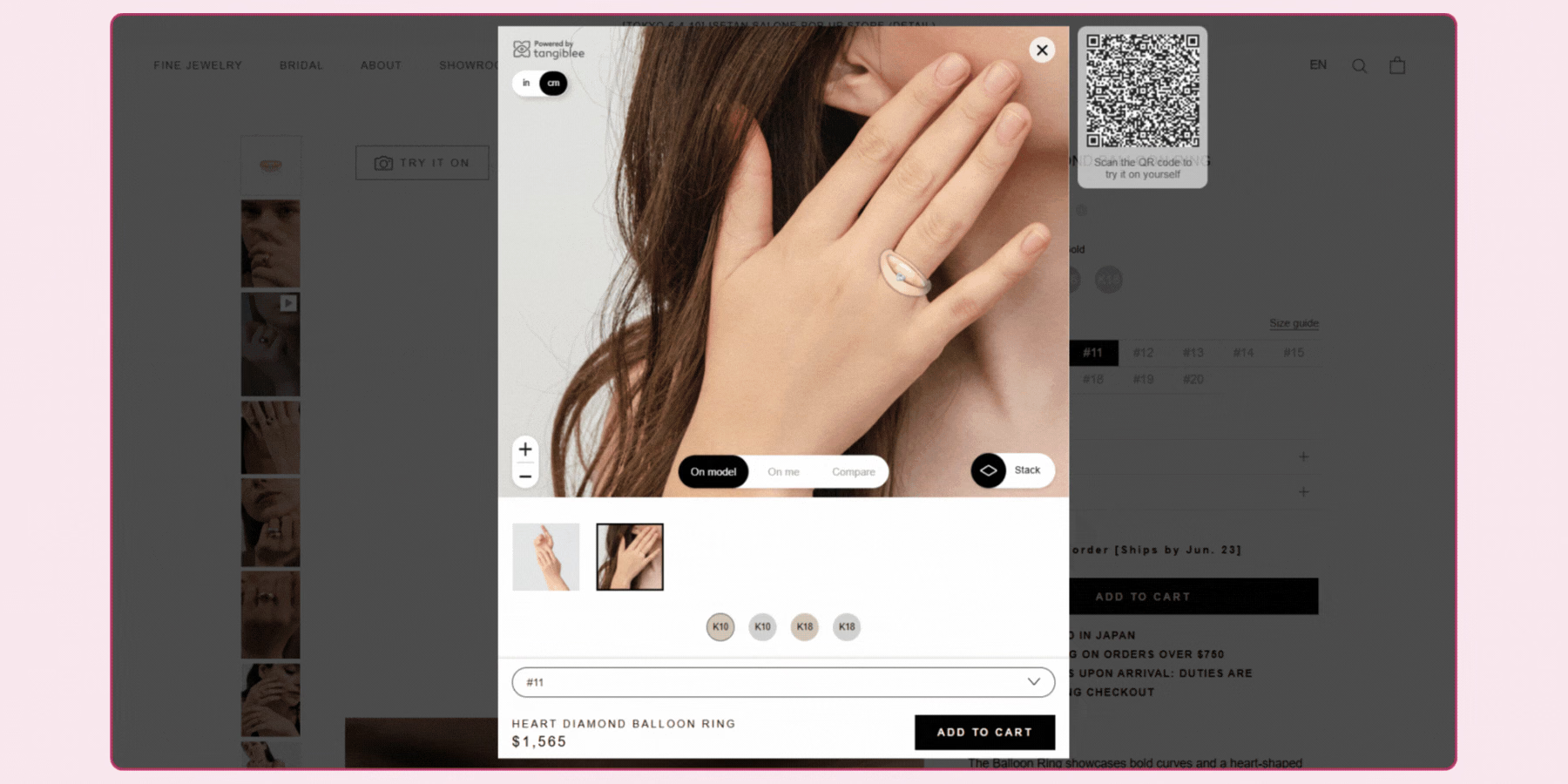
PRMAL, a Japan-based jewelry brand, has started to use MirrAR’s virtual-try-on solution as a part of its e-commerce business strategy. PRMAL’s virtual try-on model features ‘Try on Model’, ‘Try on Yourself’, and ‘Compare Size.’
These features enable switching between ‘Single’ and ‘Stack’ modes to coordinate several pieces of rings and other jewelry items. Shoppers can make informed decisions before buying products by comparing the size of rings with real-world objects. Most importantly, these features are mobile-optimized.
3. Tasaki
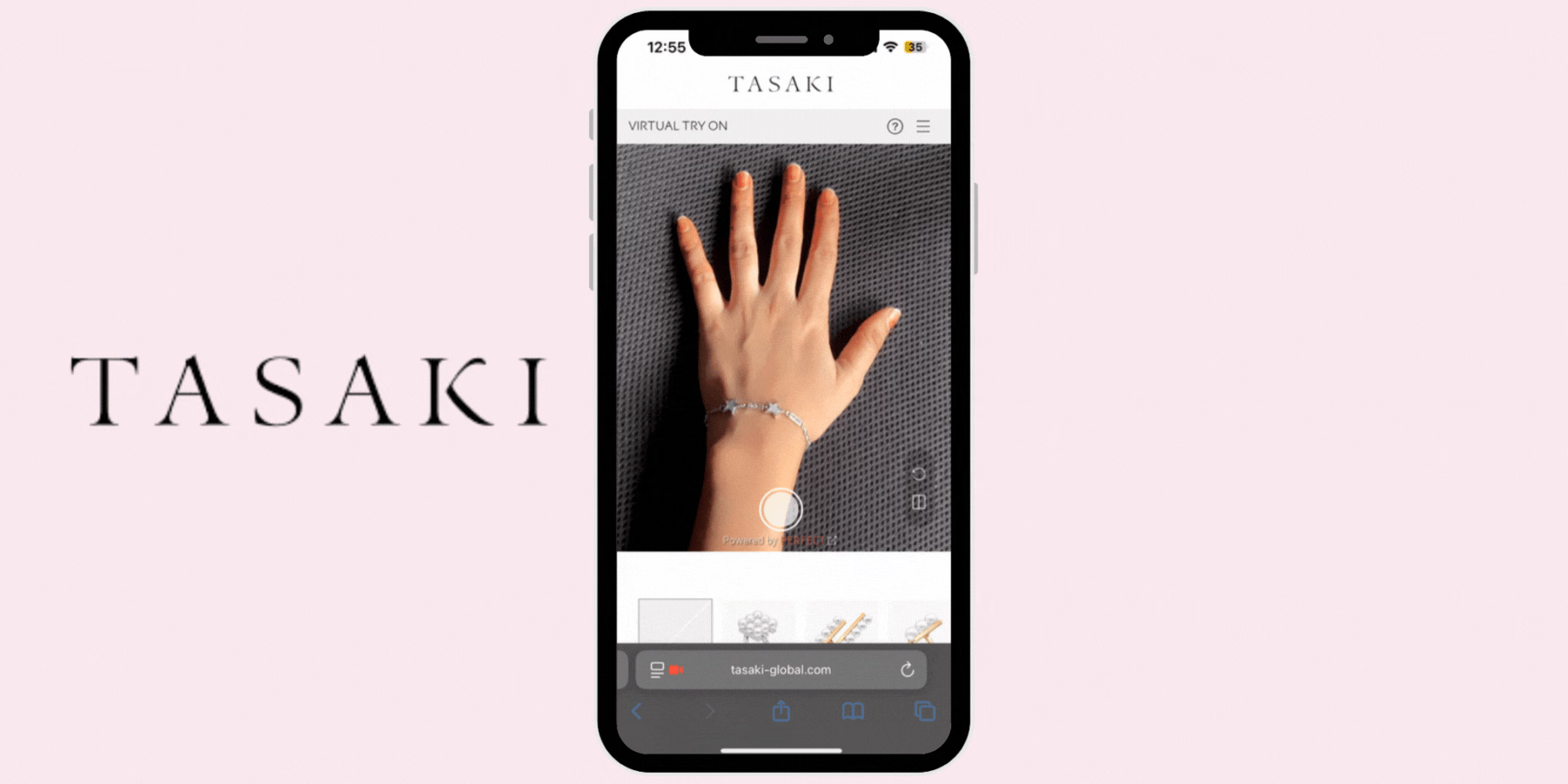
Tasaki, a renowned jewelry merchandiser, has adopted Perfect Corp’s AR Ring try-on technology. It enables their brand’s offering to tech-savvy customers. It instantly activates device cameras on the product page to try on rings. The realistic 3D technology provides a dynamic try-on experience that responds to hand movement and lighting effects.
4. Swarovski
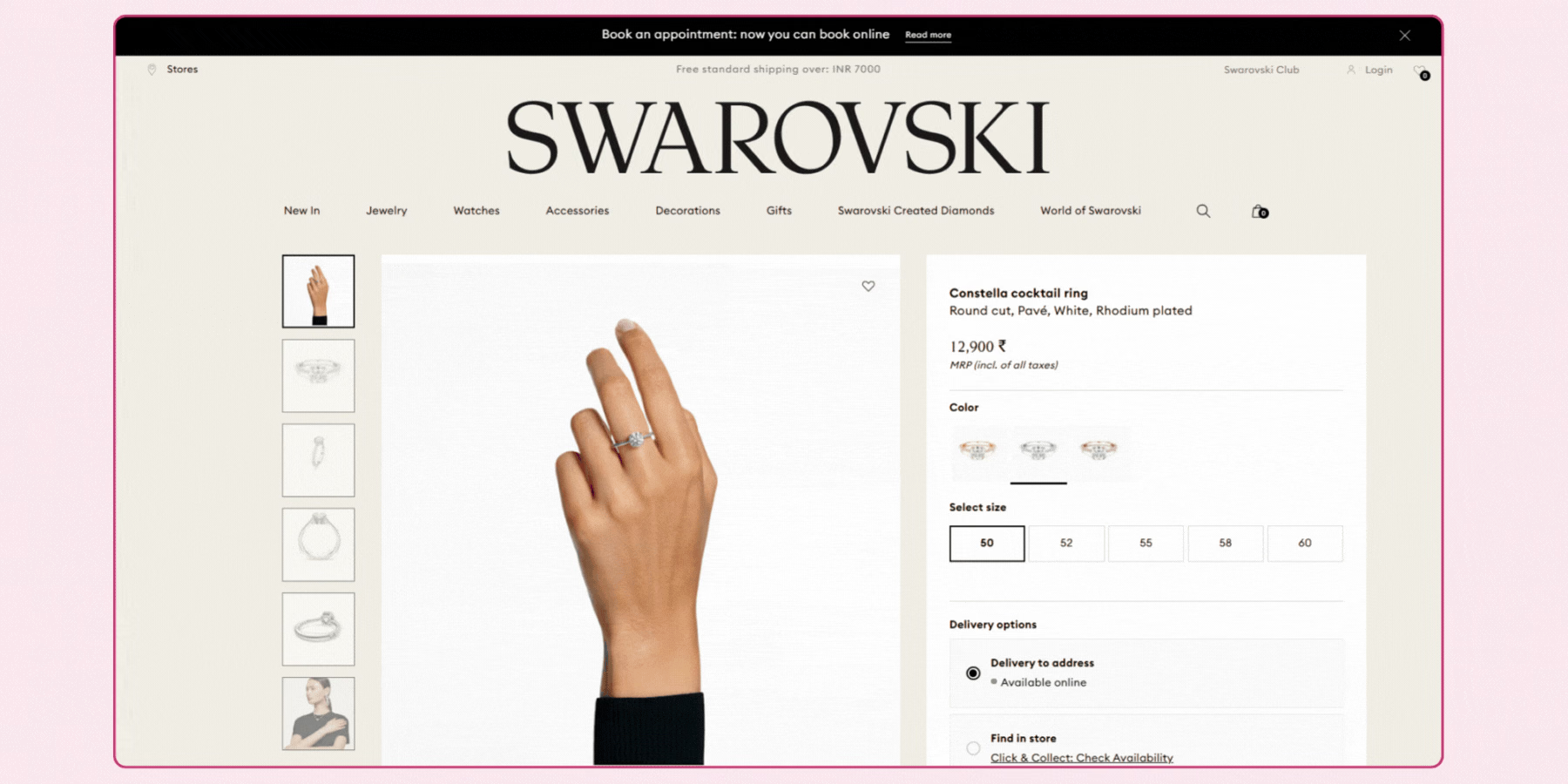
Swarovski has advanced the virtual shopping experience through the easy integration of AR technology in their e-commerce site and physical stores. Basically, it targets young women with mobile-friendly AR try-on solutions.
Such a tech-driven shopping experience has enhanced operational efficiency and brand loyalty. It allows customers to view rings from different angles. Getting close-ups and exploring the displayed items is now easier on this platform. You need to check for the features through Swarovski’s try-on.
5. Cartier
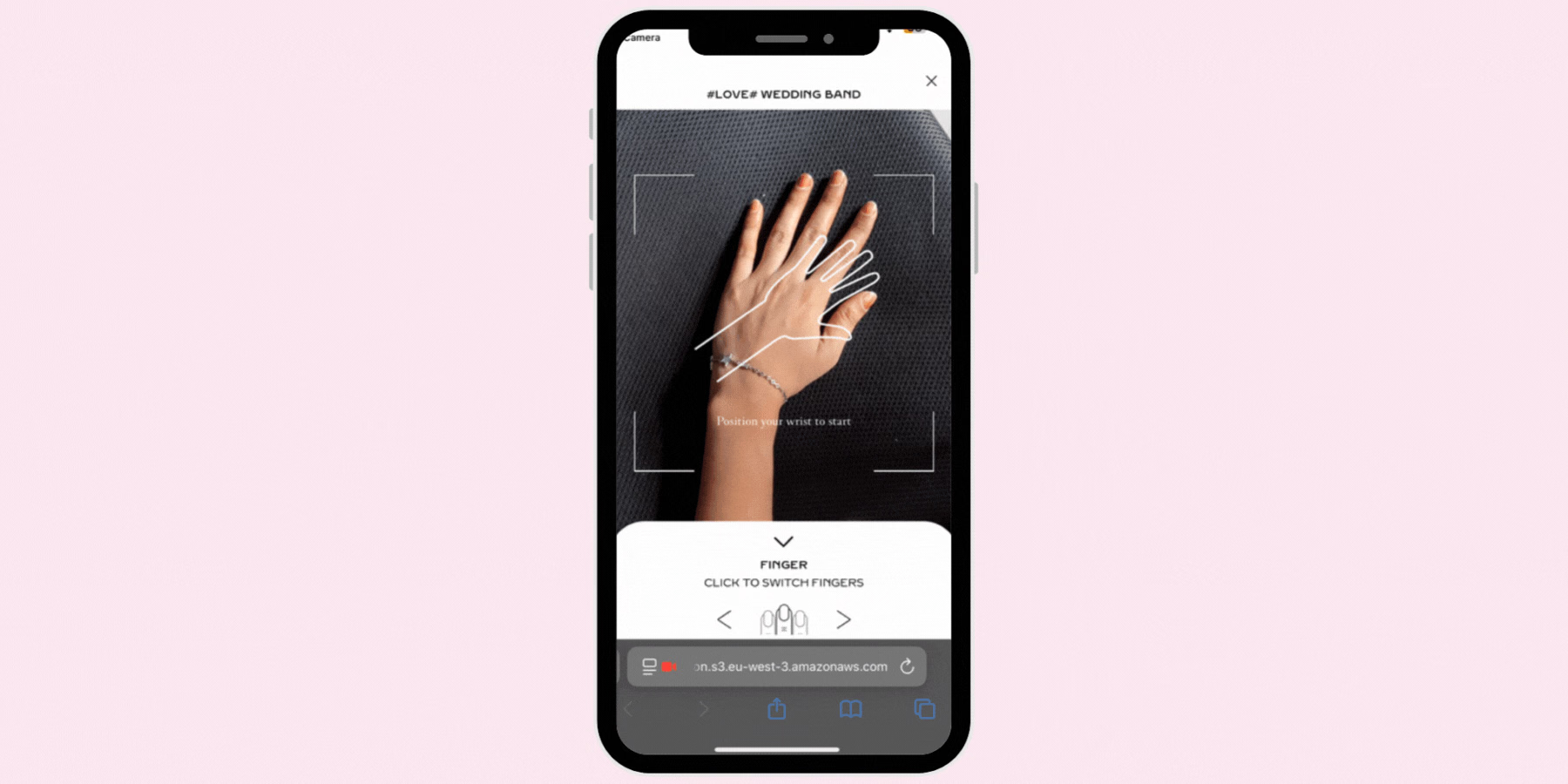
Cartier has enhanced customers' engagement with the products through the AR Ring Try-on software SDK. It allows buyers to experience a virtual try-on, specifically for exclusive rings valued at more than $35,000.
Such offers stimulate the real-time look of luxury rings. Its advanced 3D rendering feature delivers precise visualization of rings on actual fingers. The technology enhances buyers' confidence in the case of high-value purchases.
6. Brilliant Earth
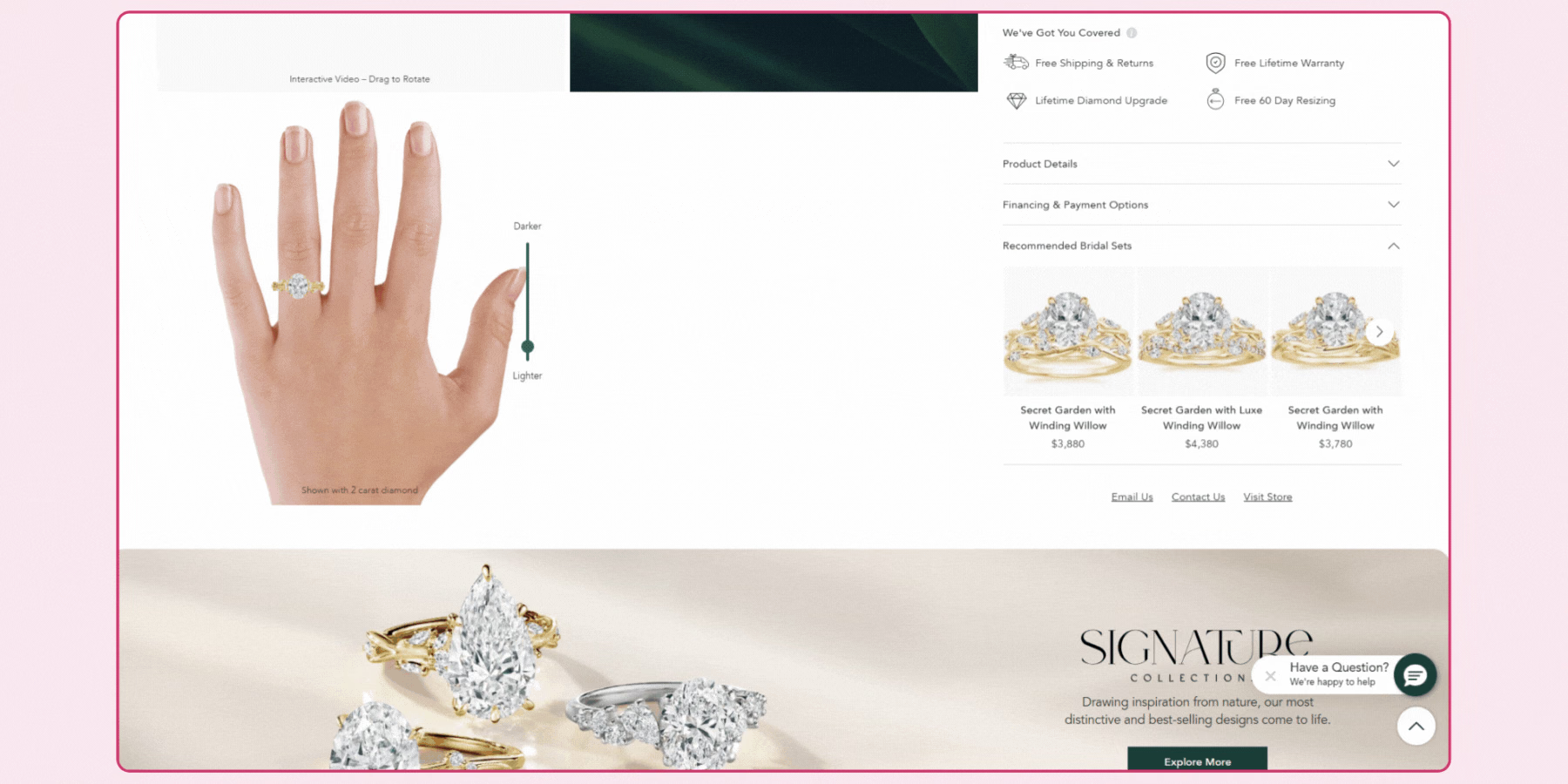
Brilliant Earth allows interactive and self-guided visualization of engagement rings. It offers instant, browsing-based 3D product try-ons. Its official ‘Virtual Try-on’ page provides the app-free experience of high-quality product visualization. Shoppers need to upload a photo of their hand to visualize the rings on their fingers.
They can pinch the screen to resize the ring according to their fingers and manually position it on their desired fingers. Customers can customize carat size, metal type, stone shape, etc., before making a final purchase.
How to Test Hand-Tracking Accuracy Before Launch
Test any SDK against a deliberately varied set of real hands, spanning different sizes, skin tones, and finger shapes, not a vendor's own curated demo. Tracking accuracy can vary meaningfully across this range, and a vendor's polished showcase video, typically recorded under ideal lighting with a cooperative model, tells you very little about how the same technology performs for your actual customer base.
Test under a range of lighting conditions and with natural hand movement, not a static pose, since tracking stability during motion is the clearest indicator of whether a ring will render convincingly in a real customer session rather than only in a controlled test. Ask specifically how the SDK handles partial occlusion, a hand partly out of frame or fingers overlapping, since this is a common real-world scenario a vendor's demo is unlikely to showcase.
Confirm scale accuracy directly using a tape measure against a known ring size, rather than trusting a vendor's general claim of accurate scaling. A ring that renders at a visually plausible but technically inaccurate size can mislead a shopper into ordering the wrong size with just as much confidence as a genuinely accurate render would, which makes this a detail worth verifying rather than assuming.
Test on a deliberately wide range of devices, spanning flagship, mid-range, and older hardware, since tracking performance and rendering quality can both degrade on lower-powered devices in ways a vendor's own test hardware won't reveal. Pull your own analytics on the device mix your actual traffic uses before assuming a vendor's stated minimum specifications match your real customer base.
Pilot any SDK on a limited set of SKUs before a full catalog rollout, and track return rate specifically by reason code where your systems allow it. A drop in size or appearance-related returns specifically, without a corresponding change in unrelated return reasons, is a stronger signal that the tool is working than a single blended return-rate number. Set your measurement window and success criteria in writing before launch, rather than after seeing early results, so you have a genuine baseline to compare against.
How GlamAR Supports AR Ring Try-On
GlamAR's ring try-on is built to render a ring at accurate scale on a customer's own hand, with manual position and sizing adjustment available so a shopper can fine-tune placement on their preferred finger rather than accepting one fixed default. The same underlying platform extends across earrings, necklaces, and bracelets, which matters for a jewelry brand selling across multiple categories, since catalog onboarding, analytics, and vendor support run through one relationship rather than several.
Integration typically takes a matter of days once product assets are ready, and the experience runs consistently across web and mobile without requiring a customer to install a separate app, including a published Flutter SDK for teams building on that framework. For a brand running both an ecommerce storefront and native mobile apps, this cross-platform consistency matters as much as the rendering quality itself, since a shopper researching rings on a desktop browser and one browsing through a native mobile app should both get the same reliable experience from the same underlying technology.
Review the jewelry virtual try-on solution directly, test the experience on the jewelry demo store, and for a broader comparison of how to choose between a licensed SDK and a white-label build, see our guide on AR SDK versus white-label virtual try-on.
Conclusion
The strongest AR ring try-on SDKs share two traits worth prioritizing above any single feature: hand-tracking that holds up under real movement and across a genuinely diverse customer base, and a sizing approach that resolves fit uncertainty alongside style uncertainty rather than addressing only one. Request a trial against your own catalog and your own representative customers before committing to any vendor on this list, and measure the actual results against your current conversion and return baseline rather than taking a published case study as a guarantee.
If you want to evaluate AR ring try-on against your own catalog, talk to the GlamAR team about scoping an integration.










