
Augmented reality in retail : Stats & benefits


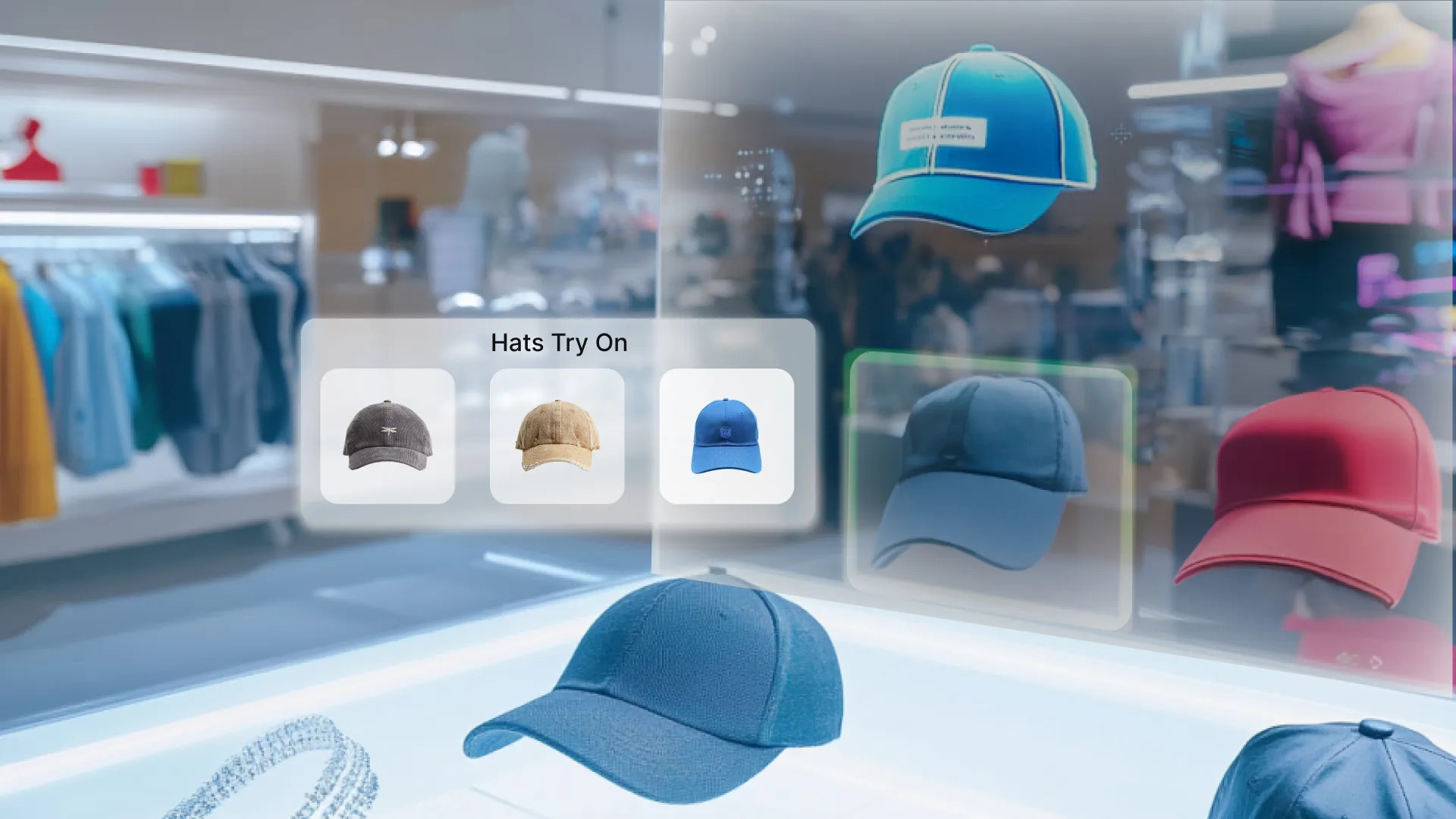
Augmented reality (AR) is a technology that overlays digital elements in the real world through devices like smartphones, tablets, or AR glasses. While it may seem like a futuristic concept, AR has steadily made its way into everyday life, and retail is one of the industries where its impact is undeniable. Retailers are increasingly turning to AR to make shopping more engaging, interactive, and convenient for customers. Whether it’s trying on clothes virtually or visualizing furniture in a living space, AR is reshaping how people shop.
The use of AR in retail leads to a 17% increase in consumer purchase intent.
Source: AMA
The evolution of retail: From brick-and-mortar to AR


The traditional retail landscape
For decades, physical stores were the cornerstone of shopping. Customers would visit stores, interact with products, and make purchase decisions based on touch and feel. While this worked well for many years, it wasn’t without its challenges. Limited store hours, inventory constraints, and long checkout lines often made shopping inconvenient.
The rise of e-commerce changed everything. Suddenly, people could shop anytime and anywhere, with access to endless options. However, online shopping brought its own challenges, like not being able to see or try products before buying. This gap between the tactile experience of in-store shopping and the convenience of online shopping is where AR steps in.
61% of consumers said they prefer retailers that offer AR experiences.
Source: Silversea Media
The emergence of AR in retail
AR blends the physical and digital worlds, offering the best of both shopping experiences. Customers can now interact with products virtually, whether they’re in a store or browsing online. This technology is not just a trend; it’s becoming a practical tool for businesses to enhance customer experiences and boost sales.
71% of shoppers said that they would shop more often if they used AR.
Source: eclipse
Key applications of AR in retail
Virtual try-ons
One of the most popular uses of AR in retail is the virtual try-on. For instance, beauty brands allow customers to see how different shades of lipstick or eyeshadow look on their faces using their phone’s camera. Similarly, clothing brands are using AR to let shoppers try on outfits without stepping into a fitting room. This feature reduces the guesswork and helps customers make confident purchase decisions.
For eyewear brands, virtual try-ons are a game-changer. Customers can see how glasses will fit and look on their faces, addressing one of the biggest concerns in online shopping: fit and style.
58% of shoppers who have used augmented reality whilst shopping believed it improved their experience.
Source: Whiplash
Interactive product visualization
AR also enables customers to visualize how products will look in their homes or personal spaces. Furniture retailers like IKEA have apps that let customers place virtual furniture in their rooms to see how it fits and matches their decor. This reduces the need for returns and enhances the buying experience.
Customization is another area where AR shines. Customers can tweak product colors, materials, and designs in real time to see what works best for them before making a purchase.
40% of consumers are willing to pay more for a product if they could experience it through augmented reality.
Source: eclipse
AR-driven in-store experiences
In physical stores, AR enhances the shopping experience in unique ways. AR mirrors or kiosks let customers see how clothes or accessories look on them without physically trying them on. Stores also use AR for navigation, guiding customers to specific products or departments with ease.
66% of consumers want physical stores to offer more AR experiences.
Source: Jasoren
Gamification and engagement
Retailers are using AR to create fun and interactive campaigns that captivate customers. For example, scavenger hunts or collectible digital rewards make shopping more engaging, especially for younger audiences. These experiences are often shared on social media, amplifying the brand’s reach.
Marketing campaigns which utilise AR elements have an average dwell time of 75 seconds.
Source: 99Firms
Benefits of AR in retail
Enhanced customer experience
AR helps customers make better-informed decisions. It addresses common shopping concerns, like “Will this fit?” or “Will this match my space?” By providing interactive and personalized experiences, AR adds a layer of convenience and satisfaction to shopping.
Increased conversion rates
When customers feel confident about a product, they’re more likely to buy it. AR reduces hesitation by providing a clearer understanding of what they’re purchasing. Brands that have adopted AR often report higher conversion rates and fewer returns, making it a valuable investment.
Brand differentiation and loyalty
In a competitive retail landscape, standing out is crucial. AR helps brands offer unique experiences that customers remember. When people associate a brand with innovation and convenience, they’re more likely to return. This fosters long-term loyalty and positive word-of-mouth.
The use of AR in retail leads to a 17% increase in consumer purchase intent.
Source: AMA
Future trends in AR and retail
Advancements in AR technology
AR is constantly evolving. Features like AI-driven recommendations and real-time environmental mapping are making AR experiences more intuitive and accurate. The development of AR glasses and wearables will likely push the boundaries further, offering hands-free and immersive experiences.
75% of the global population will become active AR users by 2025.
Source: Deloitte / Snap
Omnichannel integration
The future of retail is omnichannel, where customers move seamlessly between online and offline experiences. AR plays a key role in this by integrating physical and digital touchpoints. For example, a customer could use an AR app to check product details in-store and then continue shopping online.
It is projected that by 2025, AR in retail will be worth $12 billion.
Source: Charged Retail
Emerging use cases
AR is also finding its place in areas like sustainability. By helping customers make better decisions, it reduces returns and waste. Additionally, AR is becoming a vital part of social commerce, where shoppers discover and purchase products directly through social media platforms.
Conclusion
AR is becoming an essential tool for retailers who want to offer more than just products. By enabling customers to interact with items in new and meaningful ways, AR enhances the overall shopping journey. As the technology advances and becomes more accessible, its role in retail will only grow. For brands willing to invest in AR, the opportunities are endless.










