
Benefits of augmented reality in the furniture industry


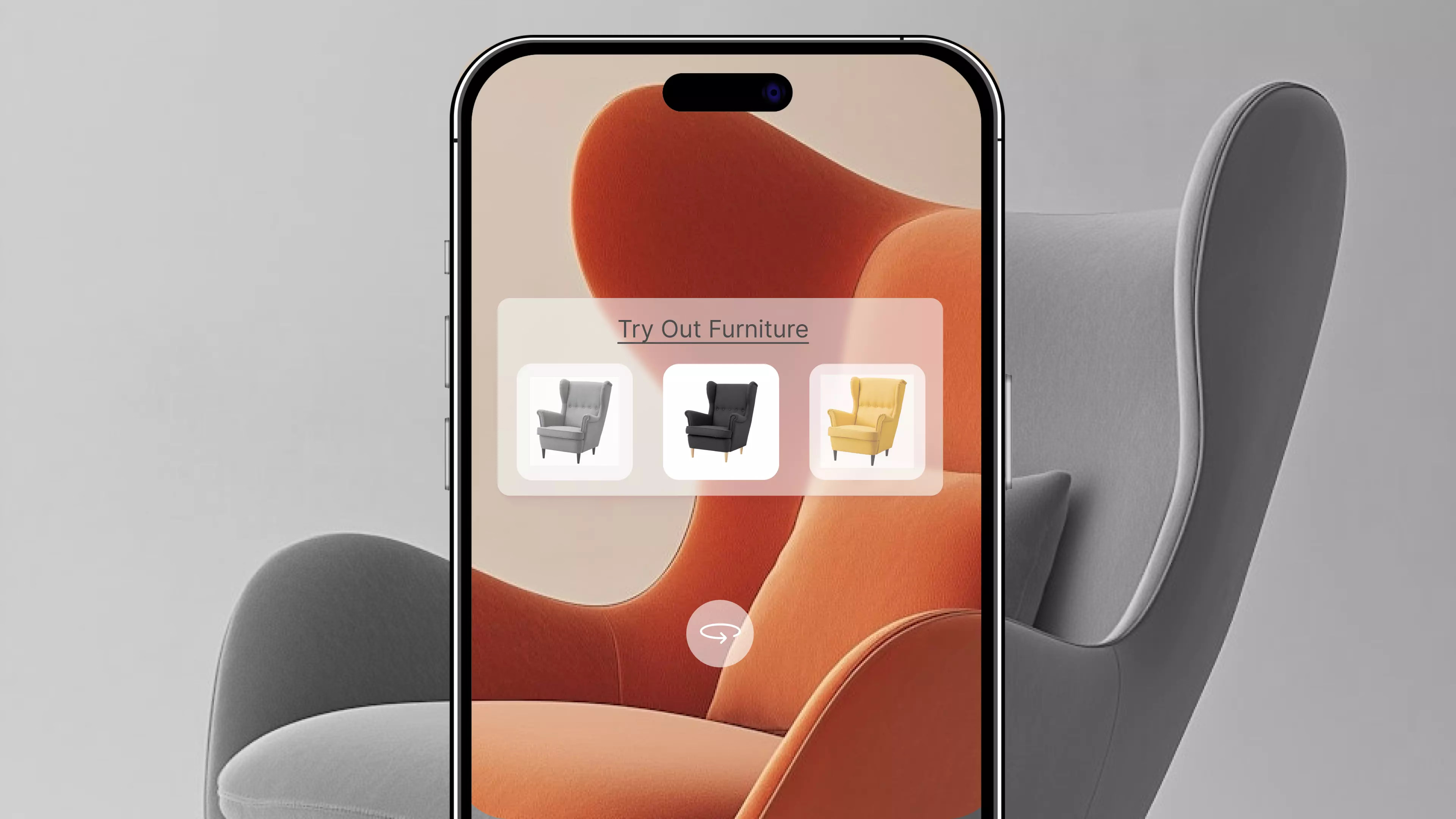
There was a survey carried out by Accenture, which recorded that 47% of people are willing to pay more for a product that they can interact with. Basically, visual scenery is a surefire way to capture people's attention; a product can draw them into a shop. When it comes to an online store, virtual images are necessary, but they don't give customers the best impression and confidence about their purchase. The furniture industry has evolved from a physical shop to an online store that makes use of augmented reality.
This technology is critical in the furniture industry because of the nature of the products. In reality, one can view furniture from various angles, while a picture cannot fully convey the product's details. AR helps make shopping online fun and interactive, as users can view furniture from a 360-degree angle.
AR technology would make buying a bunk for the room easy because the customer could visualize it before seeing it. Both customers and producers have benefited from the use of AR technology, resulting in a mutually beneficial outcome. Customers can purchase their products without fear or doubt and have a wonderful experience exploring the AR app while producers increase their sales. Join the ride, and let's talk more about this!
What is augmented reality furniture?
In the current furniture industry, augmented reality is changing the story because it has brought many innovative changes to buyers’ online shopping experiences. Augmented reality is the means of making the users interact with any virtual goods in a real-time experience. In other words, users get to view what the selected product will look like in the real world before purchasing it.
In the furniture industry, consumers can virtually make a preview of the product through their mobile devices. Users can also place the 3D model furniture product to overlay it on their actual environment. With these experiences, users have explicit knowledge about purchasing the product. Also, users can decide the furniture piece’s texture, color, and material that will fit their real-time needs through the AR tool. In summary, AR technology is a valuable tool that should not be underrated.
How does AR work for the furniture industry?
Many have been wondering how the furniture industry can leverage AR technology. While the topic may sound like something to worry about, attention should be paid to how AR can work for the furniture industry. AR presents the virtual 3D furniture against the actual live display of the user's physical space. It enables the user to make an informed decision before making a payment. More importantly, it provides users with the ability to change the color and texture of the furniture product.
At this stage, it is essential to point to the fact that the AR is an engaging tool that fills the gap between the virtual product and its real-life experience. The user's mobile device camera can overlay any physical space with the virtual furniture piece. Hence, users can get an accurate idea of what the furniture product will be in the real sense even before the purchase.

Benefits of augmented reality in furniture
Augmented reality is a technology that has brought new changes. Imagine what would have happened to furniture industries during the COVID-19 break that required everyone to stay indoors.
Physical shopping stores were affected, and even online stores didn't give users the best experience. Augmented Reality is an innovation that has paved the way for the furniture industry in various ways. The benefits are listed below:
1. Increases customer confidence
Customers usually encounter unpleasant experiences going through the stress of getting the wrong products due to the wrong specifications. Augmented reality helps customers visualize the furniture the way it would look in reality. This means that the furniture would look exactly how the app displays it. These benefits make customers confident in the brand since they get their desired product.
2. Increased sale
The furniture industry can adopt AR technology to attract customers to their brand since it provides a display that is compelling to them. This method gives brands an edge over physical stores since they can showcase products the way they appear in real life. Hence, customers don't have to be physically present to make their choices. This approach encourages customers to make purchases conveniently.
3. Real-time customization
The augmented reality app provides features that make it possible to customize your product to fit their preferences. Customers that introduce changes to the products add and subtract features, and are creative with their design.
1. Reduced rate preferences
High returns are a disadvantage to the company because they would have to make refunds, which would cut off their profit. Relocating the furniture back to the store would also incur an additional cost. AR reduces the tendency for customers to return products since they see them before using them.
2. An edge over competitors
The furniture industry is saturated with many firms. The products produced by the furniture industry are very similar and firms need to have unique features to be able to stand out. AR can give firms an edge over others since they would be providing a better experience for their customers.
3. Saves cost and time
With the AR in place for furniture businesses, customers can select their products and make purchases in the comfort of their homes. This reduces the cost of going to a physical showroom.
4. Better customer shopping experience
Customers would rather buy a product in the comfort of their homes and get it delivered to their doorsteps. This is the advantage that online stores bring, but customers might not be satisfied with the product because the picture displayed doesn't look like what they want. AR makes online shopping fun as customers visualize their products in a 3D model.
5. Accelerated work on the project
Customers can pick their choice of furniture on the AR app, having a proper understanding of the function each part plays, which reduces sellers' stress of explaining in detail. This helps the company to commence work immediately, and customers pick their choice.
Differences between AR and VR furniture
Augmented Reality (AR) and Virtual Reality (VR) are technologies useful in every industry. Both have different functions. AR puts the digital elements into real-world space by overlaying. Through this, customers can place furniture in real-life spaces before buying. However, VR integrates users in a fully digital environment. It completely detaches users from their physical surroundings and offers a showroom-like experience.
AR improves shopping experiences by letting customers see how the furniture would look in their space through their smartphone. VR provides a fully virtual showroom by allowing customers to view several furniture designs in a digital setting. AR and VR provide distinct contributions to the furniture industry in the following ways:
- Customer experience: AR ensures that users get the actual size, color, and style of the furniture piece. VR creates a showroom experience that allows customers to interact with furniture in an artificial space virtually.
- Cost & accessibility: AR is more budget-friendly and widely accessible. In contrast, VR is quite expensive.
- Ease of integration: AR can effortlessly unite users with e-commerce platforms and mobile apps. In contrast, VR requires advanced hardware and development.
- Marketing & engagement: AR ensures that customers interact with items in their immediate environment. This increases user confidence. VR is mostly helpful for large-scale showroom displays and trade events
- Customization: AR makes it possible for users to correct the furnishings of furniture items within a real-time environment. At the same time, VR offers a completely designed virtual home where customers can see various designs and styles.
Brands that use AR experiences
Certain online stores leverage augmented reality to create a better marketing strategy for the furniture industry. They include the following:
1. GlamAR
This is the top software platform that creates AR, 3D and VR solutions for e-commerce brands and manufacturers. GlamAR allows furniture businesses to showcase their products in an immersive way using AR. With the provision of AR solutions, the furniture industry has no issue presenting its products to its audience in a photorealistic manner.
This implies that consumers can view the product in a 3D model, fully optimized for use in AR. Hence, the consumers can interact with the products as though they were physically present. Are you looking for an online platform with suitable AR experiences where users can confidently purchase any furniture goods? Then, GlamAR is the perfect answer!


2. IKEA Place APP
As early as the 21st century, IKEA became known as the world’s biggest furniture seller. The IKEA app uses the power of AR to enable the furniture industry to market its products strategically. With the integration of AR, users can make an informed decision before purchasing any furniture piece.
The app allows users to use their phone camera and sensors to replicate the rooms in their house in 3D. Afterward, you can select any furniture piece virtually to overlay and scale items in that room to get the desired result. In essence, buyers will get a hyper-realistic visual presentation of any furniture piece with a mode of satisfaction.
3. Wayfair
This is a retail app leveraging augmented reality to help shoppers get a perfect preview of their desired products before making a purchase. As one of the pioneers of AR furniture apps, Wayfair creates room for a seamless service. It has a more extensive inventory that contains a wide range of furniture, which creates an avenue for buyers to pick from.
Additionally, users can create a list where they can add their preferred furniture items or ideas on the app. Popularly known as the ‘View in Room 3D’, users can freely place their preferred furniture in 3D models directly into the real-world space through their mobile devices.
4. Amazon
Amazon is an e-commerce store where sellers display goods for buyers. The store employs AR technology so users can make better shopping decisions. Majorly, the purpose of the Amazon AR app is to ensure that users get their desired products with adequate knowledge.
On this app, buyers can tap the camera icon in the search bar with the AR view to place the desired furniture products to test different chosen placements in the real environment.
5. Houzz
This is one of the furniture industry's leading platforms for home renovation and design. As time passed, Houzz adapted the AR technology within its apps, available only for iPad and iPhone users through the App Store. Leveraging AR, users can virtually place their preferred furniture to fit the position they want in their home.
Furthermore, have access to check the texture, materials, and color realistically. Lastly, with the phone camera, the user can overlay the virtual furniture with their real environment to confirm the authentic result of their choice.
Key features of AR applications in the furniture industry
- 3D Furniture visualization: This lets customers place life-like 3D models of furniture in their homes, providing a true-to-scale representation before they make a purchase. That mostly leads to more profitability.
- Recommendation: Some AR apps can scan a room’s angles and recommend furniture that can fit perfectly. Hence, it helps to remove the guesswork from shopping.
- Customization: AR helps customers to switch between different colors and materials in real time. It helps choose the best match for their home décor.
- Reliable effects: AR features adjust furniture visuals based on natural lighting. This will give customers a better idea of how a piece will look under different conditions.
- Effortless shopping: The AR features a mixture with online furniture stores that help to provide effortless service. This enables customers to add items to their cart instantly after virtually viewing them in their space and according to their preferences.
Why augmented reality is the future of the furniture industry
An increasingly digitized world is the driving force of augmented reality, where technology has become a platform, not just an option, in every business endeavor. This article will explore the specific areas where augmented reality adds value to the furniture industry.
- Customised furniture placement: Augmented reality helps potential clients see beforehand the correct size, color, and shape of the furniture. It also helps the clients to imagine how the furniture would fit into their own customized home or office layout.
- Eliminates the limitations of physical showrooms: While an organization might not have enough space to display all its products at the same time, in the case of a traditional showroom, through WebAR or AppAR, the organization could display a catalog of all its products at a time.
- Reduces cost: While reducing the cost of transportation to the physical location of the furniture on the part of customers, AR also serves to reduce the additional costs associated with damages and returns of products, thus favoring furniture industries.
- Product creativity: Through AR, brands portray their products the way they expect their customers to perceive them. They also allow customers to bring the products into their personal space to their taste virtually.
Challenges of augmented reality in the furniture industry
- Customer security and privacy challenges: One of the challenges of the use of AR platforms is the risk of cyberattacks by hackers, which could be in the form of phishing or misinformation. AR collects personal data from customers. The exposure of such sensitive data could lead to severe consequences.
- Complicated UI/UX design: The major aim of AR technology is to enhance user experience. These factors must be considered when creating UI/UX designs. Complex UI/UX designs often frustrate customers.
- Difficulty in selecting an AR development platform: Furniture industries often face the challenge of selecting the right framework to develop AR for their products. The goals and objectives of the organization, as well as its target audience, must be considered in framework selection.
- Overfitting: This condition is an image recognition challenge that occurs when a model works perfectly with the examples that are used in training it (trained data) but performs poorly in new situations (unseen data). This condition affects the quality of AR images produced by the furniture industry.
Conclusion
To a large extent, you would agree that augmented reality addresses the problem of “What I ordered” versus “What I got” that is inherent in the online purchase of household furniture. The furniture industries have ready solutions to address the challenges of AR.
The security and privacy challenge could be resolved by adopting precautionary and strict access controls. Models used in AR must be strictly tested before adoption. How else would you purchase furniture if it weren't for AR, a method that guarantees reduced convenience?










