
How AR Enhances Customer Experience in E-Commerce


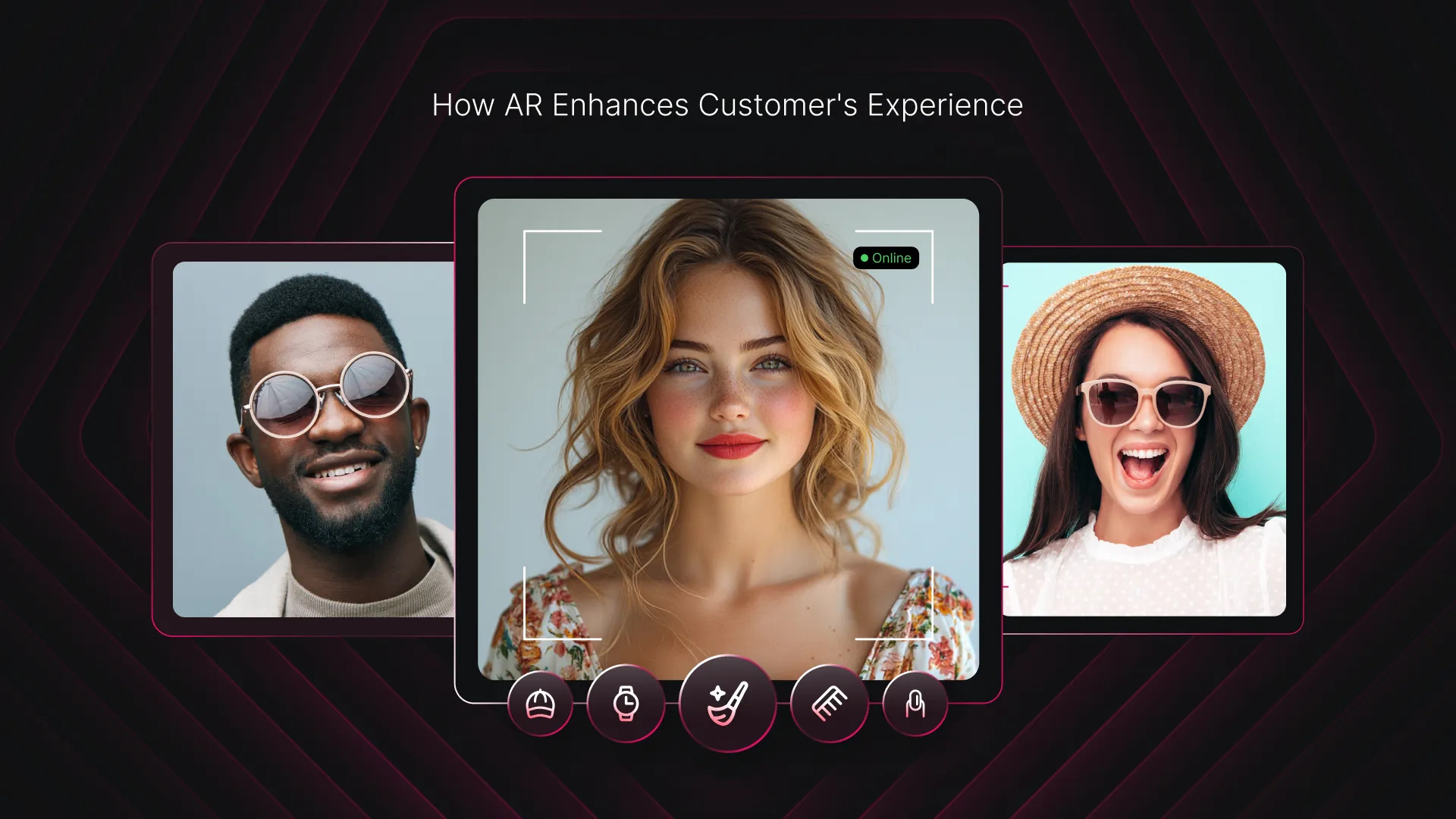
E-commerce has seen tremendous growth in recent years, but with that growth comes new challenges. One of the most significant challenges is delivering an in-store experience to online shoppers. Augmented Reality (AR) has quickly become a game-changer in the e-commerce industry, bridging the gap between the physical and digital shopping experience. With AR, customers can virtually try products, leading to more informed buying decisions, increased engagement, and higher satisfaction. Let’s dive into how AR is revolutionizing customer experiences in e-commerce.
This article explores how AR technology enhances customer experience in e-commerce, the benefits it provides to retailers, and real-world case studies of brands that have successfully integrated AR into their business models.
What is Augmented Reality in E-Commerce?
Augmented Reality (AR) is a technology that overlays digital elements—like images, sounds, or 3D models—onto a user's real-world environment through a smartphone or tablet. In e-commerce, this means customers can virtually try on products like clothes, accessories, or makeup, enhancing their shopping experience.
This is especially useful for industries like fashion, beauty, furniture, and automotive, where seeing a product in real life—or imagining how it would look—plays a crucial role in the purchase decision.


The Impact of AR on Customer Experience
Boosting Engagement and Interactivity
AR transforms static product listings into interactive experiences. Customers can view products from all angles, "try them on," and get a real sense of what they’re buying. This level of interaction not only engages customers longer but also increases their likelihood of making a purchase. It’s proven that customers engage more when they can interact with products in real time, encouraging users to spend more time on websites or apps.
Building Trust and Reducing Uncertainty
Online shopping often leaves customers unsure about their final decision, especially for products like apparel and makeup. AR removes this uncertainty by allowing users to virtually experience products in real-time, which builds trust and transparency leading to higher conversion rates, as customers feel more secure in their decision.
Reducing Returns with AR
One of the biggest challenges e-commerce retailers face is product returns & the primary reasons customers are hesitant to shop online, especially for fashion or beauty products, is the uncertainty around how products will look or fit. According to a study by Shopify, product returns cost online businesses billions of dollars annually. AR significantly reduces return rates by enabling customers to see the product in real time and interact with it before purchasing & making well-informed decisions, minimizing the risk of dissatisfaction when the product arrives. Ultimately reducing returns for the business.
Enhancing Personalization Through AR
Personalization is critical in today's e-commerce landscape, and AR takes it a step further by tailoring shopping experiences to individual needs. Through features like real-time virtual try-ons, AR creates a personal and unique shopping journey for each customer.
Boosts Customer Confidence
When customers can engage with and visualize a product in real-time, their confidence and satisfaction in purchasing increases. This trust and transparency lead to higher conversion rates, as customers feel more secure in their decision.
The Future of AR in E-Commerce
With AR projected to grow into a multi-billion-dollar industry, the future looks bright. From fashion to beauty and beyond, the possibilities for brands to harness AR in their customer experience strategy are endless.
Stats:
According to Statista, the global AR market is expected to reach $97.76 billion by 2028. This signals a significant opportunity for e-commerce brands to invest in AR technology and stay ahead of the curve.
Case Studies: How AR Transformed Businesses in E-Commerce
Sephora’s Virtual Artist: Revolutionizing Beauty with AR
Sephora was one of the early adopters of AR technology in the beauty industry. With their Virtual Artist feature, customers could try on a variety of makeup products using their smartphones. This AR-powered tool allows users to experiment with different shades of lipstick, eyeshadow, and other beauty products without having to physically apply them.
Results:
- Sephora’s Virtual Artist saw over 200 million try-ons within the first 18 months of launch.
- The app improved conversion rates by allowing customers to try products they otherwise wouldn’t have experimented with in-store.
- The personalized experience led to higher customer retention and satisfaction.
Lenskart: Leading AR Adoption in India
In the Indian e-commerce market, Lenskart introduced AR to enable customers to try on glasses virtually. This technology was a major breakthrough, particularly in a region where customers still preferred in-store shopping for essential products like eyewear.
Results:
- Lenskart reported a 50% increase in conversions from users who interacted with the virtual try-on feature.
- It became a critical element in expanding their online customer base, especially during the pandemic when in-store shopping was restricted.
Nykaa: AR in India’s Beauty Industry
Nykaa, one of India’s largest beauty retailers, integrated AR technology into its app, allowing users to try on makeup virtually. With the increasing competition in the Indian beauty e-commerce space, this feature helped Nykaa stand out.
Results:
- Nykaa saw a 30% increase in app engagement from users who interacted with their AR features.
- The feature also improved overall customer satisfaction, as users felt more confident in their purchases.
The Future of AR in E-Commerce
With advancements in technology, AR is poised to become a staple in e-commerce. As more brands realize the potential of AR to enhance customer experience, we can expect to see greater adoption in sectors like fashion, automotive, real estate, and even groceries.
Predictions:
- By 2025, AR in e-commerce is projected to reach $78 billion, as more brands and retailers adopt the technology to improve customer engagement and reduce returns.
- Retailers that integrate AR technology will stand out from their competitors by offering a more immersive and personalized shopping experience.
Conclusion: AR is the Future of E-Commerce
As customer expectations evolve, businesses must adapt to new technologies that enhance the online shopping experience. Augmented Reality offers a unique opportunity to bring the physical retail experience to the digital world, leading to higher engagement, reduced returns, and a more personalized shopping journey. By adopting AR, businesses can stay competitive and deliver exceptional value to their customers.
For retailers looking to stay ahead in the competitive e-commerce landscape, investing in AR technology like GlamAR’s Virtual Try-On is essential. It’s time to embrace the future of retail, offering customers an experience that rivals in-store shopping from the comfort of their homes.
Ready to elevate your customer experience?
Explore GlamAR’s AR solutions today and schedule a free demo.










