
15 Best Face Tracking Software and SDKs in 2026


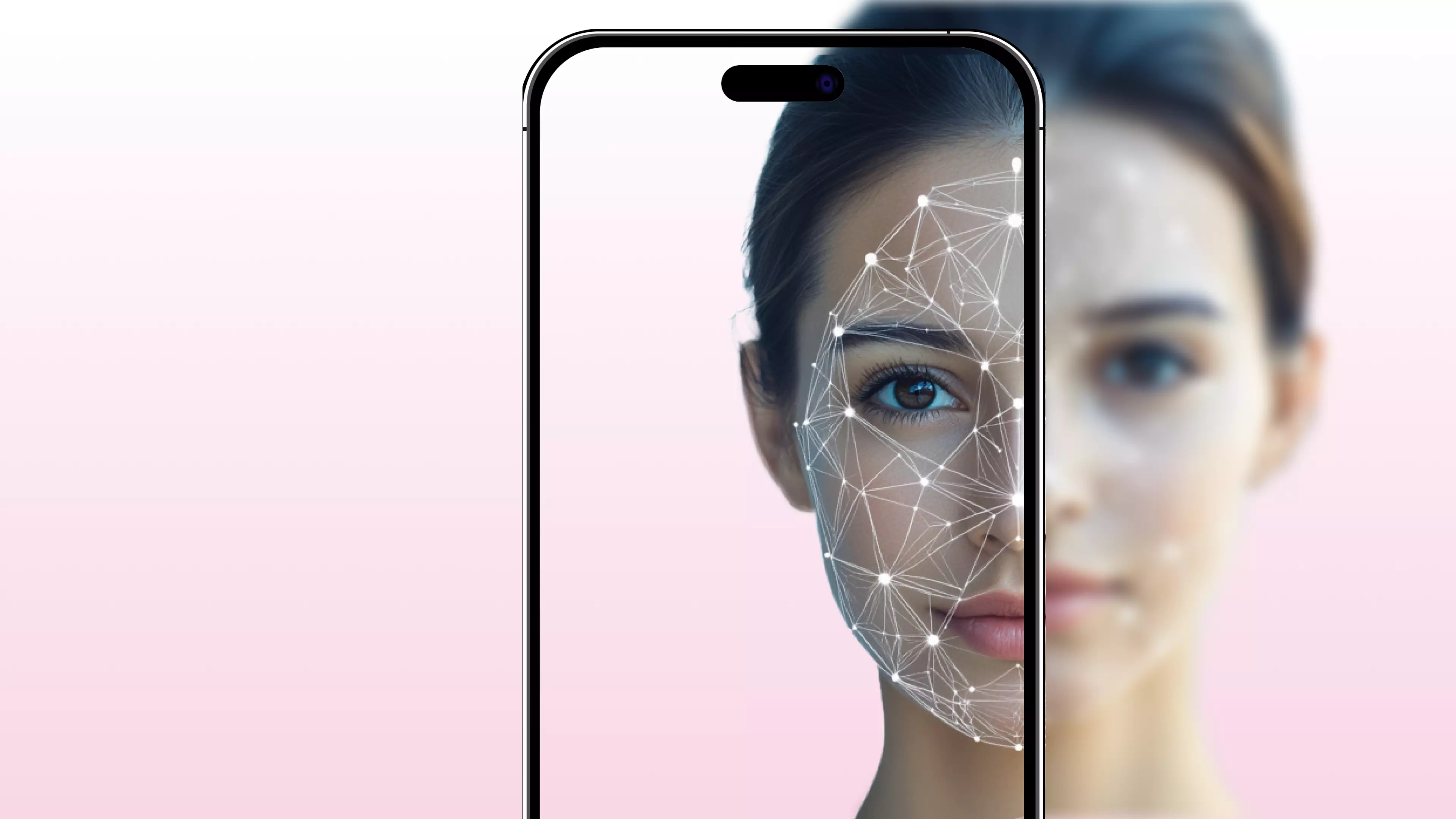
Developers and brands evaluating face tracking technology have 15 widely referenced SDKs and platforms to consider, spanning commercial, open source, and cloud-based options. Below is a comparison of each on tracking accuracy, real-time latency, device and platform support, and licensing model, since these four factors determine whether a face tracking integration actually performs well in production, not how polished a vendor's demo video looks.
According to Deloitte's 2025 Digital Consumer Trends survey, 32 percent of consumers now regularly use AR while shopping online, a figure that has doubled since 2022. Face tracking is the underlying technology making nearly all of that growth possible, since virtually every AR beauty, eyewear, and accessory try-on experience depends on accurately detecting and following facial landmarks in real time. That makes the technical quality of the face tracking layer a direct driver of whether a commerce AR feature actually works well enough to influence a purchase decision.
This guide is written for the person actually evaluating which technology to build on, a developer, a technical product lead, or a brand's digital team scoping an AR feature, not a general audience curious about how face tracking works. Most existing comparisons in this category rely on vague, reviewer-style language, calling a tool's results "near perfect" or "impressively real" without offering any way to actually verify those claims. This guide instead focuses on the specific, testable technical factors that determine real production performance, since those are what actually matter once you move past a vendor's own demo environment.
What is face tracking software?

What Is Face Tracking, and Why Does Accuracy Matter?
Face tracking software detects a face in an image or video stream, maps specific landmarks like eyes, nose, mouth, and jawline, and follows those points in real time as the face moves. This landmark data is what a downstream application, a makeup try-on, an eyewear fitting, an emotion detector, actually builds on, which means the face tracking layer's accuracy sets a hard ceiling on how good the final product can possibly be.
Accuracy matters specifically because errors compound visibly. A face tracking model that loses landmark precision during head movement, struggles in low light, or drifts slightly off the true facial contour produces a downstream effect, a virtual lipstick or eyeglass frame, that visibly misaligns with the user's actual face. For a commerce application specifically, this isn't just a technical imperfection, it directly undermines the purchase confidence the feature was built to create in the first place.


Key Technical Factors to Evaluate
Tracking accuracy and landmark density is the foundational factor. More tracked points generally allow for more precise downstream effects, but raw landmark count matters less than how stable and accurate those points remain under real-world conditions, movement, varied lighting, and partial occlusion from hair, glasses, or hands. A model that detects 478 landmarks but loses stability the moment a user turns their head is a weaker practical choice than one tracking fewer points more reliably under real movement.
Latency and real-time performance determine whether a tracked effect feels responsive or noticeably laggy. This is measured in milliseconds per frame, and it's directly affected by whether processing happens on-device or on a server, as well as how well-optimized a given SDK is for the actual hardware it's running on, not just a flagship test device. A delay that feels imperceptible on a high-end phone can become a visibly distracting lag on a mid-range device, which is exactly the kind of gap that separates a vendor's demo environment from real-world production use.
Device and platform support spans whether an SDK works across iOS, Android, and web, and critically, how consistently it performs across that range rather than just technically supporting it. A face tracking SDK that runs well on a current flagship phone but degrades significantly on a mid-range device three years old is a meaningfully weaker choice for a brand with a broad, real-world customer base. This is worth testing explicitly rather than taking a vendor's platform-support claim at face value, since technical compatibility and consistent real-world performance are genuinely different things.
Licensing model affects both cost and flexibility. Proprietary SDKs typically bundle support, documentation, and a maintained effect library into a subscription or usage-based fee, while open source options are free to use but place the burden of building, optimizing, and maintaining the rendering pipeline on your own team. Neither option is universally better, the right choice depends on your team's existing computer vision expertise and how quickly you need a working product versus how much control you need over the underlying implementation.
The 15 Best Face Tracking Software and SDKs Compared
The table below leads with licensing model specifically, since this single factor determines whether a platform is evaluated as a packaged product or as a foundational toolkit requiring your own build.
1. GlamAR
GlamAR's face tracking supports real-time virtual try-on across makeup, eyewear, jewelry, and accessories, with SDK integration spanning iOS, Android, Web, Unity, and React. Its AI engine identifies 15 core skin health and beauty metrics alongside standard facial landmark tracking, feeding directly into product recommendations rather than functioning as tracking in isolation.
A brand evaluating face tracking specifically for a commerce try-on use case should weigh GlamAR's combination of tracking accuracy and catalog-connected recommendation logic against a pure tracking SDK that would require separate integration work to reach the same outcome. Review the AI facial skin analysis solution directly for current tracking and integration specifics.
This packaged approach is a meaningful consideration specifically for a team without dedicated computer vision engineering resources, since it avoids the separate build-and-maintain burden that a foundational tracking SDK like MediaPipe or ARCore would otherwise require to reach the same working commerce feature.


2. Meishe
Meishe's face tracking SDK targets live streaming and short-form video specifically, detecting facial landmarks to drive skin smoothing, lighting adjustment, and makeup effects in real time. Its focus on video-based use cases, rather than static product pages, makes it a stronger fit for a social or livestream commerce application than a standard ecommerce try-on page.
A brand building a video-centric shopping experience should evaluate Meishe specifically against this use case, since its core strength is optimized for continuous video processing rather than a single-session product page interaction.
3. Banuba
Banuba's face tracking is built for consistent performance across a wide device range, with reported compatibility across roughly 97 percent of iOS devices and 80 percent of Android devices. Independent testing has found Banuba sustaining 45 to 50 frames per second on a budget Android device under poor lighting conditions where comparable SDKs dropped to 20 to 25 frames per second or lost tracking entirely.
This device-performance consistency is a genuine differentiator for a brand with a broad, global customer base rather than one serving primarily flagship-device users. Integration covers Flutter, React Native, iOS, and Android specifically.
4. MediaPipe
MediaPipe Face Landmarker is Google's free, open source face tracking solution, detecting 478 3D facial landmarks and 52 blendshape scores for expression tracking, available under an Apache 2.0 license with no licensing fee. Independent benchmarking has measured its landmark detection latency at approximately 22 to 35 milliseconds on a Pixel 7, competitive with several commercial SDKs, though this figure covers detection only, not the rendering pipeline a production application still needs to build on top.
MediaPipe provides no official commercial support, enterprise SLA, or pre-built effects library, meaning a team choosing it is committing real engineering time to build and maintain the rendering and effects layer independently. This makes it a strong fit for a team with computer vision engineering resources and a multi-month timeline, and a weaker fit for a brand wanting a fast, supported path to a working commerce try-on feature.
5. Visage Technologies
Visage Technologies provides face tracking alongside a broader suite covering emotion detection, facial biometrics, and driver monitoring, positioning it toward a more technical, multi-use-case buyer than a pure commerce try-on vendor. Its FaceTrack technology tracks more than 100 facial points, and its customization options let a licensee adapt the underlying SDK to a specific product rather than deploying a fixed, packaged experience.
A brand or platform building a custom application on top of flexible underlying tracking technology, rather than deploying an existing packaged try-on product, is the stronger fit for Visage Technologies specifically.
6. BytePlus
BytePlus combines face recognition and tracking with AR effects and filters, built primarily for Android developers, with machine learning models aimed at reducing implementation complexity for sophisticated facial recognition features. Its security-focused facial detection capabilities extend beyond pure AR effects into identity-adjacent use cases.
A developer building specifically for Android, rather than needing broad cross-platform parity from day one, should weigh BytePlus's Android-first optimization as a genuine advantage over a more generalized cross-platform SDK.
7. MoodMe
MoodMe's face detection runs locally on edge devices, including IoT hardware, smartphones, and PCs, built on Unity Barracuda neural networks with support across Windows, Android, iOS, macOS, and web. This on-device, edge-focused architecture is a meaningful differentiator for a use case requiring processing without server dependency, kiosks, in-store hardware, or offline-capable applications specifically.
A brand or platform building for Unity-based environments specifically should also weigh MoodMe's dedicated Unity SDK support, which keeps pace with Unity's own update cycle.
8. Luxand
Luxand FaceSDK is built as a universal library supporting both end-user and server-based face detection and recognition across still images and live video. Luxand.cloud extends this into a hosted service specifically, reducing the engineering burden of building biometric and recognition features from scratch compared to a fully self-hosted library.
A team needing server-side face detection and recognition at scale, rather than a real-time client-side try-on experience, is the clearer fit for Luxand's architecture specifically.
9. Seerslab
Seerslab's platform, built around its ARGear SDK, extends face and body tracking into multi-category try-on covering eyewear, clothing, and footwear, with real-time facial landmark removal and dimension measurement that accounts for movement when wearing glasses specifically. This broader category coverage, tracking both face and body pose, differentiates it from a pure facial-landmark SDK.
A brand needing try-on across both facial and body-worn product categories from one underlying tracking foundation should weigh Seerslab specifically against a narrower, face-only competitor.
10. MindAR
MindAR is a free, open source web AR SDK under the MIT license, supporting both image tracking and face tracking for browser-based AR without requiring an app download. MindAR Studio adds a no-code, drag-and-drop editor for building face-tracking AR scenes and exporting them as static, self-hostable web pages.
This combination of free licensing and no-code tooling makes MindAR a reasonable starting point for a smaller team or an agency prototyping a face-tracking concept before committing budget to a commercial SDK, though it carries the same tradeoff as other open source options, limited official support and a smaller pre-built effects library than a commercial competitor.
11. Amazon Rekognition
Amazon Rekognition provides cloud-based image and video analysis through AWS, including face-based verification, demographic analysis, and celebrity recognition, priced on a usage basis tied to AWS's broader cloud infrastructure. This is fundamentally a server-side, API-based service rather than a real-time, on-device tracking SDK, making it a different architectural choice than most other entries on this list.
A team already building on AWS infrastructure, or needing server-side face analysis at scale rather than real-time client-side tracking for a try-on experience, is the clearer fit for Rekognition specifically.
12. FaceUnity
FaceUnity's SDK combines facial recognition and tracking with real-time makeup effects, customizable for virtual cosmetics like lipstick and eyeshadow, with support across iOS, Android, Windows, and web browsers. Its cross-platform breadth, spanning both mobile and desktop web, is worth weighing for a brand wanting consistent effects across a genuinely wide range of access points.
A brand should confirm FaceUnity's specific tracking stability under movement directly, since this is the detail that most affects whether a makeup effect feels precisely placed rather than approximately placed during normal use.

13. Zappar
Zappar provides browser-based face tracking as part of its broader WebAR platform, with tools including Zapworks Designer for building interactive campaigns without requiring an app download. This positions Zappar toward marketing and campaign-driven use cases specifically, time-sensitive brand activations and limited product drops, rather than an ongoing, deeply catalog-integrated commerce try-on feature.
A brand should weigh Zappar's fast, broad-device-compatible campaign strengths against a more deeply integrated commerce SDK if the actual need is a permanent, catalog-connected try-on feature rather than a time-limited activation.
14. DeepAR
DeepAR's face tracking supports real-time makeup and hair color preview, emotion detection across seven core emotions, and special effects, delivered through a lightweight SDK aimed at fast implementation without sacrificing visual quality. Its combination of breadth, effects, emotion detection, background replacement, from one SDK is a genuine efficiency advantage for a team wanting multiple capabilities without separate vendor integrations.
A developer working under a tight deadline, needing to ship a broad set of face-tracking capabilities quickly, is a reasonable fit for DeepAR's stated positioning specifically.
15. Augmented Faces (ARCore)
Augmented Faces is Google's free, ARCore-based face tracking capability, identifying distinct facial regions and overlaying 3D assets that follow the natural curves and movement of a detected face. As part of ARCore specifically, it's maintained directly by Google and requires no third-party SDK licensing, though it's limited to Android and ARCore-supported devices rather than offering the broader cross-platform reach a dedicated commercial SDK provides.
A developer building specifically for Android within Google's own AR ecosystem, rather than needing iOS parity or web deployment, is the clearest fit for Augmented Faces.
How to choose face tracking software
The decision of knowing the correct face-tracking software to choose can be daunting and very tedious most times. But before making a decision on which face-tracking software to choose, it is important to be aware of some certain factors.
Such factors include self-need, budget, technical expertise and the issue of compatibility. Consider factors like customization options when you are engaged in developing professional applications, gaming, or personal projects.
Key considerations
- Precision and accuracy: Choose any software that has an expression for high precision in terms of tracking facial appearances.
- Security: Watch out for software that has a strong backup database or any form of strategy for privacy's sake. Hence, your information will be kept confidential.
- Customization: Considering adaptability of the software with your chosen devices really matters. This will save you from unnecessary stress.
- Compatibility: Consider how seamlessly the software can work with your mobile devices or any of your chosen platforms.
- Cost: At this stage, choosing open-source face-tracking software might be less costly, while proprietary face-tracking software might be highly costly for you. However, you need to be aware of your budget. Also, consider the unique functions of these two facial tracking software before making a selection.
How to Benchmark Accuracy and Latency Before Committing
Test any SDK against your own representative hardware, not a vendor's demo device. Independent testing has shown real performance gaps between SDKs under identical conditions, one comparison found Banuba sustaining 45 to 50 frames per second on a budget Android device under poor lighting where other SDKs dropped to 20 to 25 frames per second or lost tracking entirely, a difference that never shows up in a polished demo recorded on a flagship phone in good light.
Measure latency specifically, not just frame rate. A face tracking pipeline's responsiveness depends on both the underlying model's detection speed, commonly in the 20 to 40 millisecond range for a well-optimized model on current hardware, and the rendering pipeline built on top of it, which can add significant additional overhead depending on implementation quality. Ask any vendor directly for their measured detection latency on a specific device, not a general claim of real-time performance.
Test under genuinely poor conditions deliberately, low light, partial occlusion from hair or glasses, and natural head movement rather than a static, forward-facing pose. These are exactly the conditions a polished vendor demo is least likely to include, and they're also the conditions a meaningful share of your real customer base will actually present.
Confirm what you're actually getting with an open source option specifically before assuming it's a cost-free equivalent to a commercial SDK. A free, open source model like MediaPipe gives you detection and landmark output, but the rendering pipeline, effects library, and ongoing optimization work are your team's responsibility to build and maintain, a real engineering cost even without a licensing fee attached. Weigh this real cost honestly against a commercial SDK's subscription or usage fee before assuming the open source path is automatically cheaper for your specific team and timeline.
How GlamAR Uses Face Tracking in Its Try-On Products
GlamAR's face tracking is built specifically to support commerce try-on reliably across a broad device range, not just flagship hardware, since a brand's real customer base spans far more device variety than a typical demo environment. Tracking accuracy feeds directly into both virtual try-on rendering and AI skin analysis, giving a brand one underlying technology foundation across multiple customer-facing features rather than separate tracking implementations per use case.
This consolidation matters for a brand evaluating face tracking as one piece of a broader AR commerce strategy, since extending from try-on into skin analysis, or vice versa, reuses the same tracking foundation rather than requiring a second vendor relationship and a second integration project. Review GlamAR's full solutions range to see how face tracking supports different commerce use cases, and see our guide on the best AR beauty try-on software for how tracking quality translates into try-on experience specifically.
Conclusion
Face tracking accuracy and performance set a hard ceiling on what any downstream AR application can achieve, which makes the technical evaluation covered here more important than comparing feature lists or marketing claims across these fifteen options. Test any SDK against your own representative devices and real-world conditions, not a polished vendor demo, and weigh the genuine tradeoff between a supported commercial SDK and the engineering investment an open source option requires.
If you want to evaluate face tracking for a commerce try-on application specifically, talk to the GlamAR team about scoping an integration.










