
From in-store to online: How virtual try-on enables omnichannel jewelry retail


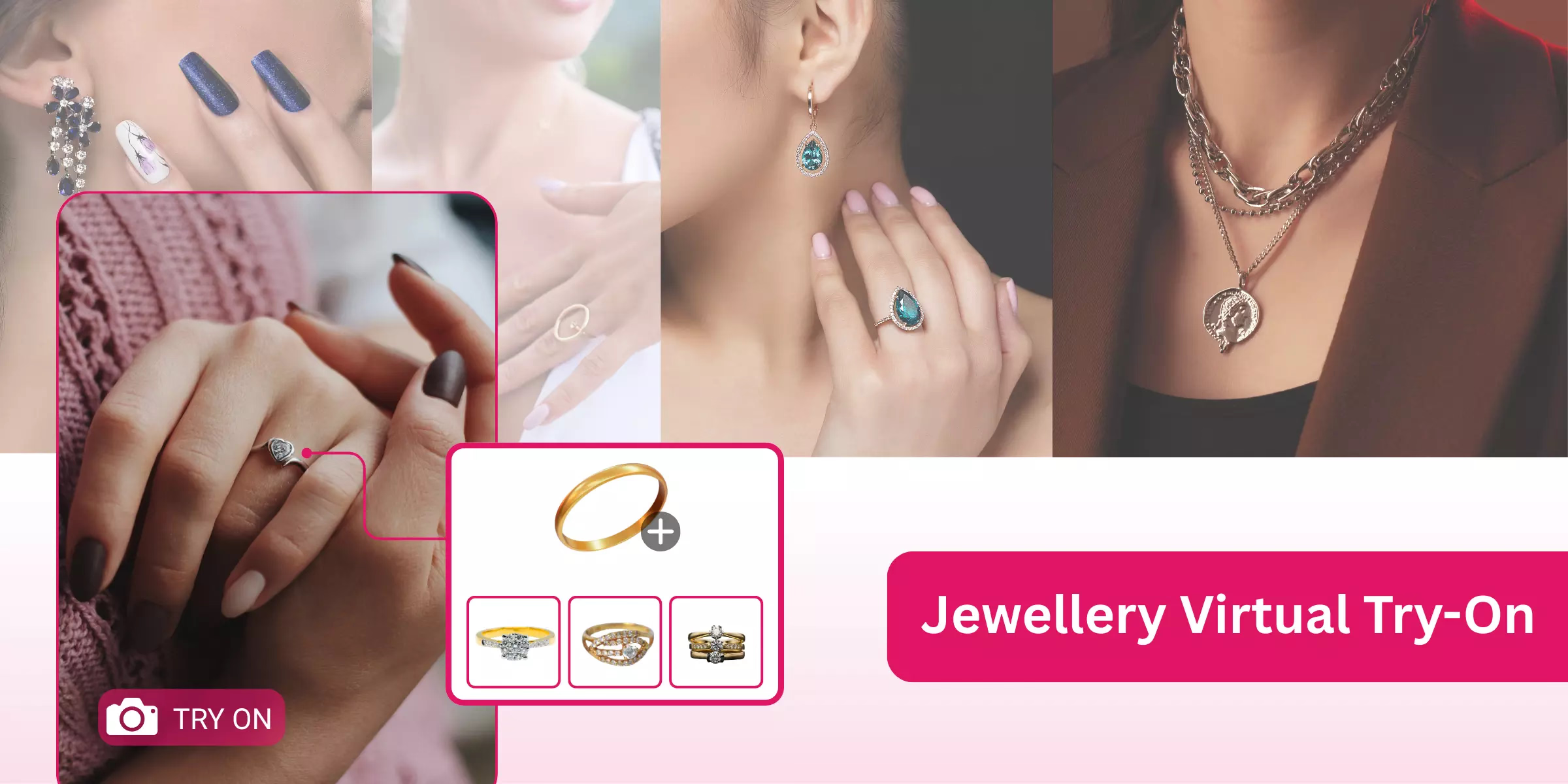
The jewelry brands have been increasing their customer base from both online and offline platforms by providing them with a similar shopping experience, both physically and virtually, by integrating virtual try-on technology. With the help of the virtual try-on feature, brands and sellers have been able to provide their customers with an engaging and immersive shopping experience by offering them a seamless experience, interactive exploration, and personalized recommendations.
By integrating the virtual try-on technology on the e-commerce platform, brands can facilitate omnichannel sales and conversions because it helps them to bridge the gap between physical and digital shopping experiences while boosting customer confidence and reducing product return rates. According to various reports, the global jewelry industry has seen immense growth after the implementation of the virtual try-on technology, which is expected to grow at a CAGR of 17.2% from 2026 to 2033, reaching a projected value of $4.11 billion by 2033.
But have you ever wondered how a virtual try-on technology based on augmented reality and artificial intelligence helps businesses to provide their online and offline customers with a similar shopping experience? Don’t worry, in this blog, I will help you understand how a virtual jewelry try-on can help brands and sellers increase their sales and conversion rates while maintaining their omnichannel presence across various platforms.
What is a virtual jewelry try-on?
A virtual jewelry try-on is an online tool that helps users explore various jewelry items and pieces virtually by integrating augmented reality and artificial intelligence technology, using a device like a smartphone at home or a smart mirror in a store. It provides users with a real-time experience and lifelike visualization of jewelry items by using AR overlays and 3D models, enabling them to understand how different pieces look and fit on them before making any final decision.
It provides users with an interactive and personalized shopping experience by using the user's live video or photo to superimpose the AR overlays of 3D jewelry items onto their image or live video, while enabling them to perform customizations according to their needs and preferences. It also helps the brand to increase customer confidence and satisfaction during shopping, which will reduce the product return rate and enable the brand to manage its logistics and inventory appropriately while reducing its operations costs.


Key features of a virtual jewelry try-on
- Augmented reality: It provides users with a real-time experience and lifelike visualization of the jewelry items by superimposing the AR overlays of products on their live videos or images, enabling them to understand how the jewelry looks before making any purchase decisions.
- User-friendly interface: It helps brands to provide their customers with an intuitive and easy-to-use platform so that they can explore items and products seamlessly through the e-commerce store, website, or app, providing them with a seamless and engaging shopping experience.
- Movement tracking: It uses advanced tracking and mapping systems to track the neckline movements and hand gestures of users, which will help them to understand the accurate placement of earrings, necklaces, bracelets, and rings from different angles.
- Multiple-platform compatibility: It provides users with the ability to explore jewelry items on various devices, including desktops, tablets, and smartphones, which will also provide them with the accessibility to purchase anytime and anywhere without any geographical limitations or paying for a store visit.
- Social sharing: It provides users with the ability to share their images or videos from virtual try-on with their friends and family members on social media platforms, which will help them make more confident and informed purchase decisions without any uncertainty.
- Multiple item try-on: It helps users to try on multiple jewelry pieces, such as necklaces, rings, bracelets, and earrings, at once so that they can understand how they look together or enable them to compare styles side-by-side.
Benefits of using a virtual jewelry try-on
- Convenience: It helps the brand to provide its customers with a convenient and hygienic shopping experience by enabling them to try different jewelry items using AR overlays and 3D models without touching anything and without having to go to a physical store.
- Increased confidence: With the help of the virtual try-on, jewelry brands can help their customers to increase their confidence and satisfaction by offering them 3D models and AR overlays, enabling them to understand how a piece looks, which can help customers feel more confident in their purchase decision.
- Reduced returns: It helps the brand to decrease its product return rate because it helps its customers to make more informed and confident purchasing decisions by providing them with a better idea of size and fit, which will reduce their uncertainty towards style, color, and appearance mismatch.
- Interactive experience: It provides customers with a more engaging and immersive shopping experience when compared to traditional online browsing, as it offers them 3D models with 360-degree rotation and spin, enabling them to explore items from different angles and perspectives.
How does a virtual jewelry try-on work?
- Realistic preview: It provides users with a realistic preview of how earrings, necklaces, rings, and bracelets will look on them by mapping and tracking their head and hand movement, enabling them to try jewelry pieces on from different angles.
- Monitors movement: It helps users to understand the accurate placement of different jewelry pieces, such as earrings, rings, bracelets, and necklaces, by tracking their facial contours, necklines, and hand gestures in different environments.
- Customization options: It provides users with a tailored experience by customizing the jewelry pieces before making any final purchase decision, enabling them to choose the metal type, color, and size according to their needs and preferences.

How does virtual jewelry try-on help brands to bridge the gap between online and offline shopping?

It helps businesses to bridge the gap between online and offline shopping by providing their customers with real-time experiences and lifelike visualization with the help of AR overlays, 3D models, and 360-degree previews. It also helps users to make more informed and confident shopping decisions by reducing their uncertainty and enabling them to make confident purchases, making their online experience more like being in a physical store.
Apart from that, it also helps businesses to opt for more omnichannel strategies by helping and enabling their customers to start making a purchase online and finish it in-store (or vice versa), which can be done by integrating smart mirrors into physical stores with advanced technologies and algorithms for a more seamless and engaging experience.
Using an interactive approach will also help a jewelry brand to increase its engagement and conversion rates while reducing its product return rates by fulfilling customer experiences with 3D models and 360-degree previews.
In this section, I will provide you with brief information on how brands can bridge the gap between online and offline shopping experiences by using the virtual try-on for jewelry items and pieces.
1. Connects the digital and physical shopping experience
- In-store-like shopping experience: It provides customers with an in-person-like shopping experience by offering them AR overlays and 3D models to help explore products available in e-commerce and physical stores, while sitting comfortably at their home without stepping out for a store visit.
- Supports hybrid retail models: It helps brands to modify both online and offline settings with the help of virtual try-on technology by integrating AR overlays and 3D models into e-commerce stores and adding smart mirrors in physical stores, which will create a cohesive shopping experience for customers across multiple channels and platforms.
2. Increasing customer confidence and conversions
- Reduces uncertainty: It helps businesses to reduce the uncertainty among customers regarding the style, color, and appearance of the jewelry products by enabling them to try products virtually by using AR overlays and 3D models, which will also eliminate the guesswork during jewelry shopping and help them make more confident decisions.
- Boosts conversion rates: With the help of the virtual try-on technology, jewelry brands and businesses can increase their conversion rates by boosting customer confidence and satisfaction during shopping, which will help them to increase their revenue after the implementation and integration of try-on features with 3D models and 360-degree viewers.
3. Provides customers with enhanced shopping experiences
- Increases user engagement: It helps businesses to boost their customer engagement rate by providing them with some exciting features, including rotation, zoom, and spinning, which will enable them to explore and understand the detailing of several jewelry items from different angles and perspectives while offering them an engaging shopping experience.
- Offers personalized experience: It helps brands to provide their customers with a tailored and customized online shopping experience by offering them AI-based personalized product recommendations, which depend on their purchase history, so that they can explore and purchase the jewelry items according to their needs and preferences.
GlamAR’s virtual jewelry try-on for online sellers and brands
GlamAR is an AR-based solution provider for brands that deal in the jewelry, watches, makeup, footwear, clothing, and home decor industries, as it helps them to increase user engagement by 94% and conversion rates by 45% while reducing return rates by 40%. It provides brands with multiple solutions in different categories, including virtual try-ons, 3D model creators, 3D configurations, 360-degree viewers, and AI-based skin analyzers, which will enable them to increase and foster the trust, loyalty, and satisfaction of their customers towards the business.
For jewelry brands and sellers, it has a dedicated virtual try-on SDK that will help jewelry businesses to provide their customers with an engaging and interactive shopping experience by trying on different products and items virtually before making any purchasing decisions. It provides users with three different ways, which include selecting a model, uploading an image, or using a live camera, so that they can try different types of jewelry, such as necklaces, bracelets, rings, and earrings.
It also provides businesses with various engaging and immersive features, such as cross-device compatibility, seamless integration, real-time 3D rendering, customizable 3D assets, and easy catalog onboarding, enabling them to provide their customers with a similar and interactive experience. Apart from that, it also helps brands to take care of their customers’ privacy, as it is backed by enterprise-grade security and scale, which includes SOC 2 for secure AR shopping, GDPR for globally compliant AR solutions, and ISO 27001 to integrate AR with their systems securely.
Key features of GlamAR’s virtual try-on for jewelry businesses
- Movement and gesture tracking: It helps brands to increase engagement rate by tracking and mapping users' head movement and hand gestures, which will enable them to explore various jewelry items from different angles while offering them an in-person-like shopping experience.
- Seamless integration: It provides brands with an easy-to-integrate SDK, which will enable them to integrate the feature into the e-commerce platform quickly, and offers them a dedicated team of developers to help them during the integration process, making it easier.
- Cross-device compatibility: It helps brands to provide their customers with a similar shopping experience across various platforms and devices by offering them cross-device compatibility for different platforms, including mobile phones, tablets, and desktops, offering their customers accessibility to explore products without geographical limitations.
- Customization options: It helps businesses to maintain their image and identity throughout the website or app by providing them with various personalization options, providing their customers with a similar and intuitive interface while maintaining their brand image.
Benefits of using GlamAR’s try-on SDK
- Enhanced personalized experience: It provides customers with a personalized and real-time online shopping experience by allowing them to customize products according to their needs and preferences. It also enables them to explore new products and try them before buying by using AR overlays, which will help the brand to bridge the gap between online and offline shopping experiences.
- Increased conversion rates: It helps brands or businesses in increasing their overall sales and conversion rates by offering their customers unmatched realism and accuracy. It allows customers to explore new products and helps them make more informed purchasing decisions by enabling them to use virtual try-on and augmented reality technology while exploring products before buying.
- Reduced product returns: With the help of this online tool and advanced technology, customers can try products online before making any purchasing decisions, which will help them make more informed buying decisions and reduce uncertainty due to color mismatch. Therefore, it will help the brand to reduce the product return rate and enable it to increase customer satisfaction and trust in the business.
Conclusion
Using a virtual try-on for jewelry pieces and items helps businesses and brands to provide their customers with personalized and engaging shopping experiences by bridging the gap between online and offline shopping. It helps businesses in increasing their customer base by helping them to reach a wider audience through various devices and channels, including social media platforms, smart kiosks, and e-commerce platforms, which will help brands to boost user engagement and sales.
By using the GlamAR virtual try-on, brands can also get various benefits, such as seamless integration, cross-device compatibility, 3D models, and 360-degree previews, which will offer their customers engaging features to help them explore products in an engaging and interactive way. Hence, using a virtual try-on SDK will help brands in increasing their sales, conversions, and engagement while enabling them to increase their omnichannel presence across multiple platforms.










