


What Is a Virtual Pop-Up Shop, and Why Are Brands Using Them in 2026?


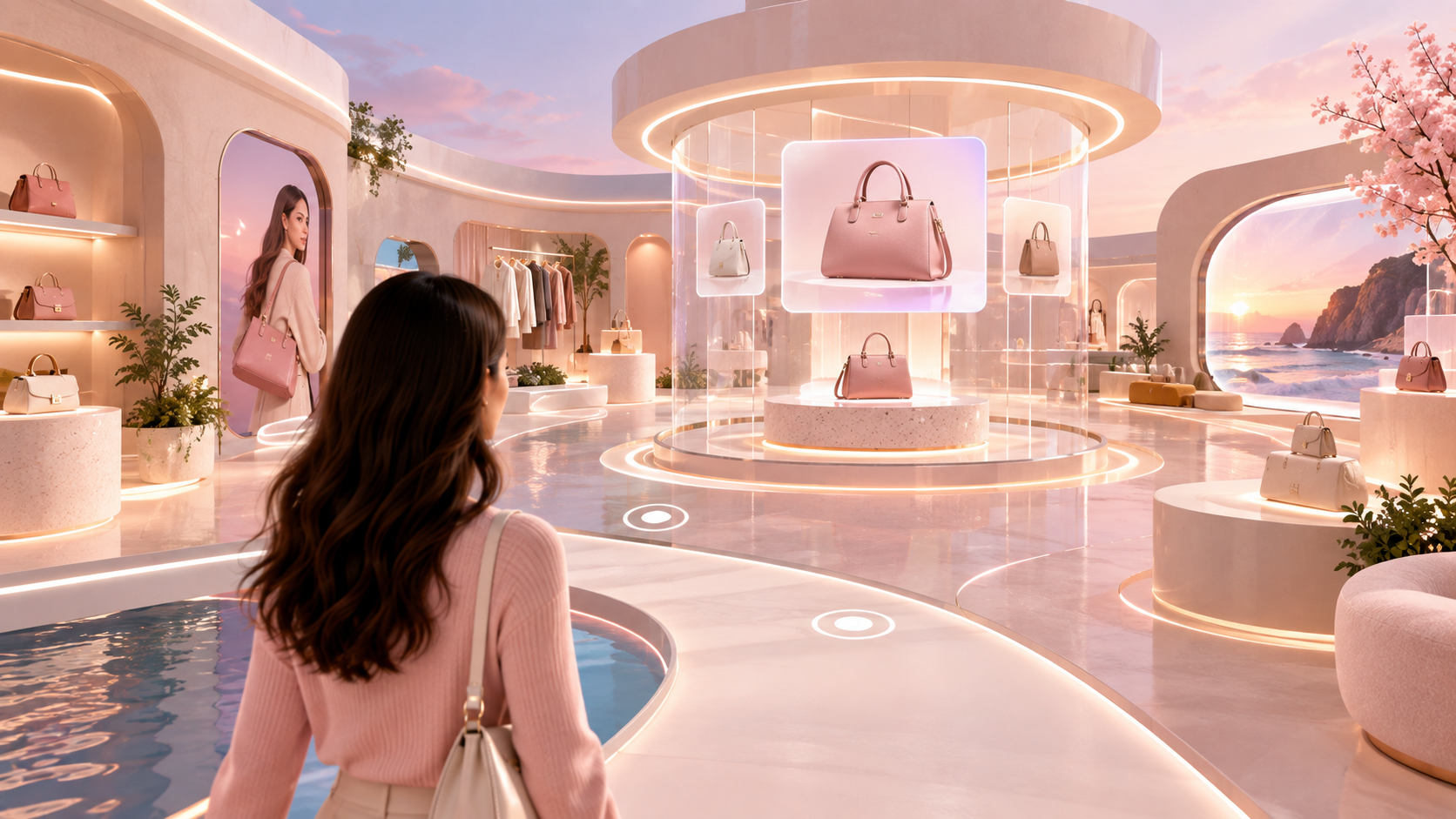
A virtual pop-up shop is a time-limited, campaign-specific 3D storefront that brands deploy online to create urgency, drive engagement, and sell a defined product set, then close when the campaign ends. For brand and e-commerce managers weighing up the format, the key decision point is not whether virtual pop-ups work in principle: the question is whether the commercial case (launch moment, audience reach, and campaign ROI) justifies the build over a permanent virtual environment or a standard e-commerce page.
The pop-up retail format carries real commercial weight. The global pop-up and temporary retail market is projected to reach $95 billion in 2026, and Capital One Shopping research found that 80% of retailers who have run a physical pop-up considered it a success. Virtual pop-ups take the same urgency-and-exclusivity logic and remove the location, logistics, and rental constraints that limit who can run them.
What Is a Virtual Pop-Up Shop?
A virtual pop-up shop is a branded, immersive 3D retail environment that operates for a defined window of time, built around a specific campaign objective rather than as a permanent brand presence.
That definition matters because it distinguishes the format from two things it is often confused with: a standard landing page campaign (which has no spatial or interactive dimension) and a permanent virtual store (which is built for ongoing traffic, not a single activation). A virtual pop-up is temporary by design. The limited duration is not a limitation. It is the mechanism that generates urgency.
In practice, a virtual pop-up shop lives at a URL or within an app, is accessible on any device without installation, and is built to feature a curated set of products, campaign-specific creative, and in some cases interactive elements like games, quests, or exclusive offers that expire when the pop-up closes.
Virtual Pop-Up Shop vs. Permanent Virtual Store: What's the Difference?
Brands evaluating immersive retail formats often consider both virtual pop-ups and permanent virtual stores. The distinction is not about quality or ambition. It is about what the format is optimised for.
A permanent virtual store is built for sustained traffic. It functions like a flagship digital presence: always on, hosting the full catalog, and designed to give returning customers a consistent brand world to shop within. The investment pays off over time through repeat visits, SEO value, and ongoing catalog management. A virtual store is the right choice when the goal is durable brand infrastructure.
A virtual pop-up shop is built for a moment. It is commissioned for a product launch, a seasonal drop, a collaboration, or a campaign window, then retired. The catalog is tighter, the creative is more campaign-specific, and the engagement mechanics (countdown timers, limited stock signals, gamified quests) are designed to concentrate buying behavior into a short window. It is the right choice when urgency is the commercial lever.
The two formats are not mutually exclusive. A brand with a permanent virtual store can deploy a virtual pop-up alongside it for a launch or seasonal event without cannibalizing the permanent space. They serve different moments in the marketing calendar.
How It Works
Setting Up a Campaign-Specific Storefront
A virtual pop-up begins with a defined campaign brief: what products are featured, what the activation window is, what the primary conversion goal is (direct purchase, email capture, demo request), and what audience it is aimed at.
From that brief, the storefront is built as a 3D environment. Products are converted into high-quality 3D assets, typically from photography, physical samples, or existing CAD files, and placed into the virtual space. The environment itself is designed to match the campaign's creative direction: a product launch might use a minimal, architectural space; a seasonal event might use a more atmospheric setting.
The finished storefront is delivered via a URL. Customers access it on any device (mobile, desktop, or tablet) without downloading anything. For brands that want to push the experience further, VR headset access is also available, though it is not required.
Campaign mechanics like discount unlocks, interactive quests, and time-limited offers are built into the environment, giving customers a reason to explore the space rather than simply clicking through to product pages.
Customization and Brand Design
The storefront environment, product placement, signage, lighting, and interactive elements are all customizable to the campaign's brand requirements. This extends to the interface: the experience runs under the brand's own identity rather than carrying the platform's branding, which matters for premium and luxury campaigns where brand presentation is part of the value.
Product 3D assets created for a virtual pop-up can be reused across other digital touchpoints (permanent virtual stores, AR ads, 3D product viewers) so the asset creation cost has ongoing value beyond the single campaign.
Why Brands Are Using Virtual Pop-Ups Now
Product Launches and Limited-Time Drops
The pop-up format is particularly well-suited to product launches and limited releases, where the scarcity and novelty of the moment is a commercial asset. A launch that lives inside a purpose-built 3D space, rather than a standard product listing or landing page, signals that the product warrants a dedicated experience. That signal alone affects how the launch is perceived by press, influencers, and high-intent customers.
Virtual pop-ups are also well-suited to collaboration launches, where two brands create a temporary joint space that has its own identity separate from either brand's permanent presence. The temporary nature of the format is coherent with the nature of the collaboration itself.
For fashion, beauty, and accessories brands in particular, the ability to incorporate 3D product try-on within the pop-up adds a functional layer to the immersive experience, so customers can interact with products, not just view them. This combines exploration with decision-making in the same environment.
Lower Cost vs. Physical Pop-Ups
A physical pop-up in a premium location carries costs that put the format out of reach for many brands: location hire, build-out, staffing, logistics, and security, multiplied by the duration and footprint of the event. These costs are why 44% of physical pop-ups cost under $5,000 to open. Most are low-budget activations that trade location quality for accessibility.
A virtual pop-up removes most of that cost structure. There is no location fee, no build crew, no staffing requirement for the duration of the campaign, and no geographic constraint on who can attend. A brand in the UK can run a virtual pop-up that reaches customers in the US, Middle East, Southeast Asia, and Australia simultaneously, with no incremental cost per market.
The remaining investment is in 3D asset creation and platform configuration, both of which generate reusable assets with value beyond the single campaign. This changes the ROI calculus materially compared with a physical-only activation.
How to Plan a Virtual Pop-Up Campaign
A virtual pop-up that generates commercial results is planned as a full campaign, not assembled at the last minute. These are the steps that matter:
1. Define the campaign moment and window
What is the trigger for the pop-up: a launch, a seasonal moment, a collaboration? How long will it run? Virtual pop-ups typically run for 3 to 10 days. Longer windows dilute urgency; shorter windows reduce the audience you can reach. Set the window deliberately against your email list size, paid media plan, and influencer timing.
2. Curate the catalog tightly
A virtual pop-up is not a full catalog experience. Choose the products that make the strongest case for the campaign moment: a new range, a limited edition, a bestseller in a new colorway. Fewer SKUs with better 3D assets will outperform a large catalog with inconsistent quality.
3. Commission 3D assets early
3D model creation from physical samples or photography takes time. Build this into the timeline before anything else. The quality of the 3D assets determines the quality of the experience. This is not where to cut corners or compress the schedule.
4. Plan the engagement mechanics
What will keep visitors in the space longer than 60 seconds? Countdown timers, discount quests, and interactive games are the virtual equivalents of the sensory experience that makes a physical pop-up memorable. Decide which mechanics align with your brand and campaign goals, and spec them in the brief.
5. Connect the storefront to your conversion infrastructure
The virtual pop-up needs to feed your existing e-commerce checkout, email capture, or CRM. Confirm the integration path before build begins. Fixing data flow issues after launch is expensive and disruptive.
6. Plan your traffic strategy
A virtual pop-up has no physical footfall. Traffic comes from your owned channels (email, social, push notifications), paid media, influencer distribution, and press. Map this out and build it into your campaign timeline so that the pop-up goes live to an audience, not into a void.
7. Set measurement criteria before launch
Decide what success looks like: unique visitors, average dwell time, product interactions, conversion rate, and revenue within the window. These metrics are available through the platform's analytics dashboard. Set the targets before launch so the post-campaign evaluation is against defined benchmarks, not post-hoc rationalisation.
How GlamAR Supports Virtual Pop-Up Shops
GlamAR's virtual pop-up shop solution is built around three confirmed capabilities: 3D gamification, 3D asset creation, and 3D product virtual try-on.
The 3D gamification layer gives brands a way to build quests and games into the shopping environment, where customers earn discounts or unlock offers by interacting with the space. This is the mechanism that extends dwell time and creates the sense of participation that differentiates a pop-up from a standard promotional page.
3D asset creation means GlamAR handles the conversion of physical products into interactive 3D models. Brands supply source materials; the team produces the assets optimised for the virtual environment. Assets created for a pop-up can be deployed in other GlamAR environments: the permanent virtual store, AR ads, or product viewers, extending their commercial lifespan.
The 3D product try-on layer means customers can interact with products in real time, not just view them. For fashion, jewelry, and accessories brands in particular, this closes the confidence gap that separates browsing from buying.
The platform runs across mobile, desktop, tablet, and VR headset, with no app installation required. Pricing depends on campaign duration, catalog size, and feature scope. The team works with brands on scoping before any commitment.
For brands evaluating how a virtual pop-up fits alongside a permanent virtual store, the 3D virtual store builder guide and the virtual retail store overview are both worth reading before that conversation.
Conclusion
Virtual pop-up shops are a commercially coherent format for brands that need to create urgency around a moment (a launch, a drop, a collaboration) without the geographic, logistical, and financial constraints of physical activation. The temporary nature of the format is what makes it work: the campaign window, the curated catalog, and the interactive mechanics all concentrate attention and buying intent.
The planning decisions that determine whether a virtual pop-up delivers results are made before the build begins: the campaign window, the product selection, the 3D asset timeline, the engagement mechanics, and the traffic strategy. Brands that treat the format as a campaign discipline rather than a last-minute add-on get measurably better outcomes.
Talk to the GlamAR team to discuss what a virtual pop-up campaign looks like for your brand, or explore GlamAR's virtual store solution if you are evaluating a permanent immersive presence alongside a pop-up activation.
Timeline depends on catalog size and whether 3D assets already exist. For a focused campaign with a small product set, the asset creation and platform configuration can move quickly once source materials are supplied. Brands with tight launch windows should open a conversation with the GlamAR team as early as possible so that 3D model creation, the longest-lead part of the process, can begin before other campaign elements are finalized.
A physical pop-up in a premium location carries location hire, build-out, staffing, and logistics costs that most virtual formats do not. Virtual pop-up investment is concentrated in 3D asset creation and platform configuration, both of which generate reusable assets with value beyond the single campaign. For brands that have previously built for physical activations, the virtual format typically offers more audience reach for comparable or lower total spend.
There is no hard technical maximum. From a campaign effectiveness standpoint, virtual pop-ups typically run for 3 to 10 days. Longer windows are possible but dilute the urgency mechanics that make the format effective. The right duration depends on your traffic plan and campaign goals. The GlamAR team can advise based on comparable campaigns.
Yes. GlamAR's virtual pop-up shop supports integration with existing e-commerce websites and checkout infrastructure. The specific integration path depends on your platform and the conversion action you are optimising for. Confirm integration requirements in the brief stage before build begins.
The platform includes a dashboard that tracks visitor interactions in real time. This covers visit volume, product interactions, dwell time, and engagement with gamification elements. Connecting the pop-up's engagement data to downstream conversion events (purchase, email capture, or lead submission) requires the conversion tracking to be configured as part of setup.
The environment, layout, product placement, lighting, signage, and interface are all customizable. The experience runs under your brand identity with no platform branding visible to customers. The scope of customization for a given campaign is established during the briefing and scoping process.
Descubra como AR, VR e 3D podem impulsionar o crescimento das receitas em 2026
Agende uma chamada com a nossa equipa

.avif)