Compare






Discover how AR, VR and 3D can drive revenue growth in 2026
Schedule a call with our team

.avif)


What is virtual try-on?
Virtual try-on is a digital technology that lets shoppers see how a product would look on them using AR. It places a realistic 3D version of your product directly onto a live image or 3D avatar of the customer.
Virtual try-on is common among industries where appearance, fit, or color plays a significant role in the buying decision. It provides an opportunity to showcase your products and also engage with your customers.
How a virtual try-on works
Virtual try-on makes use of AR and AI to give a realistic virtual try-on experience.
1. Computer vision & facial/body mapping
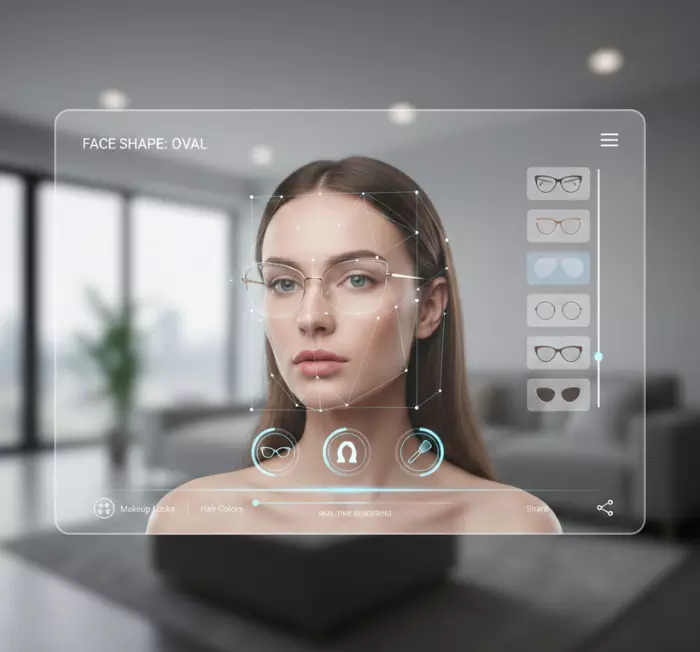
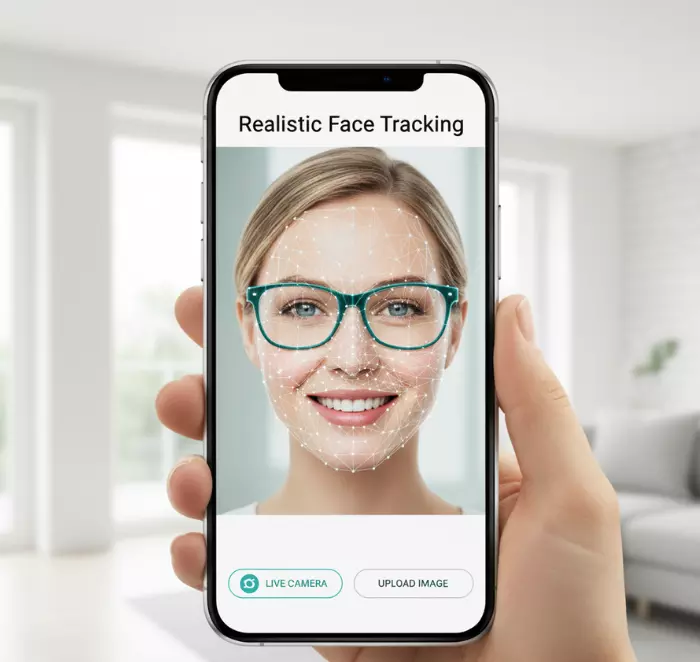
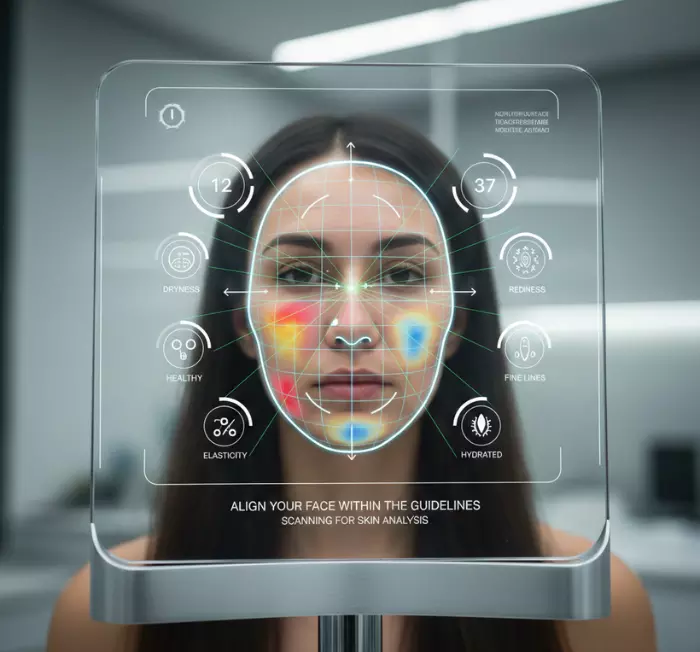
It begins with scanning the user's face or body using the device's camera. The virtual try-on detects body parts and scans the eyes, nose, chin, or shoulders to create a digital map of the person. The mapping enables your product to align with the customer's part.
2. Augmented reality overlay
After the virtual try-on maps out the body part, it places a digital version of the selected item on the customer's live image. This virtual product adjusts as the customer moves, and it maintains a realistic positioning. For example, if a customer turns their head while trying on products like earrings, the jewelry appears to swing naturally, just as it would in real life.
3. Product customization
GlamAR allows you to customize products to match your brand's preferences. Because of this feature, your customers can adjust the size of your products or change colors in real time. It gives your customers the opportunity to completely take control over how they want the product to be.
4. 3D product rendering
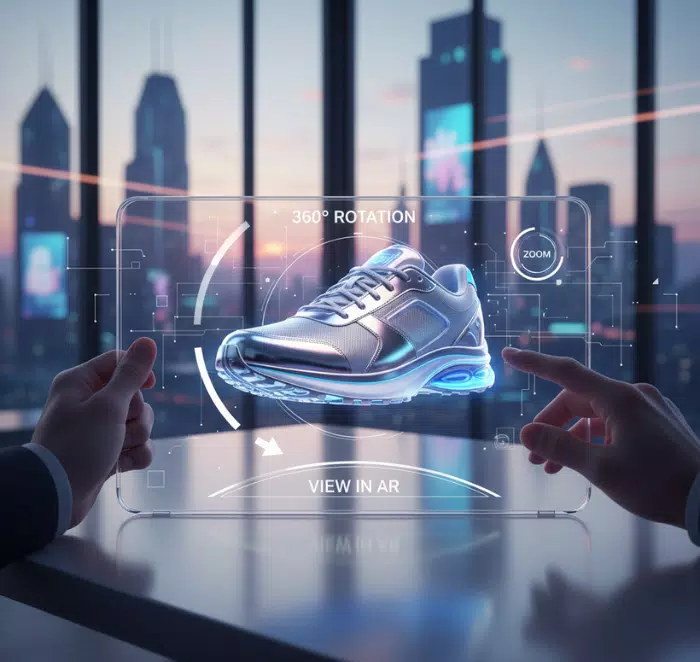
Virtual try-on helps you to display every product in a 3D model that is created from product scans or design files. These 3D models allow your customers to view your products from various angles and spin them, providing a complete and immersive experience.
Benefits of virtual try-on
Virtual try-on benefits both customers and brands. These benefits are:
1. Reduces product returns
One challenge brands face is the possibility of product returns. Customers sometimes buy items that don’t fit their criteria or appear differently in real life. With virtual try-on, your customers can make more informed choices that will result in fewer returns and reduced revenue loss for retailers.
2. Increases customer confidence
When customers see and they feel confident about the product they’re buying, they’re more likely to complete the purchase. This is especially important for new buyers or those hesitant about trying new brands. Our virtual try-on provides them with a digital equivalent of a fitting room, so they feel confident
3. Increase engagement
Virtual try-on naturally increases the time shoppers spend on your product pages due to its interactive nature. It encourages shoppers to explore and try on different products. It also offers user-friendly ways to experiment with different products until they find the perfect fit.
4. Supports sustainability
Suppose you’re getting fewer returns; that automatically means less shipping, less packaging, and less waste. Virtual try-on is a valuable tool for reducing the environmental impact of shopping. Because of its virtual nature, shoppers do not need to travel to a physical store.
5. Helps brands differentiate
While many e-commerce websites still rely on static 2D images that can't be rotated or interacted with, virtual try-ons have become standard. It has changed the game with the 3D experience, which allows customers to see products from every angle and in realistic detail. This technology is still being adopted, which means that early adopters are viewed as being committed to customer satisfaction.
Features of GlamAR’s virtual try-on technology
GlamAR virtual try-on is one of the most robust and user-friendly virtual try-on solutions available today.
1. Real-time AR try-on
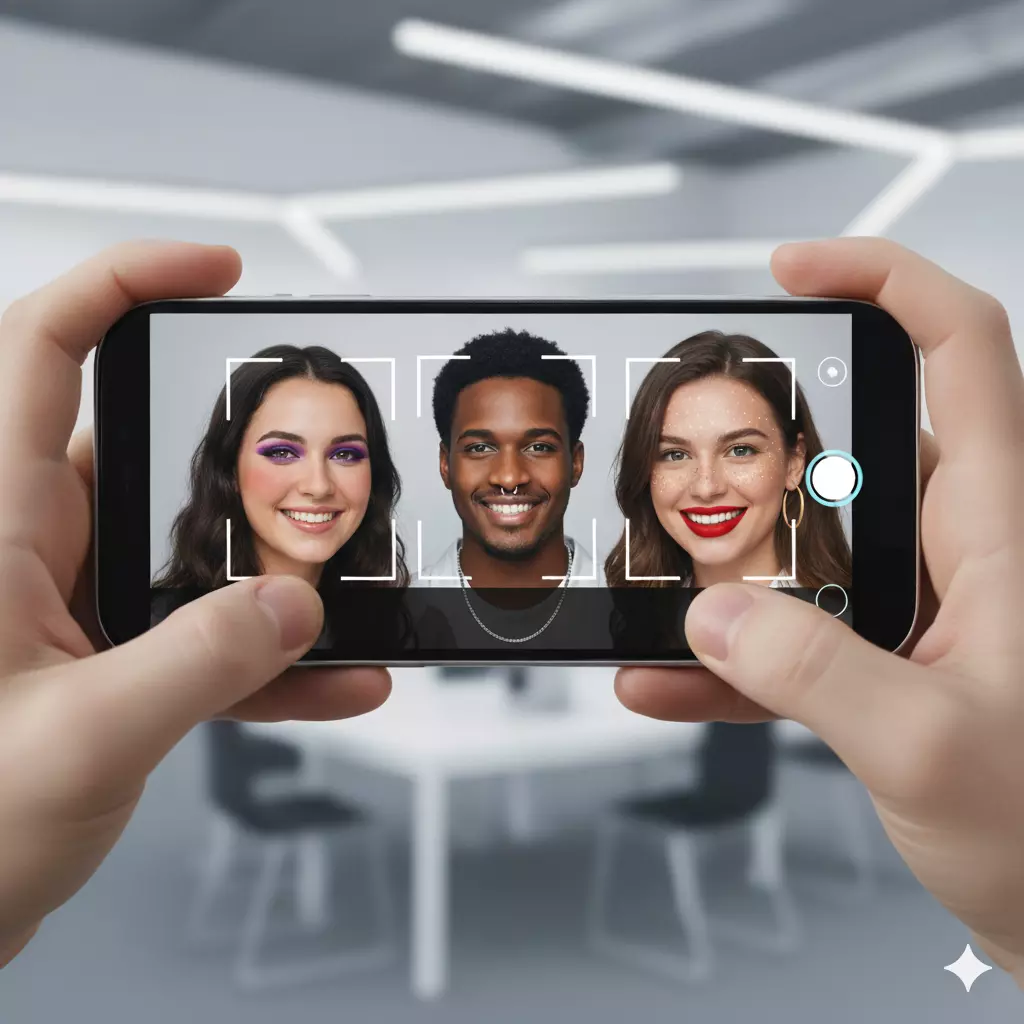
GlamAR’s virtual try-on feature works instantly as users move. If a customer is trying on glasses or lipstick, the product stays in the right place, even when they turn their head, smile, or move around. It quickly adjusts to every movement, to give a smooth and realistic try-on experience that feels just like real life.
2. Web-based, no app required
GlamAR does not require you to download an app to use the virtual try-on. It works directly from a mobile browser. This means users can start trying products with a single click.
3. High-fidelity 3D modeling
GlamAR supports 3D rendering, which means it displays products in a 3D format instead of flat images. This allows users to see every detail, such as shine, texture, shape, and size, just as they would in real life. This will help them to understand precisely how it will look when worn.
4. Body tracking feature
Our virtual try-on tracks the movements of your users and correctly position your product on their body. It tracks the user's face, hands, and body movements to place your product until it fits perfectly.
5. Multi-product try-on
GlamAR’s virtual try-on lets your customers try on different products. They can try on different sunglasses, necklaces, lipstick, eyeshadow, and other beauty products. This creates a more complete look for your users and makes it easier for them to buy more items together.
6. Analytics dashboard
GlamAR analytics dashboard helps brands to track how their customers interact with their products. It shows which products are being tried on the most, how long users spend with each item, and which try-ons lead to purchases. This helps to understand further what’s popular and what needs improvement.
7. Customizable interface
This feature gives retailers control over how they want their virtual try-on to look. It allows you to adjust certain features of your products, such as colors, fonts, and buttons, to match your physical brand. It helps you to create a professional experience that keeps your customers engaged.
Industries adopting virtual try-on
The fashion industry is one of the early adopters of virtual try-on, and since then, it has expanded to multiple other sectors.
1. Fashion and apparel
Clothing brands utilize virtual try-on technology to enable customers to see how fashion products would look on their bodies. It reduces the confusion that comes with product sizing. With the virtual try-on, users can accurately judge which size would fit them.
2. Cosmetics
Beauty brands utilize virtual try-on to enable their customers to try on lipstick, foundation, eye makeup, and even nail polish. The exciting part is that customers can test shades without touching their skin, which makes it ideal for both hygiene and convenience.
3. Eyewear
Eyewear brands make use of virtual try-on to allow their customers to try on products such as sunglasses and prescription glasses. It will enable them to virtually try on different eyewear till they get the perfect fit. This is especially helpful for people who can’t visit a physical store.
4. Jewelry and watches
Jewelry brands also make use of virtual try-on to allow their customers to virtually try on high-value items, such as diamond rings or luxury watches. Their customers can see the sparkle, size, and fit, which makes them more comfortable.
5. Furniture brands
Virtual try-ons are not just limited to brands that offer wearables. Furniture brands also use it to help shoppers visualize how couches, lamps, or decorative items will look in their living spaces. This will help you lower the risk of mismatch and returns.
The future of virtual try-on
Virtual try-on is seeing frequent upgrades, and as it becomes more accessible, it will meet more customers' expectations and give them a more immersive experience. Here’s what the future holds:
1. Hyper-personalization with AI
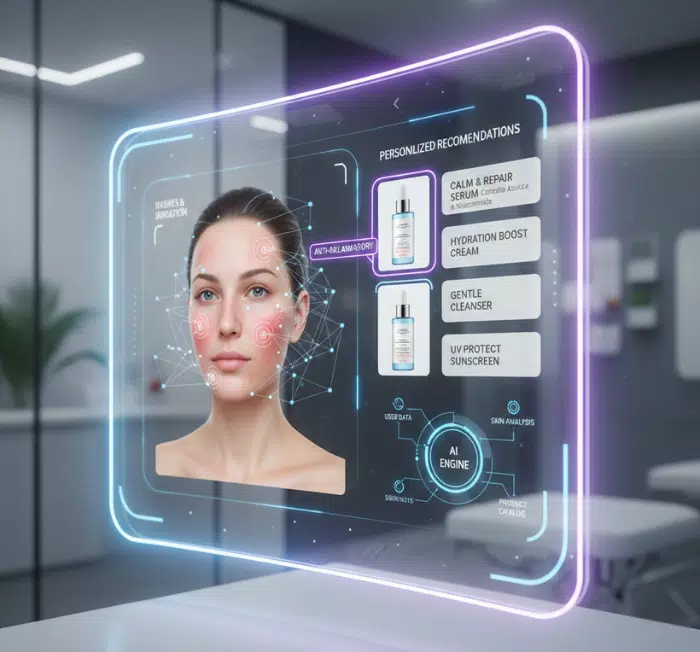
Virtual try-on is already personalizing users' experiences. In the future, it will enable users to learn their preferences, allowing for more sophisticated recommendations of shades, styles, and sizes based on past interactions. This will create a more personalized and efficient shopping journey that customers will enjoy.
2. Integration with digital avatars
As more brands integrate into the metaverse, virtual try-on will expand to include more advanced avatars for try-on purposes. These avatars will assist users in trying on products from their world.
3. AR mirrors in stores
Only a few physical stores have integrated virtual try-on with the use of AR mirrors. The smart mirror allows customers to try on clothes, accessories, or makeup without actually putting anything on. As the technology improves, more stores will adopt it.
This will make it easier for people to try different products quickly, without needing to handle physical samples. In the future, shoppers will simply stand in front of a mirror and instantly see how items look on them without having to change or test anything physically.
4. Gesture & Voice Controls
A few years ago, it was hard to imagine talking to a device and having it follow your commands, but now voice assistants are a big part of our everyday life. Similarly, virtual try-on technology is advancing toward voice control.
In the future, users will simply wave their hands or say what they want, and the system will respond instantly. This will make trying on products easier. All you’ll have to do is speak, and you’ll get the perfect fit.