
4 Best AI Skin Analysis Shopify Extensions for E-commerce in 2026


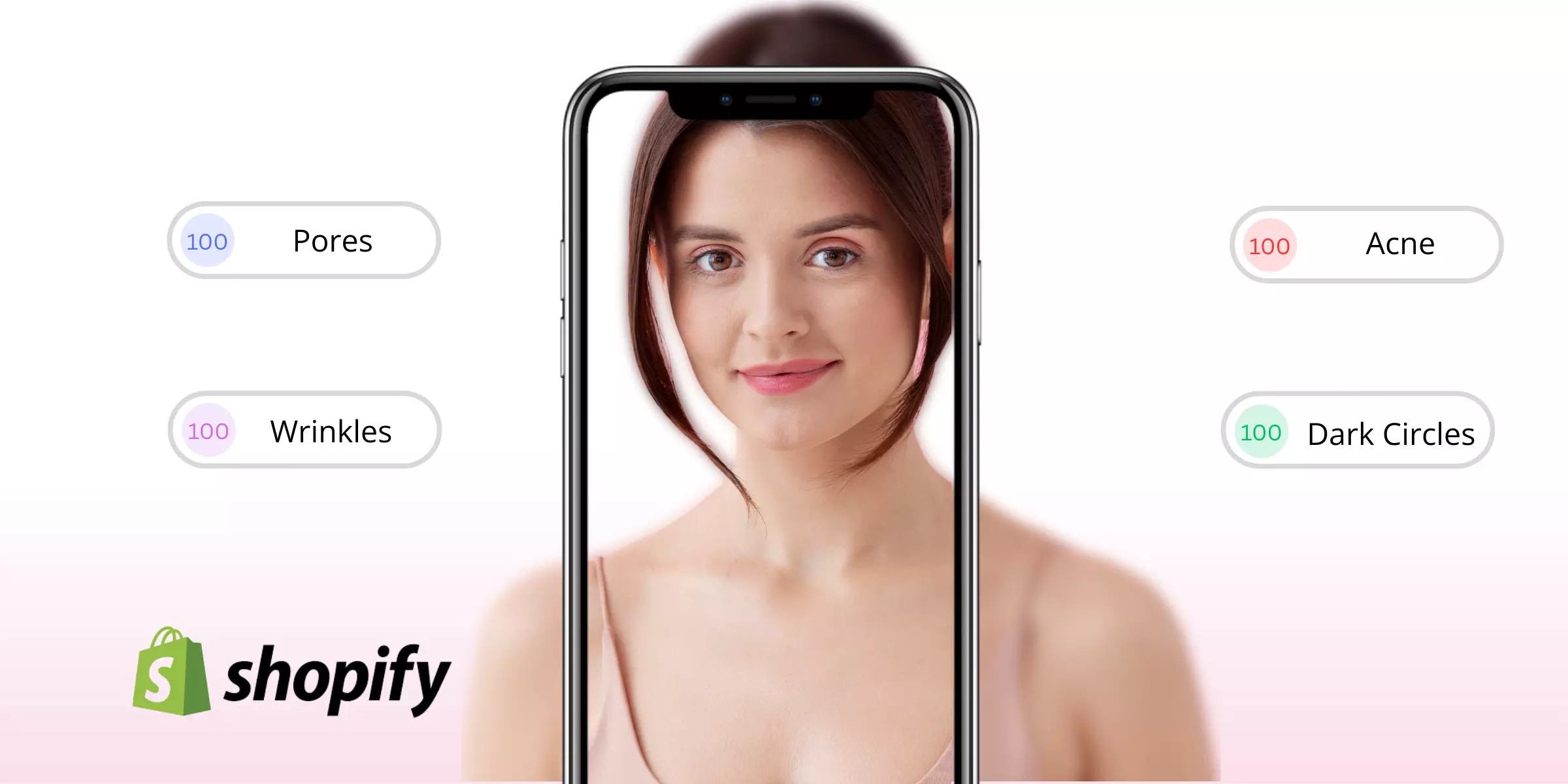
Shopify store owners have 4 widely used AI skin analysis extensions to choose from for a skincare catalog: the GlamAR Shopify app, Face Age, Appbrew, and Formulary. Below is a comparison of each on installation process, pricing tiers, Shopify theme compatibility, and what customer data the extension actually collects, since those four factors determine whether an extension fits your store more than how polished its demo looks.
Beauty and personal care carries one of the highest cart abandonment rates in ecommerce, commonly benchmarked between 76 and 82 percent depending on the dataset, compared to a general ecommerce average closer to 70 to 78 percent. Personalization tools are one of the more effective levers against that gap specifically: Shopify beauty brands running a full personalization suite have reported average order value roughly doubling compared to stores with no personalization set up, with conversion moving from under 2 percent to more than 4 percent in some cases. AI skin analysis is one of the more concrete personalization tools available for a skincare store specifically, since it replaces a generic shade or product chart with a result tied to the shopper's own face, turning an otherwise passive browsing session into an active, personalized moment.
This guide is written for the person actually deciding which extension to install, a Shopify store owner or a skincare brand's ecommerce manager, comparing real setup and integration tradeoffs, not for a shopper using one of these tools on a product page. The four extensions compared below each take a genuinely different approach to the same underlying problem, matching a shopper's actual skin concerns to your specific catalog, and the right choice depends more on your existing tech stack and catalog structure than on any single feature list.
What Is an AI Skin Analysis Shopify Extension, and How Does It Work?
An AI skin analysis Shopify extension adds an app to your store that lets a shopper upload a selfie or use a live camera to get an instant skin assessment, then matches that result against your own product catalog to generate a personalized recommendation. The underlying technology detects concerns like fine lines, acne, hydration, and uneven tone using computer vision trained on facial image data, then maps those detected concerns to specific SKUs you've tagged as relevant.
The two technical pieces worth understanding before evaluating any specific extension are the detection model itself, how many concerns it identifies and how that detection was validated, and the recommendation logic connecting a detected concern to an actual product in your catalog. An extension that detects concerns accurately but can't map them to your specific SKUs in a useful way delivers less value than one built to integrate directly with your existing product tagging.
A third, less obvious piece worth understanding is how an extension handles a result that doesn't map cleanly to any product in your catalog. A shopper whose detected concerns don't have a strong matching product should see a reasonable fallback recommendation rather than an empty or awkward result, and this is worth testing directly during evaluation rather than assuming every extension handles edge cases gracefully, since a poor fallback experience can undermine trust in the entire feature.
Why Shopify Skincare Stores Are Adding This to Product Pages
A skincare shopper without in-person guidance is making a purchase decision based mostly on marketing copy and a product photo, which is a weak substitute for the kind of assessment a dermatologist or beauty advisor would normally provide. AI skin analysis gives a store a structured way to replicate part of that guidance online, reducing the generic, one-size-fits-all browsing experience that drives hesitation and cart abandonment in this category specifically.
Beyond the shopper-facing benefit, the data generated by a skin analysis session is a genuine merchandising asset. Knowing which concerns your actual traffic reports most often, and which recommended products get added to cart versus ignored, gives a store owner a data source for catalog and marketing decisions that a standard analytics setup doesn't capture on its own.
This operational value is often underweighted when a store first considers adding an extension like this, since the initial pitch tends to focus entirely on the shopper-facing experience. A merchandising team that can see which skin concerns are underserved by the current catalog, because shoppers reporting that concern consistently don't find a strong matching product, has a genuinely actionable signal for what to develop or source next, something a generic product page view count never reveals.
Given how high cart abandonment already runs in this category, even a modest, measured improvement from better personalization is worth the installation effort for most skincare stores, provided the chosen extension actually integrates cleanly with the catalog and tech stack already in place rather than adding friction of its own.


The 4 Best AI Skin Analysis Shopify Extensions Compared
Each of these four extensions takes a genuinely different approach to the same underlying problem, and the table below reflects each one's primary stated strength based on its own positioning.
How to integrate AI skin analysis technology with Shopify?

Integrating AI skin analysis technology into your Shopify store may seem challenging. But with the right tool, you will find it easy. Let’s discover its step-by-step guide:
- 1. Visit the Shopify app store and install the Shopify app builder for your e-commerce business.
- 2. Then, you won’t need to upload your products’ images or reorganize product categories. The Shopify app will automatically sync with your existing product inventory.
- 3. Now, you should determine how you want your customers to experience AI skin analysis through a homepage button, a pop-up, or something added within product pages. You can customize it according to your wishes.
- 4. After the live launch of your products, your customers can upload their photos and get a personalized skincare routine. The good news is that shoppers can check out without leaving your store.
- 5. Apart from this, you can track consumer data and use analytics to modify your inventory strategy.
Best AI skin analysis Shopify extensions
I explored many Shopify app development platforms to find the best one to make your e-commerce business stand out. I focused on the ones that nail AI skin analysis and recommend the best platforms. Let’s check them out:
1. GlamAR Shopify app

GlamAR's Skin Analysis Shopify Plugin installs directly from the Shopify app store, connecting to your existing product catalog to map detected skin concerns to the specific SKUs you've tagged as relevant. The underlying analysis identifies more than 14 skin health and beauty metrics using 94 algorithms trained across a large, dermatologist-graded image dataset, and results generate in roughly 15 seconds from a single photo or live camera capture, which is fast enough that most shoppers complete the flow without abandoning partway through.
Because GlamAR's broader platform also covers virtual try-on for makeup and other categories, a store already running or considering those features can add skin analysis from the same vendor relationship rather than installing a second, unrelated app. Branding and interface customization are built in, letting the analysis experience match your store's existing visual identity rather than looking like an obviously third-party widget. Review the AI facial skin analysis solution directly for current pricing tiers and catalog integration specifics.
For a store already selling across multiple beauty categories, not skincare alone, this consolidation case is worth weighing specifically against a narrower, skin-analysis-only competitor, since managing one vendor relationship across diagnostics and try-on reduces the operational overhead of running several separate apps that each need their own catalog sync and support relationship.
Features:
- Custom skin reports: I tried and tested GlamAR’s AI-driven skin analysis. It analyzed my image. Then, it delivered me a personalized skin report. Plus, I received customized skincare products and routines to improve my skin.
- AI chatbot: GlamAR offers SkinGPT: an AI-powered chatbot. It can meet your customers’ skin-based queries. Also, it can suggest personalized skincare routines along with suitable products to enhance their skin.
- Personalized branding: You can perform SDK customization and theming for store branding. Plus, you will get an analytics dashboard. So, you can track the performance of the AI skin analysis tools. It may help you alter their sales strategies.


2. Face Age
Face Age is positioned around customizable quiz creation, letting a store build a guided diagnostic flow that combines a skin quiz with photo-based analysis rather than relying on image analysis alone. This hybrid approach can work well for a brand wanting to capture self-reported information, skin type, lifestyle factors, product history, alongside what the AI detects from a photo, giving a more complete picture than either input alone.
A store evaluating Face Age specifically should confirm directly how its quiz-building interface integrates with your existing Shopify theme, since quiz-based apps can sometimes require more manual placement and styling work than a more turnkey, pre-built widget. This upfront configuration time is worth weighing against the potential benefit of a more thorough, multi-signal diagnostic that photo analysis alone doesn't capture, since self-reported information like lifestyle habits or known sensitivities can meaningfully improve a recommendation's relevance beyond what visual detection alone provides.
Features:
- AI skin analysis: Face Age’s AI skin analyzer can detect the problem areas of your customers’ skin. Then, it can provide targeted skincare solutions for them. Based on their skin analysis, you can create personalized skincare routines, including your products.
- Skin quiz creator: If you want to engage consumers and get leads, you can build a customizable quiz with Face Age. It will answer your customers’ skin-related queries.
- Multi-language support: On this platform, you can add any preferred language. Thus, you can customize any label or text.
3. Appbrew
Appbrew is built around omnichannel and customizable integrations, extending personalization beyond a single product page into email, SMS, and other channels a store might already use for marketing. This breadth is worth weighing specifically if your store wants skin analysis data to feed directly into existing marketing automation rather than functioning as an isolated, standalone feature, letting a shopper's detected concerns inform a follow-up email campaign rather than being used only in the moment they complete the scan.
A store should confirm exactly which existing apps and platforms Appbrew integrates with directly, since the value of this omnichannel positioning depends entirely on whether it actually connects to the specific tools already in your stack. A store running a disconnected set of point tools for email, SMS, and on-site personalization is the clearest candidate for this kind of consolidated, omnichannel approach, since the operational savings compound across every channel the integration actually covers.
Features:
- Promotional engine: It is a no-code mobile app builder and is designed for evolving marketers. Integrating it into their Shopify store can allow them to execute campaigns with app-only discounts and others. With Appbrew, you can access “vast native integrations.” It will connect your app to tools like email marketing platforms, CRM systems, analytics dashboards, etc. As a result, you can offer omnichannel customer support.
- AI skin assessments: If you add an AI skin analysis tool to your Shopify store, your customers can upload their selfies for scanning. Then, it will detect their skin concerns and suggest suitable skincare products to improve their skin conditions. It provides science-backed skincare solutions. It may make your customers transition from analysis to purchase.
- Skincare routine recommendations: Integration of AI-driven beauty routine optimization will enable you to deliver your shoppers unique and smart skincare experiences. AI can analyze a customer's purchase history, skin type, and usage patterns to create personalized beauty routines for them. It can send reminders to your customers for product applications. Also, it can adjust the product recommendations with their skin updates and seasonal variations.
4. Formulary
Formulary's stated strength is ease of use, aimed at a smaller store or a team without dedicated technical resources wanting a straightforward setup rather than extensive configuration options. This simplicity is a genuine advantage for a fast launch, though a store with more complex catalog tagging or a larger SKU count should confirm Formulary's recommendation logic can scale to that complexity before assuming its simple interface also means simple underlying capability.
A newer or smaller skincare brand specifically, testing whether AI skin analysis changes shopper behavior at all before investing further, is a reasonable fit for Formulary's lower-friction setup, with the option to evaluate a more feature-rich alternative once the initial results justify a deeper investment, since this kind of staged approach reduces the risk of overcommitting before the feature has proven its value on your own traffic.
Features:
- User-friendly solution: You will find the app easy to install and customize. Plus, your customers can scan their faces from any location and use the app with ease. If you are a Shopify store owner, you can integrate Formulary’s AI skin analysis technology into your app.
- Cross-platform support: You can display and offer your skincare products through multiple channels. As a Shopify store owner, you can get various marketing opportunities with Formulary.
- Personalized skincare: Formulary’s AI skin analysis enables you to deliver customized skincare product suggestions. It may help consumers find the products to buy for treating their skin issues.

Popular brands that are using an AI skin analysis Shopify extension
Some skincare brands can use AI skin analysis tools through Shopify extensions. It can help them provide personalized skincare recommendations to their customers. Here, I am presenting those brands integrating AI skin analysis technology to empower customized solutions:
1. Minimalist
Minimalist uses a Shopify extension, like Appbrew’s AI skin analyzer, to offer personalized product recommendations. I uploaded my selfie on the Minimalist website and discovered my skin concerns along with skincare routines. It suggested suitable skincare products to improve my skin. The best part is that consumers can directly add the recommended products to the cart for future purchase.
2. Cetaphil
Cetaphil has an AI skin analysis tool: ‘My Skin by Cetaphil.’ Shoppers can access it through a QR code scan on their mobile devices. As a third-party Shopify store owner, if you want to use an AI skin analysis extension to offer Cetaphil products, you may use an AI skin analysis app from the Shopify App Store. Then, you can integrate it with your store's product catalog.
How to Choose the Right Extension for Your Catalog
Start with your actual catalog size and tagging structure. A larger catalog with detailed product tagging already in place benefits most from an extension offering granular control over how detected concerns map to specific SKUs, while a smaller catalog can work well with a simpler, more turnkey option.
Next, check what's already in your app stack. If your store already runs email or SMS marketing automation, an extension like Appbrew that's built to integrate with those channels directly saves you from building that connection manually. If your store is already using or considering a broader AR commerce platform for try-on or other features, consolidating skin analysis under that same vendor reduces the number of separate app relationships you need to manage.
Confirm each extension's actual installation and setup time before committing, since a quiz-based or highly customizable tool generally takes longer to configure properly than a more turnkey option, even if both advertise a similarly fast initial install. Request a demo against your own product catalog specifically, not a generic sample catalog, since recommendation accuracy depends on how well an extension's logic actually maps to your real SKU structure.
Test the extension on both desktop and mobile before launch, given how much skincare traffic arrives on a phone, and confirm the experience loads quickly and doesn't noticeably slow down the rest of your product page. A diagnostic feature that adds meaningful load time works directly against the conversion benefit it's meant to deliver.
Finally, confirm pricing against your actual expected traffic and scan volume, not a published starting tier, since several extensions in this category price based on usage rather than a flat monthly rate. Getting a quote scoped specifically to your store's traffic avoids an unpleasant surprise once a published starting price turns out to apply only to a much lower usage tier than your actual store generates.
How GlamAR Supports AI Skin Analysis on Shopify
GlamAR's Shopify plugin is built to connect skin analysis directly to your product catalog from the start, rather than treating diagnostic output as a standalone feature disconnected from what you actually sell. Beyond the standard Shopify integration, GlamAR also offers JavaScript and native mobile SDKs for brands running a custom platform alongside or instead of Shopify, which matters if your business spans more than one storefront technology.
This matters specifically for a skincare brand planning to grow beyond a single Shopify storefront, since migrating or expanding onto a native app later doesn't require switching vendors or losing the accumulated customer data from your existing Shopify deployment. The underlying analysis engine and catalog mapping logic carry over, which reduces the technical and data continuity risk of a future platform change.
A published case study with Foxtale, a skincare brand using GlamAR's skin analysis across its iOS and Android apps alongside its online store, reported the tool addressing specific challenges around skin literacy and decision paralysis among shoppers, delivering instant analysis, skin results, and contextual education tied to facial mapping and concern detection. Review the AI facial skin analysis solution directly, see our guide on how a Shopify skincare brand can increase conversion using a skin analysis tool, and explore why every beauty brand needs an AI skin analysis feature for a broader look at this category.
Conclusion
The right AI skin analysis extension for a Shopify store depends less on which one has the most features and more on how well it maps to your actual catalog, your existing app stack, and your team's capacity to configure and maintain it. Request a demo against your own products before committing, and track engagement and conversion against a real baseline rather than assuming any single extension's published results will transfer directly to your store.
If you want to evaluate AI skin analysis against your own Shopify catalog, talk to the GlamAR team about scoping an integration.










