


Why Every Beauty Brand Needs an AI Skin Analysis Feature


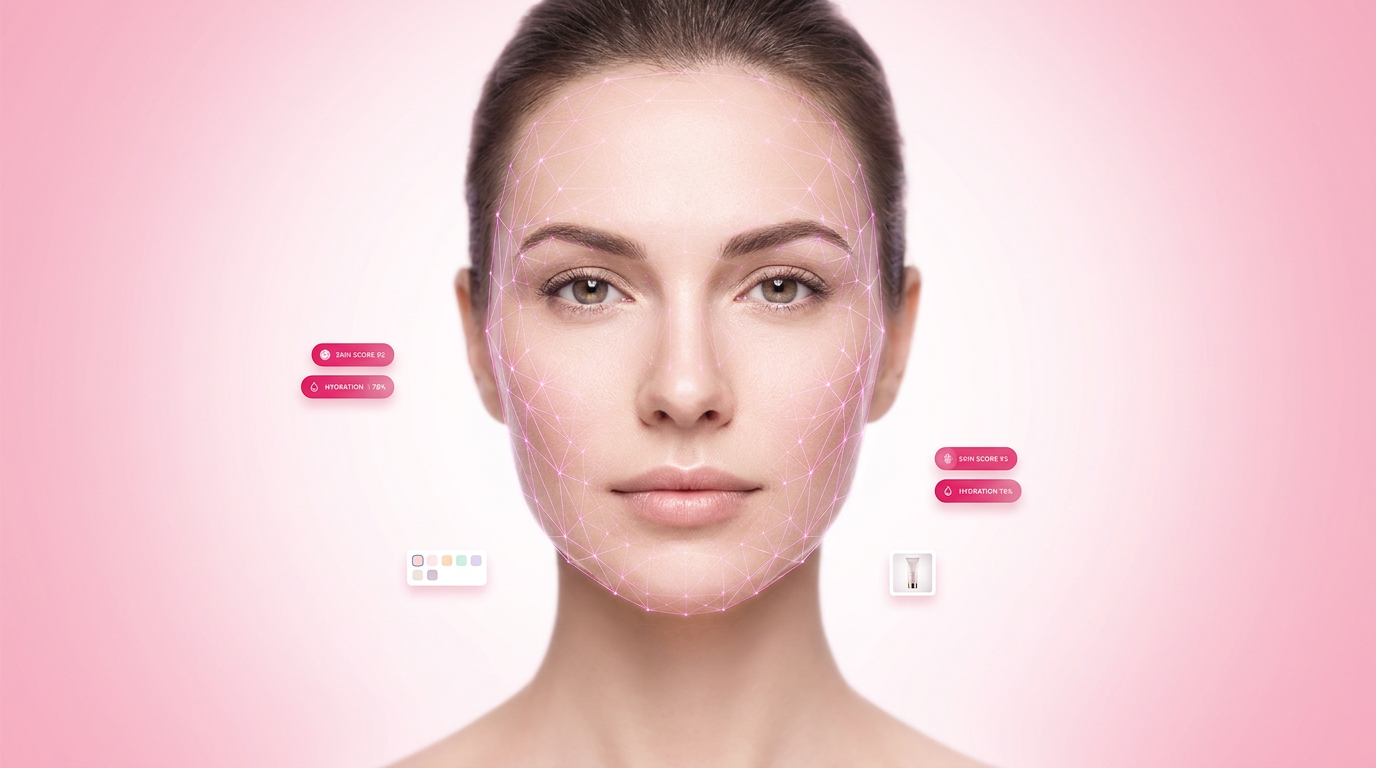
An AI skin analysis feature is no longer a futuristic concept reserved for luxury skincare brands with massive R&D budgets. It is a baseline expectation for consumers shopping online. According to Grand View Research, the AI in beauty market is projected to reach USD 13.34 billion by 2030, and much of that growth is being driven by skin analysis technology that helps shoppers find the right products without guessing. If your beauty brand still relies on generic product descriptions and shade guides to drive purchases, you are already behind.
The shift is not subtle. A 2023 Epsilon study found that 73% of consumers actively want personalized skincare recommendations before they buy. They want to know their skin type, their specific concerns, and which products address those concerns. Brands that deliver this experience are seeing measurable results. GlamAR-powered skin analysis tools, for example, have driven a 45% boost in conversion rates and a 62% reduction in skincare product returns. Those numbers are hard to ignore when margins in beauty e-commerce keep getting thinner.
This article breaks down exactly why every beauty brand needs an AI skin analysis feature, how the technology works under the hood, and what it takes to integrate one into your existing platform. We will also look at how GlamAR's AI Skin Analysis SDK stacks up against traditional consultations and where this technology fits across different beauty industry verticals.
{{component="/internal/widgets"}}
What is an AI skin analysis feature, and how does it work?
An AI skin analysis feature uses computer vision and machine learning algorithms to evaluate a user's skin in real time through a smartphone camera or webcam. The user takes a selfie or a short video, and the system maps their face using facial landmark detection, identifies skin regions, and then classifies visible concerns like acne, wrinkles, dark spots, redness, and uneven texture. The entire process typically takes under five seconds, making it fast enough to keep users engaged during a shopping session.
The technology behind it relies on convolutional neural networks (CNNs) trained on large datasets of dermatological images. These models learn to distinguish between different skin conditions with high accuracy, often matching or exceeding the consistency of human dermatologists for common concerns. More advanced systems like GlamAR's AI Facial Skin Analysis go further by mapping 150 facial biomarkers and analyzing 14+ distinct skin concerns across 7 skin types.
Here is what a robust AI skin analysis feature typically evaluates:
- Skin type classification across oily, dry, combination, normal, sensitive, and other categories using sebum and hydration indicators
- Acne and blemish detection including active breakouts, post-inflammatory hyperpigmentation, and comedonal acne
- Wrinkle and fine line mapping with depth scoring and localization around eyes, forehead, and mouth
- Dark spot and pigmentation analysis including melasma patterns, sun damage, and uneven skin tone
- Skin texture evaluation measuring pore size, roughness, and overall smoothness
- Under-eye analysis for dark circles, puffiness, and dehydration signs
Benefits of AI skin analysis for beauty brands
The business case for adding an AI skin analysis feature goes well beyond novelty. Brands that have deployed this technology are reporting tangible improvements across their entire funnel, from first visit to repeat purchase. Here are the core benefits that matter most.
- Higher conversion rates. When shoppers receive personalized product recommendations based on their actual skin concerns, they buy with more confidence. Brands using GlamAR's skin analysis tools have seen conversion rates jump by 45%, because the recommendation feels earned rather than algorithmic guesswork.
- Dramatically lower return rates. Returns are one of the biggest margin killers in beauty e-commerce. A 62% reduction in skincare returns, as documented by GlamAR partners, happens because customers are buying products that genuinely match their skin needs instead of impulse-purchasing based on marketing claims.
- Increased average order value. Brands with skin analysis tools see 3x higher average order value compared to standard product pages. When the analysis identifies multiple concerns, customers naturally add complementary products like serums, moisturizers, and treatments to their cart.
- Stronger customer engagement. GlamAR's AI skin analysis drives 94% engagement rates, meaning nearly every user who starts the analysis completes it. That level of interaction is almost unheard of for any e-commerce feature. The analysis becomes a destination in itself, not just a checkout tool.
- First-party data collection. Every skin analysis session generates valuable data about your customer base. Skin type distribution, most common concerns by demographic, seasonal trends in skin health. This data fuels smarter product development, inventory planning, and marketing segmentation without relying on third-party cookies.
- Brand differentiation. In a market where every D2C skincare brand is running the same influencer playbook, an AI skin analysis feature is a genuine differentiator. It signals technological sophistication and a commitment to personalized care that generic quizzes cannot match.
Why every beauty brand needs AI skin analysis
Understanding the benefits is one thing. Understanding why this technology is becoming non-negotiable is another. The beauty industry is shifting from mass-market to hyper-personalized, and AI skin analysis sits at the center of that shift. Let us break down the specific business drivers.
Customer retention through personalized experiences
Acquiring a new customer in beauty e-commerce costs five to seven times more than retaining an existing one. The brands winning the retention game are the ones that make every interaction feel tailored. An AI skin analysis feature creates a personalized skin profile that evolves over time. When a customer returns to your site, GlamAR's system can compare their current skin state to previous analyses, track improvement, and recommend next-step products based on real progress.
This is not the same as a loyalty program that offers points. It is a health and beauty journey that the customer co-owns with your brand. That emotional connection drives repeat purchases far more effectively than discount codes. Brands using GlamAR's AI Skin Analyzer have reported significant improvements in customer lifetime value because the analysis creates a reason to come back that goes beyond transactional incentives.
Personalized recommendations that actually convert
Most "personalized" recommendation engines in beauty e-commerce are collaborative filtering systems. They recommend products based on what similar shoppers bought, not based on what a specific customer's skin actually needs. AI skin analysis flips this model entirely. The recommendation comes from objective skin data, not purchase history.
When GlamAR's system identifies that a user has combination skin with visible enlarged pores and early signs of sun damage, the product recommendations are specific, relevant, and defensible. The customer understands why they are being shown a niacinamide serum instead of a retinol cream. That transparency builds trust, and trust converts. A detailed analysis of conversion rate improvements shows that this data-driven recommendation approach consistently outperforms traditional product discovery flows.
First-party data collection in a cookieless world
With third-party cookies disappearing and privacy regulations tightening globally, beauty brands are scrambling to build first-party data strategies. An AI skin analysis feature is one of the most natural and value-exchanging ways to collect rich customer data. Users voluntarily share their skin data because they receive immediate, tangible value in return through personalized recommendations and skin health insights.
The data generated from GlamAR's skin analysis includes skin type distribution across your customer base, prevalence of specific concerns by age group and geography, seasonal variation in skin conditions, and product-concern matching patterns. This intelligence is gold for product development teams, marketing strategists, and inventory managers. And it is all first-party, fully consented, and GDPR-compliant.
Competitive edge in a crowded market
The beauty industry launches thousands of new products every month. Shelf space, whether physical or digital, is brutally competitive. An AI skin analysis feature gives your brand a structural advantage that competitors cannot replicate overnight. It takes significant engineering investment, dermatological validation, and user experience design to build a skin analysis tool that actually works well.
Or, you can integrate GlamAR's ready-made SDK and leapfrog months of development. Either way, the brands that adopt this technology early are building a data moat. Every analysis they run makes their recommendation engine smarter, their product-market fit tighter, and their customer relationships deeper. Brands that wait will find themselves trying to catch up to competitors who already have millions of skin profiles informing their strategy.
Measurable impact on conversion rates
Let us talk numbers. The 45% conversion boost that GlamAR partners report is not a cherry-picked statistic from one brand during a promotional period. It is a consistent pattern across multiple deployments. The mechanism is straightforward. When a customer sees an objective analysis of their skin, followed by products specifically matched to their concerns, the purchase decision shifts from "do I need this?" to "this is what I need."
The 94% engagement rate with GlamAR's skin analysis means that nearly every visitor who encounters the feature uses it. Compare that to the 2-3% click-through rate on typical product recommendation carousels. The impact on D2C beauty brand conversions is particularly striking because these brands often lack the physical retail presence where customers could otherwise test products in person. AI skin analysis fills that gap digitally.
How GlamAR's AI Skin Analysis SDK powers beauty brands
GlamAR, built by Fynd, has developed one of the most comprehensive AI skin analysis solutions available for beauty brands today. The technology is not a basic skin quiz wrapped in a modern interface. It is a full-stack computer vision system that processes facial imagery through multiple neural network layers to deliver clinical-grade skin assessments in real time.
GlamAR's AI Skin Analysis maps 150 facial biomarkers across every analysis session. These biomarkers cover geometric facial features, skin surface topology, color distribution patterns, and texture gradients. The system classifies skin into 7 distinct types and evaluates 14+ skin concerns simultaneously, including acne, wrinkles, dark circles, enlarged pores, redness, oiliness, dryness, hyperpigmentation, skin texture irregularities, firmness loss, and more.
What sets GlamAR's SDK apart from basic skin analysis tools is the integration layer. The SDK is designed to plug directly into existing e-commerce platforms, mobile apps, and in-store kiosk systems. GlamAR offers a dedicated Skin Analysis Shopify Plugin for brands on Shopify, making deployment as simple as installing an app and configuring product mappings. For custom platforms, GlamAR provides JavaScript and native mobile SDKs with comprehensive documentation and dedicated integration support.
GlamAR's system does not just identify skin concerns. It generates a quantified skin health score, provides concern-specific severity ratings, and maps each concern to product categories and ingredients. This means brands can automate their entire recommendation pipeline. When GlamAR detects moderate acne with oily skin tendencies, it can automatically surface salicylic acid cleansers, lightweight gel moisturizers, and non-comedogenic sunscreens from the brand's catalog. The recommendation logic is configurable, so brands retain full control over which products map to which concerns.
GlamAR also provides an analytics dashboard that aggregates anonymized skin data across all users. Brands can see which skin concerns are most prevalent among their customers, how skin profiles vary by region or season, and which product recommendations drive the highest conversion rates. This feedback loop turns every customer interaction into a data point that improves the system over time.
{{transform="/internal/widgets"}}
Industries and use cases for AI skin analysis
AI skin analysis technology is not limited to a single vertical within beauty. The applications span multiple industries and use cases, each with distinct requirements and opportunities.
Beauty e-commerce
This is the most obvious and highest-impact use case. Online beauty retailers lose significant revenue to product uncertainty. Shoppers cannot touch, feel, or test products before buying, which leads to hesitation and high return rates. GlamAR's AI skin analysis feature bridges this gap by giving shoppers a data-driven reason to purchase. The complete guide to AI skin analysis for e-commerce covers implementation strategies for brands at every scale.
Skincare clinics and dermatology practices
Dermatology clinics are using AI skin analysis as a patient intake tool. Before a consultation, patients complete a GlamAR-powered skin analysis that gives the dermatologist a baseline assessment and quantified concern scores. This saves consultation time, creates a documented baseline for tracking treatment progress, and adds a layer of technological credibility that patients increasingly expect from modern practices.
Direct-to-consumer skincare brands
D2C brands face a unique challenge. They need to convince first-time visitors to trust a brand they have never heard of with their skincare routine. An AI skin analysis feature on a D2C site immediately elevates the brand's perceived expertise. Instead of telling customers "our vitamin C serum is great for dark spots," GlamAR's tool shows them "you have moderate hyperpigmentation on your cheeks, and here is a vitamin C serum formulated to address exactly that." The specificity builds credibility that no amount of influencer marketing can match.
Salons and beauty retail stores
Physical retail is not immune to the AI skin analysis wave. Salons and beauty stores are deploying GlamAR-powered kiosks and tablet-based skin analysis stations. Customers walk in, get a free skin analysis, and leave with a printed report and product recommendations. This transforms the in-store experience from browsing to consulting, increases dwell time, and drives higher-value purchases. Staff can use the analysis results to guide conversations and upsell treatments.
Wellness and telehealth platforms
Telehealth platforms focused on dermatology and wellness are integrating AI skin analysis as a triage tool. Before scheduling a virtual consultation, patients complete a skin analysis that helps route them to the right specialist and provides the clinician with preliminary data. GlamAR's SDK supports HIPAA-compliant deployment configurations for healthcare applications, making it viable for regulated environments.
How to integrate AI skin analysis into your beauty platform
Adding an AI skin analysis feature to your existing beauty platform does not require rebuilding your tech stack. GlamAR has designed its SDK for straightforward integration across common e-commerce architectures. Here is the step-by-step process.
Step 1: Define your use case and product mapping
Before writing any code, map your product catalog to skin concerns. Identify which products address acne, which target hyperpigmentation, which suit oily skin versus dry skin. GlamAR's system needs this mapping to generate accurate recommendations. Most brands can complete this mapping in a spreadsheet within a few hours.
Step 2: Choose your integration method
GlamAR offers multiple integration paths depending on your platform. Shopify brands can install the GlamAR Skin Analysis Shopify Plugin directly from the app store. Custom platforms can integrate via GlamAR's JavaScript SDK for web or native SDKs for iOS and Android. For headless commerce architectures, GlamAR provides REST APIs that return skin analysis results as structured JSON.
Step 3: Configure the analysis parameters
GlamAR's SDK allows you to configure which skin concerns are analyzed, how results are displayed, and what severity thresholds trigger specific product recommendations. You can also customize the user interface to match your brand's visual identity, including colors, fonts, and messaging tone.
Step 4: Test with real users
Before a full rollout, GlamAR recommends a beta period with a subset of your traffic. This lets you validate that product mappings are accurate, that the user experience flows smoothly, and that recommendation quality meets your standards. GlamAR's analytics dashboard tracks engagement, completion rates, and recommendation click-through during this phase.
Step 5: Launch and optimize
Once testing validates the experience, roll out to your full audience. GlamAR's team provides ongoing optimization support, including A/B testing different analysis flows, refining product mappings based on conversion data, and updating the ML model with new skin concern categories as they become available. Most brands see the full 45% conversion lift within the first 60 days of deployment.
GlamAR's AI skin analysis vs traditional skin consultations
Traditional skin consultations, whether in-store with a beauty advisor or in-clinic with a dermatologist, have served the industry for decades. But they have inherent limitations that AI skin analysis addresses directly. Here is how GlamAR's technology compares.
Consistency and objectivity
Human consultants vary in their assessments. Two beauty advisors might evaluate the same customer's skin differently based on their training, experience, lighting conditions, and even their mood. GlamAR's AI applies the same 150-biomarker analysis framework to every face, every time. The results are reproducible, quantified, and free from subjective bias. This consistency is critical for brands that need reliable data across thousands of customer interactions.
Scalability
A beauty advisor can consult with maybe 15 to 20 customers per day. GlamAR's AI skin analysis can process thousands of analyses simultaneously with zero degradation in quality or speed. For brands with high website traffic or multiple retail locations, this scalability difference is the difference between a nice-to-have feature and a viable business strategy. GlamAR's cloud infrastructure handles peak loads during sales events and product launches without any additional configuration.
Speed and accessibility
Traditional consultations require appointments, travel, and waiting. GlamAR's skin analysis takes under five seconds and is available 24 hours a day from any device with a camera. A customer lying in bed at midnight can get the same quality skin assessment that would previously require a weekday appointment at a clinic. This accessibility removes friction from the purchase journey and meets customers where they already are, which is on their phones.
Data capture and tracking
Traditional consultations generate notes at best, often on paper. GlamAR digitizes every analysis, creating a longitudinal skin health record for each customer. Over time, this data shows whether a customer's skin concerns are improving, worsening, or changing. Brands can use this progression data to time product recommendations, trigger re-engagement campaigns, and demonstrate product efficacy with before-and-after data that the customer owns.
Cost efficiency
Hiring, training, and retaining skilled beauty advisors is expensive. GlamAR's SDK operates at a fraction of the per-interaction cost of a human consultant. For brands scaling across multiple markets and channels, the cost difference compounds quickly. The savings can be redirected into product development, marketing, or expanding the AI capabilities further. According to McKinsey's beauty industry analysis, brands that invest in digital tools over headcount-heavy models consistently achieve better unit economics.
{{revolution="/internal/widgets"}}
The beauty industry is moving toward a model where every product recommendation is backed by data, every customer interaction generates insight, and every purchase feels personalized. An AI skin analysis feature is the technology that makes this model possible at scale.
GlamAR's AI Skin Analysis SDK gives beauty brands the infrastructure to deliver clinical-grade skin assessments through any digital touchpoint. With 150 facial biomarkers, 14+ skin concerns, 7 skin type classifications, and proven metrics like 94% engagement, 45% conversion lift, and 62% return reduction, the technology has moved well past the proof-of-concept stage. It is a production-ready tool that brands across e-commerce, D2C, clinical, and retail verticals are deploying today.
The question for beauty brands is not whether AI skin analysis will become standard. It already is. The question is whether you integrate it now while the competitive advantage is still significant, or later when it has become table stakes and the data moat belongs to someone else. GlamAR makes that decision straightforward with flexible SDK options, ready-made Shopify plugins, and a track record of measurable results across beauty brands of every size.
An AI skin analysis feature uses computer vision and machine learning to evaluate your skin through a selfie or webcam image. It identifies concerns like acne, wrinkles, dark spots, and skin type in real time, then recommends products matched to your specific needs.
GlamAR's AI maps 150 facial biomarkers and detects 14+ skin concerns across 7 skin types. The system is trained on large dermatological datasets and delivers consistent, reproducible results that match the accuracy of professional skin assessments for common concerns.
Yes. GlamAR's AI Skin Analysis SDK is trained on diverse datasets that include all skin tones and ethnicities. The system uses biomarker-based analysis rather than color-dependent shortcuts, ensuring accurate results regardless of the user's complexion or lighting conditions.
Shopify brands can go live in under a day using GlamAR's Skin Analysis Shopify Plugin. Custom platform integrations via JavaScript or native SDKs typically take one to two weeks, including product mapping, UI customization, and testing with real users before full deployment.
No. AI skin analysis is a screening and recommendation tool, not a medical diagnostic device. It helps beauty brands personalize product suggestions and helps users understand their skin better. For medical skin conditions, users should always consult a licensed dermatologist.
GlamAR partners report a 45% increase in conversion rates, 62% reduction in skincare returns, and 94% user engagement with the analysis feature. Brands also see 3x higher average order value when skin analysis drives product recommendations compared to standard browsing.
Discover how AR, VR and 3D can drive revenue growth in 2026
Schedule a call with our team

.avif)