
How does AI skin analysis improve conversion rates?


The AI-based skin analysis market is a growing trend that is helping beauty brands and salons to experience rapid growth, which is driven by demand for personalized skincare, early detection, and non-invasive solutions by using computer vision and artificial intelligence technologies. It shows the growth of the AI skin analysis market that accounted for USD 1.38 billion in 2024 and USD 1.61 billion in 2025, which is expected to reach USD 7.75 billion by 2035, growing at a CAGR of around 16.98% from 2025 to 2035.
It shows the increasing usage of the skin analysis tool among online sellers and beauty salons, which can be used to create personalized skincare routines by dermatologists and e-commerce sellers. But have you ever wondered what the benefits are of using an AI-based skin analysis tool that helps beauty brands and salons to improve their overall sales and conversion rates?
Before implementing the skin analysis tool on your store or e-commerce platform, it is very important to understand how it helps businesses and beauty salons to increase their sales and conversion rates. In this blog, I will provide you with detailed information on how an AI-based skin analysis tool helps businesses and beauty salons to improve their conversion rates and overall sales.

What is an AI skin analysis, and what are its key features?

AI-based skin analysis is an artificial intelligence tool that helps users understand their skin issues and concerns by using computer vision and deep learning technologies to provide them with a comprehensive skin health report. It analyzes high-resolution images or live videos of users’ skin by detecting and analyzing it for wrinkles, acne, pores, and pigmentation, which will help them to understand their skin issues that cannot be seen by the naked eye and help them to opt for personalized product and treatment recommendations.
With the help of this AI-driven tool, beauty brands and salons can analyze, detect, and understand various skin concerns and issues of their clients, which will also help them build tailored skincare routines according to their clients' needs and requirements. It helps users to build personalized skincare routines by enabling them to select suitable products according to their skin conditions and concerns by generating a comprehensive skin health report after detecting and analyzing their skin issues.
Key features
- Image-based skin analysis: It allows users to generate a comprehensive report of their facial skin, including textures, patterns, visuals, and more, with the help of computer vision technology, helping them to perform early detection of various skin conditions such as pigmentation, acne, and melanoma.
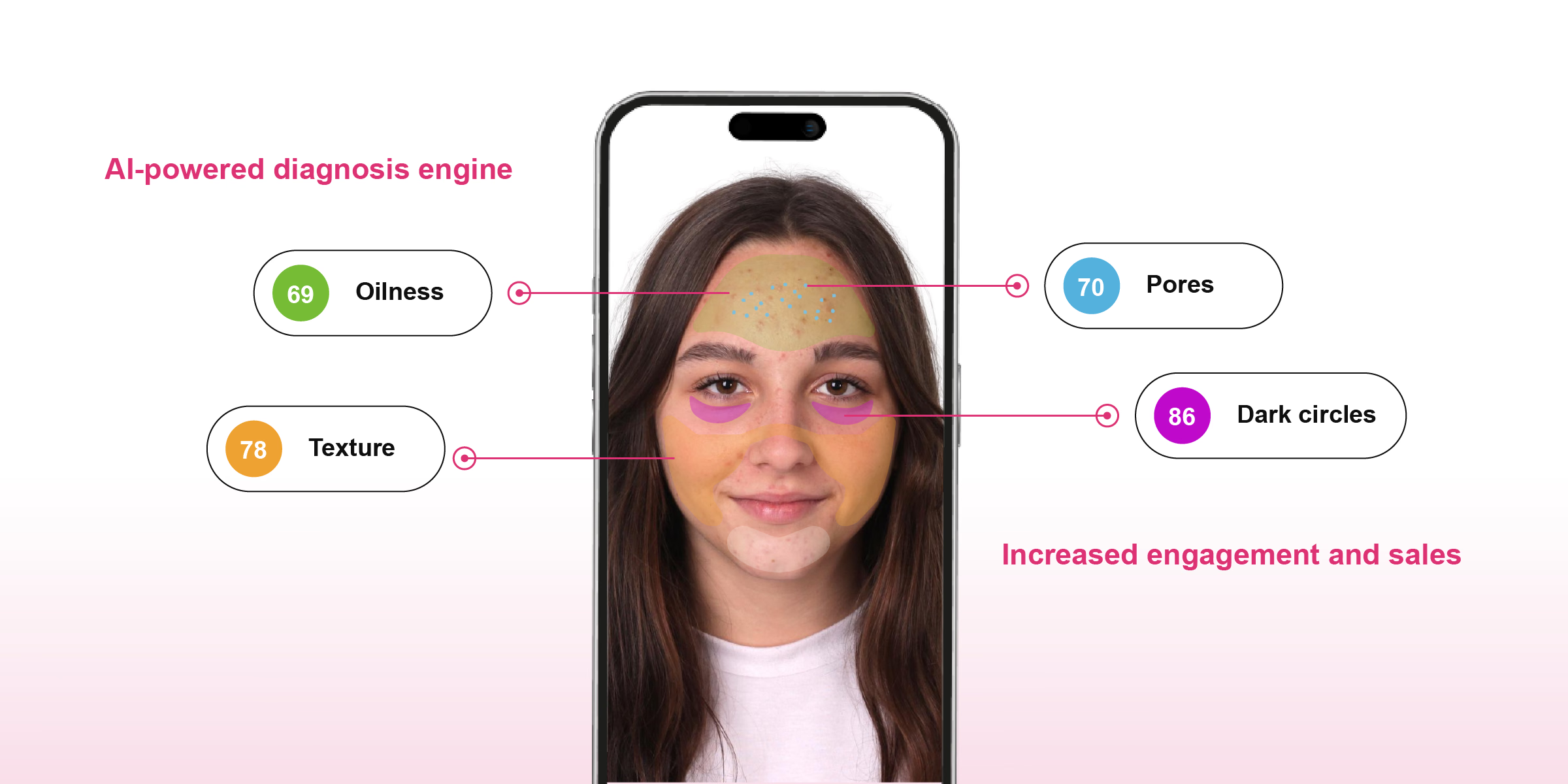
- AI-powered diagnosis engine: It helps users identify different skin conditions with the help of advanced machine learning models accurately, as it is trained on thousands of dermatology images to detect issues like eczema, fungal infections, skin cancer, and more.
- Personalized recommendations: It provides users with a detailed skin analysis along with personalized treatments and recommended steps based on their skin conditions, helping them to treat their skin with dermatologist-approved treatments and products.
Key ways in which AI skin analysis helps beauty businesses to improve conversions

Using an AI-based skin analysis tool helps beauty businesses and salons in multiple ways, enabling them to increase their sales, conversions, and engagement, which will also provide their customers with a personalized experience of building a skincare routine by generating a tailored skin health report. With the help of this tool, businesses can build stronger and more trustworthy relationships with their customers while fostering their loyalty by helping them select the most suitable products according to their skin issues.
In this section, I will help you understand how these benefits will help a beauty brand or salon to improve their conversion rates while providing their customers with data-driven insights and building stronger relationships with their customers.


1. Personalized recommendations and accuracy
Brands can use the skin analysis tool to provide their customers with a personalized experience by helping customers build their tailored skincare routine by recommending products according to their skin conditions. It uses AI technology to perform a detailed analysis to provide users with data-driven and relevant solutions for their skin concerns, helping the brand increase customer satisfaction and generate more leads.
It will also help the brand to foster customer trust and loyalty by offering them customized recommendations depending on their skin condition, which will improve their conversions and sales by enabling their customers to build personalized skincare routines.
2. Increased engagement and sales
With the help of the skin analysis tool, brands can increase user engagement and sales by providing their customers with personalized recommendations and an engaging interface. Brands provide their customers with an engaging and interactive interface that keeps users engaged on the website by elongating their session time and providing them with a detailed skin analysis report.
Users can use this report along with personalized product recommendations to purchase the best alternative products depending on the skin issues, which will help the brand increase conversion rates and sales.
3. Reduced returns and dissatisfaction
By using the skin analysis tool, brands can increase user satisfaction with their products by recommending the most effective solutions according to their skin issues. With the help of personalized recommendations, brands can help users make more informed and confident decisions depending on their skin conditions, which will reduce their uncertainty of product choice.
Hence, it will help the brand to increase customer satisfaction by helping them make informed decisions, which will also reduce the product return rates and enable users to make effective purchasing decisions.
4. Data-driven product development
With the help of the AI-based skin analysis tool, brands can develop data-driven products because it provides them with detailed information on customer preferences and choices. Brands can use these data-driven insights to understand more about users’ needs and requirements, which will enable them to address skin concerns and deep dive into the trends among the target audience.
It will help the brand to understand its target audience and optimize its marketing and development strategies accordingly, which will enable it to generate more user-friendly products and help them meet customer expectations.
Introducing GlamAR’s AI skin analysis tool for beauty salons and brands
GlamAR provides beauty and cosmetics businesses with multiple AI- and AR-based solutions, such as virtual try-ons and skin analyzers, which will help them to provide their customers with an engaging and immersive online shopping experience. Its AI-based skin analysis SDK is a science-backed analysis tool that helps users analyze their skin condition and improve it by optimizing and personalizing their skincare routine according to the skin analysis report.
With the help of this AI-based skin analysis tool, online beauty salons and brands can perform an analysis of more than 14 skin issues, including spots, wrinkles, texture, redness, oiliness, and moisture, providing their clients with a detailed skin health report. It is an AI-driven solution that is easily tailored for beauty brands and salons, which is trained on more than 3 million data points to ensure accurate skin analysis and uses 94 algorithms to help beauty brands and salons recommend skincare products to their customers.
By using GlamAR’s skin analysis tool, brands and salons can increase their conversion rates and enhance their customer retention rate by 4 times by offering them key insights into customer preferences to drive smarter decisions and fuel business growth. It helps businesses to decrease their product return rate by up to 62% by providing their customers with personalized product recommendations, as well as offering accurate demand forecasting that helps them to reduce wastage by providing them with detailed customer data to help them make the user shopping experience more engaging.


Features
- Accurate product suggestions: It helps beauty brands and salons to provide their customers with personalized product suggestions based on their skin concerns and features, which will enable them to have a personalized skincare routine according to their needs and requirements.
- Better-suited alternatives: It helps businesses boost their user satisfaction and overall sales by providing their users with the best-suited skincare product alternatives based on their skin health and concerns, by analyzing the ingredients and mapping them to their skin issues.
- Comprehensive evaluation: It provides users with a comprehensive evaluation of more than 150 unique multidimensional facial biomarkers, which will help them to understand their skin requirements and enable them to choose products and treatments accordingly.
- In-depth metrics analysis: It provides users with a detailed and comprehensive skin analysis report by analyzing more than 15 essential skin health and beauty metrics, which will help them achieve flawless skin by using the best skincare products tailored to their skin metrics.
Advantages
- Increased conversion rate: It helps beauty brands and salons to increase their conversions by 4 times, as it helps them to provide their customers with an immersive and personalized online experience by offering them tailored recommendations based on their skin health and concerns.
- Enhanced customer retention: It helps beauty and cosmetics brands to improve their customer retention rate because it provides online sellers and salons with key insights about user preferences, which they can use to make smarter decisions and help them fuel their business growth.
- Decreased product return: It helps businesses to reduce their product return rates up to 62% by helping their customers to make more informed and confident decisions with the help of their comprehensive and detailed skin analysis report generated by the AI-based tool.
- Personalized recommendations: It helps businesses to provide their customers with tailored skincare product recommendations, which are based on their skin health and concerns, to help them build customer trust and foster their loyalty towards the brand by helping them select the best-suited alternatives.
Conclusion
With the help of an AI-based skin analysis tool, both beauty brands and salons get assistance in several ways, as it provides their customers with a detailed skin health report that they can use to build their personalized skincare routine or help them opt for customized treatment options. It also helps businesses to increase their conversions and sales by providing their customers with detailed and data-driven recommendations to help them improve their skin health.
Beauty brands and salons can use the GlamAR’s skin analysis SDK to integrate the skin analyzer into their e-commerce platforms or stores, which will help them to increase their conversion rates and improve their marketing strategies by offering them data-driven insights about customer preferences. Using this tool will enable brands and salons to foster customer engagement and satisfaction while helping them to choose the most suitable products or treatment options, depending on their skin issues.










