
10 best AR bracelet try-on (B2B SDKs) for eCommerce


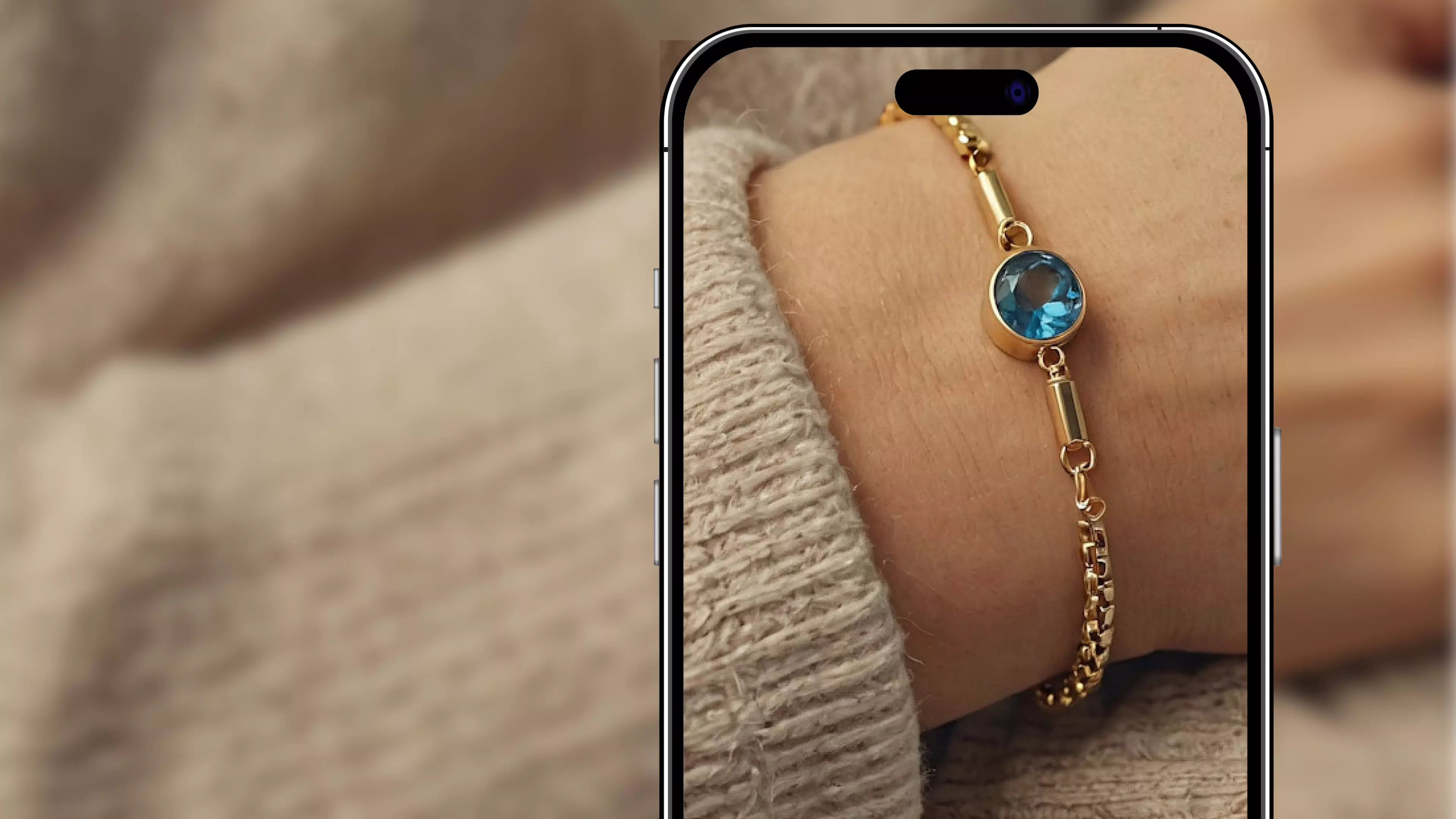
AR-powered bracelet try-ons have revolutionized the jewelry market as a whole. To ensure being the best in the business, you need to pay attention to customer needs and satisfaction.
The biggest hurdle with online shopping is the uncertainty that comes along with it. While making a purchase, consumers are confused and hesitant, as they have not seen the product in real time.
With augmented reality and virtual try-ons, this problem goes away entirely. Consumers get to try on bracelets and other products in real time, helping them make an informed decision. I took it upon myself to try out the best AR bracelet try-ons available, just to save you from the trouble.
What is a bracelet try-on?
A bracelet try-on is an AR-powered tool that allows users to virtually try on bracelets on themselves in real time using 3D digital models overlaid onto the user’s wrist. Such SDKs are effortless to use and don’t require any high-end equipment. In fact, they are designed to be used on all camera-equipped devices like mobiles, laptops, iPads, etc.
By allowing customers to try on your bracelets virtually before making any purchase, you can increase customer confidence in the product. Studies show that 71% of consumers think virtual try-ons boost purchasing confidence. This increases consumer engagement and helps boost sales while simultaneously ensuring fewer return rates.
10 Best bracelet try-ons
1. GlamAR
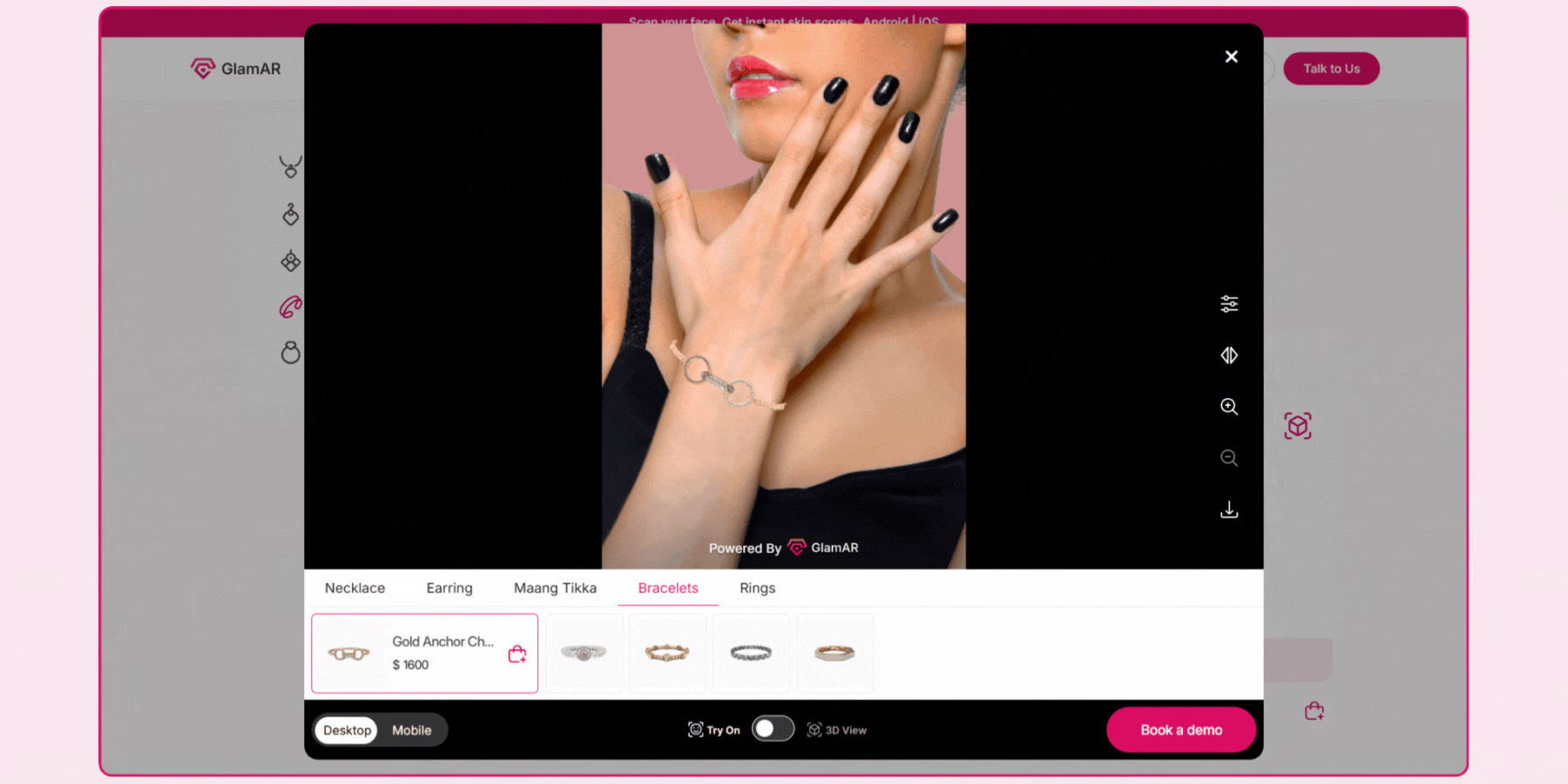
GlamAR is an all-in-one platform that provides 3D, AR, and VR solutions for retailers, e-commerce brands, and manufacturers. This platform creates an immersive and captivating shopping experience for users by bringing products to life. It is trusted by global brands like Sephora, Foxtale, Hamleys, and many more, proving its reliability.
This platform provides virtual try-ons for various categories, including makeup, accessories, eyewear, and jewelry. It is one of my top picks for bracelet try-ons for various reasons. When I tried this platform, I was stunned by how easy it was to use. The page took little to no loading time.
I found the virtual try-on option under “3D solutions.” I found options to try on products from various categories, and I chose jewelry. GlamAR offers a wide range of jewelry products, including necklaces, earrings, maang tikas, bracelets, and rings. I selected the bracelet category and clicked on "Try On."
Features:
- Try-on mode: This platform allows users to try on products in three different modes—using a live camera, by uploading a picture, or by using a model.
- Ease of application: I found the GlamAR interface to be simple and direct to use. The bracelet try-ons were easy to navigate and did not take a long time to buffer. There is no requirement to contact the team or pay any fees to access the try-on feature.
- Device compatibility: The bracelet try-on SDK is available for all devices equipped with a camera and an internet connection, making it accessible for a larger group of customers.
- Product rage: This platform offers product try-ons for various products from multiple categories, making it a suitable option for a larger audience.
- Accuracy of virtual experience: GlamAR provides its users with utmost accuracy in terms of the virtual try-ons. The bracelets are made to look lifelike with high-quality AR rendering.
- 3D view: Using GlamAR, allow your customers to view products in 3D. This feature allows users to rotate the products 360 degrees for better viewing.
- Additional features: While trying out the bracelets, I was able to zoom in, zoom out, position, or adjust the products, which helped me understand them better. I was also fascinated by the split-screen comparison feature and found it very helpful.
- Image capture: Using GlamAR, you can allow users to capture screenshots of themselves as they virtually try on products directly from the page, which they can view later, use to seek advice with this software, or post on social media.


2. TINT by Banuba
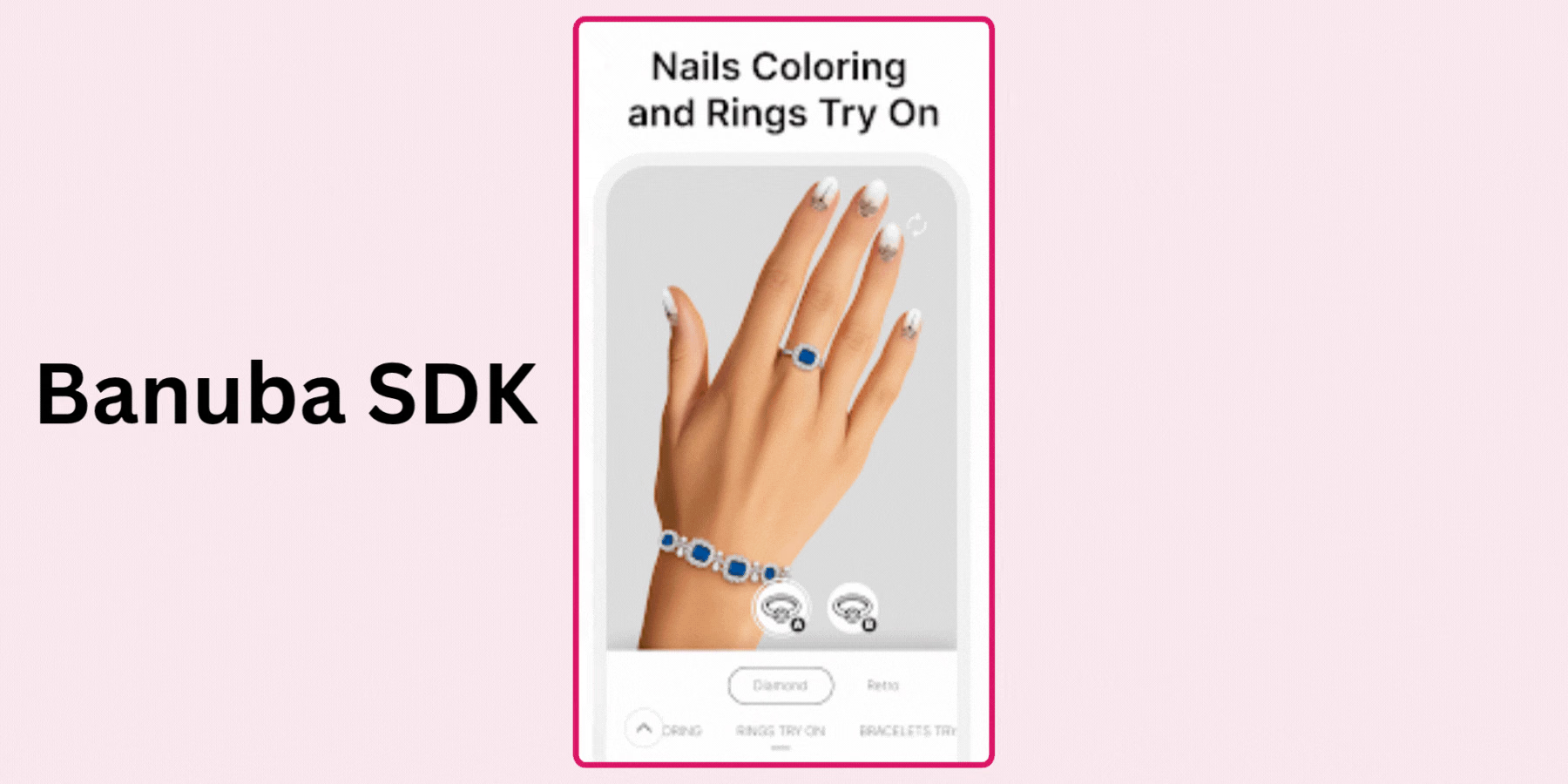
Banuba is one of the most prominent names in the AR industry. This platform creates realistic 3D models for users to provide them with a lifelike shopping experience. Banuba enables e-commerce platforms to allow users to try on a product virtually before purchasing. I found the platform very easy to use with minimal buffering.
I also observed that this platform offers many product try-ons for various categories, from jewelry to hair color, making it accessible for everyone. Banuba allows users to elevate their online shopping experience by allowing customers to test products before buying.
Features:
- Easy accessibility: Banuba is compatible with all devices that have a camera and an internet connection, making it easily accessible to a large number of people.
- Multilingual customer care: This platform offers a 24/7 multilingual customer care service to address complaints at any given time across the world.
- Vast library of products: Banuba offers a wide variety of jewelry products, including rings, necklaces, earrings, and bracelets.
- User-friendly: The bracelet try-on feature was easy to locate. After clicking on "Try On," users can choose from the vast library of products.
3. MirrAR
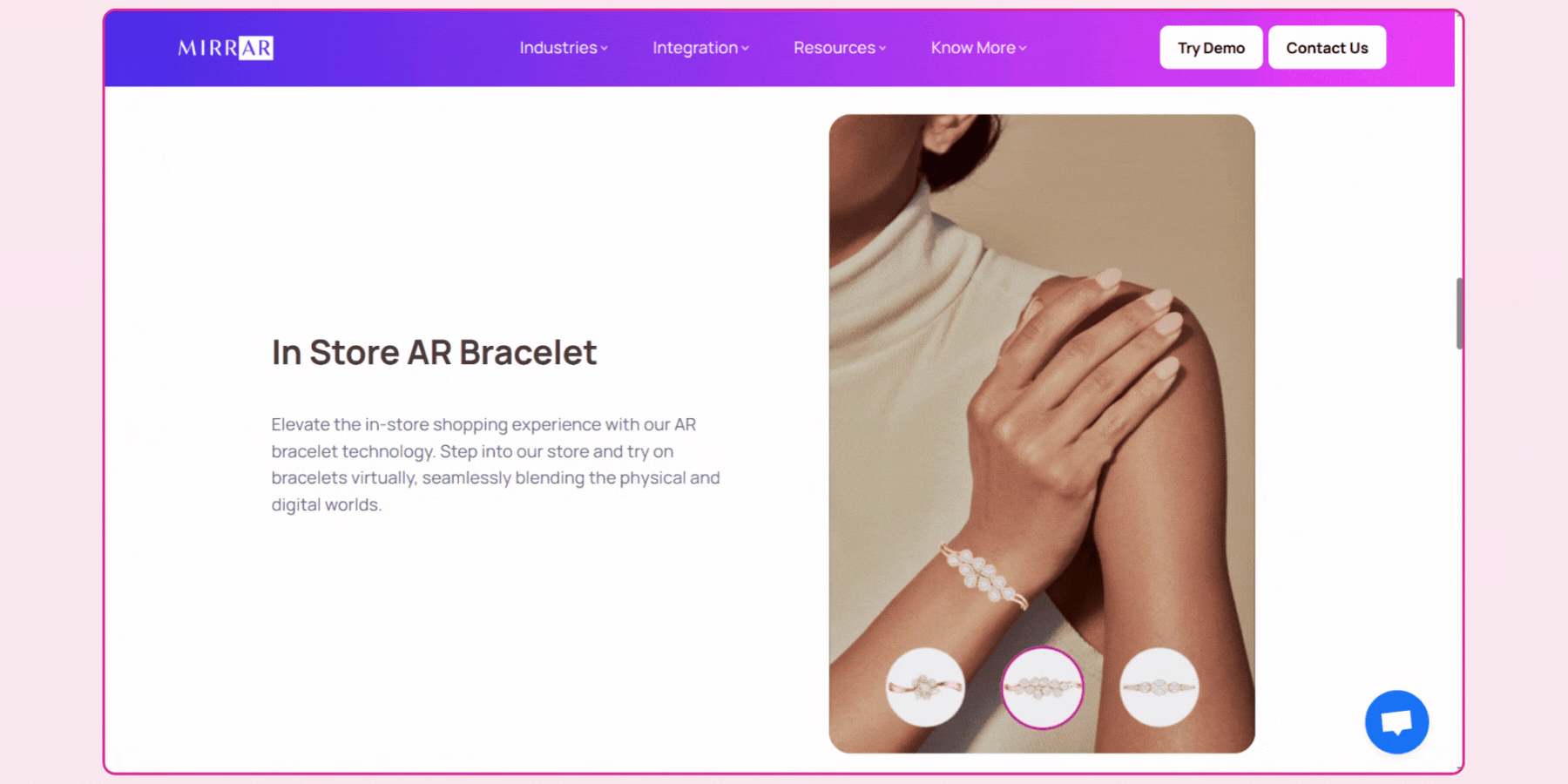
MirrAR offers advanced virtual solutions for e-commerce retailers that want to enhance customer satisfaction by allowing customers to virtually try on bracelets along with other jewelry products. Using mirrAR, users can elevate their online shopping environment and allow their customers to have an immersive shopping experience, bridging the gap between physical and online shopping.
This platform is trusted by major luxury brands across India, including renowned jewelry brands like Tanishq and Kalyan Jewellers. It also claims to result in 30% higher conversion rates, a 37% decrease in return rates, a 160% increase in customer engagement, and a 10% higher add-to-cart ratio.
Features:
- Wide range of jewelry try-ons: MirrAR offers try-ons for a wide range of products like rings, necklaces, and earrings, apart from bracelets.
- Accurate virtual experience: This platform provides users with accurate virtual try-ons for bracelets. It also allows users to move to see these true-to-life models from different angles, resulting in a better understanding. Also, it offers accurate wrist detection, which ensures accuracy.
- Streamlined setup: It provides users with in-store and online integration and is fully compatible with desktop and mobile web browsers.
- Multiple features: This platform provides users with multiple features, such as creating filters to make choosing easy. It also allows users to try on multiple products simultaneously with the “add to stack” option.
- Social media integration: This platform enables users to use custom filters and AR try-ons to take “Instagrammable” pictures and videos to share with their followers directly from the platform.
4. Camweara
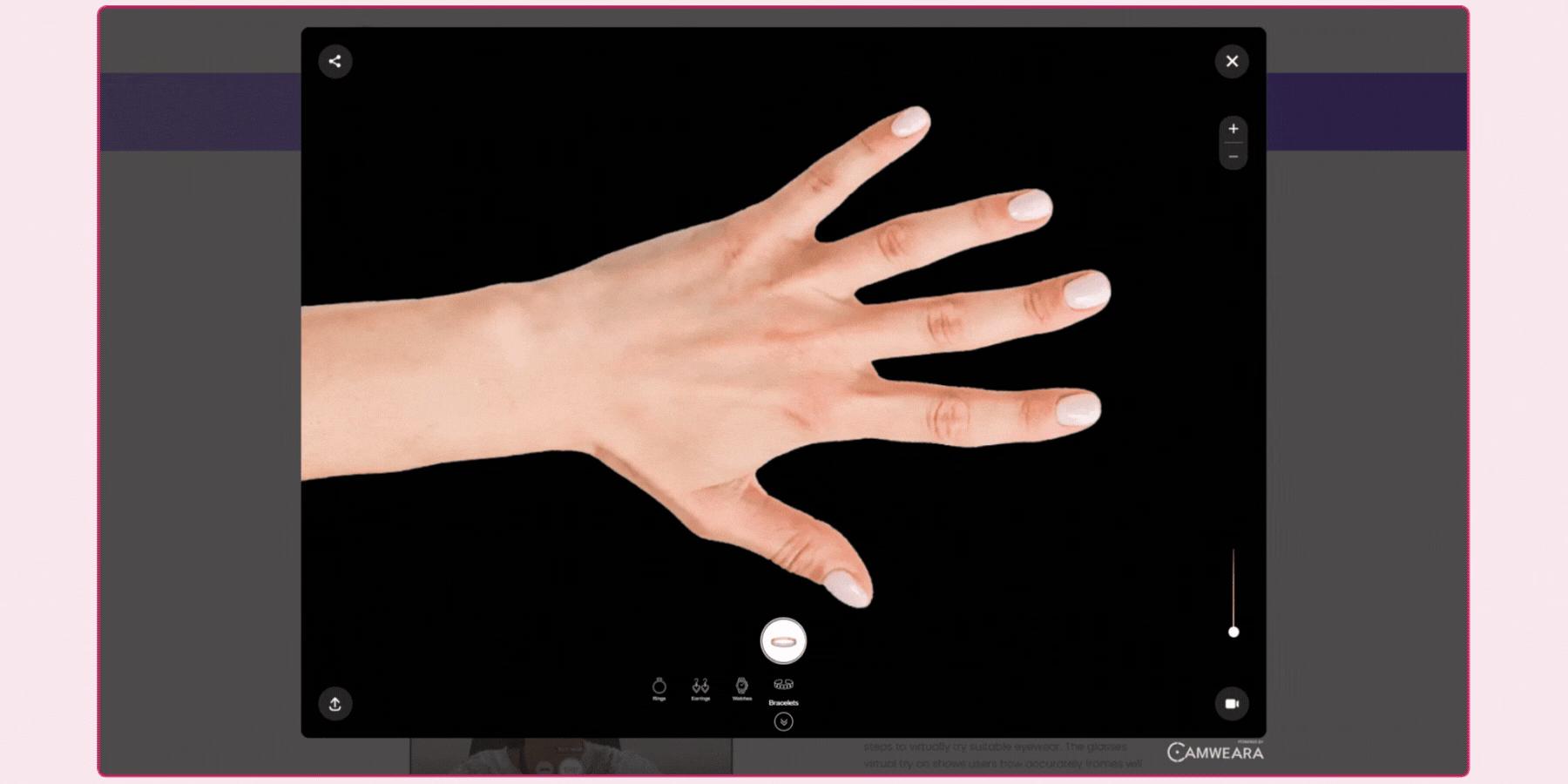
Camwera is an application using augmented reality technology to offer customers virtual try-ons of several products, such as jewelry, spectacles, clothing, watches, and caps, and offers a unique and engaging online buying experience.
Camweara allows brands to apply this technology and take away the uncertainty of customers while making online purchases by giving them the ability to try out the products virtually on themselves, which is helpful in customer confidence. Camweara is supported by 150+ customers across 20 nations and is therefore reliable.
I tested the bracelet try-on feature, and I could see that it was very accurate. The 3D overlay was accurate even when I moved my hand. The 360-degree view option was also given.
Features:
- Easy to use: Camweara's user-friendly interface allows consumers to try on jewelry products virtually without any prior tech knowledge.
- Features: It provides features like a 360-degree view in the studio mode and virtual try-on using a live camera or by uploading a picture.
- Accurate 3D models: It provides enhanced 3D models for a realistic virtual experience.
- Affordable for small businesses: Camweara provides cost-effective, lightweight AR solutions for small and medium businesses.
5. Makeup AR by Perfect Corp
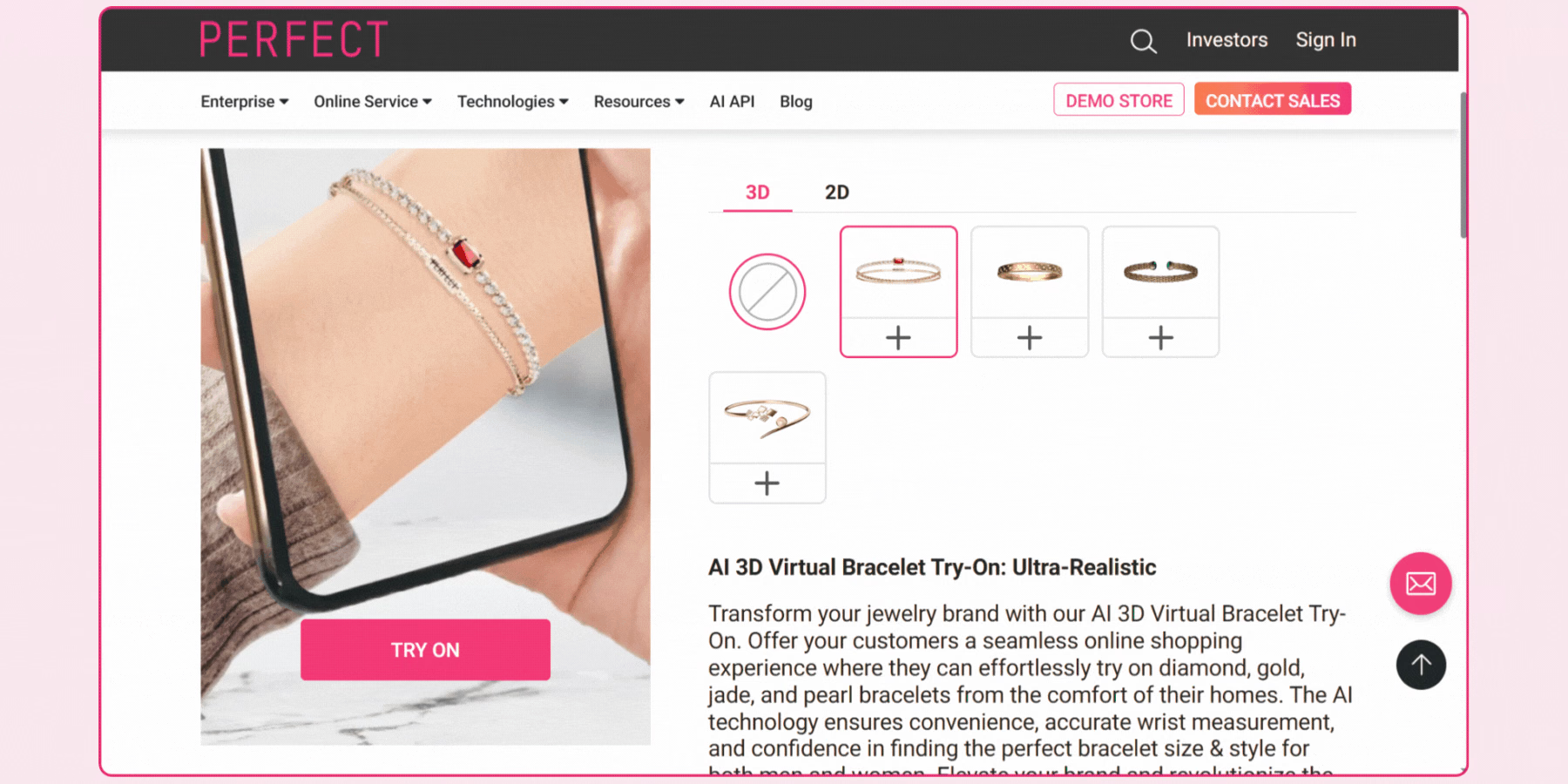
Makeup AR by Perfect Corp. is one of the most renowned platforms in the AR industry. It provides various virtual try-on solutions to retailers and brands under various categories such as makeup, hair, jewelry, face diagnostics, nails, and much more. Their augmented reality bracelet try-on works by utilizing realistic 3D models overlaid onto the user’s wrist, allowing them to test the bracelet before making a purchase.
I found this platform effortless to use. All the categories were well divided, and the bracelet try-on was easy to navigate. The virtual try-on process was also uncomplicated. After clicking on "Try On" under the bracelet category, a pop-up appeared telling me to either use my left or right wrist and remove all wrist accessories. I found the virtual try-on flawless.
Features:
- Wide range of products: This platform offers a variety of jewelry products apart from bracelets for its users to try on virtually before making a purchase. The offering includes try-ons for rings, necklaces, and earrings.
Additional features:
- It allows users to use a size guide to get an accurate idea of their size.
- It also allows users to use multiple AR jewelry product try-ons simultaneously, explore stacking styles, and mix and match with other rings, bracelets, or watches to create a personalized look.
- Moreover, it has options like a “smooth” feature, which allows users to decide the level of smoothness they require in the try-on feature.
- Realistic virtual try-ons: Makeup AR by Perfect Corp. uses emerging next-gen AR technology to provide its users with accurate virtual try-ons.
- Trusted by major brands: It is trusted by globally renowned brands like Estée Lauder and MAC for virtual try-ons.
6. Kivisense
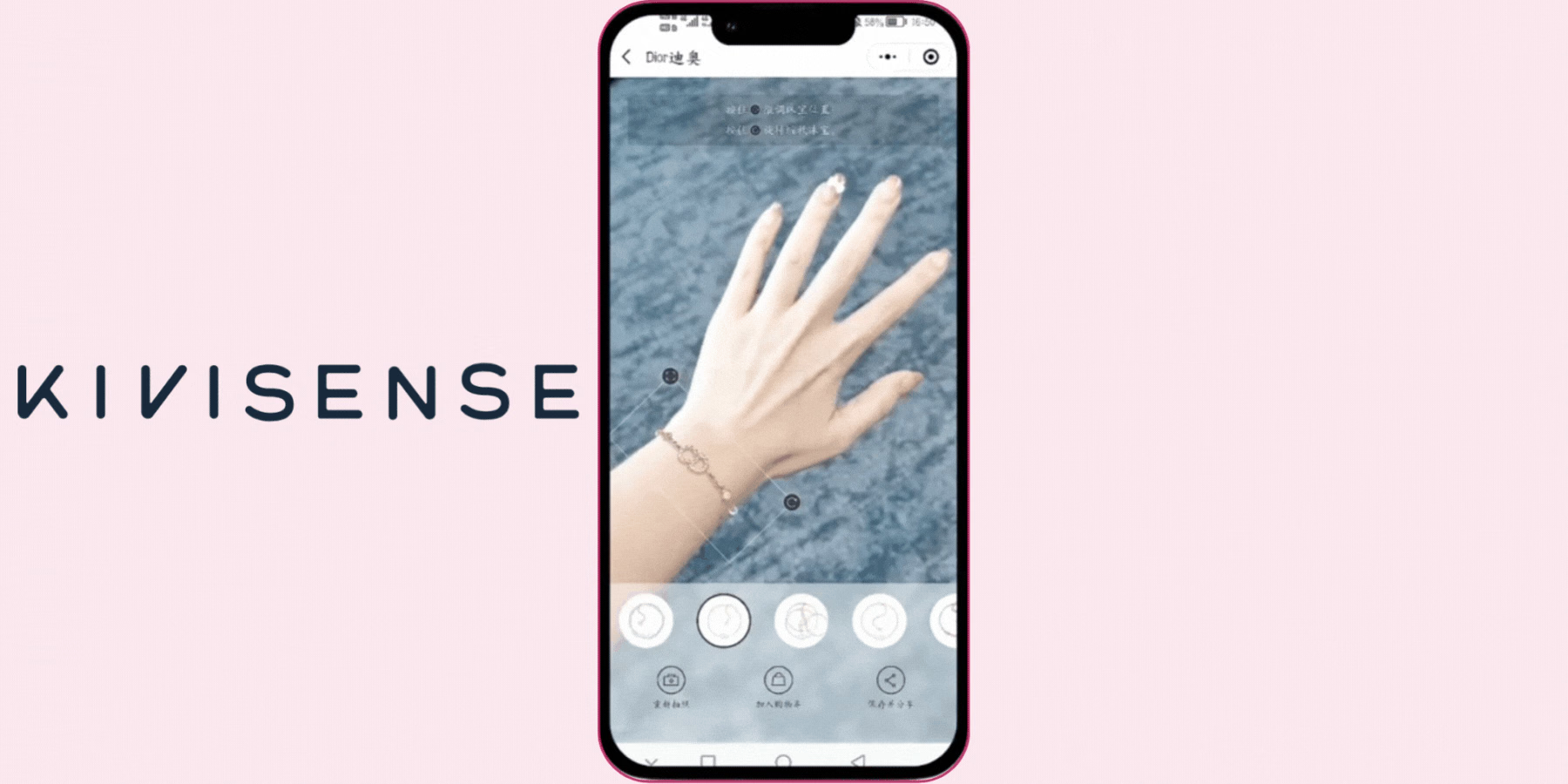
Kivisense is an AR platform where users can virtually try on various products in real time before purchasing anything. Try-ons on the platform are available across numerous product categories, from jewelry, watches, and eyewear to footwear, bags, and clothing.
The website is easy to use. I was able to easily navigate bracelet try-ons under the jewelry category. Various major brands, such as Gucci, Tiffany & Co., Graff, Dior, Chaumet, etc., trust this platform.
Features:
- Try-on product range: Sets a new standard for bracelet shopping by allowing users to virtually test them in real time.
- Social media: Allows users to capture their virtual experience through pictures and videos and instantly share them on social media, which is beneficial for brand presence.
- Quick and secure file transfers: Kivisense provides fast transfers and data security. Ensuring privacy is essential for maintaining consumer trust.
- Simple integration process: It ensures a convenient connection with e-commerce platforms, allowing retailers to incorporate virtual try-ons without the fear of disrupting existing data.
- Device compatibility: It functions optimally across all devices with a camera and internet connection, such as mobiles, laptops, tabs, etc.
7. DeepAR
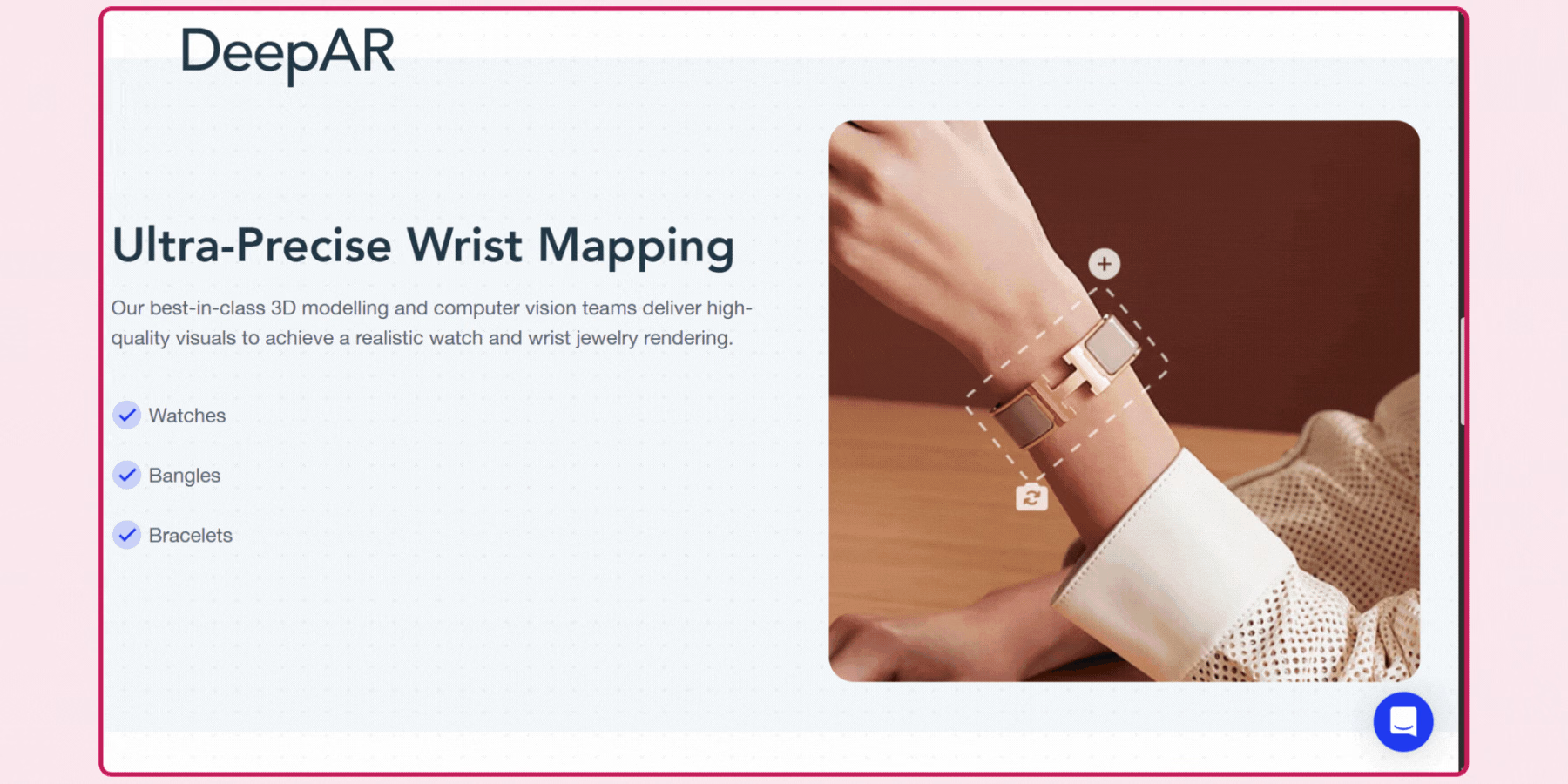
The DeepAR SDK uses DeepAR effects composed of all 3D effects, animation, and logic to bring the AR experience to life. I have discovered its compatible web, iOS, and Android features for bracelet try-ons. It designs photo-realistic simulations for brands' customers.
I found this platform convenient to use. All the categories were mentioned clearly, and buffering was minimal. This platform is trusted by major brands like Rolex and Tiffany & Co. Let your shoppers try this platform to elevate your online brand environment.
Features:
- Accuracy: This platform uses high-quality augmented reality rendering to provide accurate virtual bracelet try-ons.
- Product try-on range: DeepAR gives an accurate virtual try-on experience for various product categories like shoes, wrist jewelry, makeup, glasses, etc.
- Advanced features: This platform allows users to test products in three different modes, including using a live camera, uploading a picture, or using a model. Also, it allows users to try on various products at once to create looks and make better and more informed decisions.
- Easy to use: This platform is convenient and simple to use for new or technologically challenged users.
8. KiXR
The KiXR platform imitates a real-time visual experience for its users, enabling them to elevate their brand’s online shopping environment by allowing customers to try on products in real time before making any purchasing commitment. It includes multiple product categories, including jewelry, shoes, watches, and more. It designs accurate 3D models with the help of a few high-definition images.
KiXR also ensures the consumers' privacy by not saving any data after the session ends. It also allows users to make video calls with up to six people at a time and get advice from them in real time for better decision-making.
Features:
- Visual try-on experience: It allows users to try on products and test them before buying.
- Features offered: Users can zoom in, zoom out, and adjust the product to enhance their understanding.
- Multiple try-ons offered: KiXR offers a variety of product try-ons in addition to bracelets, including other categories like eyewear and shoes.
- Privacy: KiXR never stores user data. This solution is PII compliant, including GDPR.
9. Tangiblee
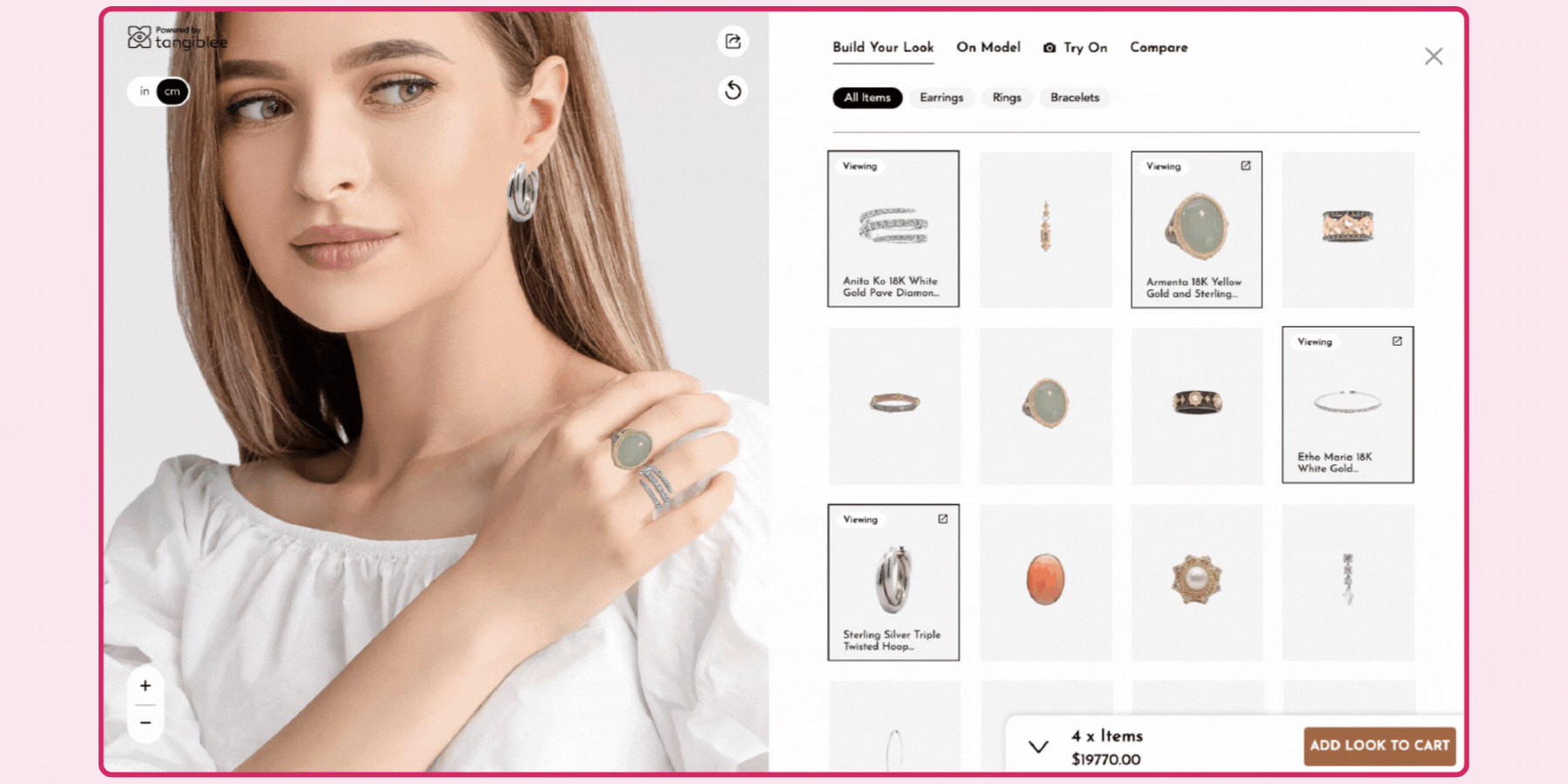
Tangiblee makes realistic shopping possible virtually with its interactive AI and AR solutions. It helps increase customer engagement and sales. Using your existing product images, you can transform your online store into an immersive virtual shopping experience.
It can extract every individual SKU’s details and content and create on-brand product experiences for every SKU. Thus, you can deliver a personalized customer experience on every SKU in your catalog.
I tried out the bracelet try-ons offered by this software, and I was stunned by the results. Users can try on bracelets using models or using a live camera. After finding the perfect bracelet, they can share it via social media, SMS, etc. Their user guide is easy to follow and interactive.
Features:
- Bracelet try-on solution: Tangiblee allows online shoppers to take a 4-second recording to view and try on your entire collection of bracelets in real-time 3D. The hands-free experience lets them zoom, swap SKUs, and share their try-on experience with others. They can also build their jewelry stack, then try it on and add it to the cart for purchase.
- Multi-device sync: Using this software, jewelry retailers can allow their shoppers to take a photo on their phone and have it auto-sync to a desktop for an interactive and personalized shopping experience.
- Product stacking: It allows shoppers to view multiple jewelry products at once. Shoppers can rearrange the products to find an ideal placement and combination. It promotes cross-selling by providing consumers a scope to purchase multiple products within one experience.
10. Plushvie

Plushvie is an AR shopping platform for luxury jewelry brands. It has highly realistic rendering technology for virtual bracelet try-on. By integrating this software SDK, you can enable your shoppers to find the perfect bracelet by allowing them to test it out before making a purchasing decision.
Using this platform, you can elevate your online brand presence. As an e-commerce platform or brand, this software can help you increase customer confidence and engagement, boost sales, and ensure lower return rates.
Features:
- Bracelet try-on solution: Let your online shoppers try on a wide range of bracelets in real time. They can compare multiple bracelets to select the one that suits them best.
- Wrist detection and tracking: With AI technology, this software can accurately track wrist movements in real time. Also, it can adapt to any rotation of hands in 3D space with accuracy and speed efficiency.
- Privacy and security: Plushvie takes privacy concerns very seriously and does not store or capture any data without client consent.
- AR video calling: It allows you to connect with your global customers with glitch-free AR video calling.

How I tested these apps:
1. Research
First off, I educated myself about augmented reality, how it works, and what its benefits and drawbacks are. Then I researched the bracelet market to understand which brands are already using AR to enhance the customer experience. After I was thorough with my basic understanding, I proceeded to list down all the platforms providing bracelet try-ons
2. Testing
I visited the landing pages of each platform to get further information about their process and tested out their bracelet try-ons from multiple devices at different angles. Some apps offer a quick and simple demo try-on experience, while others require users to contact the operations team to schedule a demo.
3. Analysis
I analyzed the platforms using observations regarding their individual performance during the testing process. I noted down the steps to try on bracelets on each of these platforms along with the additional features provided. I also noted down any difficulties faced in the process.
4. Evaluated results
After the analysis process, I compared all the platforms by making a list of individual features for each one of them. This approach helped me shortlist the 10 best platforms for virtual bracelet try-ons.
5 real-life examples using bracelet try-ons
1. Cartier
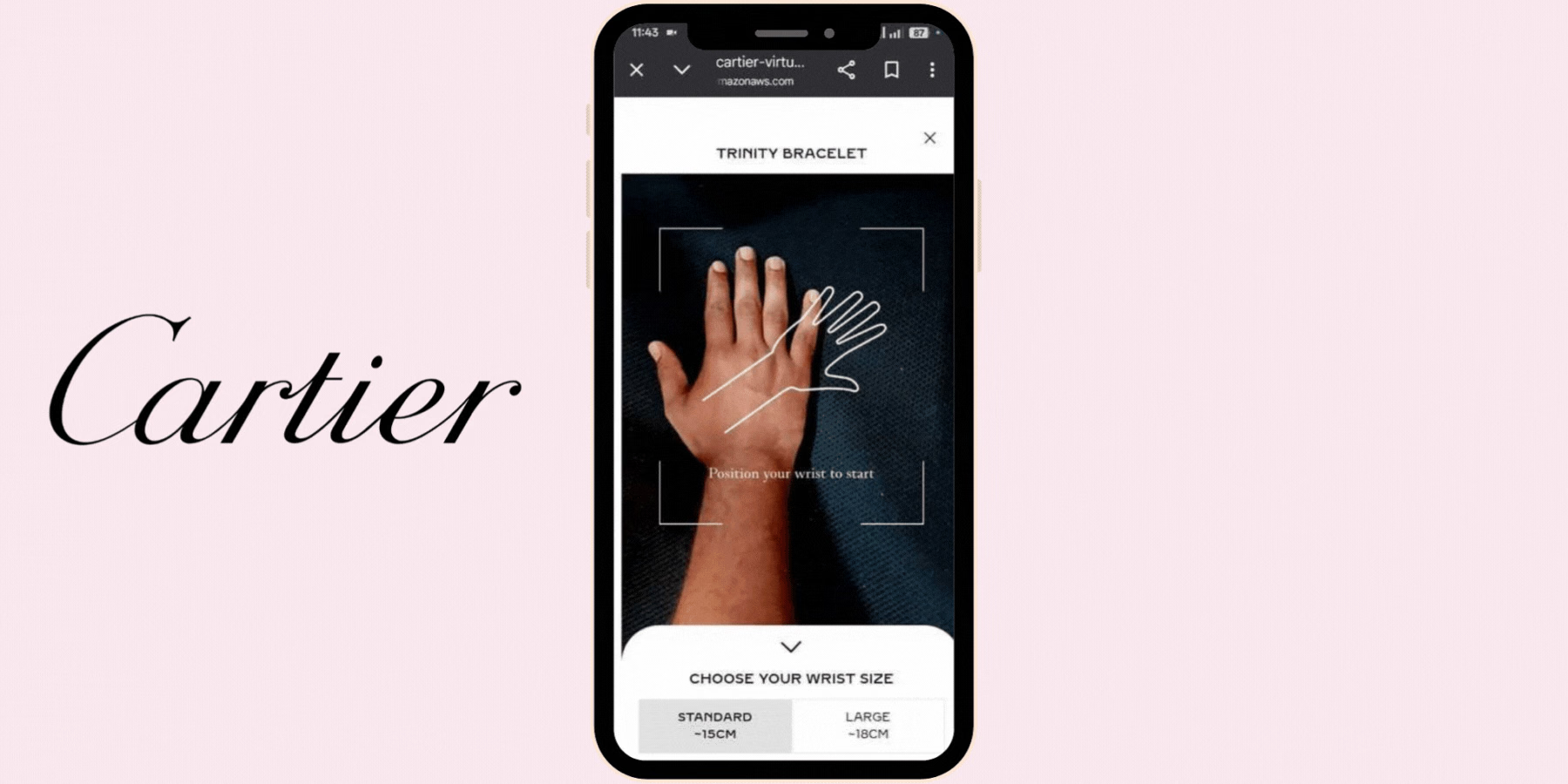
Cartier is a well-known brand for luxury jewelry. Adopting new technologies to enhance customer service and satisfaction has always been a priority for this brand. With its AR try-on feature, Cartier lets its customers see how bracelets look on them before making the purchase.
2. Swarovski
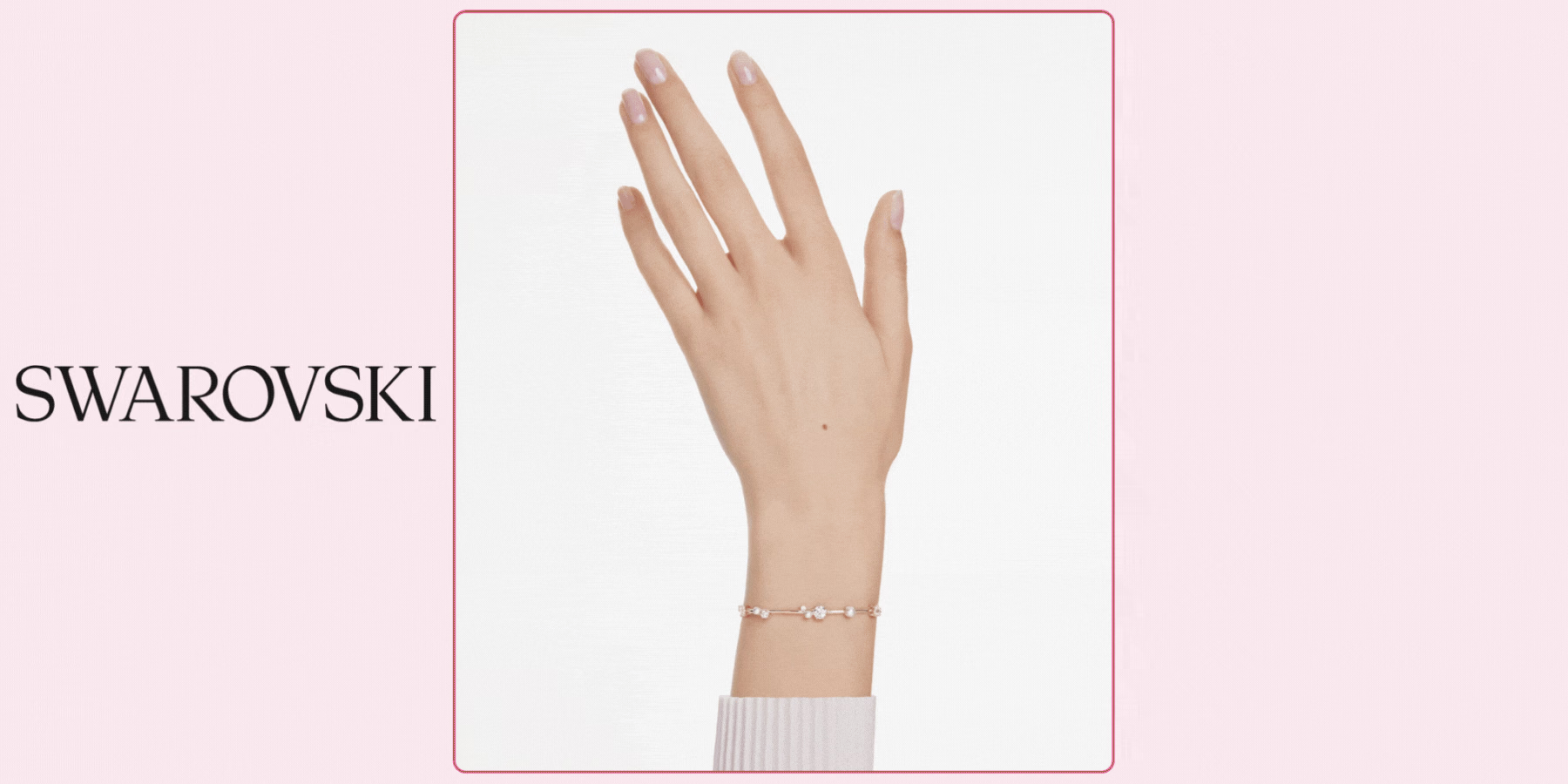
Swarovski, known for its shining and dazzling jewelry products, has also adopted new AR technology to provide an immersive virtual experience to its customers. The technology enables online shoppers to test the bracelets and other jewelry products at home without visiting stores, which also helps increase the brand’s website engagement.
3. Tiffany & Co

Tiffany & Co. is one of the globally leading jewelry brands in today’s world. This brand takes great pride in providing customers with the best experience possible. Keeping that in mind, Tiffany & Co. has now also started to provide users with the virtual try-on experience to ensure a convenient and accurate online shopping experience.
4. Pandora

Pandora is a famous jewelry brand recognized globally. Along with its competitors, Pandora has also now started to incorporate AR technology to elevate the brand’s online presence. By allowing customers to try on bracelets and other jewelry products virtually without any compulsion to make a purchase, this brand has taken an active step towards elevating their customer experience.
5. Tanishq
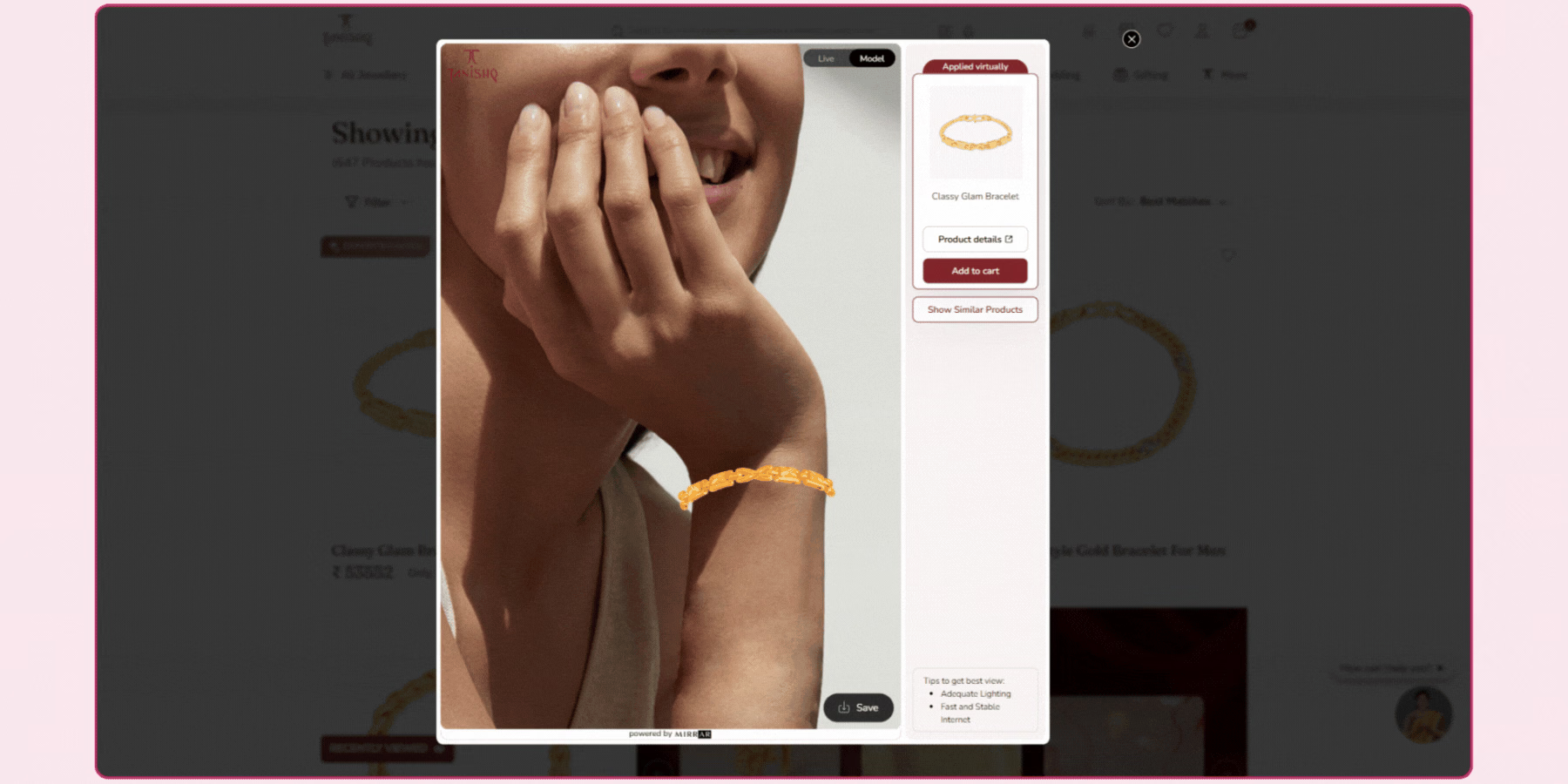
Tanishq is a well-known name in the Indian jewelry market. It is known for prioritizing customer experience. This brand is also using AR technology to elevate customer experience and boost sales by allowing customers to virtually test the products before purchasing. This technique takes away the uncertainty of online shopping and makes the brand’s online presence better.
Merits and demerits of bracelet try-ons
Merits
1. Increase in customer engagement & satisfaction
Virtual try-on solutions give users an option to purchase items with full confidence without having to go anywhere. Online shopping is not a luxury anymore; it is the new normal. In this way, AR try-on lets customers personalize their experiences.
By allowing customers to try on products virtually in real time, it creates an immersive and fascinating environment for the users while also ensuring convenience. This leads to a rise in customer engagement and satisfaction.
2. Boost in sales
By allowing customers to test products virtually without making a purchase, virtual try-on solutions result in an increase in sales. It takes away the uncertainty previously involved with online shopping and makes the decision-making process faster and easier.
3. Consumer confidence and return rates
Since using these solutions, the consumers know exactly how the bracelet would look on them, which results in confident purchases. There are no surprises or shocks for the buyers upon delivery.
Any confusion regarding the fit, size, shine, or look of the bracelet goes away using the virtual try-on. This also helps drastically reduce return rates, as the buyers are already aware of what they are purchasing.
4. Personalized shopping experience
AR SDKs allow for a unique and personalized shopping experience. Some AR try-on software even lets them customize metal, size, shape, carat, and setting, and then try it on. It enables them to design and visualize their bracelets online before final purchase.
5. Cost saving for businesses
For jewelry retailers, the implementation of AR try-on solutions may mean significant cost savings. It can reduce the need to invest in large in-store physical stock and complicated displays.
With no need for physical products, businesses can minimize overhead for storage, security, and physical merchandising, plus operational and administrative expenses.
Demerits
1. Visual experience accuracy
One of the biggest challenges for AR bracelet try-on software is the high-quality rendering and accuracy. Bracelets and other jewelry products need a high level of accuracy to be useful for customers.
Consumers’ wrist sizes and shapes may vary from one to another. So, the fit has to be right, and the style has to match. Apart from the size and fit, for bracelets, the shine and color of the product is also of utmost importance, or else it could result in a failed virtual try-on experience for the consumer, leading to dissatisfaction or a loss of trust.
2. Data privacy concerns
AR try-on software may collect personal data and information of the consumers for marketing purposes. Also, it requires access to the camera of the consumer's device. Therefore, data privacy issues appear due to user data usage and storage policies. This may restrict consumers from using AR try-on for purchasing products.
3. Technical implementation
To integrate a virtual bracelet try-on, a lot of technical knowledge is required. Creating a virtual experience demands skill and knowledge in AR, and it takes a lot of time as well.
What makes an AR bracelet try-on the best?
1. Accuracy of virtual try-ons
The first and foremost feature a bracelet try-on SDK must have is high-quality AR rendering and accurate 3D models. Especially for bracelets and other jewelry products, the accuracy in virtual experience is extremely necessary. If a customer is unable to accurately try out the bracelet, this procedure will fail and may result in dissatisfied customers and a lack of trust.
2. Easy integration
While choosing an SDK for your brand, you should pay attention to the integration and setup process of the software. A seamless integration is necessary as it takes less time and ensures no data damage to the existing components of your platform.
3. Client feedback
Client feedback and reviews are vital to understanding the software better. Also, you can use the list of features to compare multiple AR bracelet try-on SDKs and choose the one that suits you the best.
4. Personalization
Opt for an AR software SDK that analyzes individual SKUs’ details and content and creates on-brand product experiences for every SKU. Thus, you can deliver a personalized customer experience on every SKU in your catalog.
Conclusion
With the rise of online shopping, brands are constantly trying to elevate their online shopping environment to increase customer satisfaction. Gone are the days when customers used to get confused and make hesitant purchasing decisions.
Now, they want a personalized and immersive shopping experience. If you are an e-commerce brand, retailer, or manufacturer looking to elevate your brand presence, now is the time.
Integrate one of the best AR bracelet try-on software SDKs, like GlamAR. It will allow you to offer your customers a satisfactory and confident purchasing experience and reduce return rates. Talk to GlamAR’s team directly to meet your needs.










