Configurateur visuel de produits pour le commerce électronique


Modèle 3D réaliste


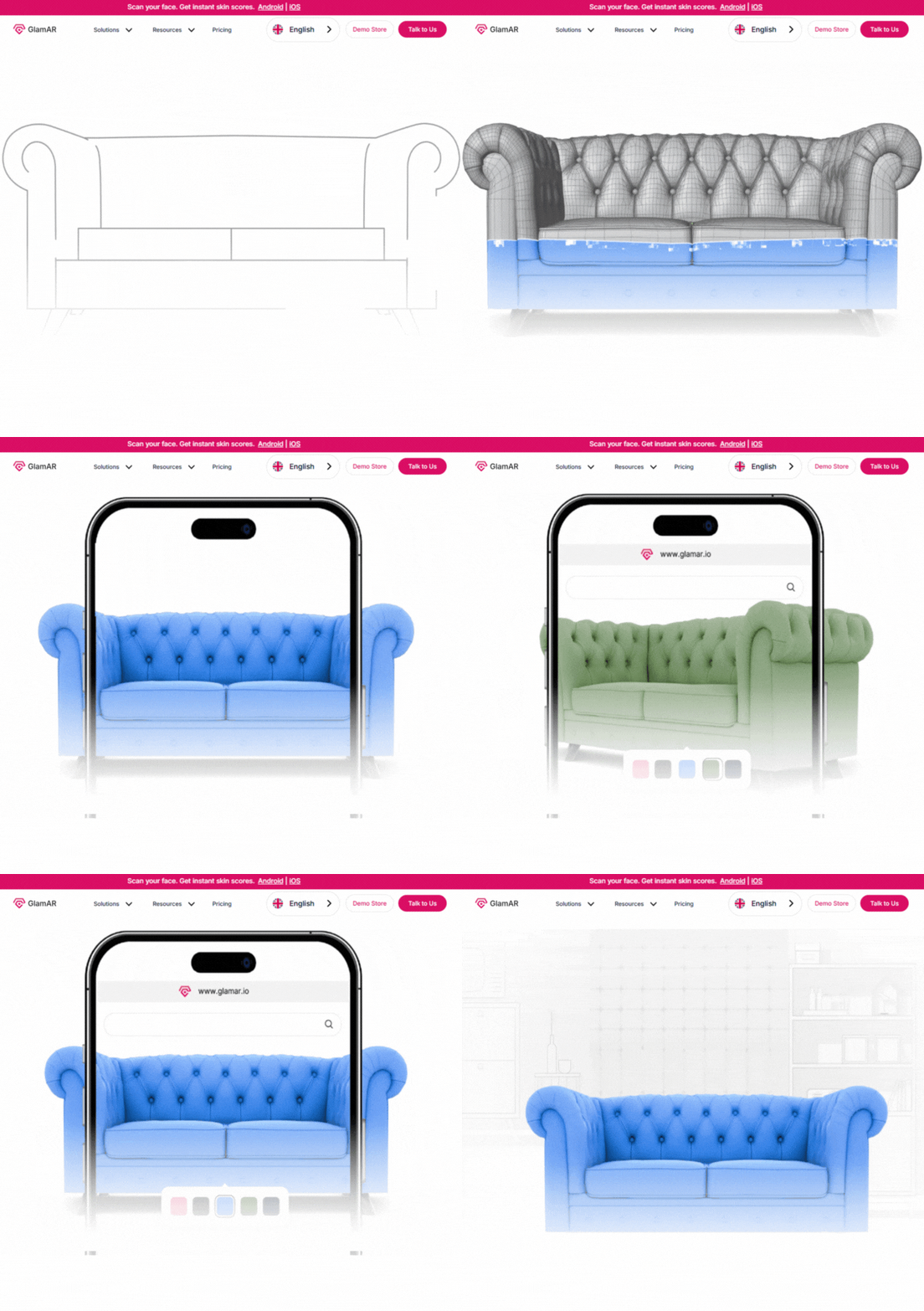
Interactivité et contrôle utilisateur de pointe
Tableau de bord d'analyse des données
Frequently asked questions
Un configurateur visuel de produits de commerce électronique fait référence à un logiciel numérique qui permet à votre client de concevoir un produit en temps réel à l'aide de graphiques interactifs, tels que des modèles 3D, des vues à 360 degrés, des échantillons de matériaux et des images en direct. Il élimine les affichages fixes des produits grâce aux étapes de configuration interactives qui modifient l'apparence, les composants et les prix en temps réel. Les entreprises peuvent intégrer cet outil pour aider les utilisateurs à prendre une décision d'achat éclairée, minimiser les niveaux de confusion entre les produits et offrir aux utilisateurs une expérience d'achat plus directe. Le système peut être directement intégré à n'importe quelle page de produit ou connecté à des plateformes de commerce sans interface.
Une page produit typique contient des images prédéfinies et quelques choix, tandis qu'un configurateur donne à l'acheteur la possibilité de participer à la construction de son produit en choisissant des attributs et en les observant changer instantanément. Les pages produits sont basées sur des photos ; les configurateurs utilisent des ressources 3D réactives aux options de l'utilisateur. Cela signifie que vos acheteurs sont en mesure de tester les matériaux, les couleurs, les tailles et les ajouts au lieu de faire des conjectures.
Oui La plupart des configurateurs peuvent fonctionner avec tous les appareils : ordinateurs de bureau, tablettes et téléphones portables. L'interface peut être simplifiée sur mobile à l'aide de gestes de balayage, de commandes repliables et de menus simplifiés et peut même être adaptée à des écrans plus petits. L'appareil repose sur la puissance de sa carte graphique, qui peut être réduite pour permettre des moteurs 3D légers capables de restituer les graphismes de manière fluide, même sur les téléphones de milieu de gamme. Et il peut être utilisé par de nombreuses entreprises dans des secteurs tels que le meuble, la mode, les accessoires automobiles et l'électronique grand public.
La précision est déterminée par la qualité des ressources 3D. Les configurateurs haut de gamme sont basés sur la photogrammétrie, ou sur des fichiers créés avec la CAO, pour fournir une précision au millimètre près. Les matériaux utilisent des textures PBR photoréalistes pour refléter la lumière, les ombres, la brillance et la couleur réelles. Cela permet à vos clients d'avoir une vision précise de l'échelle, des proportions et de la perception finale du produit avant de prendre une décision d'achat.
Oui Les configurateurs d'entreprise de conception sont conçus pour traiter des produits très complexes avec des centaines, voire des milliers de combinaisons possibles. Ils peuvent contenir des règles conditionnelles (lorsque X est sélectionné, masquer Y), des niveaux de prix, des contrôles d'inventaire et des offres dynamiques. Cela est particulièrement important pour des industries telles que le mobilier modulaire, les pièces automobiles, les équipements industriels et la fabrication sur mesure. Le système n'autorise pas vos utilisateurs à créer des combinaisons non valides, ce qui minimise les erreurs de commande et les erreurs de production.
Les configurateurs peuvent augmenter le temps passé à interagir avec vos produits, ce qui peut éventuellement conduire à un achat. L'outil réduira les cas de doute en démontrant aux clients ce qu'ils vont obtenir. Cela peut également contribuer à réduire le nombre de retours, car les clients connaissent mieux les matériaux, la taille et la couleur du produit grâce à la fonction de configuration. Et les informations analytiques collectées lors des interactions avec les utilisateurs peuvent aider à identifier les tendances, notamment les styles les plus populaires ou les plus fréquemment choisis, ceux qui ont été abandonnés et même les plus lucratifs.
Découvrez comment la réalité augmentée, la réalité virtuelle et la 3D peuvent stimuler la croissance des revenus en 2026
Planifiez un appel avec notre équipe

.avif)