Configurateur de produits de fabrication


Configuration des produits en temps réel


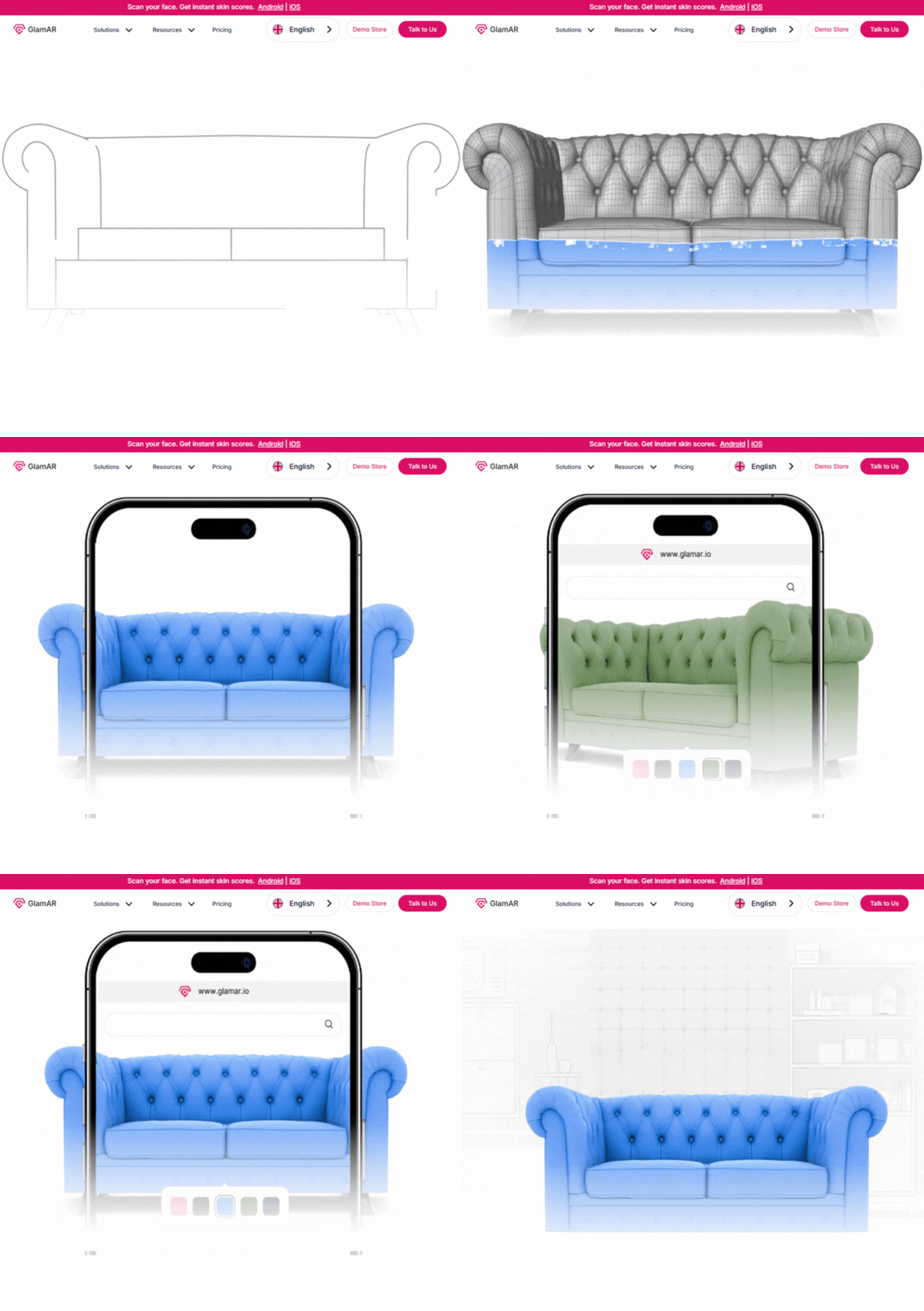
Logique de configuration et validation
Intégration de l'image et de la tarification

Frequently asked questions
Un configurateur de produits de fabrication est une solution informatique qui permet aux fabricants de définir, de contrôler et de vérifier des produits configurables à l'aide de règles et de logiques préexistantes. Les configurateurs de produits de fabrication se trouvent généralement dans les industries des équipements industriels, du mobilier, des pièces automobiles, des machines, de l'électronique et des matériaux de construction.
Il fonctionne en suggérant des règles de configuration qui orientent les utilisateurs vers des choix de produits légitimes et en créant des spécifications, des prix et des informations de fabrication précises. Il fonctionne également en permettant aux fabricants de faire face à la complexité des produits en permettant la configuration des composants, des dimensions, des matériaux et des options du produit de manière structurée avant sa production.
Les configurateurs de produits permettent la configuration, la visualisation, la tarification et la validation en temps réel, ce qui contribue à réduire le nombre d'erreurs dans le système manuel, à réduire les cycles de vente et à améliorer la coopération entre les équipes de gestion des ventes, d'ingénierie et de fabrication. Les principaux avantages sont la réduction des erreurs, un cycle de vente rapide, une coopération améliorée, une évolutivité et la confiance des clients.
Il est basé sur la complexité du produit, les exigences d'intégration, la facilité d'utilisation, l'évolutivité, la logique de tarification et les exigences de déploiement.
Les méthodes d'intégration sont les SDK, les API, les widgets, les codes intégrés ou la connectivité directe à l'ERP et au CRM, en fonction du fournisseur.
Certains de ses fournisseurs sont GlamAR, Threekit, VividWorks, Expivi, KBMax, DriveWorks, Epicor CPQ et Salesforce CPQ, entre autres.
Découvrez comment la réalité augmentée, la réalité virtuelle et la 3D peuvent stimuler la croissance des revenus en 2026
Planifiez un appel avec notre équipe

.avif)