Analyse du teint par IA


Analyse précise de la région de la peau

.gif)
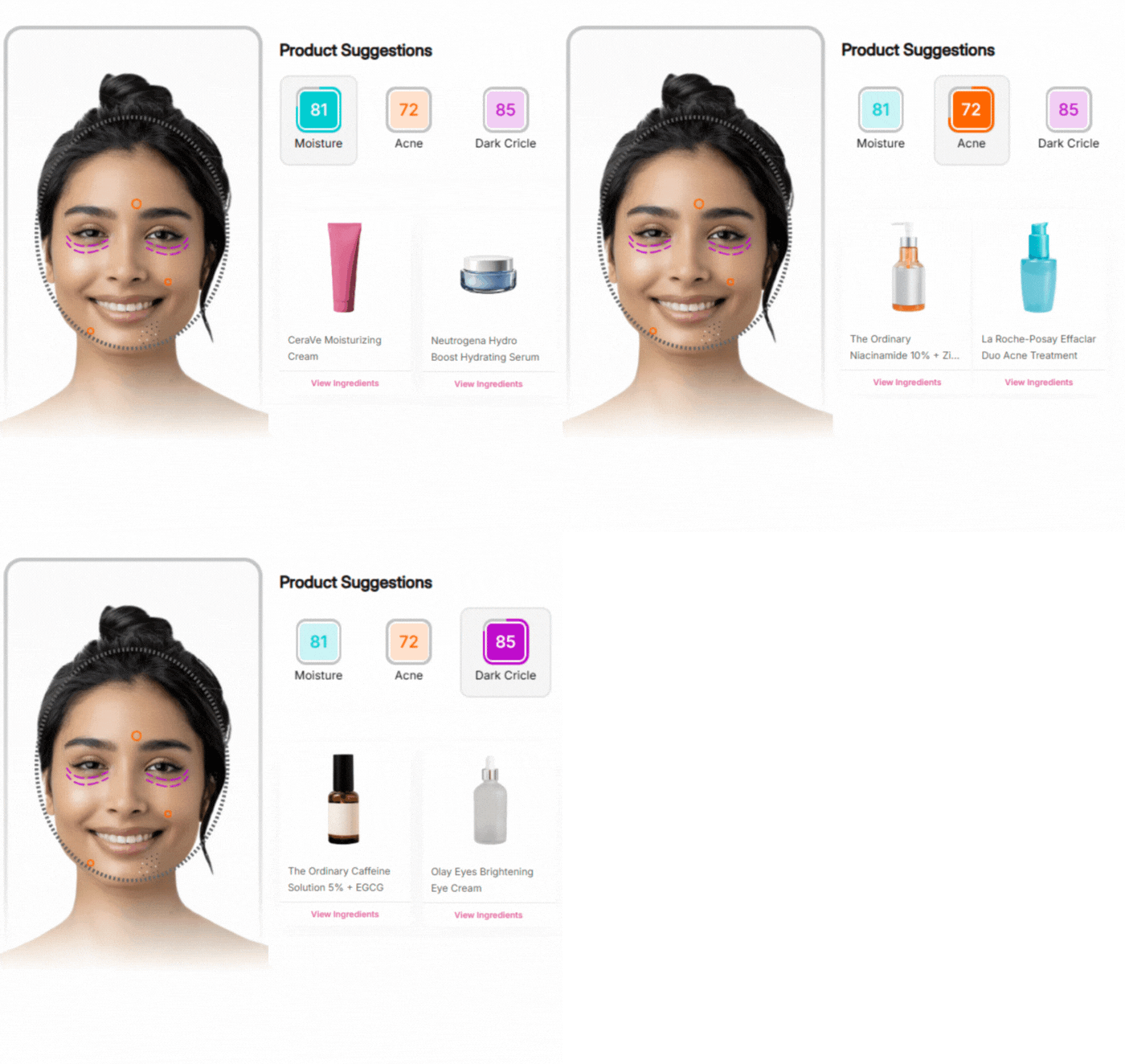
Recommandations de produits personnalisées pour le teint
Intégration de l'API et du SDK
Frequently asked questions
L'analyse du teint Al est un système alimenté par AL qui utilise la vision par ordinateur et l'apprentissage automatique pour analyser les régions visibles de la peau à partir d'images ou de flux de caméra en direct et estimer les catégories de teint et de nuances de peau d'un utilisateur. Contrairement aux évaluations visuelles manuelles, l'outil applique des modèles entraînés pour évaluer la distribution des couleurs et des données cutanées normalisées en fonction de l'éclairage pour des résultats plus cohérents. Il est couramment utilisé par les marques de beauté et de maquillage pour faciliter la correspondance des teintes et les recommandations de produits. Le système utilise des modèles d'apprentissage profond basés sur des ensembles de données de teint vastes et variés pour estimer le teint visible en analysant les informations de couleur au niveau des pixels provenant d'images téléchargées ou de flux vidéo en direct. Les résultats sont utilisés par les marques de beauté et de soins de la peau pour recommander des teintes de maquillage appropriées et des produits connexes.
L'analyse du teint par IA utilise la vision par ordinateur et d'autres technologies pour identifier les zones cutanées claires du visage afin d'analyser et d'identifier la catégorie de teint de la peau d'un utilisateur. Plus important encore, le système est construit à partir de modèles qui ont été entraînés sur une base de données diversifiée de motifs et de tons de peau provenant de différentes personnes du monde entier. Il compare ensuite les modèles faciaux de l'utilisateur avec cette base de données pour obtenir un résultat approprié.
Pour les marques de maquillage, l'outil aide les clients à choisir des produits adaptés en analysant leur teint et leurs nuances visibles. Sur la base de cette analyse, elle recommande en temps réel des teintes de fond de teint, de rouge à lèvres ou de correcteur compatibles figurant dans le catalogue de produits de la marque.
Toutes les analyses de teint offrent une accessibilité 24 h/24, 7 j/7, sur tous les appareils et tous les lieux. En quelques secondes, il peut estimer le teint et les nuances visibles de la peau des utilisateurs dans des conditions d'éclairage et de caméra appropriées. Cela permet aux marques de proposer des recommandations de teintes plus rapides et plus pratiques et améliore l'expérience d'achat globale.
Le résultat de l'analyse du teint par IA dépend de facteurs tels que la qualité de la photo, les conditions d'éclairage, la qualité de l'appareil photo et la présence d'un maquillage épais. Ils peuvent affecter la capacité de l'outil à différencier le teint de la peau des effets de couleur environnementaux.
Cela dépend de la politique de stockage du fournisseur. Certains fournisseurs veilleront à la suppression de l'image de l'utilisateur, tandis que d'autres fournisseurs peuvent conserver temporairement la photo de l'utilisateur sur la base du consentement pour une analyse plus approfondie. Mais il existe des réglementations en matière de confidentialité, telles que le RGPD ou le CCPA, que vous pouvez consulter avant de choisir un fournisseur.
Cela dépend. Le niveau de précision du résultat de l'analyse des tons de peau par IA peut être affecté par les conditions d'éclairage, la caméra et la qualité de l'image. Il peut détecter les nuances froides ou chaudes après avoir analysé la distribution des couleurs dans les zones visibles de la peau de l'apparence du visage de l'utilisateur.
Vous pouvez intégrer l'outil en choisissant l'une des options d'intégration proposées par le fournisseur. GlamAR vous fournira un SDK ou des options d'intégration d'API, selon votre choix. Pour le processus d'intégration, vous pourriez avoir besoin d'une assistance technique pour intégrer l'outil dans votre système.
L'analyse du teint par IA est en train de devenir un outil précieux pour les marques de beauté et autres marques de détail en raison de sa capacité à proposer des expériences d'achat personnalisées aux clients. Ses développements avancés devraient améliorer la précision, l'inclusivité et l'intégration des plateformes de commerce numérique.
Non. L'analyse complète du teint ne remplace pas les consultations professionnelles en matière de soins de la peau. Mais il peut s'agir d'un outil supplémentaire qui peut fournir des informations rapides et une assistance aux dermatologues lors des consultations.
Découvrez comment la réalité augmentée, la réalité virtuelle et la 3D peuvent stimuler la croissance des revenus en 2026
Planifiez un appel avec notre équipe

.avif)