AI skin analysis free


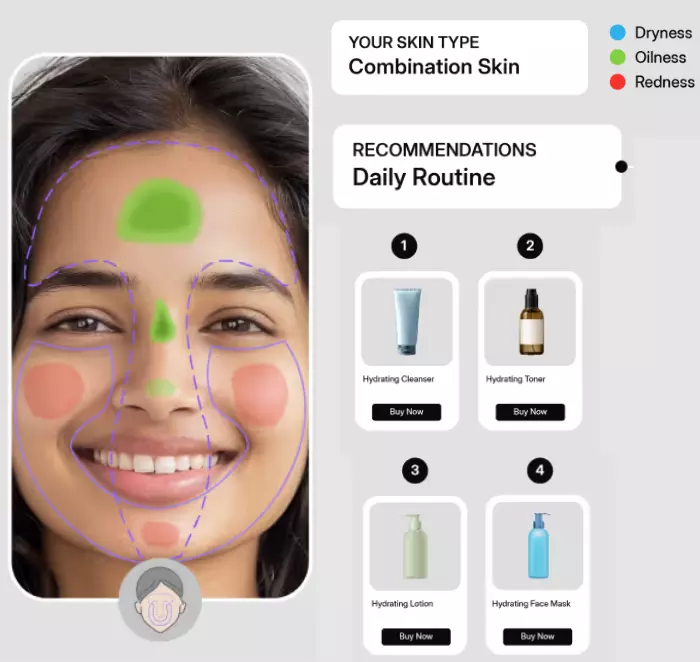
Facial mapping

.gif)
Skin progress tracking
Personalized product recommendations
Frequently asked questions
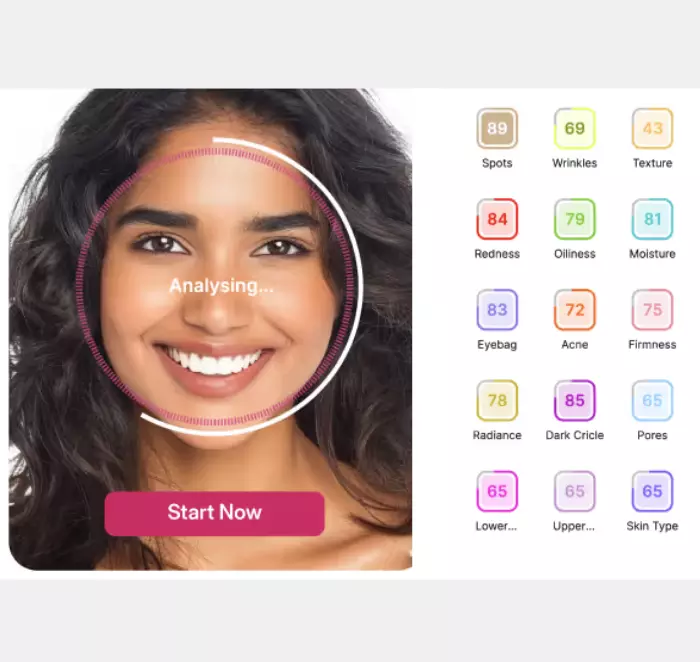
This involves the use of a smart diagnostic device with the integration of artificial intelligence technology to analyze the user's skin, to understand or spot the problem areas of the skin, and to generate tailored and custom skincare recommendations. The GlamAR's AI skin analysis involves the use of an AI tool to capture users’ images and evaluate the overall skin parameters to identify the over 14+ skin defects, such as the pores, wrinkles, acne, spots, and moisture, to identify the main skin defects. Afterward, there are suggestions for possible skincare products to use with a personalized chatbot engine to engage in related questions but it availability depends on the plan selected.
There is no specific answer for this. But the accuracy of these AI skin analysis scan tools is largely based on three factors: the quality of the training data, model design, and context of use. When the system is trained on a variety of high-quality pictures, which cover most of the age groups, skin tones, and face shapes, then the outcome tends to be more accurate. When training data is small or biased, the output would be biased as well.
Users get their skin analyzed and get to know their suitable skin issues. Also, they will get suitable skincare suggestions for improving those skin issues. The tool enables them to save their past and present skin scans in tracking their skincare improvement journey as they engage with those skincare recommendations. Moreover, GlamAR’s AI skin analysis includes a personalized chatbot named “skinGPT,” which enables users to ask and get answers to skincare-related issues in a few seconds.
The longevity depends on certain factors, such as the user's device hardware and the stability of the user's internet connection. Generally, the tool is built with advanced AI-powered elements to ensure the smooth operation and processing time rate of the AI skin analysis. But basically, the scan time normally takes a few seconds for most AI tools.
It helps beauty brands to provide hyper-personalized experiences. The AI is able to examine the pore visibility, uniformity of skin tone, redness, fine lines, and face shape. On these metrics, the tool tends to suggest product recommendations, routine builders, or skincare tips suggestions to enable users to resolve their skin issues.
The existing constraints are the reliance on lighting, the quality of cameras, the training data being biased by demographics, and sensitivity to angles or facial expressions. AI can learn to identify shadows as a texture problem, but it may struggle to handle accessories such as glasses, masks, or heavy makeup.
Discover how AR, VR and 3D can drive revenue growth in 2026
Schedule a call with our team

.avif)