
How 3D Experiences Are Revolutionizing Marketing and Sales


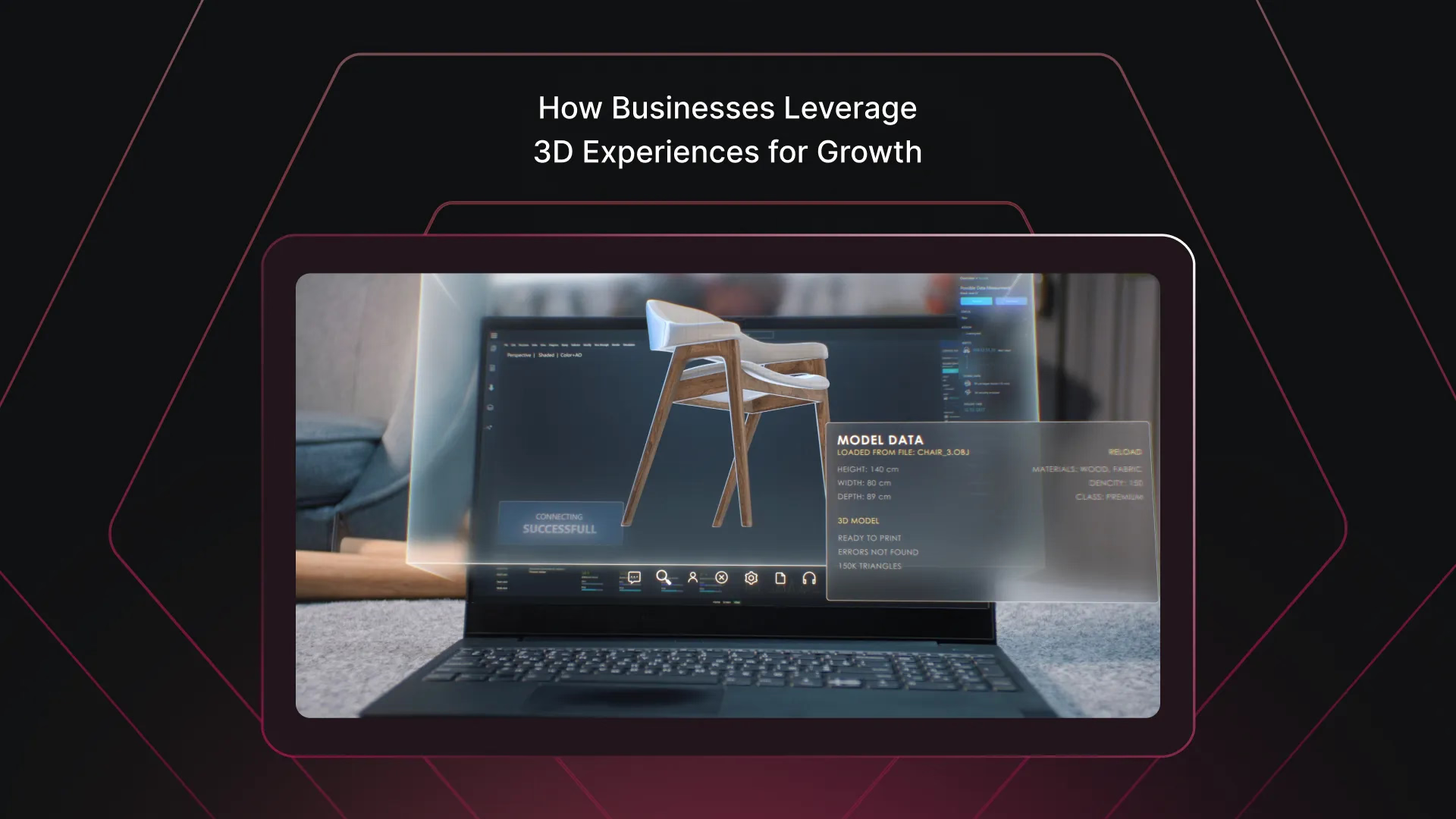
In the ever-evolving landscape of technology, businesses are constantly seeking innovative ways to engage customers, enhance brand presence, and drive sales. One of the most exciting advancements in recent years is the rise of 3D experiences. From virtual reality (VR) and augmented reality (AR) to 3D product design and interactive environments, these experiences are transforming how businesses interact with their audiences. But how exactly are companies capitalizing on these cutting-edge technologies? Let’s explore the different ways businesses are leveraging 3D experiences.
Let’s Explore How Businesses Can Capitalize on 3D Experiences
Enhanced Product Visualization
One of the most significant ways businesses are using 3D experiences is by offering better product visualization. Traditionally, customers would rely on photos or 2D representations to make purchasing decisions. However, 3D modeling allows businesses to present their products from every angle, giving consumers a more immersive, interactive experience.
For example, in the fashion and retail industries, brands like Nike and IKEA have integrated 3D models of products into their websites and mobile apps. Customers can virtually "try on" shoes or see how furniture will look in their living rooms using augmented reality (AR). This kind of experience enhances the shopping process, giving customers confidence in their purchase decisions, ultimately leading to reduced return rates and increased customer satisfaction.


Virtual Showrooms and Stores
With the rise of e-commerce, many brick-and-mortar stores are shifting to virtual spaces. Using 3D experiences, businesses can now create virtual showrooms where customers can explore products in a digital environment as if they were physically present. Virtual showrooms enable consumers to browse products, interact with them, and even make purchases—all from the comfort of their homes.
Automotive companies like Audi and BMW have embraced 3D technology by offering virtual car showrooms. Customers can explore different models, colors, and features in 3D, allowing for a richer, more detailed experience than what traditional online photos can provide. These virtual experiences help businesses expand their reach beyond physical locations while providing an immersive and informative environment for customers.
Immersive Advertising and Marketing
3D experiences are transforming advertising strategies by offering more engaging, interactive, and visually stunning content. Instead of traditional 2D ads, businesses are now experimenting with 3D ads, creating interactive experiences that capture the attention of their target audience.
For instance, brands are increasingly using AR to create interactive ads on social media platforms like Instagram and Snapchat. By utilizing filters and AR lenses, businesses can encourage users to engage with their brand in fun and memorable ways. This engagement can include everything from virtually trying on makeup to placing a digital version of a product in their home to see how it fits into their environment. These interactive ads provide a more personalized experience, enhancing brand recall and driving consumer action.
Training and Simulation
3D technologies are not just useful for customer-facing applications; they also play a critical role in employee training and simulation. In industries like healthcare, aviation, and manufacturing, 3D simulations allow employees to practice complex procedures and tasks in a safe, virtual environment. These simulations offer an immersive experience that closely mirrors real-life scenarios, enabling workers to develop skills without the risks associated with traditional training methods.
For example, medical professionals can practice surgeries in a virtual 3D environment, helping them build their skills and improve their confidence before performing procedures on real patients. Similarly, companies in the manufacturing sector use 3D simulations to train workers on operating heavy machinery or handling hazardous materials. By using 3D technology for training, businesses can enhance safety, reduce errors, and improve overall efficiency.
Architectural Visualization and Real Estate
In the real estate and architecture industries, 3D experiences have become a game-changer. Architects and real estate developers are using 3D models to showcase properties, designs, and construction projects before they are built. This helps potential buyers, investors, and stakeholders get a realistic sense of what the final product will look like.
Virtual walkthroughs of homes and buildings have become a popular tool for real estate agents. Prospective buyers can explore every corner of a property from their computer or mobile device, allowing them to view layouts, check out different design options, and visualize themselves in the space—all without stepping foot inside. For architects, 3D visualization tools enable them to present designs more effectively, gather feedback, and make adjustments before construction begins.
Improved Customer Support and Service
Businesses are also using 3D experiences to improve customer support and service. For instance, some companies are incorporating 3D guides and tutorials to help customers troubleshoot products, assemble furniture, or understand how to use certain features. By offering step-by-step instructions in a 3D format, businesses make it easier for consumers to solve problems independently, enhancing customer satisfaction.
Additionally, 3D models are used for product repairs and maintenance. Instead of relying on manuals or written instructions, businesses can provide 3D representations of products, showing customers exactly how to disassemble, repair, or replace parts. This not only saves time for customers but also reduces the volume of service calls and technical support inquiries for businesses.
Events and Conferences in the Metaverse
As the concept of the "Metaverse" continues to gain momentum, businesses are exploring how 3D virtual spaces can be used for events and conferences. In a world where travel restrictions and remote work have become the norm, virtual events offer a viable solution for global companies to connect with audiences and share information.
For example, businesses are organizing virtual trade shows, product launches, and networking events in the Metaverse, where participants can engage with 3D avatars, visit virtual booths, and attend presentations. This creates an immersive experience that mimics real-world events but without the logistical challenges and costs of physical gatherings. These virtual events allow businesses to reach a global audience and offer a more interactive experience than traditional webinars or video calls.
Gaming and Entertainment Experiences
The gaming and entertainment industries have been at the forefront of adopting 3D experiences, creating vast virtual worlds where players can interact with one another and explore digital environments. Game developers use 3D technology to create lifelike characters, immersive landscapes, and realistic gameplay, providing users with unparalleled experiences.
Beyond gaming, the entertainment industry is also integrating 3D experiences into movie production and live performances. 3D animation and visual effects allow filmmakers to bring imaginative worlds to life, while 3D projections at concerts and theatrical performances enhance the live experience for audiences.
How 3D Advertising is Shaping the Future of Marketing: Key Statistics and Insights
3D advertising is set to become a driving force in future marketing strategies. Here are some key statistics that highlight its growing impact:
- Interactive 3D marketing campaigns have seen a 40% increase in conversions.
- A study by Cappasity revealed that 82% of participants used the 3D product view, and 95% preferred an interactive 3D experience over video playbacks.
- Amazon found that user engagement increased by 66% with a 3D technology configurator compared to traditional 2D marketing solutions.
- YuMe conducted a study that showed virtual reality ads are highly effective, with 70% of users recalling a brand the same day after viewing a 3D ad.
- A global study by Freeman found that over one in three CMOs plan to allocate 21% to 50% of their budgets to experiential advertising.
These statistics underscore how immersive 3D experiences are reshaping marketing, improving engagement, and driving higher conversions.
Ready to Generate Conversions with 3D Marketing?
As businesses continue to seek new ways to innovate and engage customers, 3D experiences are proving to be an invaluable tool. Whether enhancing product visualization, creating immersive virtual environments, or offering interactive marketing campaigns, 3D technologies are transforming how companies communicate with their audiences. As technology continues to advance, we can expect businesses across various industries to adopt even more creative uses of 3D experiences, enhancing customer experiences and ultimately driving business growth.
If you're ready to reap the benefits of 3D, you only need to invest in one marketing solution tool — GlamAR. This software as a service (SaaS) specializes in 3D configurators, Virtual Try-On, Augmented Reality, Virtual studio photo, 3D product customizations, and more.










