
AI Skin Analyse für E-Commerce: Ein praktischer Leitfaden


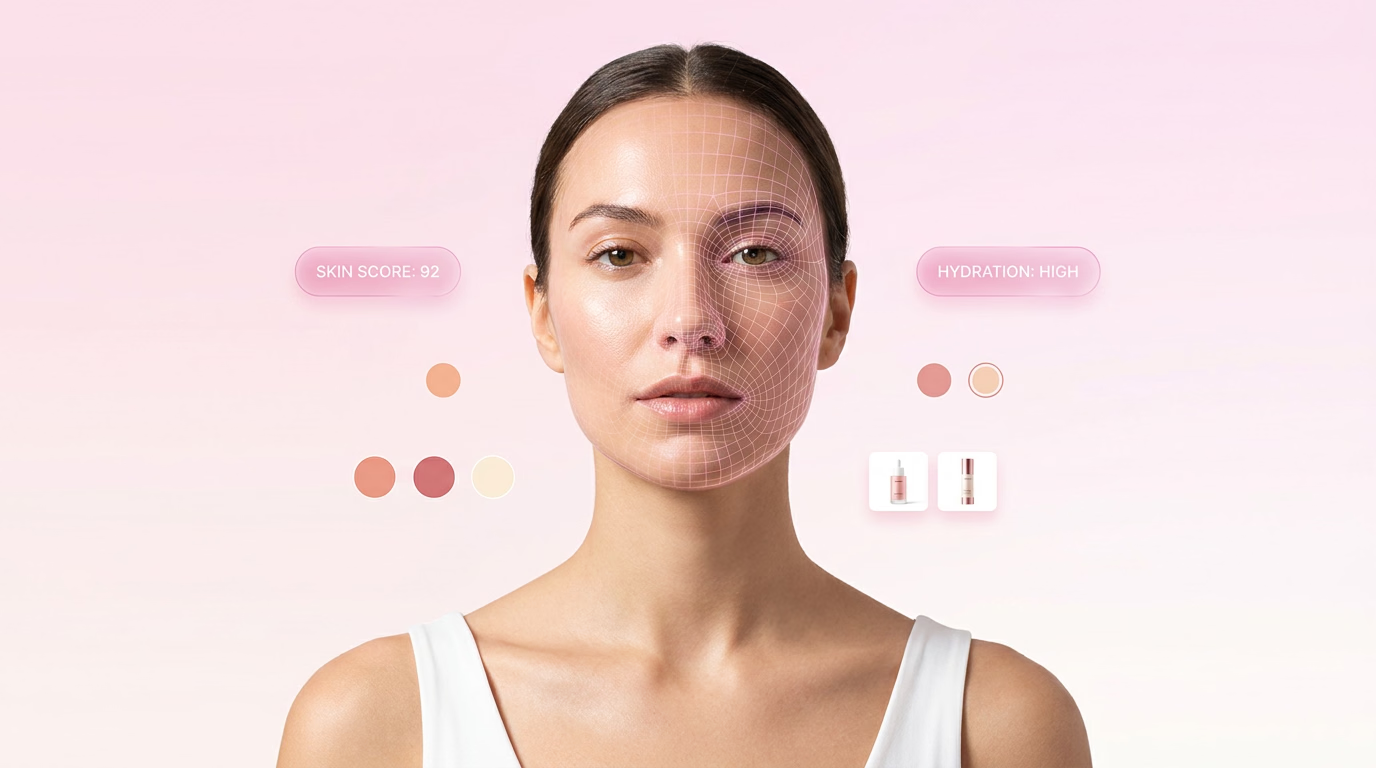
Have you ever tried buying skincare online, only to discover it doesn't suit your skin needs? That's where AI skin analysis for ecommerce steps in. It's revolutionizing the way consumers shop for beauty products online by offering personalized recommendations that align with each person's skin needs, boosting satisfaction and sales.
Top AI Skin Analysis Providers
The field of AI skin analysis is expanding rapidly, with several leading providers transforming ecommerce experiences. These companies offer innovative solutions that integrate seamlessly with online platforms, making it easier for businesses to provide personalized shopping experiences.
- GlamAR
- Best for: Effortless integration with ecommerce platforms
- Standout features: Instant skin analysis, support for various skin types
- Revieve
- Best for: Brands in need of tailored skincare consultations
- Standout features: Comprehensive skin condition reports
- Perfect Corp.
- Best for: Cosmetic brands
- Standout features: AI-driven virtual try-ons, detailed skin diagnostics
- ModiFace
- Best for: Brands specializing in AR technology
- Standout features: Facial recognition, augmented reality
What Is AI Skin Analysis?
AI skin analysis uses artificial intelligence to evaluate the condition of the skin and suggest suitable products. This technology assesses various skin characteristics, including texture, wrinkles, spots, and pores, providing insights that are detailed and uniquely personalized.
- Real-time analysis: Offers immediate assessments, providing precise skin condition data for quick decisions.
- Personalized recommendations: Creates custom skincare routines based on the user's specific skin profile.
- Wide compatibility: Integrates easily with various ecommerce platforms, enhancing user experience without disrupting workflows.
- Multi-parameter evaluation: Conducts detailed analysis on multiple skin parameters for comprehensive insights.
- Scalability: Deployable across numerous channels, offering businesses a scalable solution for customer interaction.
Benefits of Using AI Skin Analysis
Incorporating AI skin analysis into ecommerce platforms brings numerous benefits that enhance customer interest and sales. This technology not only personalizes the shopping experience but also provides important insights into consumer behavior and preferences.
- Increased personalization: Delivers tailored product recommendations that meet individual customer needs.
- Improved customer satisfaction: By accurately matching products to individual skin conditions, the likelihood of returns decreases, leading to a more satisfying customer experience.
- Enhanced shopping experience: Engages customers in an interactive shopping environment, increasing enjoyment and satisfaction.
- Data-driven insights: Provides valuable data on customer preferences and shopping habits, helping businesses refine marketing strategies.
- Higher conversion rates: Personalization increases the likelihood of purchase, effectively boosting conversion rates.
Tools Comparison: Key Features
Choosing the right AI skin analysis tool involves comparing the features and capabilities offered by different providers. Below is a comparison table highlighting some standout features of top AI skin analysis solutions.
- GlamAR
- Best For: Easy ecommerce integration
- Standout Features: Instant skin analysis, support for multiple skin types
- Revieve
- Best For: Personalized skincare consultations
- Standout Features: Detailed skin condition reports
- Perfect Corp.
- Best For: Cosmetic brands
- Standout Features: AI-powered virtual try-ons, comprehensive skin diagnostics
- ModiFace
- Best For: AR technology
- Standout Features: Facial recognition, augmented reality
Common Mistakes When Implementing AI Skin Analysis
While AI skin analysis offers many benefits, businesses should be careful to avoid common pitfalls that can hinder the effectiveness of this technology.
- Underestimating integration complexity: Failing to consider the technical challenges involved in integrating AI tools with existing ecommerce platforms can lead to poor performance.
- Neglecting user experience: Overcomplicating the user interface can deter customers. It's crucial to balance technology with user friendliness.
- Ignoring data privacy: Mishandling sensitive customer data can lead to trust issues. Adhering to data privacy regulations is crucial.
- Overreliance on technology: While AI can greatly improve personalization, it should complement, not replace, human insight and customer service.
Industries and Use Cases
AI skin analysis isn't limited to the beauty industry. Its applications extend across various sectors, enhancing customer interaction and experiences. See our complete guide on How AI Analyzes Skin for Acne: A Deep Dive for a deeper dive.
- Beauty and Skincare: Provides personalized product recommendations for a variety of skin types and conditions.
- Fashion and Accessories: Complements virtual try-ons with personalized styling suggestions, boosting the shopping experience.
- Eyewear: Integrates with virtual eyewear try-ons for an engaging customer experience.
- Jewelry: Helps visualize how different jewelry pieces complement individual skin tones.
- Lifestyle Brands: Uses AI to offer personalized recommendations for lifestyle products, enhancing customer satisfaction.
Tips to Select AI Skin Analysis Tools
Choosing the right AI skin analysis tool can significantly affect your business's ability to engage customers and boost sales. Consider these key factors:
- Compatibility: Ensure the tool integrates easily with your current ecommerce platform to avoid technical issues.
- Scalability: Choose a solution that can grow with your business, accommodating increased customer interaction.
- Accuracy: Opt for tools known for their precision in skin analysis and personalized recommendations.
- Budget: Consider the cost-to-benefit ratio to ensure the investment will provide substantial returns.
- Customer Support: Select providers that offer comprehensive support and training to facilitate tool adoption.
How GlamAR's AI Skin Analysis Helps
GlamAR offers a powerful AI skin analysis tool that integrates smoothly with ecommerce platforms, enhancing customer interest and boosting sales. The solution provides real-time analysis, delivering instant skin evaluations and personalized product recommendations. This improves customer satisfaction, increases sales, and reduces return rates. With support for various skin types, GlamAR ensures accurate and personalized suggestions for a diverse customer base.
If you're ready to enhance your ecommerce platform with AI skin analysis, consider GlamAR's solution for its robust features and seamless integration.
Brands Using AI Skin Analysis Successfully
Brands across various sectors have successfully implemented AI skin analysis, transforming their customer interaction strategies and boosting sales. Here are a few examples: See our complete guide on Why Every Beauty Brand Needs an AI Skin Analysis Feature for a deeper dive.
- L'Oreal: Used AI skin analysis to offer customers customized skincare advice, leading to increased customer loyalty and sales.
- Sephora: Integrated AI-based skin diagnostics into their online platform, enhancing personalized shopping experiences.
- GlamAR Clients: Numerous brands have utilized GlamAR's AI tools to enhance their ecommerce offerings, resulting in higher conversion rates and satisfied customers.
The Future of AI Skin Analysis in Ecommerce
The future of AI skin analysis in ecommerce looks promising as the technology continues to evolve. With advancements in machine learning and data analytics, AI skin analysis tools will become even more accurate and efficient, offering deeper insights into customer preferences and enhancing personalization.
As AI technology progresses, we can expect more seamless integrations across ecommerce platforms, providing customers with an intuitive and engaging shopping experience. For businesses, these advancements will translate into improved customer loyalty, reduced return rates, and increased sales.
Conclusion
AI skin analysis for ecommerce is not just a technological innovation; it's a game-changer in customer interaction and sales. By providing personalized experiences, it helps brands stand out in a competitive market, increasing customer satisfaction and loyalty.
If you're looking to integrate AI skin analysis into your ecommerce platform, explore GlamAR's solutions to improve your customer engagement strategies.










