
15 Best Hair Color Try-On SDKs for Salons and Brands in 2026


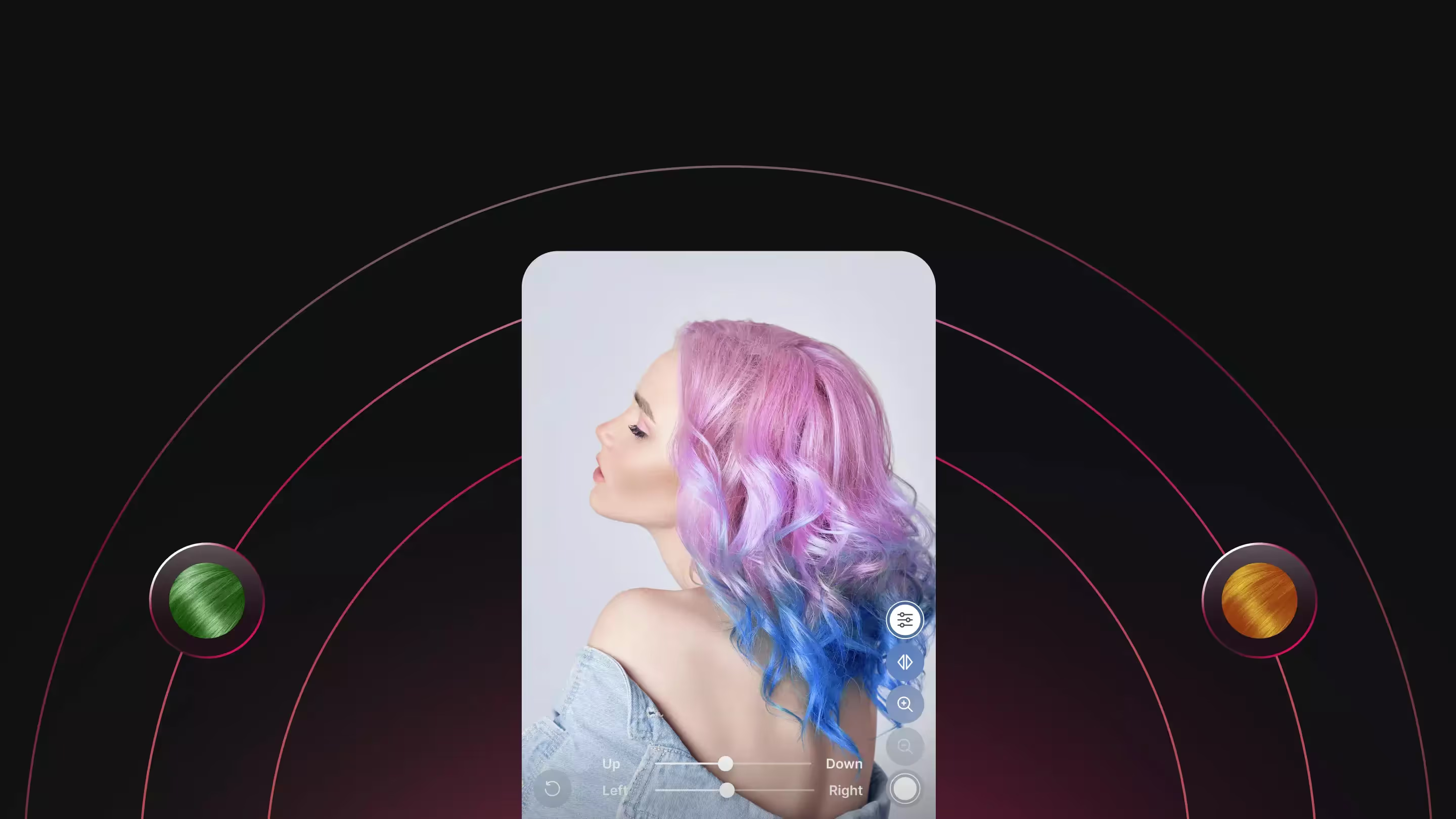
Salons and hair color brands have 15 widely referenced hair color try-on tools to evaluate, though only a handful are genuinely licensable SDKs a business can embed into its own booking flow or storefront. Below is a comparison of each on color realism and rendering accuracy, integration method, platform support, shade library size, and pricing.
Madison Reed reported a 38 percent improvement in conversion after integrating virtual hair color try-on, alongside a 10 times increase in hair color sales, in a published case study with Perfect Corp. Aveda separately reported a 220 percent increase in website traffic and a 5 times increase in traffic to its salon locator after launching its own try-on tool. These are vendor-published figures tied to specific brands, not a guaranteed outcome for every catalog, but they show the mechanism working at real commercial scale when implemented well.
This guide is written for the person actually deciding which tool to license for a salon or hair color brand, not for an individual browsing shade options for their own next appointment. Most existing comparisons in this category blend genuine licensable SDKs together with consumer photo-editing apps and individual brands' own consultation tools as if they were interchangeable options, which wastes real evaluation time for a business trying to make an actual integration decision.
What Is Hair Color Try-On, and How Does It Work?
Hair color try-on uses computer vision to detect and segment hair from the rest of an image or live camera feed, then renders a new color onto that segmented region while tracking natural movement, lighting, and strand detail so the result looks plausible rather than like a flat overlay. The harder technical problem is segmentation accuracy, correctly identifying where hair starts and ends against skin, clothing, and background, since an imprecise segmentation produces a visibly fake result regardless of how good the color rendering itself looks.
Rendering quality beyond basic segmentation depends on how well a tool adapts color to existing hair texture, base tone, and lighting conditions. A tool that applies a uniform color layer regardless of the customer's actual hair will look noticeably less convincing than one that adjusts for highlights, shadows, and natural variation in the original hair.
Live, real-time rendering through a camera feed is a meaningfully harder technical bar than applying a color to a single uploaded photo, since the segmentation and color rendering both need to hold up as a customer moves, turns their head, or the lighting shifts, frame after frame. A tool that performs convincingly on a single still photo doesn't automatically perform equally well in a live, moving consultation setting, and this distinction is worth confirming directly with any vendor during evaluation.
Why Salons and Brands Are Adding This to Their Booking or Checkout Flow
For a salon, hair color try-on shortens the in-chair consultation by letting a client arrive with a clearer sense of what they want, or decide during the consultation itself using a live camera feed, which reduces the back-and-forth that otherwise extends a color appointment. For a hair color brand selling product online, the same technology lets a shopper preview a specific shade against their own hair before adding it to cart, directly addressing the color-mismatch uncertainty that drives returns in this category.
A growing number of brands also use try-on as an acquisition tool independent of an immediate sale, since a shopper who spends time experimenting with shades on a brand's site is demonstrating real purchase intent that a static shade chart can't generate on its own. This engagement signal is also useful operationally, giving a brand's marketing team a genuine behavioral data point, which shades get tried most, where in the flow shoppers drop off, that a standard product page analytics setup doesn't capture.
For a salon chain specifically, pairing try-on with the booking flow itself, rather than treating it as a separate feature, is where most of the practical value sits. A client who tries a shade and books the appointment in the same session has already committed mentally before ever sitting in the chair, which tends to reduce both no-shows and the awkward mid-appointment pivot to a different, less ambitious color than originally discussed.
15 Best hair color try-on in 2025
| Tool | Category | Best For |
|---|---|---|
| GlamAR | SDK | Brands wanting opacity control and hair color alongside other try-on categories |
| Modiface | SDK | Brands wanting color-matching technology backed by L'Oreal |
| Facetune | Consumer app | Reference point only, no confirmed licensing path |
| YouCam Makeup | Consumer app, B2B via Perfect Corp | Brands evaluating Perfect Corp's underlying API |
| Hair Color Booth | Consumer web tool | Reference point only |
| Hair Try on by Ulta | Retailer implementation | Case study for a retailer's own deployment |
| Fotor | Consumer app, limited API | Marketing teams needing batch image edits |
| Makeup Plus | Consumer app | Reference point only |
| Style My Hair | Brand implementation (L'Oreal, built on Modiface) | Case study for salon-facing consultation design |
| Fabby Look | Consumer app | Reference point only |
| PhotoDirector | Consumer app | Reference point only |
| My Hair [iD] | Salon consultation tool | Reference point for consultation-style diagnostics |
| Orbo AI | SDK | Brands wanting cross-device deployment including in-store kiosks |
| AlgoFace | SDK | Platforms wanting underlying face and hair segmentation infrastructure |
| Tryndbuy | Live shopping platform | Reference point for live-session consultation format |
Recently, I have tried and tested more than 20 platforms to pick the best ones for your online shoppers. Through these beauty tech solutions, they can find the perfect shade for their next hair transformation. Here I have listed the top 15 hair-color try-ons for the cosmetic brands and e-commerce business owners:
1. GlamAR
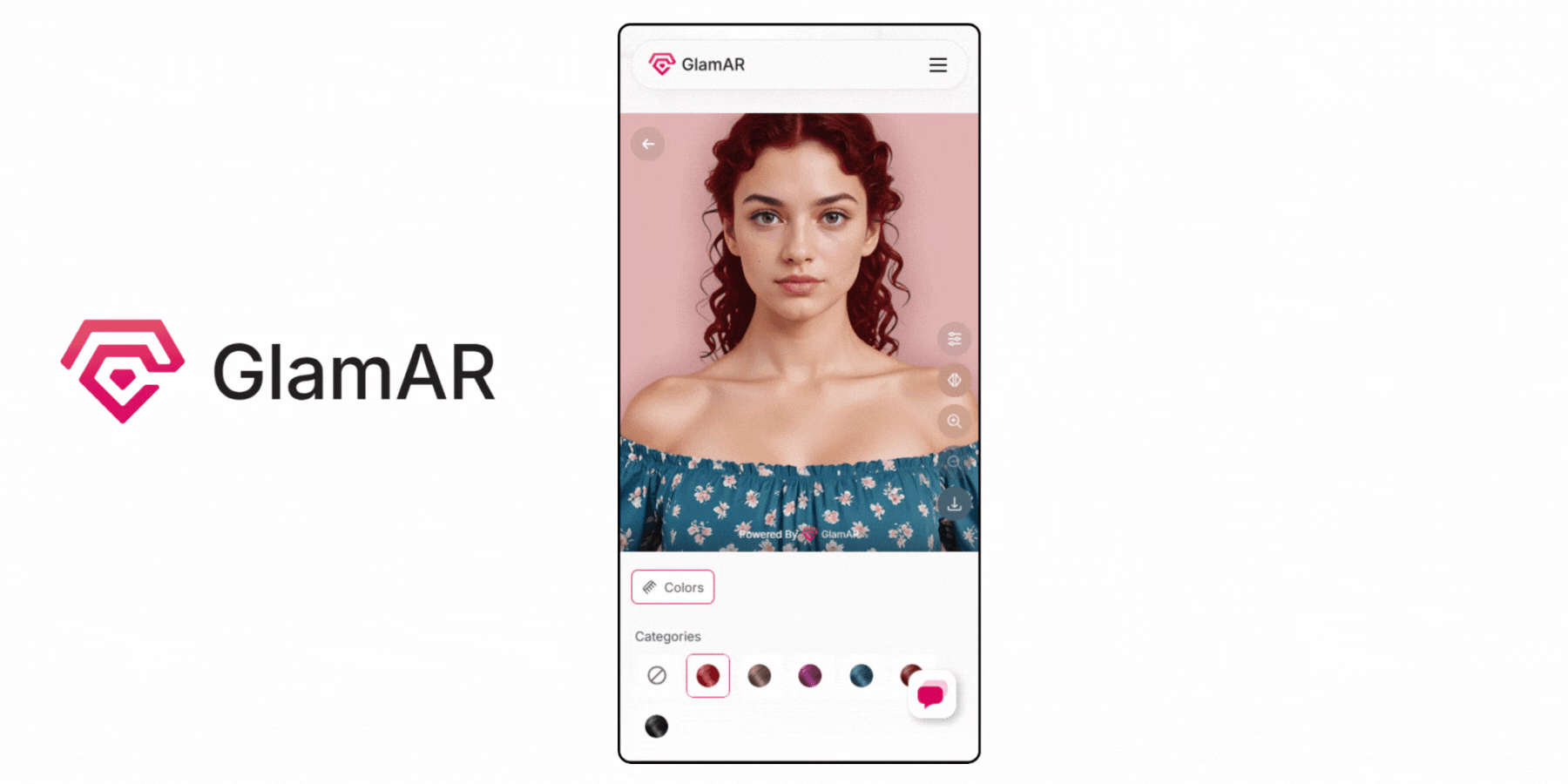
GlamAR's hair color try-on lets a customer adjust opacity to increase or decrease color intensity, compare a before-and-after view directly, and test a look against a model matched to their own age or skin tone. It's delivered as an SDK across web, Android, and iOS, so a salon or brand can embed it directly into an existing app or site rather than directing customers to a separate tool, and the same platform extends to makeup, jewelry, and other try-on categories from one vendor relationship.
For a brand already using GlamAR for another category, adding hair color reuses the same integration and face-tracking foundation rather than requiring a second technical project. Explore the makeup and hair color try-on solution directly for current shade library and platform specifics.
Its model-based preview option, letting a customer see a shade on a face and hair type matched to their own rather than only on their own live camera feed, is a genuine differentiator for a shopper hesitant to grant camera access or without a clear photo on hand, widening the pool of customers who actually engage with the feature at all.
Features:
- Multi-platform compatibility: GlamAR works on websites, Android, and iOS. Now, you can easily add its AR VTO solutions, like hair color try-on, to your existing app or platform.
- Face tracking software: GlamAR uses advanced technology to track human faces and expressions. It allows your shoppers to try on makeup, jewelry, and hair colors virtually using their smartphones or any other devices.
- Hair color try-on: When your customer try-on GlamAR’s hair color VTO, they will get an option: Opacity to increase or decrease the intensity of the applied hair color, according to their preferences. Also, they can compare the before and after effects with a tool. They can do a customized look test, based on age or skin tone.
- Social sharing: Through the ‘download’ option, your shoppers can save the image after applying virtual hair color. Then, they can share it with their friends and family, even on their social media feed.
Drawbacks:
- Need a well-lit space to try-on


2. Modiface
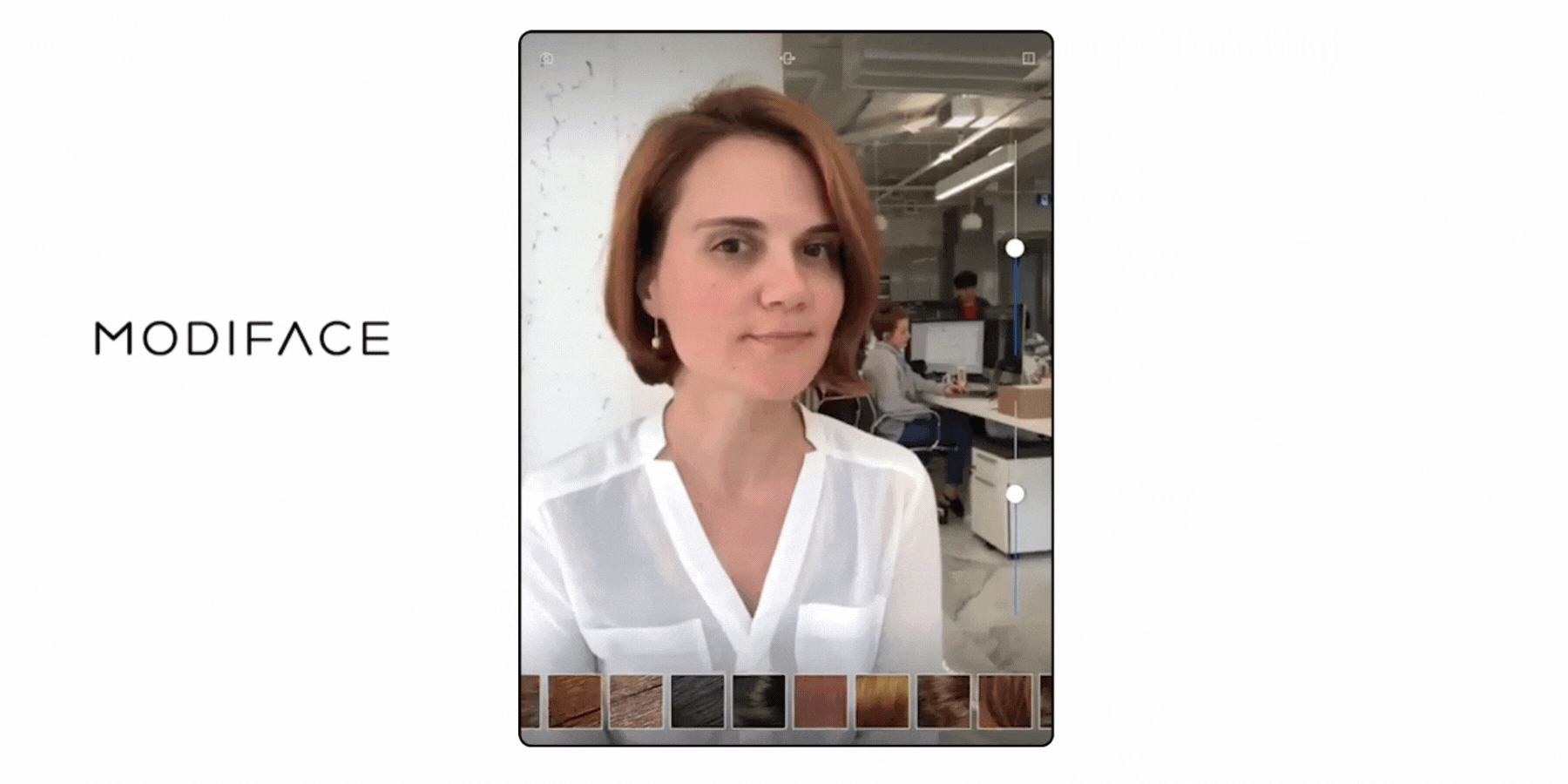
Modiface, backed by L'Oreal, is one of the most established names in this category specifically because of its color-matching technology, adjusting rendered shade to a customer's actual base hair color and texture rather than applying a flat overlay. Its hair diagnostic tool pairs the try-on experience with haircare product recommendations, extending the use case beyond pure visualization into a guided shopping flow.
Modiface's deployment across more than 3,000 retail and salon sites globally, and its use by major brands including L'Oreal Paris, Aveda, and Redken, is a strong signal of production maturity, though a smaller brand should confirm pricing and integration scope directly rather than assuming enterprise terms apply uniformly. Its parent company's reported figures, more than 100 million people globally using its digital try-on tools in 2023, up from 40 million the prior year, reflect genuine scale that most other vendors on this list cannot independently claim.
Features:
- Easy-to-set-up: Following the user guide, you can easily set up your products on its Hair Virtual Try-On within a few minutes.
- Hair color try-on: Modiface allows your customers to try a variety of hair colors in its virtual space, by combining advanced tracking and realistic shade rendering.
- Inclusive hair tracker: It works on every hair type with strong coverage and offers real-time effects by perfect edging.
- Automatic rendering: Modiface has designed hair renderings to adapt to your exact needs. It ensures hyper realism and accuracy.
Drawbacks:
- No free trial option.
- Inaccessible virtual try-on options.
3. Facetune
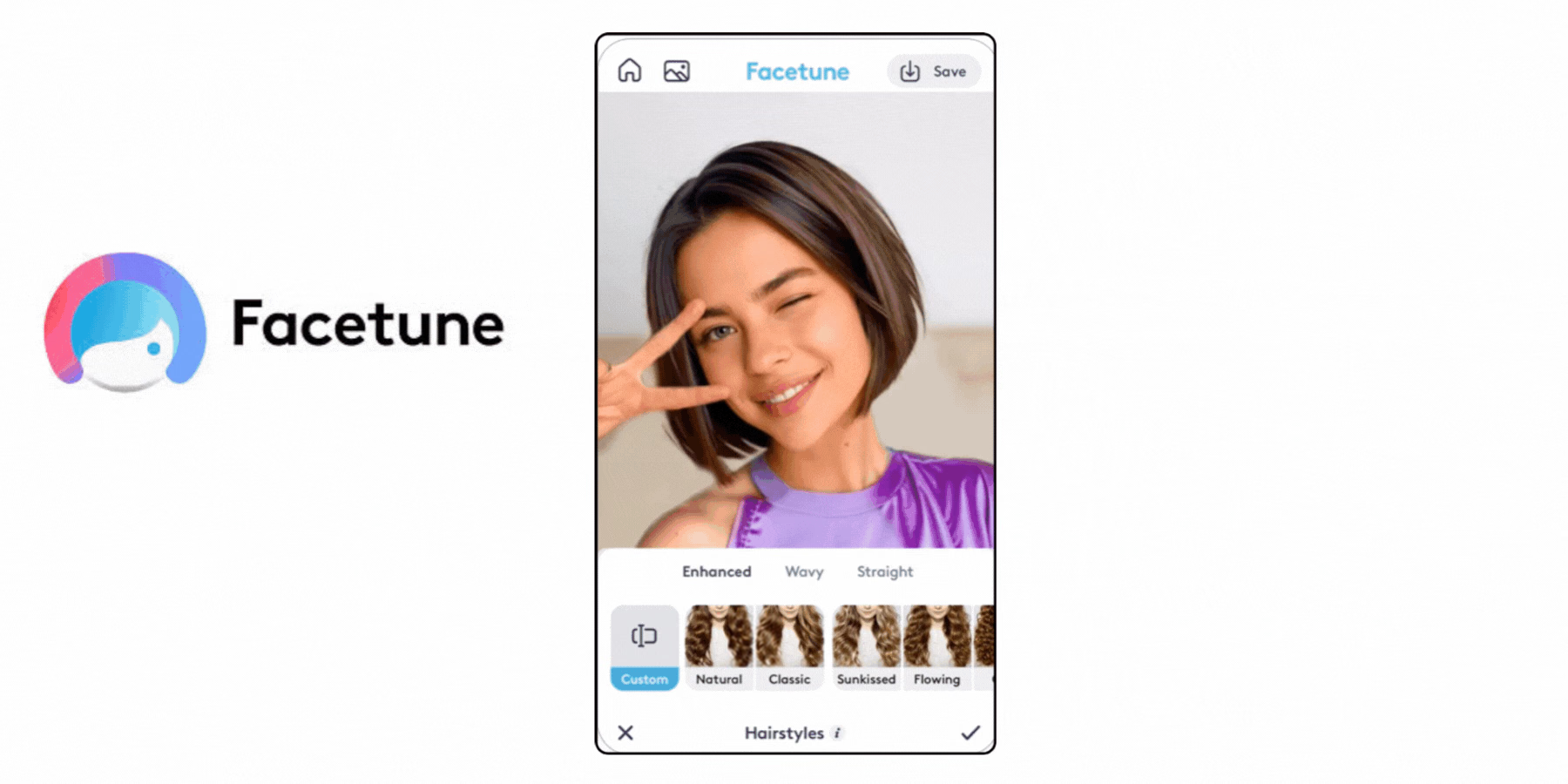
Facetune's hair color editing sits inside a broader consumer photo and video app with no confirmed licensing path for a salon or brand to embed. It's useful only as a reference point for how a polished consumer product presents color options, not as a vendor a business can actually integrate, and it should not appear on a shortlist of actual vendor options regardless of how well its own interface performs.
Features:
- Hair color simulator tool: Your consumers can make their hair colorful with its AI hair color simulator tools. Through it, they can transform their look in photos.
- Look enhancer: Consumers can enhance their hair-dye look, adjusting shine, texture, and other details.
- Multi-color try on: Its hair color simulator tool helps consumers try on a wide range of colors with trendy shades and highlights.
- Customization: While experimenting with multiple hair colors, they can personalize their look with the custom prompts available on the site.
Drawbacks:
- Only photo mode is available.
- No direct access to try-on.
4. YouCam Makeup
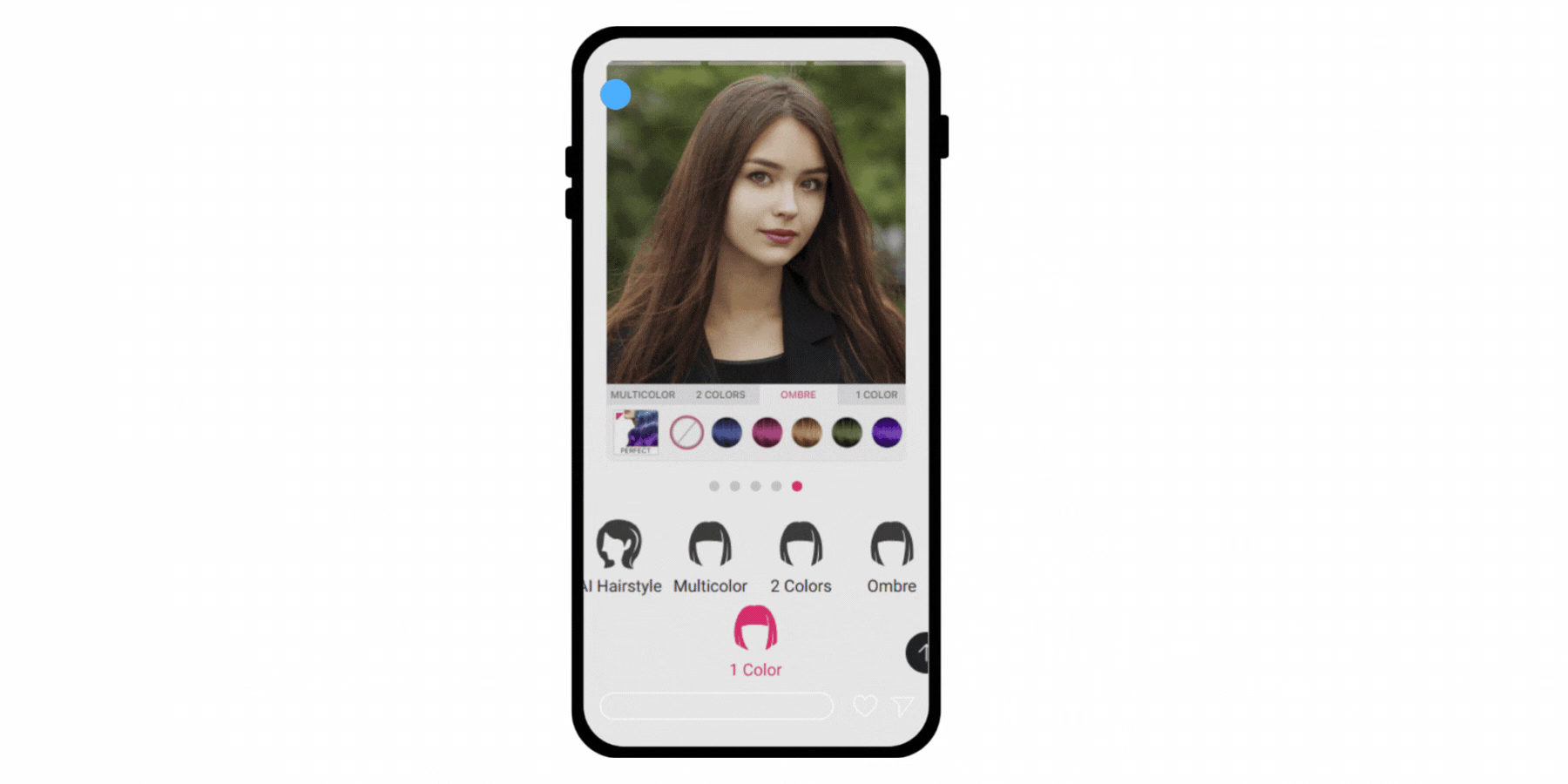
YouCam Makeup is Perfect Corp's consumer-facing app, but Perfect Corp itself licenses the underlying hair color and facial analysis technology as a B2B API, which is the product a salon or brand should actually evaluate rather than the consumer app's own feature set. Perfect Corp's published case studies with Madison Reed and Aveda, cited earlier in this guide, both run on this underlying technology.
Features:
- Hair-color try-on: Consumers can virtually try on 100+ hair colors and trendy hair dye patterns like ombre, two-tone, and highlights, on their images or live camera. They can try hair colors on their photo or via a live camera and avail of manual adjustment options.
- Color picker tool: Using its color picker tool, they can choose any color from the color scale or an existing color from their photo to get the accurate color they want.
- Easy-to-use: For your business, you can incorporate this app to showcase your hair color products to online customers. Its ready-to-use code makes you access its low-cost AI editing tools.
- Compatibility: Your customers can avail of the AR shopping advantage from their devices no matter if it is a smartphone or a desktop. Free sign-up is available.
Cons:
- Limited hair color try-on per day
5. Hair Color Booth
This is a consumer-facing web tool with no confirmed path for a business to license, included here as a reference point for basic color-swap functionality rather than a vendor option a salon or brand could actually adopt.
Features:
- Hair color try-on: Consumers can try 45+ hair colors in a photo or video mood with a sliding tab selector. Then, they can adjust the intensity of hair color filters and apply a skin-smoothing filter to their face for a polished look.
- Accessible solution: Consumers who use iOS devices can access it.
- Accurate results: Its zooming control features ensure total accuracy and provide realistic results to the consumers.
- Color strength control technology: Consumers can control their hair color strength, including smoothing and transparency.
Cons:
- Lower accuracy level in auto hair detection.
- Some hair colors are limited in the premium version.
- Single platform accessibility.
6. Hair Try on by Ulta
Ulta is a retailer, not a licensable vendor, and its own try-on tool is a working example of hair color try-on deployed directly inside a live retail purchase flow. Its personalization approach, tailoring shade suggestions to a customer's uploaded photo, is a useful design reference for a brand building its own flow, even though Ulta's specific implementation isn't something another business can license. Studying how a large, multi-brand retailer surfaces try-on within its own browsing experience, rather than as a separate, disconnected tool, is worth doing before finalizing your own placement decisions.
Features:
- Compatible solution: It is accessible from the web and app versions. Consumers can install the app or try it on the web for virtual hair colors.
- Hair color try-on: Using photo mode, consumers can try on numerous hair color options. They can increase or decrease the hair volume when experimenting with hair colors. It will help them choose an ideal color for their volume.
- Hair tips: Before proceeding to try-on application, consumers will get some useful tips for healthy and growing hair.
- Advanced tracking: Using AI and AR, it can track human faces and features accurately and give satisfactory, true-to-life effects.
Drawbacks:
- Video mode is unavailable.
- Can’t find before-and-after effects.

7. Fotor
Fotor is primarily a consumer and prosumer photo editing tool, with a hair color change feature alongside broader retouching capabilities, and it offers a developer-facing API for teams wanting to integrate automated editing into an existing workflow. This is a reasonable fit for batch processing marketing imagery, but it is not a real-time try-on SDK in the sense that GlamAR or Modiface are, and a brand should confirm which specific use case it actually needs before assuming feature parity between the two categories.
Features:
- Easy-to-use: Following its user guide, your customers can easily access their try-on tools to experiment with its hair color filter before final purchase.
- Hair color changer app: Fotor’s user-friendly hair color app allows your customers to try on multiple hair colors directly from their mobile device.
- Hair color filters: Using a hair color simulator, consumers can virtually try on different shades of hair colors on their own photo. The hair color filters help them choose the best complementary color for their hair.
- Hair color tester: There are numerous hair colors available on Fotor’s hair color tester. Your customers can modify the depth of the chosen hair color by adjusting the intensity slider.
Drawbacks:
- Live video mode unavailable.
- Premium features are confined to its pro level.
8. Makeup Plus
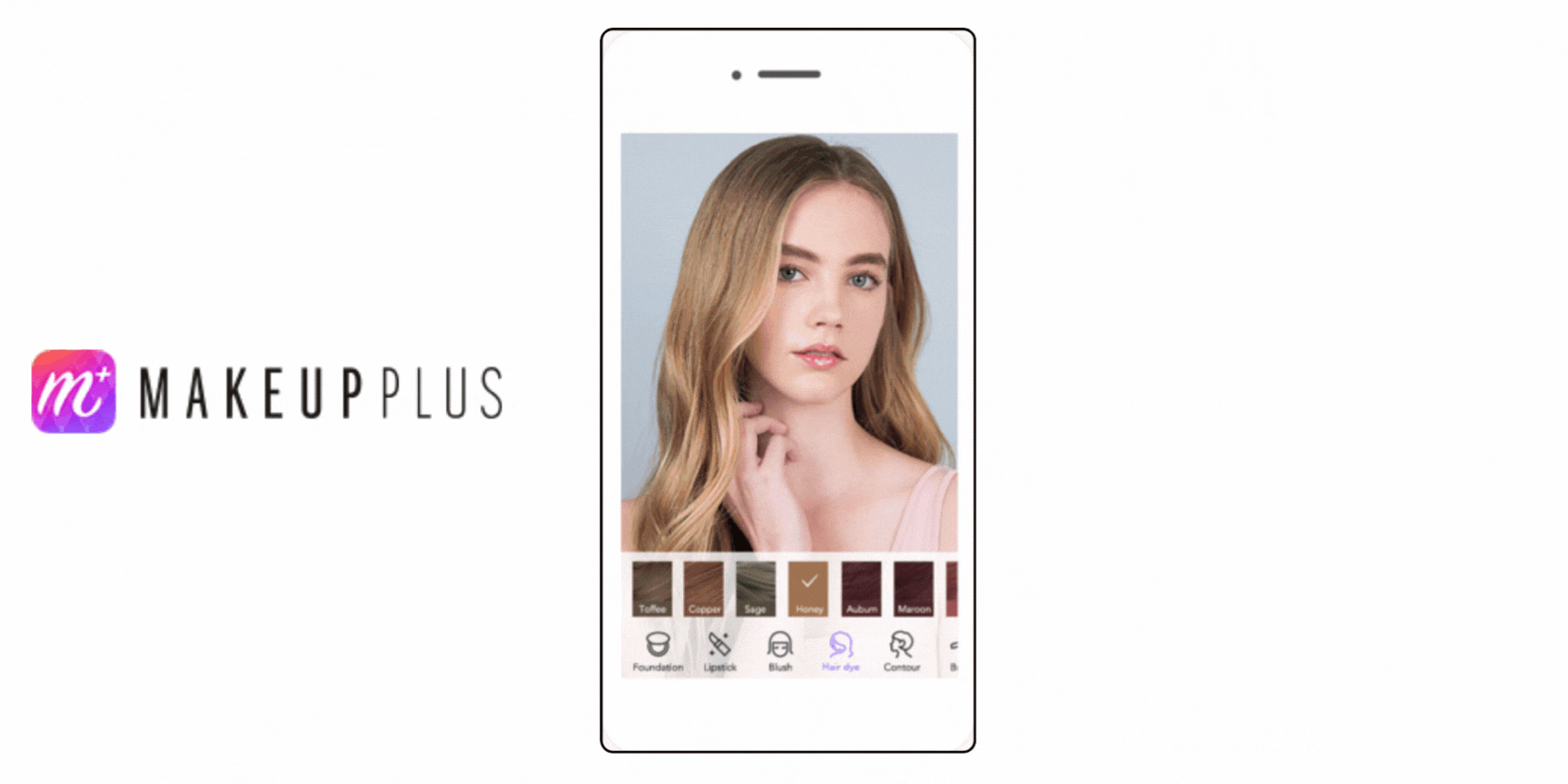
Makeup Plus is a consumer beauty app with a hair color feature bundled alongside broader makeup editing, with no confirmed licensing path for a business to embed.
Features:
- Virtual hair color try-on: With its hair dye tool, your customers can test different shades of hair color from natural tones to bold fashion shades. They can virtually apply top-branded hair colors, using AR technology.
- Customizable options: Consumers can create custom looks with this photography app. They will get complete control over your appearance with its live filters for selfies and videos.
- Device accessibility: Makeup Plus is available on Android and iOS devices.
- Convenient solution: It provides virtual product testing facilities for your customers. After testing, they can directly go to the online product store to buy the chosen product.
Drawbacks:
- Difficulty in experiencing AR solutions on some devices.
- Subscription is required for premium tools.
9. Style My Hair
Style My Hair is L'Oreal Professionnel's own consultation app, built on Modiface's underlying technology, and it's included here as a case study in salon-facing design rather than a separately licensable tool. Its free availability across more than 80 countries and its specific design for in-chair stylist use, rather than pure consumer browsing, is worth studying directly if your brand is designing a similar salon-facing consultation flow. Its real-time, strand-level color rendering, detecting individual hair strands rather than treating hair as a single uniform region, is a notable technical benchmark for what a mature licensed SDK like Modiface can actually support once deployed at this scale.
Features:
- Color consultation: ‘Style My Hair Pro’ helps hair stylists digitize color consultation with their clients.
- 3D Hair color try-on: Style My Hair provides the hair color try-on solutions to consumers. It assists them in selecting their dream color before booking a salon appointment. They can even add effects like ombré, sombré etc, and apply the split screen to see their hair before and after.
- Moodboards: It is established to inspire you and your clients with the latest trends. Moodboards are sorted out by categories, product launches, trends, artists, and events.
- AR technology: It uses Modiface virtual try-on. Its face tracking technology detects the user's hair and applies color to that area. In Spite of moving their heads around, the color will follow their hair in real-time.
Drawbacks:
- No direct access to the hair try-on from the website.
- Accessible to limited devices.
- App navigation is not intuitive.
- Hair color filters can work well on light hair.
10. Fabby Look
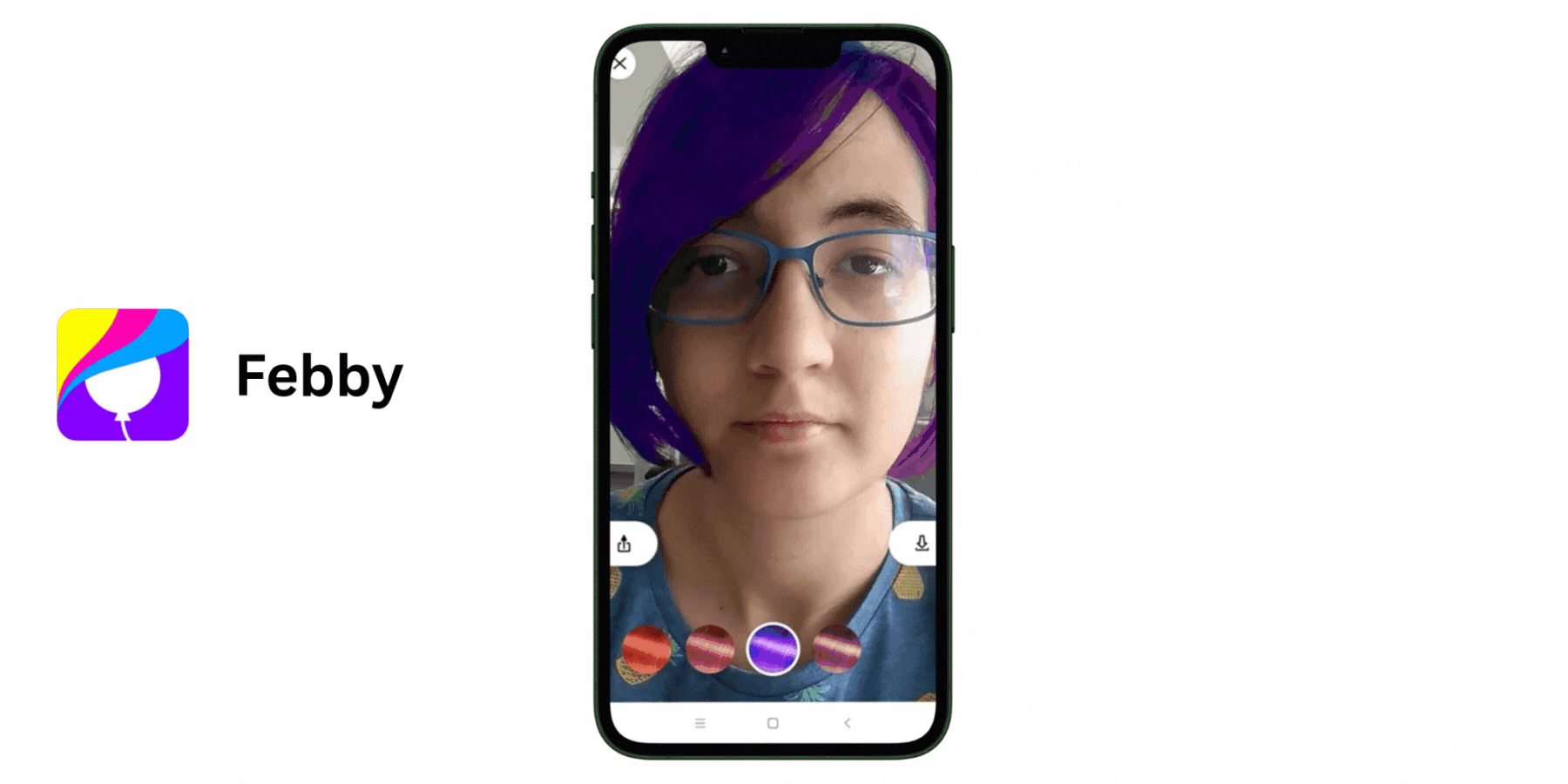
Fabby Look is a consumer hair color changer app with no confirmed licensing path, included for completeness as a reference point only rather than a genuine option a business could pursue.
Features:
- Compatibility: Fabby Look is available only on Android versions. Consumers can install it from the Google Play Store or the App Store.
- Social sharing option: After taking a snap or capturing a video, your customers can share it on their social media feed.
- Dual mode option: Photo and video mode available to try on hair color virtually.
- Easy-to-use solution: Consumers just need to install the app and click a selfie to apply the hair color effects. Then, they can save it for future use.
Drawbacks:
- No direct website access.
11. Photo Director
PhotoDirector is a consumer and prosumer photo and video editing app with hair color adjustment among its broader feature set, and like Fotor, it has no confirmed real-time try-on SDK offering built specifically for this use case.
Features:
- Easy-to-use: It is extremely easy to use. Consumers just need to follow its video tutorial, available on its website.
- Accessible solution: Photo Director is free to download for Android and iOS devices.
- Multiple look try-on: No matter what kind of look a consumer wants, it offers fun, bold, and classic looks to your customers with suitable hair colors, including trendy ones.
- Adjustment options: While applying a hair color, consumers can change its intensity, according to their choice, and get a professional-quality effect.
Drawbacks:
- No direct access to use the tool from the website.
- Manual overlaying & adjustments.
12. My Hair [iD]
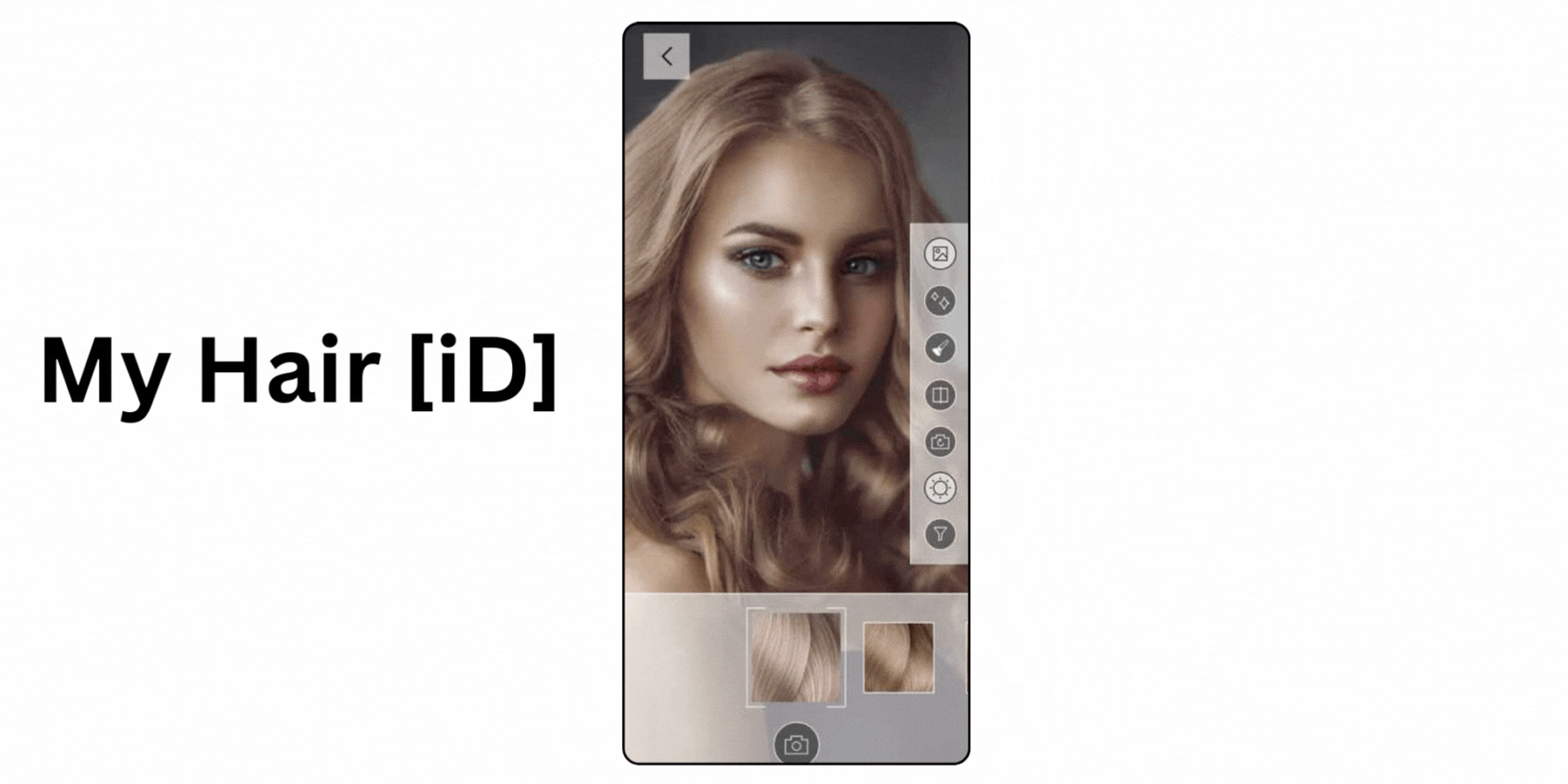
My Hair iD is positioned as a personalized color consultation tool rather than a pure visual try-on SDK, closer to a diagnostic questionnaire pairing a customer's hair goals with a recommended product or service. It's worth studying as a design pattern for pairing visualization with guided recommendation, though it's not confirmed as a licensable platform for outside integration. A brand building its own consultation flow might reasonably borrow this pairing of a short diagnostic quiz alongside a visual try-on step, rather than offering try-on as a purely standalone feature disconnected from any guided recommendation.
Features:
- Easy-to-access: You can download it for your Android and iOS devices, available on the App Store and Google Play Store.
- Professional color consultation: Through this app, you can offer your clients a professional in-salon color consultation. Your customers can experience unique inspiration, virtual try-on, professional diagnosis and product recommendation.
- Hair assessment: You can elevate your global hair assessment with it. During the assessment, you can show them your franchise’s recommendations before selecting their color preferences.
- Personalized color experience: Its swatch book showcases all L’Oreal Professionnel’s color shades. Your customer will get advice on future tailor-made colors, using virtual hair-color try-on.
Drawbacks:
- Limited color shades.
- Can’t produce an accurate outcome.
- No color adjustment tool.
13. ORBO AI
Orbo AI offers hair color and styling try-on as part of a broader beauty AI platform, with deployment spanning websites, mobile apps, in-store digital kiosks, and smart mirrors from one integration. This cross-device reach matters specifically for a salon chain or brand with both an ecommerce presence and physical retail locations wanting consistent try-on technology across both.
A business evaluating Orbo AI should confirm its hair-specific segmentation accuracy directly, since its broader platform spans multiple beauty categories rather than being purpose-built around hair color exclusively. Its omnichannel reach is worth weighing heavily for any salon group operating both an ecommerce storefront and physical locations wanting one technology partner across both rather than stitching together separate online and in-store solutions.
Features:
- Compatibility: Its virtual try-on tool is easily accessible through websites, mobile apps, retail kiosks, and chatbots. Now, your consumers can try on a wide range of hair colors without visiting a salon or physically applying them.
- Realistic impact: It captures and segments every hair strand of your consumer. Thus, it allows them to get the most realistic, virtual hair color try-on. Its beauty AI can match their original hair color with their skin undertone.
- Right recommendation: Orbo AI ensures personalized product recommendations for your customers. Using this tool, customers get suggestions for the perfect hair colors and make a quick purchase.
- In-store AI magic mirror: This AI mirror can analyze your customers' hair and come up with the results of their past choices. It provides personalized guidance and gives importance to your customers' preferences.
Drawbacks:
- Applies hair color to the whole image area, not only to the hair
- No automatic or manual adjustment tool available.
14. Algo Face
AlgoFace is a facial recognition and segmentation platform built around precision and stated privacy-first data handling, with SDKs supporting mobile, desktop, and cloud environments. It provides the underlying face and hair segmentation infrastructure a platform could build a hair color try-on experience on top of, rather than a ready-made beauty-specific try-on product with its own shade library.
A brand evaluating AlgoFace specifically for hair color try-on should confirm this distinction clearly, since licensing segmentation infrastructure assumes more in-house development work than licensing a purpose-built try-on SDK with shades and rendering already included. Its stated privacy-first architecture, including a no-storage policy for captured images, is worth noting specifically as a benchmark to hold other vendors to during your own data handling evaluation.
Features:
- Color-matching technology: Using AI, Algo Face allows your customers to virtually try on hair colors and make them confident when they apply it in real-time.
- Accurate recommendation: Its color matching technology will analyze your customer’s hair and let you suggest to them some complementary shades.
- Easy & confident purchase: Among the recommendations, your customer can choose between 2-3 colors. It will save their time and make them buy the hair color confidently.
- Reduced return rates: Since consumers can select their perfect shade after virtually trying on, there is less tendency to return those products.
Drawbacks:
- Unavailability of direct access from the web try-on.
- No free trial.
15. Tryndbuy
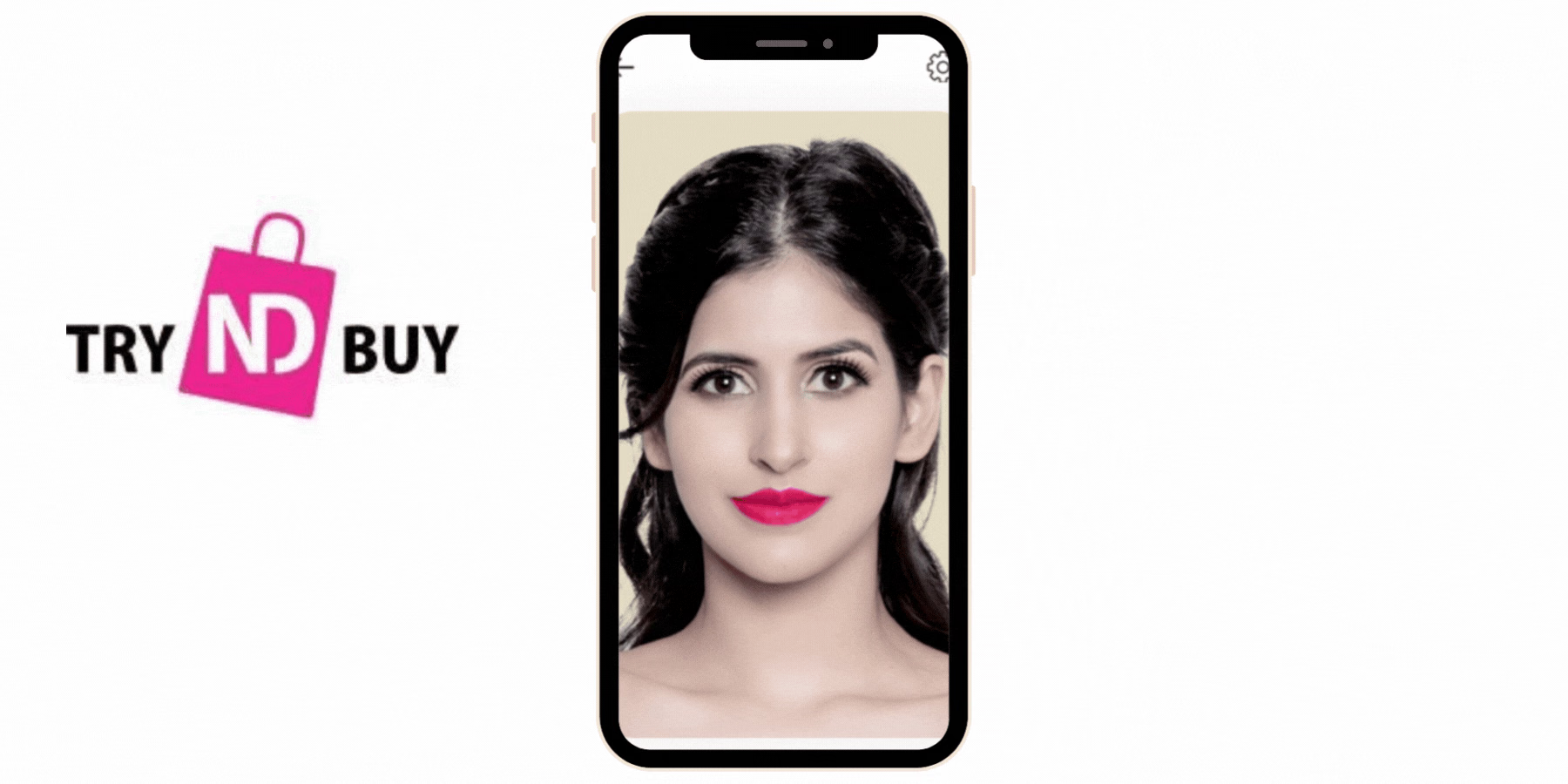
Tryndbuy is positioned around live-session shopping experiences rather than a standalone try-on SDK, and it's included here as a reference point for the live-consultation format rather than a confirmed licensable hair color vendor specifically. For a brand interested in combining try-on with a live, guided shopping session, this format is worth studying as a design pattern alongside the genuine try-on SDKs elsewhere on this list, particularly if live consultation already plays a role in your existing sales process.
Features:
- Virtual body model: Tryndbuy creates realistic 3D body models. After submitting selfies and entering body measurements, it generates a virtual body model of your customers. So, they can try products on their virtual body model while shopping online.
- Live session: Consumers can try on multiple range of hair color products in its live session and get a glamorous look.
- User guide: With its easy-to-follow user guide, your customers can try on hair colors without any difficulty. Only three simple steps are there to get a virtual hair makeover.
- Ensure accuracy: Adding it to your e-commerce site, you can offer your customers to obtain accurate and real-time results. It leads them to make a confident purchase.
Drawbacks:
- No try-on button is available.
Other platforms you can explore for hair color try-on
Apart from these listed platforms, there are so many available in the market. I have done experimentation with some of them. Let’s have a look at the two other platforms:
1. DeepAR.ai: It is easily accessible from any of your devices. Using advanced technology, consumers can try on hair colors on live video. I have tried its try-on solution and dynamically changed my hair color. It works on every hair type and color.
2. Live virtual try on: It is an easy-to-use online tool where your consumers can try on as many hair colors as they want. Here, I have found unlimited hair color options with different ranges.
Consumers can also find out how much permanency those colors can provide. Also, they will get suggestions on how to color their hair. I have selected cosmic blue and applied it virtually to my hair to check the effect.
How to execute hair color try-on for your business
Nowadays, virtual try-ons like hair color try-ons are making a flourishing place for fashion lovers. If you are a beauty brand entrepreneur and want to grow your business by implementing hair color try-ons in your online platform, you should know the process. Let's find out how you can integrate AR solutions into your business:
Prioritize your goals & audience
Before implementing AR technologies and machine learning algorithms, it is important to emphasize your business goals and find your target audience. It will help you increase the conversion rate for your business. For instance, L’oréal Paris adopted AR technologies by introducing Makeup Genius in 2014 to boost sales.
Choose the right partner
You need to ensure your technical partnership with others to expand your business in the digital field. Only the right partner can help you select a trendy technology for your brand. Just see a real-life example. L’oréal Paris partnered with ModiFace in 2018 to acquire its virtual try-on technology, which gives their brand a new wing.
Invest in a fair way
When it comes to investing in VTOs, an entrepreneur or business owner needs to think deeply about it. A good 3D model for face recognition and high-resolution picture tools can make a difference in your virtual hair color try-on. With these aids, your consumers can able to experience and explore various shades of hair colors before purchasing. So, it is worth for investment.
Optimize technologies as user-friendly
Virtual hair color try-ons should follow easy-to-use optimization to satisfy your online shoppers. If the updated technologies are difficult to use for your customers and don't provide accurate results, it will bring a real disaster to your business. Keep them user-friendly so that customers can use them straight from your website or e-commerce platform.
Types of consumers using hair color try-on
Companies such as Garnier and L'Oreal Paris have integrated hair colour try-on tools that provide real-time results. With the help of AI-powered AR, consumers can visualize more than 55 hair shades in real time. Now, let’s get to know the potential users of this emerging technology:
1. New users:
Newbies or beginners are always so hesitant to commit, especially if they happen to put their first foot wrong. Hair dye try-on tools are the perfect solution as users can boast with confidence if they wish to change their style.
2. Fashion enthusiasts:
They are the ones who love experimenting with different hair shades and styles. AR VTOs allow users to test a wide variety of colors, including pastel. At the same time, they may not otherwise be willing to buy in bulk.
3. Those who are seeking a natural look:
This category includes people who prefer changing hair colors that are close to their natural hair tone. Try-ons are perfect to compare their favorite tones with subtle variants of certain highlights, which will match their clothing choices.
4. People dealing with grey hair:
The fight with grey hairs is the most common issue individuals face at a certain stage of their lives. Many want to get rid of the grey hairs as naturally as possible. With the help of hair color try-on tools, you can ensure there is nearly perfect coverage.
5. Those who change hairstyles before a function:
This change rings true for almost every function. From parties, weddings, or photoshoots, many go through templates for a look, matching the vibe of the event. AR try-ons help them in experimenting with occasional look changes.
Popular brands (examples) using hair color try-on solutions
The beauty industry has been transformed with the emergence of virtual hair color try-on tools. Through augmented reality and artificial intelligence, consumers will get realistic hairstyle previews that facilitate easier decision-making. These technologies help leading brands to improve their customer experience and brand engagement. Here I have mentioned some real-life examples:
1. L'Oréal Paris
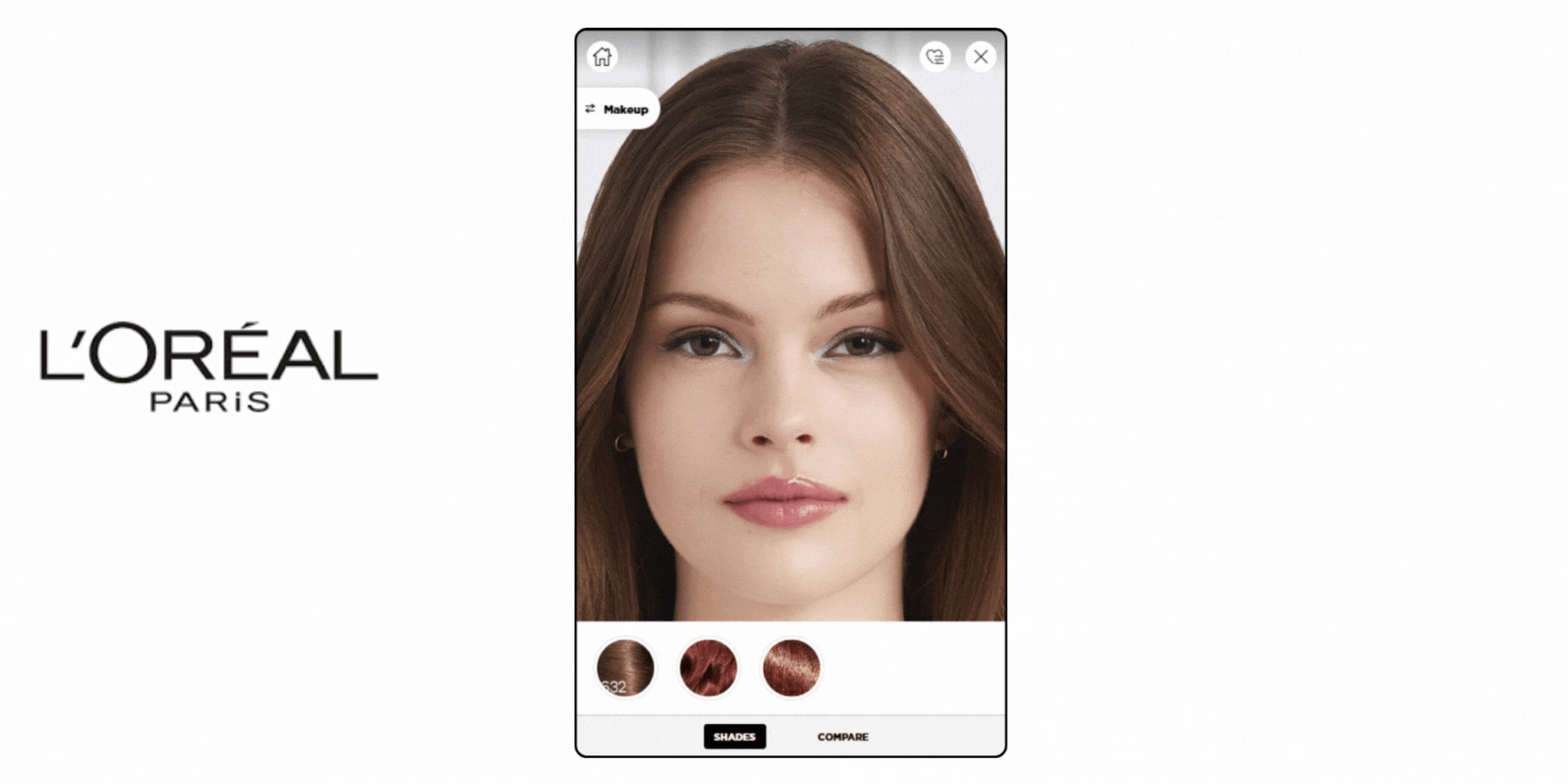
L’Oreal Paris has always set the bar high. The company has introduced no less than 200 shades that you can explore in real time using their virtual tool for Hair Color Try-On. In 2023, the company announced that more than 100 million people globally used their digital try-on tools, up from 40 million in 2022. So, within one year, customer engagement has increased by 150%.
2. Garnier
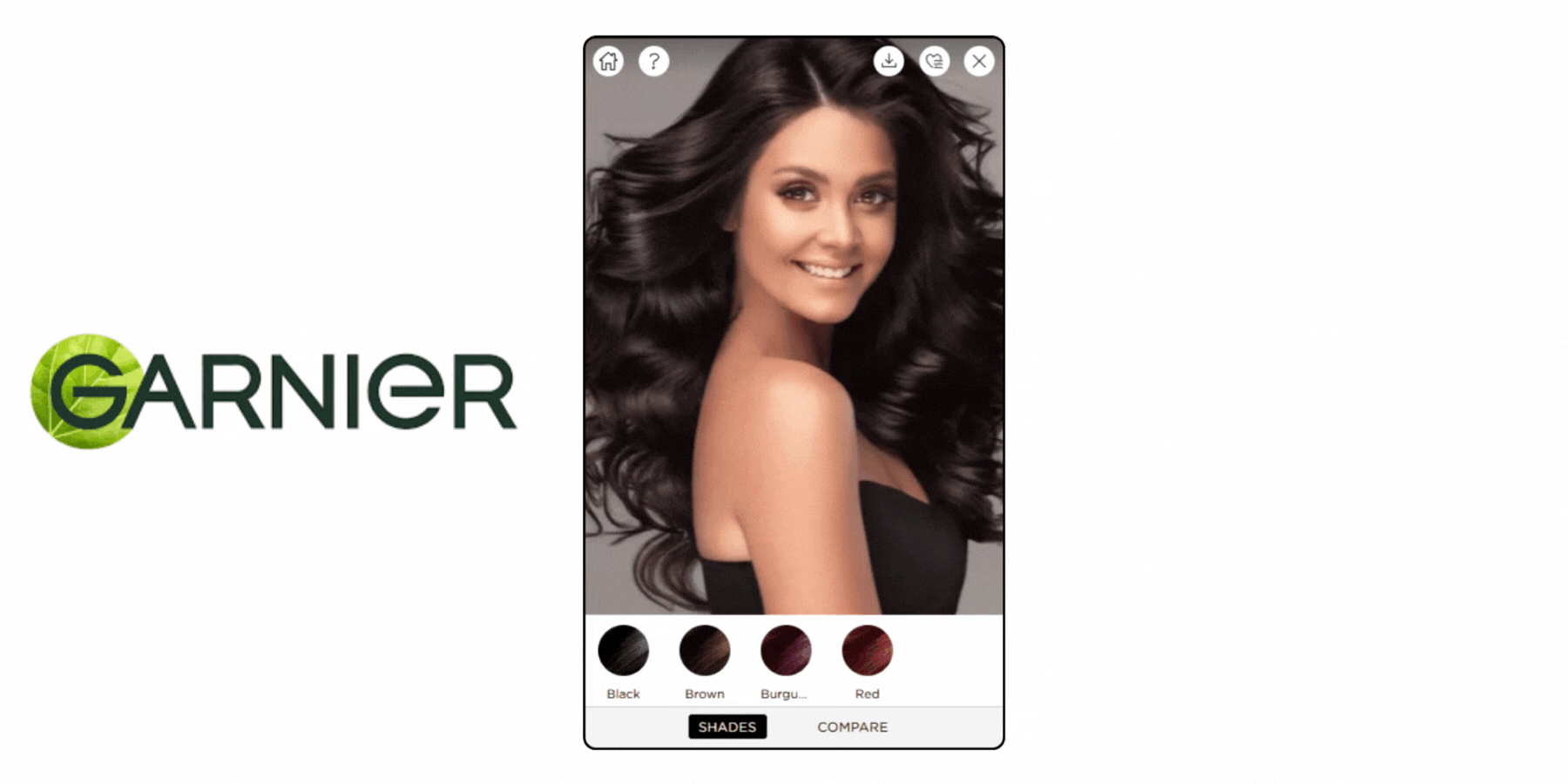
A Google subsidiary of L’Oreal, Garnier amplified its virtual try-on integration with Google Lens, allowing online shoppers to try on shades instantly via mobile. This online-offline shopping revolution has enhanced consumers’ purchasing confidence.
Back in 2020, virtual tools coupled with influencer marketing unexpectedly burst the hair-dye sales balloon, with Garnier claiming a 9.4% surge in sales. It showed AR could work as a propellant in the hair care aisle.
3. Matrix
Another L’Oreal property, Matrix, has extended its reach with an in-house virtual try-on that features an extensive array of shades, including some bold, fashion-forward options.
Although Matrix has not publicly released its year-over-year sales data, adding AR features was done for a reason. It is a part of L’Oreal’s digital-first transformation, and as the evidence shows, personalization increases consumer satisfaction.
4. Aveda
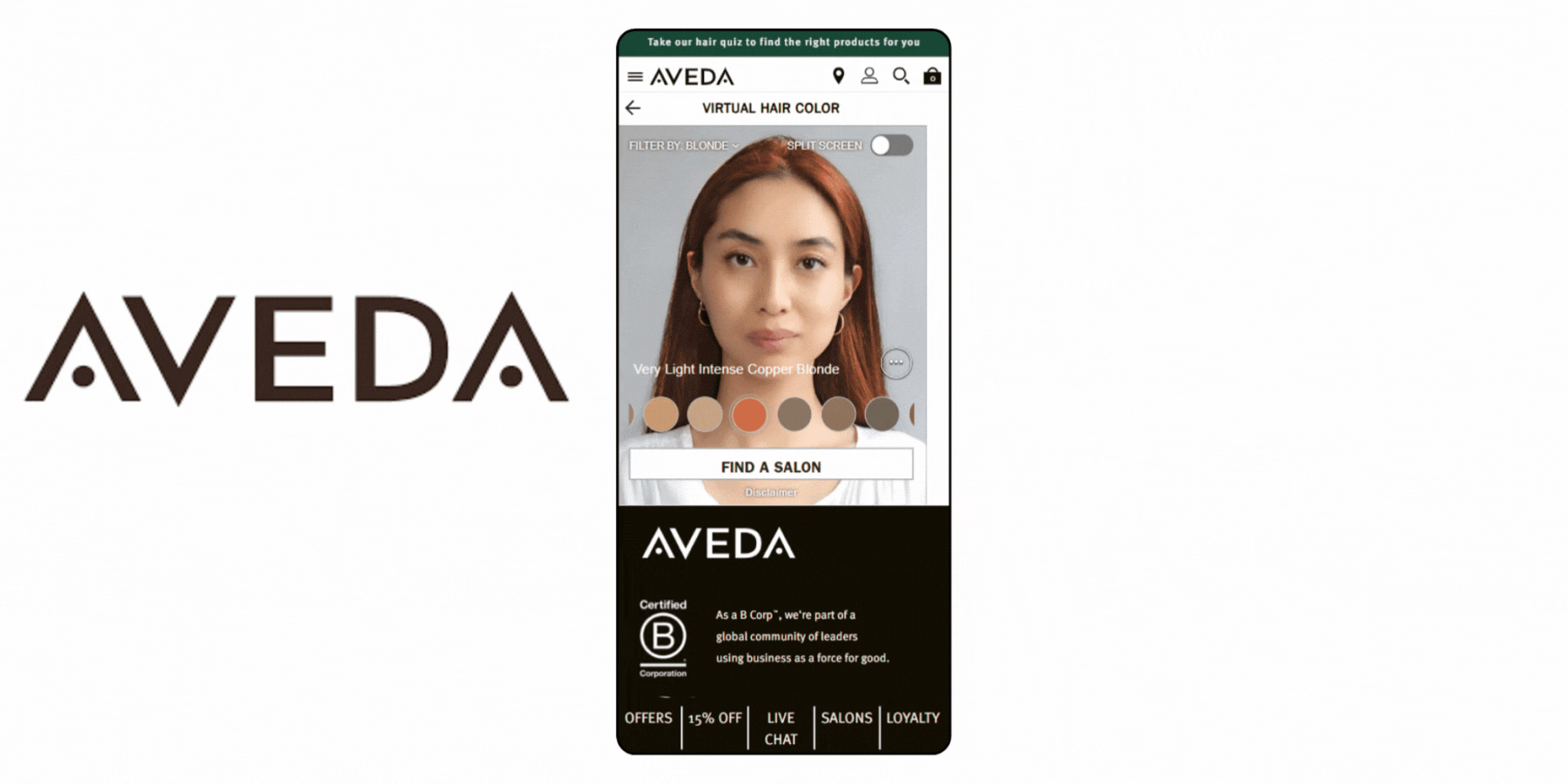
Aveda partnered with Perfect Corp in 2021 to create an interactive tool. It allows consumers to virtually try on hair colors, consisting of 90 shades. Thus, Aveda combines nature with technology. It has resulted in an impressive 220% increase in web traffic and enhanced the average time consumers spent on the pages.
5. Redken
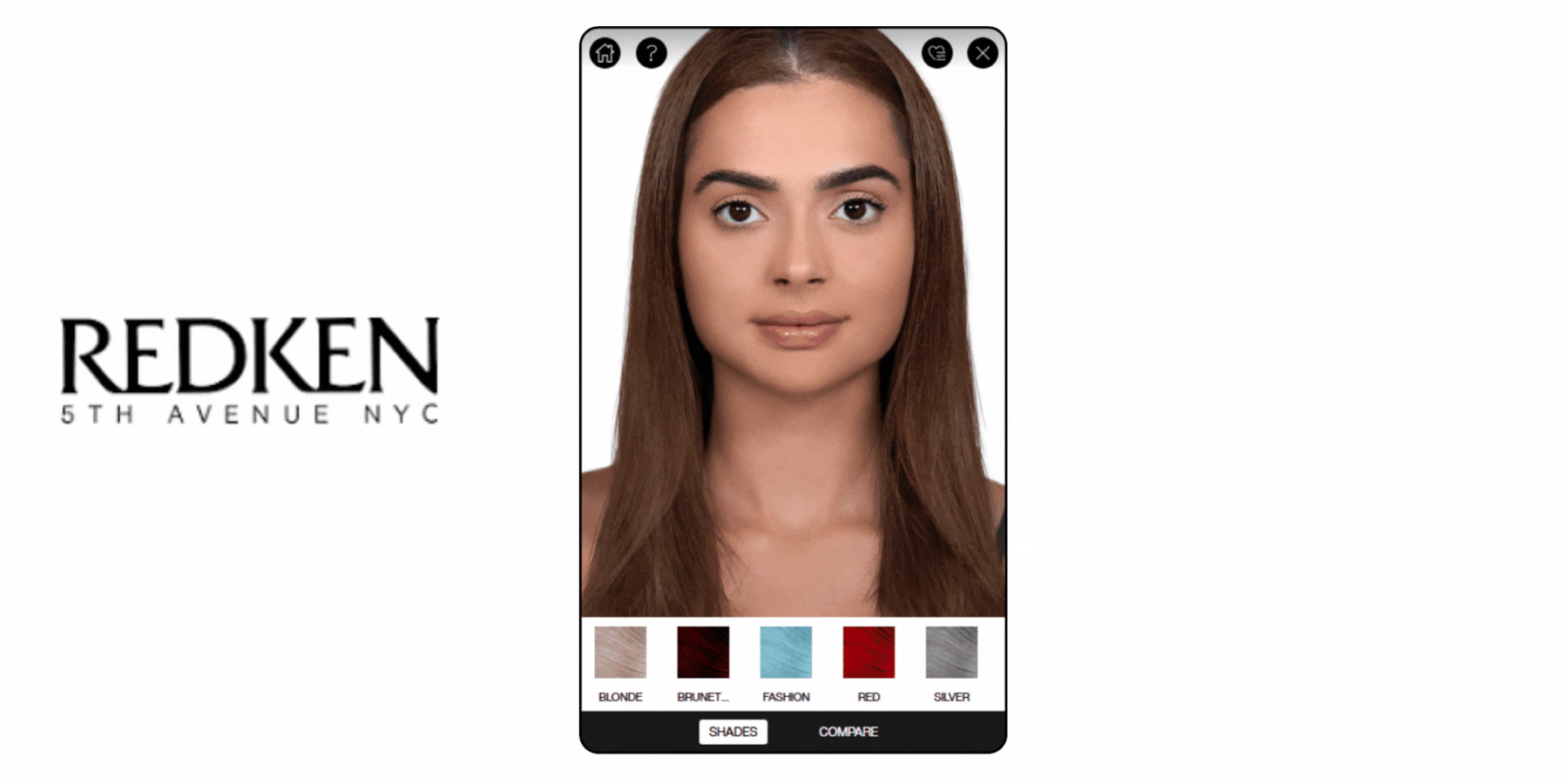
Redken’s virtual try-on platform allows consumers to visualise different shades by uploading selfies or using a real-time camera. Although no concrete sales data has been disclosed, the tool reflects a broader shift in consumer expectations: they want customization, speed, and confidence before making a purchase.
Redken’s AR interface is also used by hair stylists in salons, helping bridge the gap between at-home browsing and professional application. It minimizes post-color regret and product returns.
How to Validate Rendering Accuracy Before Integrating
Test any SDK against a genuinely varied set of real hair types, textures, and existing colors, not a vendor's curated demo images. Segmentation accuracy specifically tends to degrade on curly or textured hair, hair with loose flyaways, and hair photographed against a cluttered or similarly colored background, and these are exactly the conditions a polished demo video is unlikely to include. A vendor's own showcase reel, typically shot under controlled studio conditions with cooperative models, tells you very little about how the same technology performs for your actual customer base.
Test under a range of lighting conditions, since color rendering that looks convincing under even studio lighting can look flat or artificial under the mixed, often imperfect lighting a real customer's phone camera captures at home or in a salon under overhead lighting. Ask any vendor directly how their model adjusts rendered color for different lighting conditions rather than assuming uniform performance, and request a live test under your own salon's actual lighting setup if that's where the tool will primarily be used.
Confirm how the tool handles a customer's existing hair color and texture as a starting point, since a tool that applies a uniform new color regardless of base tone will look less convincing on dark hair being lightened dramatically than on hair closer to the target shade already. Test your own brand's actual bestselling shades specifically, not just a generic demo palette, since color accuracy claims are only meaningful against the colors you actually sell.
Confirm how gracefully the tool handles a failed or low-confidence segmentation, since a visibly broken result, color bleeding onto skin or the background, is far more damaging to customer trust than a tool that simply declines to render a preview under poor conditions and asks for a clearer photo instead.
Finally, pilot any tool with a small group of real customers or clients before a full rollout, comparing their own assessment of how closely the rendered preview matched their expectations against the eventual real-world result where that data is available. This kind of structured pilot, run before committing to a full catalog integration, is the only reliable way to confirm a vendor's accuracy claims actually hold up against your specific customer base rather than a generic demo audience.
How GlamAR Supports Hair Color Try-On
GlamAR's hair color try-on is built as part of a broader beauty and accessories platform rather than a single-purpose tool, which matters for a brand selling hair color alongside makeup, skincare, or other categories, since the same vendor relationship and underlying rendering technology extends across all of them. Its opacity control and before-and-after comparison are built specifically to help a customer calibrate a shade to their own preference rather than committing to one fixed render.
Integration runs through an SDK across web, Android, and iOS, giving a salon or brand consistent deployment regardless of which channel a customer uses to browse or book. For a salon chain specifically, this cross-platform consistency matters as much as the rendering quality itself, since a client researching shades on a phone before an appointment and a stylist pulling up the same tool on an in-salon tablet during the consultation both need the experience to behave identically.
Review the makeup and hair color try-on solution directly for current shade library and platform specifics, and see our broader comparisons of AR beauty try-on software and AI hairstyle try-on tools for related categories worth evaluating alongside hair color specifically, since a client choosing a new color is frequently considering a style change in the same conversation.
Conclusion
Of the 15 tools compared here, only a handful, GlamAR, Modiface, Orbo AI, and AlgoFace among them, are genuinely licensable SDKs a salon or brand can embed into its own booking flow or storefront. The rest are consumer apps or individual brand implementations worth studying for design patterns but not available to license directly. The real evaluation criteria for any genuine vendor come down to rendering accuracy across your actual customer base, integration effort, and whether the shade library maps to what you actually sell.
If you want to evaluate hair color try-on against your own catalog, talk to the GlamAR team about scoping an integration.










