
How eyewear brands can use virtual try-on to boost online sales


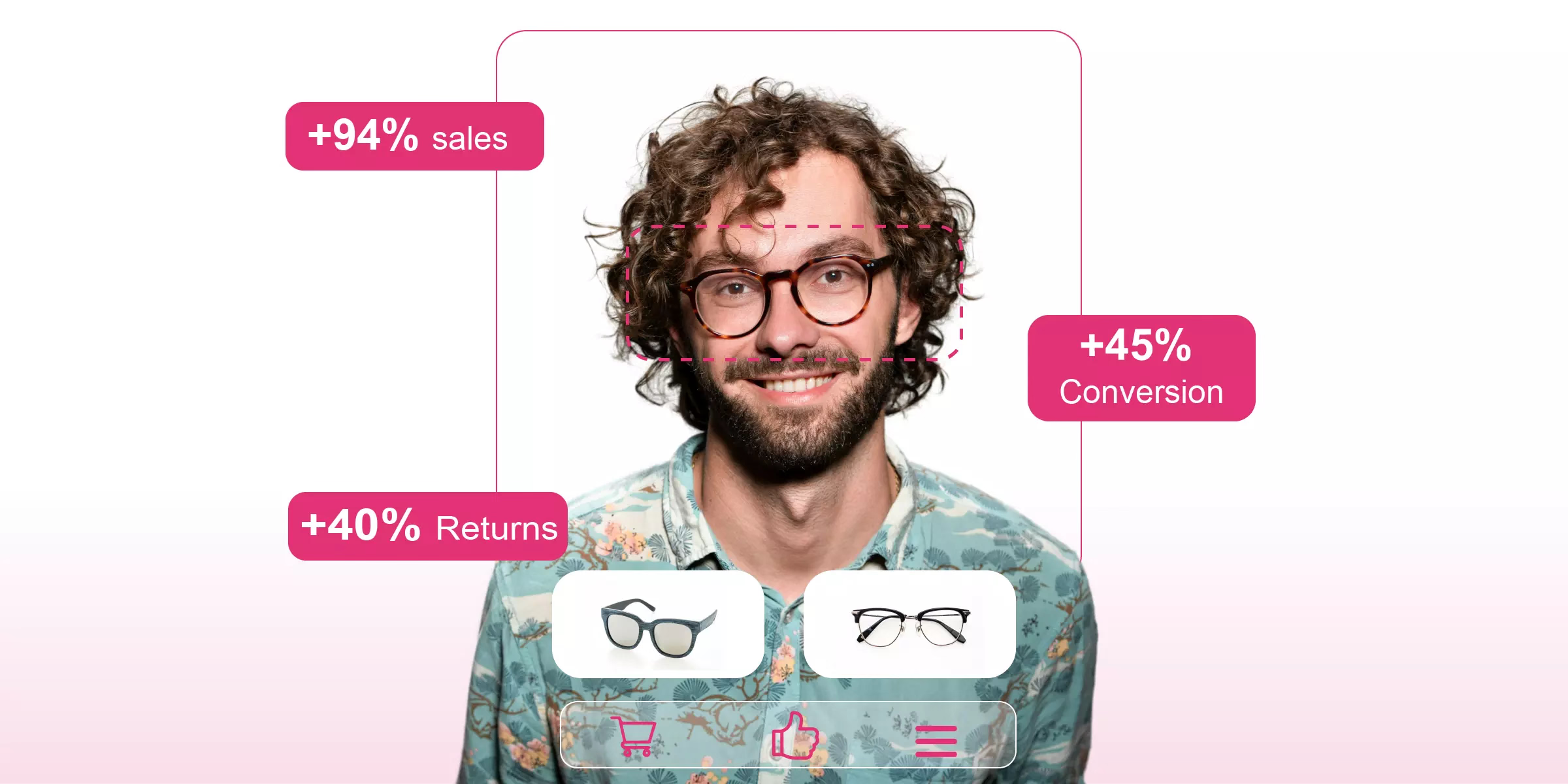
Nowadays, customers demand an easier and engaging way to explore new designs and styles of eyewear products, which will help them to elevate their overall look by opting for the best-suited products. Therefore, to provide their customers with an immersive experience, eyewear brands and sellers are using virtual try-ons to increase their online sales and conversion rates by providing them with an in-person-like shopping experience.
With the help of virtual try-ons, the eyewear industry has reached a market size of USD 1.52 billion globally in 2024, and it is projected to grow at a CAGR of 17.8% from 2026 to 2033, which is expected to reach an estimated USD 7.91 billion by 2033. The increasing adoption of technologies like augmented reality and 3D modeling has been helping eyewear brands to revolutionize the customer experience in both online and offline eyewear retail environments.
But have you ever considered how these virtual try-ons are helping brands and sellers to increase their online sales and conversion rates while providing them with an engaging experience? In this blog, I will help you understand the working and benefits of using a virtual eyewear try-on for online brands and sellers, which will help them increase their online sales and conversion rates.


What is a virtual eyewear try-on?
A virtual eyewear try-on is an online tool that helps online sellers and brands to provide their customers with an in-person and real-time shopping experience of eyewear by enabling them to see how glasses look on their face. It uses advanced technologies, like augmented reality, artificial intelligence, and 3D modeling, which will help their customers to have a preview of the glasses on their face before making any purchase.
It also provides them with a realistic experience to preview glasses by integrating features like AR overlay of 3D frame models and using AI-powered facial mapping to accurately place the glasses and render them on their face using PD/size calibration. Apart from that, it provides users with the accessibility to explore glasses in multiple styles and sizes while sitting at home, compare options, and help them make more informed purchase decisions.
Key features of a virtual eyewear try-on

With the help of a virtual eyewear try-on, online businesses and sellers can provide their customers with an engaging online shopping experience, which will enable them to explore multiple eyeglasses options by using their device’s camera at home. Every virtual try-on tool has its own unique features that make it unique and help the online brands to stand out in the marketplace while providing their customers with better services.
In this section, I will tell you about the key features of a virtual eyewear try-on that an eyewear brand or seller should consider while selecting the tool for their e-commerce website or app.
1. Augmented reality integration
It provides users with the feature to explore products using the device's camera by offering them a realistic experience with AR overlays and 3D digital models of the glasses onto the user's face in a live video feed. It will help them to see how glasses look on their face without moving from their home, and provide them with a contact-free shopping experience.
2. Realistic 3D models and tracking
It provides users with 3D models of eyewear frames, which they can use to have a 360-degree view of the glasses available in different sizes, shapes, colors, and textures in real time. It also provides users with a realistic experience by using AR overlays to place frames on their faces and offering them a real-time tracking feature that will provide them with a realistic and consistent preview.
3. Customizations and recommendations
With the help of artificial intelligence technology, brands can also provide their users with recommendations with suitable options according to their style and needs. It will also help brands and sellers to provide their customers with a personalized shopping experience by enabling them to customize the glasses by selecting from different styles, colors, and sizes.
4. AI-powered facial mapping
It provides users with a realistic shopping experience by helping them to map their facial features and place frames appropriately according to their facial features. It uses advanced artificial intelligence algorithms that will also help them select the suggested frames that go perfectly with their facial features and structure, which will enable them to elevate their overall look.
Barriers that eyewear brands experience during online sales
Online shopping and marketing are trends nowadays, which sometimes create barriers for both shoppers and sellers due to a lack of physical try-on and detailed fit feedback. Many sellers face various challenges, such as issues related to fit, prescription accuracy, and returns, while selling their eyewear products on an online platform, including a website or app, preventing them from building stronger relationships with their customers.
In this section, I will help you understand those challenges and how to overcome them by using the virtual eyewear try-on so that they can address customer concerns related to fit and style, prescription accuracy, and overall trust in the product quality.

1. Lack of professional advice
During online shopping for eyewear and eyeglasses, customers often feel a lack of professional advice, which can work as a barrier for brands because it may reduce the user satisfaction rate or lead to higher product returns.
By using the virtual eyewear try-ons along with artificial intelligence, brands can offer their customers some professional guidance and personalized recommendations, providing them with a tailored online shopping experience.
2. Inability to physically try on frames
Another challenge that online sellers and brands experience while selling their eyewear products virtually is customer uncertainty, which may arise due to the inability to try on frames physically.
Due to this, sometimes brands experience lots of product returns and cart abandonment that they can reduce by integrating the virtual try-on feature and providing their customers with an in-person-like online shopping experience with realistic visualization.
3. Concerns about prescription accuracy
During online shopping, most customers are skeptical about whether their prescription will be accurately fulfilled online, which can also bring some errors in the lens power or optical centration and cause headaches, blurred vision, and eye strain.
By using technologies like artificial intelligence, virtual try-on, and augmented reality, brands can help their customers select the appropriate glasses according to their needs and preferences while reducing the uncertainty and providing them with PD measurements for better fitting.
4. Measurement and placement issues
Many customers are unaware of their specific measurements, including pupillary distance (PD), which can bring product uncertainty and increase product return rates for online sellers and brands.
With the help of the virtual eyewear try-on, brands can reduce product return rates by helping their customers select the appropriate pair of glasses with proper measurements according to their facial features and structures.
Impact of using virtual eyewear try-on for online sellers and dealers
With the help of the virtual eyewear try-on, online sellers and brands can see a significant impact by increasing their conversion rates and lowering return rates, leading to higher revenue and reduced costs. It will also help them to enhance the customer experience, build brand loyalty, and provide valuable data for marketing and inventory management, while also improving operational efficiency by reducing logistical expenses.
In this section, I will help you understand the impact and benefits of using the virtual try-on features that online sellers and brands experience during virtual shopping.
1. Increased sales
With the help of the virtual eyewear try-on, brands will experience a boost in overall sales and conversion rates because it will help them to provide their customers with an engaging shopping experience. It will also help their customers to shop for frames in different styles and shapes with the confidence to complete purchases by virtually seeing how glasses look on their face, while reducing a major barrier to online eyewear sales.
2. Reduced returns
It will also help brands to reduce their product return rates by helping their customers to make more informed and confident purchasing decisions by providing them with a realistic preview of the product virtually. Additionally, it also minimizes the likelihood of customers being disappointed with their purchase upon arrival, which will help the brand to see a significant drop in return rates and associated costs.
3. Engaging customer experience
It helps online sellers to provide their customers with an interactive and engaging shopping experience by enabling their clients to explore and customize various frames that are present in multiple styles, sizes, and colors on the e-commerce website or app. It will also reduce the need for physical store visits because it helps brands to offer their customers a realistic and in-person-like shopping experience, which will foster satisfaction and increase brand loyalty.
4. Data-driven insights and analysis
It helps brands to enhance their marketing strategies by providing them with data-driven insights and analysis on customer needs and preferences. Online sellers and businesses can use these insights and analyses to understand customer behavior, which will help them to tailor marketing campaigns, inform product development, and guide inventory decisions.
GlamAR’s virtual eyewear try-on to boost online sales and conversions
GlamAR is a leading solution provider for brands dealing in the beauty, makeup, clothing, eyewear, and furniture industries to help them increase customer satisfaction and engagement. It provides brands with multiple solutions, including virtual try-ons, 3D configurators, 360-degree viewers, and virtual stores, offering their customers an engaging and immersive experience.
To help eyewear brands provide their customers with an engaging experience, it offers a virtual eyewear try-on that allows users to try different frames and glasses using the AR overlay technology before making any purchase decisions. It provides users with multiple features, including PD measurement, virtual store, and product configurator, enabling them to explore and customize multiple products through their device’s camera.
It helps brands to increase their conversion rate by 94%, as it provides their customers with a real-time experience with the help of 3D models and AR overlays. It also enables them to make their online catalog by offering them seamless integration and multiple customization options to help them maintain their image and identity throughout the website or e-commerce platform.
Benefits of using GlamAR’s virtual eyewear try-on for online sellers and brands
GlamAR's virtual eyewear try-on helps brands increase their overall sales and conversion rates by offering their customers an improved experience and engaging features. It also helps businesses to reduce product return rates by enabling their customers to make more informed and confident decisions during online purchases.
Along with that, it also provides brands with multiple benefits that help them build stronger relationships with their customers and provide them with better services. In this section, I will tell you about the advantages of using GlamAR’s virtual eyewear try-on for your e-commerce business.
1. Seamless integration
It offers brands seamless integration on multiple platforms and devices, including Android, iOS, web browsers, and more, to provide customers with a similar and engaging experience across various platforms. It also allows brands to customize the virtual try-on SDK according to their image and identity, enabling them to provide their customers with a similar experience throughout the platform or website.
2. Enhanced personalized experience
It helps businesses to provide their customers with a personalized and realistic experience during online shopping by allowing them to customize products according to their needs and preferences. It also enables them to explore new products and try them before buying by using AR overlays, which will help the brand to bridge the gap between online and offline shopping experiences.
3. Increased conversion rates
It helps brands or businesses in increasing their overall sales and conversion rates by offering their customers unmatched realism and accuracy. It allows customers to explore new products and helps them make more informed purchasing decisions by enabling them to use virtual try-on and augmented reality technology while exploring products before buying.
4. Reduced product returns
With the help of this online tool and advanced technology, customers can try products online before making any purchasing decisions, which will help them make more informed buying decisions and reduce uncertainty due to color mismatch. Therefore, it will help the brand to reduce the product return rate and enable it to increase customer satisfaction and trust in the business.
Brands that are using virtual eyewear try-on to increase online sales
To understand the impact of the virtual eyewear try-on, it is very important for e-commerce brands to study how several brands are already using it and how it is helping them to provide their customers with better services. Several well-known brands, such as Warby Parker, Ray-Ban, Prada, and more, are using these virtual try-on features on their websites or apps to make online shopping easier and accessible for their customers.
In this section, I will tell you more about these brands and businesses that are already using the virtual eyewear try-on to increase their sales and conversions.
1. Warby Parker
Warby Parker has introduced a virtual try-on tool for eyewear and aims to increase sales. Here, consumers can find their best frames and all eye care solutions. They can explore their wide selection of glasses, sunglasses, and contact lenses.
Additionally, they can save their favorite styles, view recommended frames, and track orders. It also offers PD measurement tools if you don’t have a prescription. So, consumers can have a perfect-fitting experience.
2. Lenskart
Lenskart utilizes AR try-on technology on its platform, focusing on 3D virtual eyewear try-ons. It lets consumers test different eyeglasses or sunglasses online. Its AR solution overlays virtual glasses on their face in real time.
Without any physical touch, their customers can browse through an unlimited number of frames from the comfort of their own home without moving from one place to another. In this manner, it provides its consumers with an interactive and convenient way to shop for eyewear.
3. Ray-Ban
Ray-Ban offers its customers a virtual try-on solution for a variety of sunglasses. They can customize their eyeglasses by using the ‘get face shape’ and ‘improve fit’ options. Using photo or live camera mode, they can try on glasses online and select a perfect pair that suits their face shape and style preferences. Consumers can directly purchase it or save it for the future.
4. Prada
Prada has launched virtual try-ons on its website through AR and computer vision technologies. The solution can measure the consumer’s face or body to ensure the product is accurately positioned on them. Consumers can use the VTO solution to test different sunglasses and accessories before the final purchase.
Following the instructions for face positioning and removing prescription glasses, they will try on Prada’s sunglasses. They can even customize their fitting using a live camera or photo mode.
Conclusion
Using a virtual eyewear try-on for online sellers and brands will help them to increase their overall sales and conversions, because it helps them to provide their customers with an enhanced experience. It also helps them to promote their products using 3D models and 360-degree previews with the accessibility to reach a wider audience through online platforms.
Several SDK providers, including GlamAR, have been providing various online brands and sellers with virtual try-on SDKs to help them increase their sales and conversion rates by offering their customers an engaging experience. It also provides online sellers and brands with seamless integration and cross-platform compatibility, which will enable them to offer their customers a similar online shopping experience.










