
Ultimate guide to white-label virtual try-on SDK for e-commerce brands and businesses


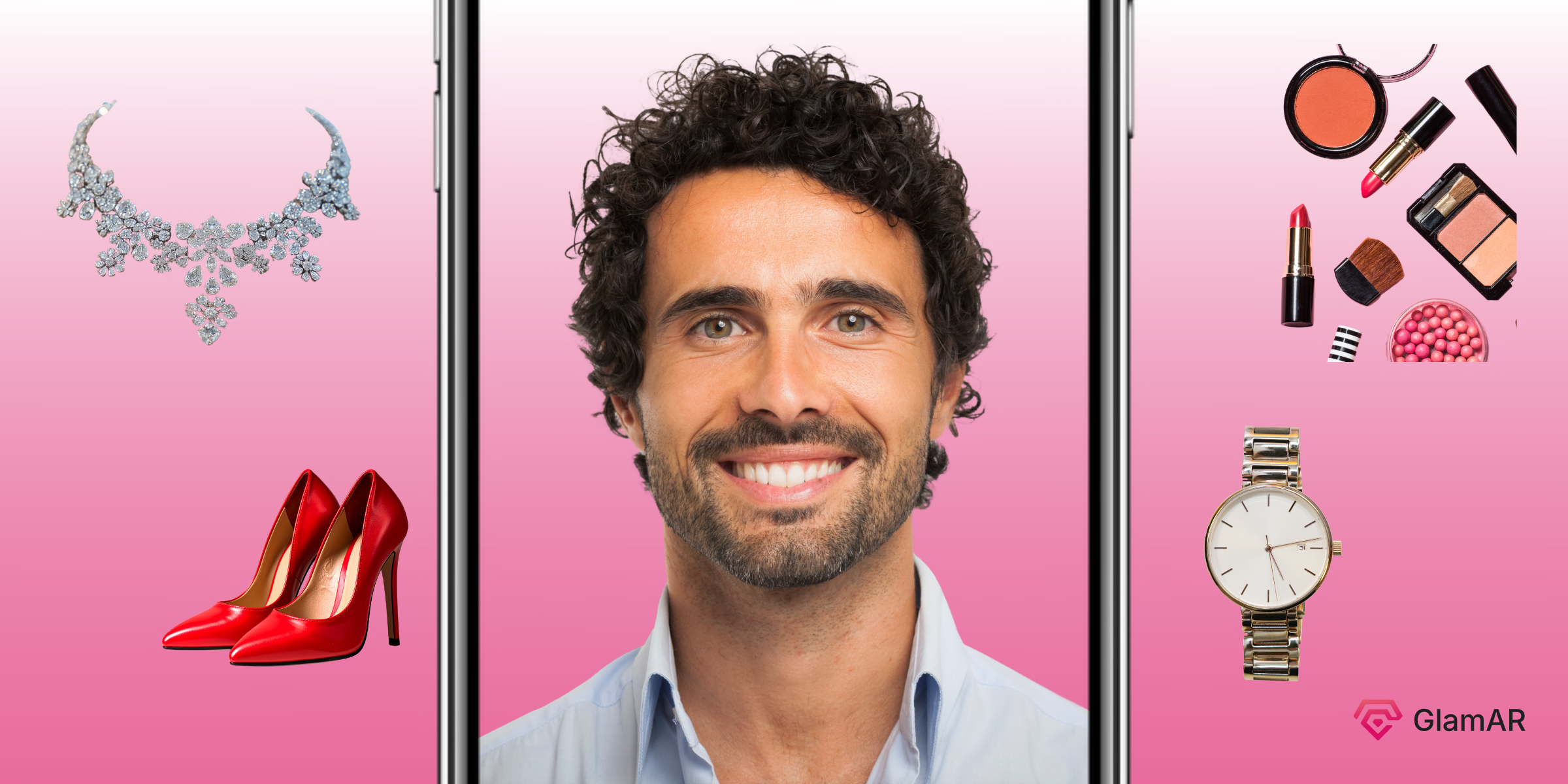
Augmented reality plays a crucial role in the growth of the e-commerce industry because it provides users with an engaging and immersive shopping experience by enabling them to try different products virtually using their device’s camera, and helps businesses to integrate the virtual try-on SDK on their website or app. It facilitates businesses providing their customers with “try-before-you-buy” experiences while offering them real-time visualizations of various products, such as clothing, jewelry, watches, makeup, and more.
With the growing demand, the virtual try-on technology market size has grown exponentially in recent years from $12.09 billion in 2025 to $15.29 billion in 2026 at a compound annual growth rate (CAGR) of 26.5%. It has accelerated the growth of e-commerce platforms while increasing smartphone camera capabilities, leading to the early adoption of augmented reality in retail, raising online apparel return rates, and increasing the demand for interactive digital shopping.
Since the white-label virtual try-on SDK helps the e-commerce industry to shift from static images to AR experiences, it also offers multiple benefits, such as improved conversions, reduced returns, and more. In this blog, I will help you understand more about the white-label virtual try-on SDK along with its features, core technologies, benefits, and top providers, which you can use as an ultimate guide to grasp detailed information.
What is a white-label virtual try-on SDK, and what are its key features?
A white-label virtual try-on (VTO) SDK is essentially a ready-made, licensed software development kit. It's designed to assist businesses in incorporating "try-before-you-buy" augmented reality (AR) capabilities into their existing applications or websites.
This online tool allows online brands and businesses to utilize advanced AR technology, created by a third party, enabling their users to visualize how clothing, makeup, jewelry, or accessories would appear on them in real-time. This approach saves both the expense and the lengthy development cycle associated with building the technology from the ground up.
Key features
- Face detection and tracking: It helps users to select the accurate size and color of the product according to their needs by performing accurate face detection and tracking, which will help e-commerce businesses to provide them with a better shopping experience and help their customers select the best option.
- Head and face mapping: It uses advanced algorithms that map the shape and contours of the user's head and face precisely, which will enable users to use product overlays during virtual try-on to perform real-time product adjustments and reduce uncertainty issues during virtual try-on.
- Easy integration: It helps businesses to provide their customers with a seamless experience by offering them easy-to-integrate software to align with their website or app configuration. It also allows businesses to easily integrate the SDK into their pre-existing e-commerce platform and make virtual try-on more straightforward.
Glance at the table of the best white-label virtual try-on SDK providers
Top 5 white-label virtual try-on SDK providers for e-commerce businesses
With the growing technologies, brands and businesses are getting confused while selecting the best virtual try-on SDK for their products because comparing various software and their features is a cumbersome task. While researching for the best white-label virtual try-on SDK provider, they must keep their business goals, needs, and requirements in mind, which will help them narrow down the options available in the market, reducing their research time during the selection.
In this section, I will provide you with a list of the 5 best white-label virtual try-on SDK providers that will save time for e-commerce brands while providing their customers with an enhanced and engaging experience during online shopping.
1. GlamAR

GlamAR provides online fashion and beauty brands with an AR-based SDK, which they can use to increase their overall revenue and sales by helping them to provide their customers with an immersive and engaging shopping experience. It provides brands with multiple AR-based solutions, such as virtual try-ons, 3D model creators, product configurators, and 360-degree viewers, which will help them to bridge the gap between virtual and in-store shopping experiences.
With the help of the white-label virtual try-on SDK, e-commerce brands can provide their customers with the virtual try-on facility for various products, such as makeup, eyewear, jewelry, and watches, while providing them with a realistic and lifelike product exploration experience. It provides users with three different modes, which include uploading an image, using the live camera, or selecting a model, enabling them to try and explore various products in different 3D environments.
It helps businesses to increase their engagement by 94% because it provides their clients with interactive try-ons that will keep them engaged for a longer time while turning their passive browsing into active interest. Apart from that, it also helps brands to drive 45% more conversions and reduce product returns by 40%, which will help them to stand out from their competitors by offering advanced features, such as 3D rendering, cross-device compatibility, customizable assets, and an easy catalog onboarding.
Features
- Easy Integration: It helps businesses to integrate the virtual try-on easily with their pre-existing e-commerce platform. It also has a dedicated team to help developers during the integration process and make the launch a seamless process.
- Precise matching: It helps users select the best-suited products according to their needs and requirements, which reduces the uncertainty of the product’s color and shade mismatch. It helps the brands to build stronger relationships with their customers by providing them with an enhanced shopping experience.
- Cross-device compatibility: It provides users with a similar shopping experience by enabling brands to offer compatibility for different platforms, including mobile phones, tablets, and desktops, which will offer them accessibility to explore products without geographical limitations.


2. Banuba
Banuba is a high-quality virtual try-on SDK that offers multiple augmented reality-based solutions for e-commerce platforms, including makeup, video editor, face, and beauty AR. It helps brands enhance their sales and build stronger customer relationships by providing users with the facility to try different makeup products virtually before making a purchase.
By using this virtual try-on SDK, brands can provide their customers with an improved online shopping experience by helping them select the accurate shade and texture of makeup products according to their needs and preferences. It helps businesses to integrate the SDK easily with their pre-existing e-commerce platform, which will provide their customers with a seamless user experience and engaging shopping journey.
It provides a real-time makeup try-on experience for users with the help of artificial intelligence and augmented reality technology to help them create a realistic makeup look through their device camera. It also provides users with ultra-precise AI face tracking technology that helps users check the makeup placement on their face, as it tracks the face by identifying their facial characteristics represented as face morphs.
Features
- Cross-platform compatibility: With the help of this feature, brands can integrate the SDK with various Android and iOS devices and browsers, which will help them to provide their customers with a seamless user experience for both online and in-store shopping.
- Look creation: It also helps users apply multiple AR products simultaneously on their faces to create different looks, allowing them to select which products will enable them to achieve various makeup styles.
- 3D face tracking: It provides customers with the advanced face tracking technology that enables them to try various makeup products on their face while offering them different facial expressions and face positions during the try-on.
3. MakeupAR by Perfect Corp
MakeupAR by Perfect Corp is an AR-based solution provider that assists e-commerce businesses and brands in increasing user engagement and experience on their website or app. It provides various solutions, such as virtual try-on, skin analyzer, skin shade finder, and more for different industries, enabling brands to boost their conversions and sales while offering their customers an interactive experience.
With the help of the virtual try-on, brands can provide their customers with the ability to explore different makeup and fashion products in multiple styles and colors so that they can make more informed decisions during online shopping. It provides various user controls, including zoom, download, and multiple style comparison, which offers an in-store-like experience. It will also help users select the best wig by uploading an image or choosing a model in a realistic environment.
It provides users with various features, such as omnichannel integration, cross-platform compatibility, and AgileHand technology, that they can use to provide users with an enhanced user experience. Therefore, it offers brands various benefits, such as increasing engagement, boosting overall sales, enhancing experience, and reducing returns, allowing them to build a stronger customer relationship.
Features
- Several user controls: It provides customers with engaging and interactive controls, including zoom in and out, multiple style comparison, and an image downloader, helping them to explore different makeup products by uploading their image or selecting any of the models.
- Boost conversion rates: It provides customers with an engaging and interactive way to try multiple products with the help of virtual try-ons, which helps brands to build a stronger relationship with them and boost their conversion rate and overall sales globally.
- Multiple product try-ons: It allows users to explore various makeup products, including eyeliner, blush, and lipstick, along with the comparison of various styles and looks, so that they can select the best products according to their choices, helping them to make more informed decisions.
4. Wanna Fashion
Wanna Fashion is an AR-based solution provider that provides businesses with virtual try-ons and 3D viewer solutions, which can help them build better customer relationships and increase their engagement. It also helps users to explore multiple products by using the AR technology and 3D models, which will enable them to virtually try and rotate the product from different angles and perspectives.
By using the virtual try-on feature, clothing brands help their customers try multiple fashion products by using the device’s camera, enabling them to make more informed decisions without any uncertainty. It also provides users with the feature to rotate the product from different angles and perspectives, along with the zoom in and out feature, providing them with a closer look at the clothing item.
It helps the brand to increase user engagement by keeping its customers engaged with the help of a 3D viewer and virtual try-on on the website or app. It offers the real-time virtual try-on feature for mobile users, while they can also try products on the web browser by uploading their image. It is an iOS-based application that works best for Apple users and allows them to explore and try different clothing items virtually.
Features
- 3D viewer: It provides users with a high-quality 3D model of the product that they can rotate to explore it from different angles and perspectives, while bridging the gap between online and offline shopping experiences.
- Increase conversions: It helps the brand to increase conversion rates by 9% because it helps their customers to make more informed and confident purchase decisions by reducing the product uncertainty due to size and color.
- Personalized experience: It also helps users to pair the brand’s outfits with their pre-existing clothes while sitting at home, providing them with a personalized online shopping experience without any geographical limitations.
5. DeepAR
DeepAR offers AR-based virtual try-on solutions that allow businesses to improve the virtual shopping experience of customers by providing the facility to try different products virtually before purchasing. It provides their customers with hyper-realistic virtual try-on 3D models of their products, which are uploaded by the brand, so that they can bridge the gap between online and offline shopping while offering them an interactive in-store experience.
With the help of the virtual makeup try-on solution, beauty brands can provide their customers with an engaging and immersive shopping experience by enabling them to explore various makeup products virtually, which will help them to turn the in-store experience into a virtual try-on pattern. It helps brands convert physical products into interactive AR experiences, which will help them boost sales and increase customer retention rates. It also provides users with the ability to perform multiple device logins from different devices or browsers, which broadens the cross-device compatibility.
Using this feature, e-commerce stores can reduce uncertainty among users by helping them to make more informed and confident decisions, which will make the virtual shopping more interesting while offering them an in-store-like experience and the facility of “try-before-you-buy” using AR technology. Therefore, using the AR solution will help the brands to increase their sales and conversions while building stronger relationships with their customers.
Features
- Ultra-realistic visualization: It provides users with a real-time visualization of the products, which will help them explore and try on various products from different angles, enabling them to make more informed and confident decisions.
- Developer-Centric SDK: It provides online brands and sellers with easy-to-use, quick, and powerful SDKs, which will help developers to integrate the tool seamlessly with the pre-existing e-commerce platform while offering their users a similar interface.
- Broad compatibility: It provides brands with cross-device compatibility with multiple devices, including phones, tablets, and desktops, which will enable users to perform multiple device logins into several web browsers, such as iOS, Android, HTML5, macOS, and Windows.
Applications of white-label virtual try-on SDK in different industries
Virtual try-on is a revolutionary technology that is growing with time and has been helping the e-commerce industry to grow and provide its customers with an engaging and interactive shopping experience. With the help of its advanced features and technologies, it can be used for various industries, such as fashion, beauty, accessories, and home decor, which will help businesses to increase conversion rates and reduce product returns.
In this section, I will help you understand how the virtual try-on technology helps businesses and brands to display products interactively from different categories and sectors while building strong customer relationships.
1. Fashion and apparel
Various fashion and apparel brands can use the virtual try-on technology because it helps businesses to provide their customers with an engaging and immersive shopping experience by enabling them to select the products according to their body shape and size.
It also helps footwear, watches, and jewelry brands to provide their customers with real-time visualization of the products, enabling them to check the fit and style of products and select designs according to their needs and preferences.
2. Beauty and cosmetics
Virtual try-on technology can be used for various beauty and cosmetics brands, which will help them to provide their customers with an immersive shopping journey by enabling them to select products in different shades and textures, according to their requirements.
It can also be used for lipsticks, eyeshadows, foundations, hair colors, nails, and more, which will help brands to bridge the gap between the online and offline shopping experiences.
3. Eyewear
Eyewear brands and businesses can use the virtual try-on technology on their e-commerce website or app, which will help their customers select the frames and styles according to their needs and preferences.
It will also help their customers to AR overlay different frames in various styles, shapes, and sizes by using their device’s camera, which will help the brand to increase its sales and conversions while fostering customer loyalty and trust.
4. Home decor and furniture
Home decor and furniture brands can also use the virtual try-on technology on their e-commerce website or app, which they can use to provide their customers with real-time visualization of furniture items and enable them to check their size and style according to their room.
Apart from that, it also helps designers to accelerate the process of home designing by enabling them to connect with their clients virtually and get feedback on digital prints to save their time and money.
Benefits of using a white-label virtual try-on SDK for businesses
By using a virtual try-on, businesses will get multiple advantages, such as increased sales, reduced product returns, and increased customer satisfaction by offering them immersive and personalized online shopping experiences. It also helps businesses to build their brand engagement, provides them with valuable data, enhances convenience, and drives sustainability, which they can achieve by reducing shipping and offering them a competitive edge.
There are multiple benefits or advantages that a brand or business can get by integrating or implementing the virtual try-on SDK on their e-commerce website or app, and studying them will help you to understand how using a VTO will help you to increase your customer base and accelerate your business growth. In this section, I will tell you about the advantages of using a virtual try-on SDK that fashion and beauty brands experience on their e-commerce platform.
1. Increased sales and conversions
It helps businesses to increase their overall sales and conversion rate by helping their customers to make more informed and confident purchase decisions during online shopping. It helps brands to reduce the uncertainty among their customers by enabling them to virtually try on various products in different colors, styles, and sizes, which will help them make confident purchases while increasing sales and conversion rates.
2. Reduced product return rates
It helps businesses to reduce the product return rates by providing their customers with a realistic visualization and an in-person-like shopping experience, enabling them to try products in different styles, colors, and sizes according to their needs and preferences. It will also help brands to reduce shipping costs and opt for sustainable practices by providing their customers with the ability to select products with a better fit and style.
3. Enhanced customer experience
With the help of a virtual try-on SDK, businesses can provide their customers with an immersive and engaging shopping experience by enabling them to try on products anytime, anywhere, regardless of their geographical location and time zone. It helps brands to increase their customer experience during online shopping by offering them realistic visualizations of products along with engaging and interactive features.
4. Increased engagement and loyalty
It helps businesses to increase their engagement rate on the e-commerce website or app by offering their customers the opportunity to create memorable and fun experiences during online shopping of fashion and beauty products. It also helps brands to foster customer trust and loyalty by enabling them to share images or videos on social media, which will strengthen the customer-brand bonds and let customers make repeat purchases with loyalty.
5. Sustainable and cost-effective
It helps brands to opt for more sustainable and cost-effective practices by helping them reduce the need for physical sampling by replacing it with 3D models or 360-degree viewers of the products. Apart from that, it also helps businesses to reduce the unnecessary costs of shipping and logistics by helping their customers to make more confident purchases, which will also reduce their product return rates.
6. Competitive advantage
It provides businesses with a competitive advantage of standing out from their competitors in the market by offering their customers innovative and interesting products with the help of the latest and most advanced technologies. It also helps businesses to enhance and modify their marketing strategies by offering them data-driven analytics, which they can use to understand customer behavior.
Differences between white-label virtual try-on and SDK-based virtual try-on
Conclusion
With the help of the white-label virtual try-on SDK, e-commerce businesses can provide their customers with an engaging and immersive shopping experience while bridging the gap between online and offline shopping. Apart from that, it provides e-commerce businesses with multiple benefits, such as improved user experience, enhanced conversion rates, reduced returns, and higher online sales, which will help them build stronger relationships with their customers.
But, before opting for these white-label virtual try-on SDKs, you must understand how these products work, their advantages, benefits, and more, which will also help you select the best ones according to the needs of your business. Therefore, in this blog, I have provided you with detailed information on different topics, such as features, benefits, applications, and top providers related to the white-label virtual try-on SDK, which you can consider while opting for the best ones according to your requirements.










