
9 different types of nose shapes explained and why they matter


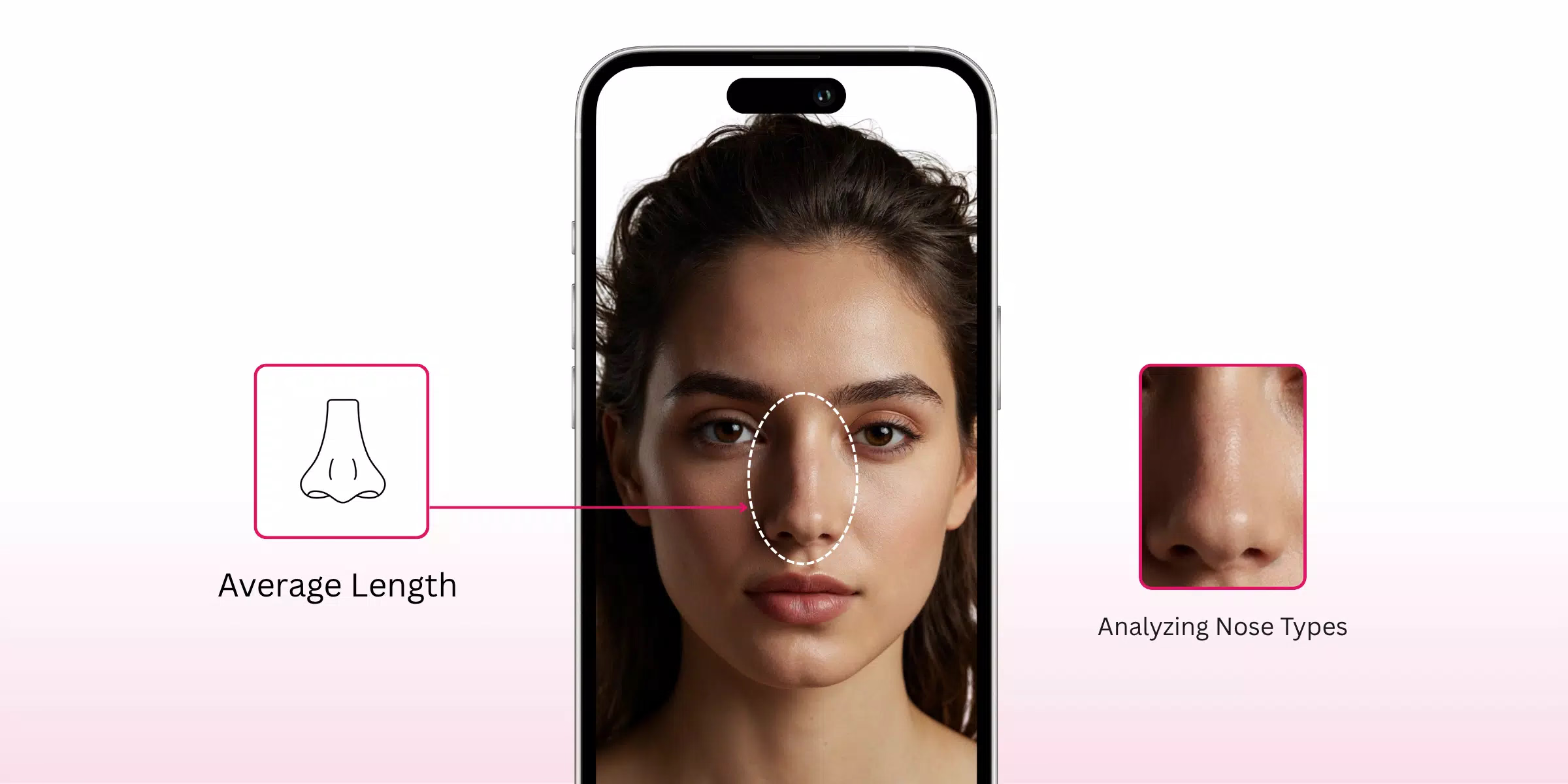
Nose shapes and structures play a crucial role in maintaining the facial features and providing them with uniqueness. Having a well-proportioned and symmetrical nose helps an individual enhance features, while an imbalanced nose can negatively affect facial attractiveness and can impact a person's confidence. The ideal nose complements the individual's unique facial structure and proportions.
Therefore, understanding the nasal shape and structure will help you in various ways, such as opting for the right cosmetic surgery options, makeup applications, and selecting the appropriate pair of eyewear. It will also help users to maintain the profile aesthetics by influencing the perception of the entire face from the side.
To help you understand the different shapes and structures of the nose, I will provide you with brief information on 9 different types of noses and their characteristics. Apart from that, I will also help you understand different nose shapes and how they help to maintain facial features and harmony.

9 different nose shapes and their characteristics
There are different shapes and sizes of a human nose that carry their own features and characteristics, which make them unique and different from one another. Since beauty is a very subjective topic, understanding these different types of nose shapes and sizes will help individuals study their features and explore whether they align with their personal or cultural preferences.
To help you understand more about various nose shapes, I will provide you with brief information on 9 different types of nose shapes and their characteristics, which are seen most commonly in people.
1. Snub nose
A snub nose, or button nose, is a nose type that has a small bridge and is slightly extended upwards, which is known for its petite and youthful appearance, adding a delicate and playful quality to the face. It is most often associated with innocence and approachability, which gives your face a friendly and inviting look.
This nose shape is sometimes found among children, which explains the petite and youthful appearance on their faces and why it is linked to youthful beauty. It also helps users to enhance the facial symmetry of the face while creating a gentle and harmonious profile. It helps users with softer facial features to complement their look by making it a favorite nose type among those who prefer a delicate and refined look.
2. Fleshy nose
A fleshy nose is a nose type that is often recognized by thick skin and a wide, rounded shape, making some people feel that it lacks uniqueness. It is a nose type with a larger size of nasal structure and consists of more soft tissue than usual. It appears a little rounder or wider because of the extra physical cushioning that is characteristic of the nasal region.
It consists of a low nasal bridge and sometimes weak cartilage, making it not strong enough, well-formed, and less prominent. Since people with fleshy noses find them less symmetrical and attractive, they can transform or fix them by opting for rhinoplasty (nose surgery) to narrow the nostrils, reduce the tip's volume, or address other nasal deformities.
3. Round nose
A round nose, also known as a bulbous nose, can be identified with a rounded shape that seems to overdevelop slightly at the tip, as compared to the rest of the nose structure. It is a prominent type of nose shape that looks out of balance with the rest of the face, which can be characterized by a rounded, fleshy, and enlarged appearance, particularly at the nasal tip.
It comes with a thicker nasal skin, excess cartilage, or a combination of both, which makes the nasal bridge a little broader, along with a less defined contour, enabling the nose type to carry its own appeal, which may not conform to traditional ideals of a slim or narrow nose. It can exude a sense of warmth, approachability, and softness, which makes it a sign of good fortune or prosperity.
4. Hawk nose
The hawk or eagle nose comes with prominent characteristics that make a sharp bridge with a downward curve, causing a sense of strength and authority, exuding a commanding and confident presence. It is in the shape of the eagle or hawk’s beak, from where it draws inspiration, which gives a sense of regality and confidence to an individual's features.
Since it has some historical associations with nobility and leadership, it is important to note that it can be found across different ethnicities and races, which adds distinctiveness and character to the face. It also helps users to enhance their overall facial profile, contributing to a striking and memorable appearance.
5. Crooked nose
A crooked nose is seen with a deviation or curve in the nasal bridge and provides the nose with an asymmetrical appearance. It can be a result of multiple issues, such as genetics, previous trauma, or developmental issues, making the nose asymmetrical in appearance. It also gives an indication of the presence of a congenital condition or deviation in the growth of a cartilage or bone.
To fix this asymmetrical nasal structure, users can go for multiple surgical procedures, including nasal realignment and open rhinoplasty. By opting for these surgical options, users can bring symmetry to their facial features by reshaping both bone and cartilage to restore symmetry.
6. Greek nose
The Greek nose is characterized by a straight and narrow bridge, leading to a well-defined and balanced tip. It mainly draws inspiration from Greek sculptures, and it is associated with a sense of aesthetic perfection and harmony. It is seen with a straight bridge, unlike other nose shapes that come with prominent curves or bends; it exhibits a straight line from the root to the tip.
The straightness of this nose type helps users to create a sense of symmetry and balance to their face, contributing to their reputation for aesthetic appeal. It also adds a refined and elegant appearance to the face, making the bridge more slender and well-proportioned. Apart from that, it also complements the other features of the face, along with a well-defined tip that adds grace and harmonious design.
7. Roman nose
The Roman nose, or aquiline nose, is known for its prominent nasal structure that is inspired by ancient Roman sculptures and art, which shows an association with strength, nobility, and regality throughout history. It is characterized by its high and prominent nasal bridge that creates a noticeable curve and a downward slope, known for the association with strength and power, while giving a symbol of authority and leadership.
It provides users with a sense of balance and symmetry to provide them with a strong and pronounced structure, helping them to enhance the facial profile and offering a sense of aesthetic harmony. The beauty of this nasal structure lies in its diversity, which will help users showcase the unique characteristics and heritage from various cultural backgrounds.
8. Nubian nose
The Nubian nose is characterized by its broad nasal base and longer bridge, which consists of a wider width and a broader and horizontal nasal base. The bridge is slightly longer when compared to some other nose shapes, and it maintains a natural curve that seamlessly connects to the tip. It also showcases natural beauty and exudes a sense of strength and authenticity.
Its wider base and longer bridge contribute to its distinctiveness and set it apart from other nose shapes, which will represent the beauty of diverse human features. It comes with a combination of genetic factors and individual characteristics, leading to unique and diverse features even within a specific nose shape category of a mixture of softness and prominence.
9. Flat nose
The flat or wide nose is characterized by a broad nasal base and a relatively flat bridge, which is found in various ethnicities, including individuals of African, Southeast Asian, and Indigenous descent. Its defining features include a broad nasal base, more horizontally oriented and wider nostrils, and a flat bridge, which is found in people from various regions and cultures.
The bridge of the nose appears flatter and lacks significant height or curvature, as they get evolved with an adaptation to warm and humid climates. Its wider nostrils and flatter bridge enhance respiratory efficiency, allowing users to have an increased airflow and improved heat exchange in regions with higher temperatures.


What are the benefits of personalized solutions according to different nose types?
Knowing your nose shape and structure helps users to personalize their treatments, improve their aesthetics, and increase confidence. By understanding the nasal structure and facial proportions, users can enhance their makeup application, opt for an accurate frame or glasses, and tailor their cosmetic treatments accordingly.
In this section, I will tell you how understanding nasal shape and structure will help you to improve your comfort and confidence by choosing the best suitable options for makeup, eyewear, and cosmetic appearance.
1. Cosmetic treatments
The first and foremost application of knowing your nose structure and shape is personalizing cosmetic treatments or rhinoplasty. Since the nose is a complex three-dimensional shape, selecting effective cosmetic surgery requires highly personalized plans to achieve balanced and natural-looking outcomes.
For different nasal structures and shapes, there are multiple cosmetic treatments that will enable users to enhance their facial proportions and build their cultural identity. Therefore, using tools like AI face analyzers will help users to understand their nasal structure better and improve their facial balance accordingly.
2. Makeup application
You can also use the knowledge of different nose structures during the makeup application because it will help you to opt for appropriate and tailored makeup techniques, which you can also check through virtual try-on technology to understand different makeup products. By understanding the nasal shape and structure, you can use light and shadow to create the illusion of a more balanced nose shape.
To give your face a defined and contoured look, you can select different techniques depending on your nose shape, which will provide you with a more defined look during events and functions. Therefore, using the right makeup techniques and personalizing them according to your nose shape will help you to make your face look balanced, refined, and enhanced.
3. Corrective eyewear
Having an understanding of different nose structures and shapes will help you to choose the best-suited eyewear, as it will enable you to understand which glasses will give you comfort and help you to enhance your look. You can also check it during physical and virtual try-on of eyewear, which will enable you to select the right pair of glasses and prevent them from slipping down or pinching uncomfortably.
Selecting the accurate glasses according to your nose shape will help you to opt for adjustable or custom-designed nose pads and resolve the issue of high frames. Selecting the precise size of glasses or frames will enable you to minimize pressure points and ensure lenses are perfectly aligned with your eyes, reducing headaches and eye strain.
How do personalized solutions help brands attract customers?
In this world of busy schedules, many people don’t have time to visit stores and stand in line to make purchases, as it is difficult to spare some time for these things. However, opting for personalized products will help users boost their confidence and help the brand increase its conversion rates.
Therefore, providing customers with personalized solutions on their e-commerce website or platform will enable the brand to increase user engagement and offer users better experiences. Using technologies such as virtual try-ons, 360-degree viewers, 3D viewers, and 3D configurators will enable you to increase user session time and help you to keep them engaged while helping them make more informed decisions.
By using these personalized solutions, brands can get multiple benefits, such as reduced returns, increased conversions, enhanced experience, built engagement, and more. Hence, to provide their customers with a personalized and enhanced experience, brands opt for a solution provider SDK, such as GlamAR, which will help them to provide their customers with a seamless and customizable experience for their e-commerce platform.
Introducing GlamAR’s AI face analyzer
GlamAR offers various solutions for beauty, makeup, and footwear brands, which will help them improve customer experience and increase engagement on e-commerce platforms. It provides brands with several online tools, including a virtual try-on, an AI face analyzer, a 3D product configurator, and a 3D model creator, which they can use to reduce the gap between online and offline shopping experiences.
I tried the AI face analyzer that allows users to perform an instant and accurate skin assessment of their facial features while sitting at home. By integrating this online face analyzer into their e-commerce platform, brands can increase user engagement by offering their customers an interactive facial analysis that detects multiple skin concerns without the need for extra devices or appointments.
Brands can integrate this online tool on their website or application by using their seamlessly integrable SDK or API, enabling their customers to track their skin journey progress over time and allowing them to compare the past facial scans with the present ones. It allows users to understand their facial geometry and proportions, which will provide them with a personalized experience because they can use this information to understand their facial features and tailor their treatments or skincare routine according to their needs and requirements.
Conclusion
Understanding different shapes and structures of the nose helps users to make better decisions and gain more confidence by enhancing their facial appearance. In this blog, I have provided you with information on 9 different types of nose shapes and structures that you can use while personalizing cosmetic surgery or selecting the appropriate makeup application.
I also told you about GlamAR’s AI face analyzer that you can use on your website to help your customers understand their facial features and proportions more appropriately. Brands can also use this online tool to provide their customers with a personalized and engaging experience, enabling them to increase their conversions, sales, and audience database by reaching a wider audience.










