
6 Best AI Plastic Surgery Simulators for Clinics and Platforms in 2026


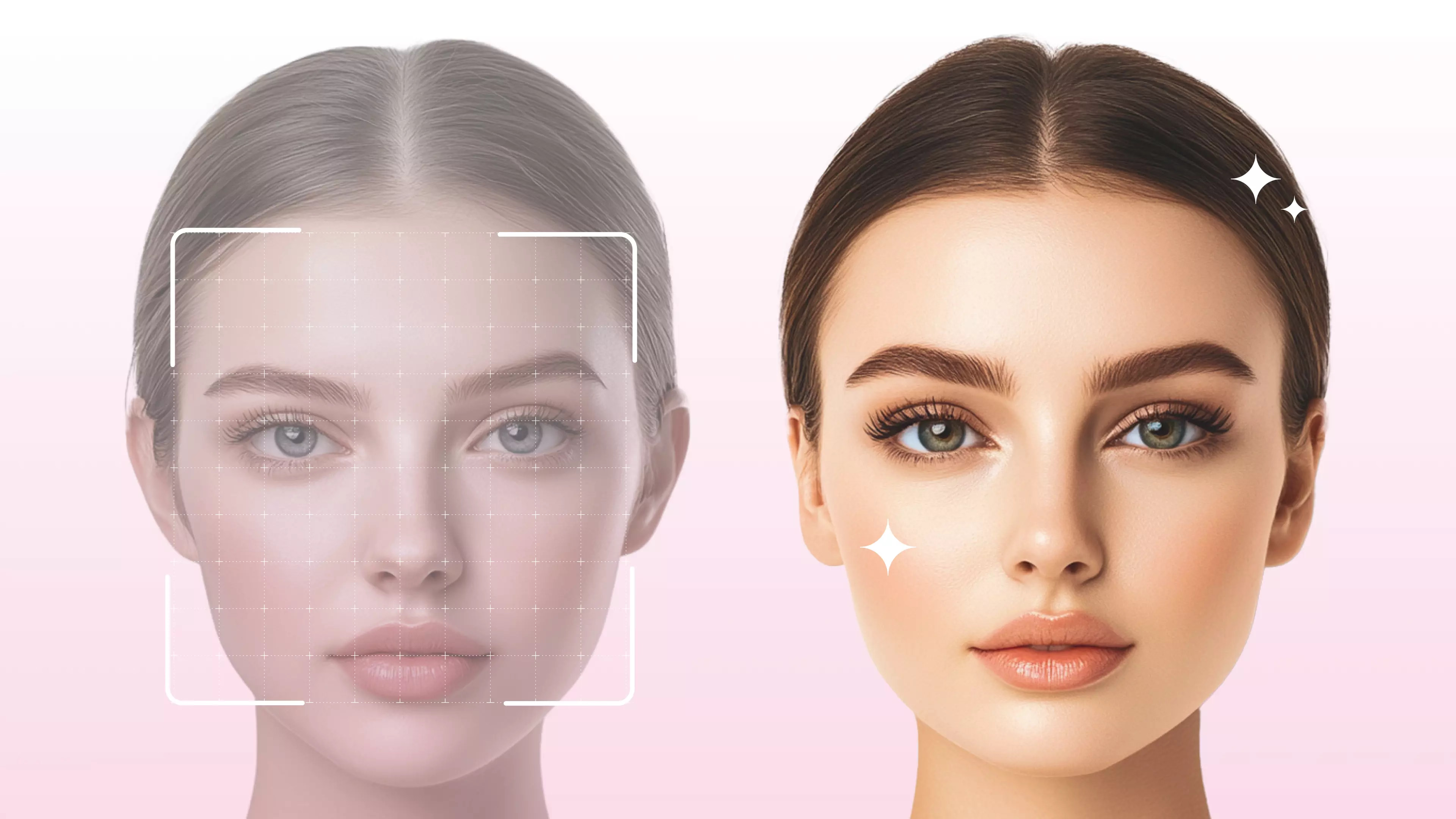
Clinics and platforms have 6 widely used AI visualization tools to evaluate for cosmetic consultations: Banuba, Perfect Corp, FaceTouchUp, AEDIT, Plastic Surgery Simulator by Kaeria, and Crisalix. Below is a comparison of each on visualization accuracy and its real limits, integration method, data privacy and consent handling, and pricing, since a tool in this category carries different stakes than a typical commerce visualization feature.
Before comparing specific tools, one point needs to be stated plainly. None of the simulators below provide a medically accurate prediction of a real surgical outcome. They generate a stylized visual approximation based on a 2D or 3D model of a patient's photo, which can support conversation and expectation-setting during a consultation, but an actual result depends on surgical technique, individual anatomy, tissue response, healing, and the specific surgeon's judgment, none of which a visualization tool can account for. Any clinic or platform evaluating this category should communicate that distinction clearly to patients, not rely on marketing language that blurs it.
Adoption of AI tools across cosmetic medicine is rising, but actual implementation still lags behind general awareness. A 2024 IMCAS Congress survey found that while 91.5 percent of cosmetic medicine professionals reported substantial knowledge of AI tools, only 48.9 percent had actually implemented them in their own practice, reflecting a genuine trust gap between interest in this technology and confidence in deploying it responsibly. That gap is exactly why the evaluation criteria in this guide matter more than a vendor's own marketing claims, and why due diligence deserves real time before any rollout decision.
What Is an AI Plastic Surgery Simulator, and What Are Its Limits?
An AI plastic surgery simulator uses facial detection and image or 3D model manipulation to show an approximation of how a patient's face or body might appear after a cosmetic procedure, adjusting features like nose shape, lip volume, jawline, or chin projection on an uploaded photo. Clinics use these tools primarily as a communication aid during consultations, helping a patient and provider discuss goals using a shared visual reference rather than words alone.
The limits matter more than the capability itself in this category. A simulation reflects a plausible visual direction, not a guaranteed result. It cannot account for how a patient's skin, bone structure, or tissue will actually respond to a specific procedure, and it cannot substitute for a surgeon's clinical judgment about what's achievable or appropriate for that individual. A clinic presenting a simulation should frame it explicitly as an illustrative tool, not a preview of the actual outcome a patient should expect to receive.
This distinction is worth repeating in different words, since it's easy for marketing language, including some of the language vendors themselves use, to drift toward implying more certainty than the underlying technology actually supports. A tool that lets a patient drag a slider to see a narrower nose on screen is demonstrating a visual concept, not modeling the biomechanics of an actual rhinoplasty, and a clinic's own communication with patients should reflect that gap honestly rather than letting the software's polish imply otherwise. The same caution applies to body-focused simulations, where swelling, scarring, skin elasticity, and the body's own healing process all shape a real result in ways no current visualization software models with any claimed precision.
How Clinics and Platforms Use These Tools in Consultations
Clinics most commonly use these tools during an initial consultation, letting a patient and surgeon adjust a feature together on screen to clarify what the patient is actually asking for, a conversation that's often difficult to have through words alone. This use case is about communication, not prediction, and the clinics that get the most value from these tools are explicit with patients about that distinction.
Platforms, including telehealth and virtual consultation services, use the same underlying technology to support remote intake before an in-person visit, giving a provider a starting point for discussion before a patient ever sits in a chair. This can meaningfully shorten the in-person consultation itself, since a patient arrives having already clarified roughly what they're asking for, though the in-person clinical assessment remains the step where feasibility and technique are actually determined.
A smaller number of platforms use simulation tools for marketing, showing illustrative before-and-after style content, which carries its own disclosure obligations depending on the advertising regulations in a given market and should be treated with particular caution given how easily this content can be misread as a guarantee. A clinic considering this use case specifically should route the decision through legal counsel before publishing anything, since the line between illustrative marketing and a misleading outcome claim is not always obvious from inside the organization producing the content.


The Best AI Plastic Surgery Simulators Compared
Here are the top AI plastic surgery simulators that use advanced technology to provide realistic visualizations of cosmetic procedures, allowing users to preview potential results and make informed decisions before undergoing surgery or aesthetic treatments.
| Tool | Delivery Model | Best For |
|---|---|---|
| Banuba | SDK for brand and clinic integration | Clinics wanting a white-labelled, embeddable simulator |
| Perfect Corp | SDK and consumer app | Clinics wanting broad procedure coverage with enterprise support |
| FaceTouchUp | Web, mobile, desktop platform | Smaller clinics wanting a low-cost, ready-made consultation tool |
| AEDIT | Consumer iOS app | Reference point only, not licensable by a clinic |
| Plastic Surgery Simulator by Kaeria | Consumer app | Reference point only, not licensable by a clinic |
| Crisalix | Web platform with surgeon network | Clinics wanting 3D body and facial simulation with surgeon-reviewed input |
1. Banuba
Banuba's 3D simulator lets a user adjust lip volume, nose shape, brow position, cheek volume, and jaw contour in real time, using sliders rather than a single fixed preview. It's delivered as an SDK, meaning a clinic or platform embeds it directly into its own website or app rather than directing patients to a separate consumer tool, with support across browsers, desktop, and mobile. Customization extends to branding, letting a clinic present the tool under its own visual identity rather than a generic third-party interface.
A clinic evaluating Banuba should confirm directly how the underlying model handles low-resolution or poorly lit photos, since image quality materially affects how plausible a given simulation looks, and should confirm data handling and consent terms before deploying it with real patient images. Its white-labeling option is a genuine advantage for a clinic wanting the tool to feel like a native part of its own consultation experience rather than an obviously third-party widget.
2. Perfect Corp
Perfect Corp's AI Face Reshape Simulator covers nose reshaping, lip adjustment, brow position, and several other features, delivered across both web and mobile with integration options for a clinic's own consultation workflow. Perfect Corp's broader footprint across beauty and aesthetic technology is a reasonable signal of platform maturity, though its enterprise sales and support process is worth factoring into a realistic evaluation timeline for a smaller practice.
As with any vendor in this category, a clinic should request specifics on data retention and consent handling in writing rather than relying on a general privacy statement, given that patient facial images carry real sensitivity. Perfect Corp's breadth across the wider beauty technology industry means its support and documentation resources tend to be more extensive than a newer or more narrowly focused competitor, which is worth weighing against its correspondingly more involved onboarding process.
3. FaceTouchUp
FaceTouchUp is built specifically for surgeon and patient consultations, supporting adjustments across rhinoplasty, facelift, breast augmentation, and liposuction-adjacent body contouring, with cloud-based photo storage replacing a separate image management system. It's accessible across web, mobile, and desktop and is positioned toward smaller clinics specifically, with no large upfront licensing cost.
Its cloud storage model means patient images are held on FaceTouchUp's own infrastructure rather than a clinic's local system, which is worth confirming directly against your own data handling policy and any regional healthcare privacy requirements your practice is subject to. Its pricing structure, with no large upfront licensing cost, makes it a reasonable starting point for a smaller independent practice testing whether a simulation tool genuinely improves its consultation workflow before committing to a larger platform elsewhere on this list.
4. AEDIT
AEDIT is a consumer-facing iOS app, not a tool a clinic can license or embed into its own platform, and it's included here as a reference point rather than a vendor option. It's worth noting precisely because some marketing language around it describes its facial analysis as medically accurate, a claim that should be treated skeptically regardless of which tool makes it, since no consumer-facing visualization app has been independently validated to that standard for predicting real surgical outcomes. A clinic should not assume consumer app accuracy claims transfer to a licensed product without separately verifying them, and this is exactly the kind of language worth flagging directly with any vendor during your own evaluation process.
5. Plastic Surgery Simulator by Kaeria
This is a consumer photo-editing app built for casual, exploratory use rather than clinical consultation, with no confirmed licensing path for a clinic or platform. It's included for completeness, but its design, intended for quick, fun distortion effects rather than a measured clinical discussion, makes it a poor fit for an actual patient consultation context regardless of licensing availability. A clinic considering any similarly casual, entertainment-oriented app for a real consultation setting should weigh whether its lighthearted framing could undermine the seriousness a patient needs to bring to an actual surgical decision.
6. Crisalix
Crisalix offers 3D simulation for facial and body procedures, built around photo uploads reviewed through a network of affiliated surgeons rather than a fully automated output alone. This human-reviewed step is a meaningful difference from the purely automated tools elsewhere on this list, and it's worth asking directly how that review process works and what it actually verifies before assuming it closes the gap between a simulation and a real outcome, since a surgeon reviewing a simulation for plausibility is still not the same as that surgeon examining the patient directly. Crisalix reports a 98 percent satisfaction rate among users of its platform, a vendor-reported figure worth validating against independent sources rather than citing as an industry-wide standard. Pricing starts around 24 dollars and varies by procedure, which positions it toward individual patient-facing use as much as a clinic-wide licensing decision.

Benefits of integrating ai plastic surgery simulator in the cosmetic industry
AI plastic surgery simulators help patients make better decisions by showing realistic results. They support online consultations, improve planning, and build trust. Clinics benefit from cost savings, better marketing, and happier patients who feel confident in their choices.
1. Enhanced patient decision-making
AI plastic surgery simulators empower patients by providing visual previews of potential results, helping them make informed decisions. By seeing realistic simulations of post-procedure outcomes, patients can better communicate their preferences and expectations to surgeons.
This reduces uncertainty, aligns expectations with possibilities, and ensures patients are confident about their choices before committing to any procedure.
2. Personalized simulations tailored to individual features
AI-driven technology creates customized simulations based on unique facial or body characteristics. These simulations consider factors like skin tone, bone structure, and proportions, ensuring accuracy.
Personalization enables patients to visualize realistic outcomes that are uniquely suited to their features, fostering trust in the process and highlighting how individualized care can enhance their desired aesthetic results.
3. Improved consultation efficiency
AI simulators streamline consultations by providing instant visual feedback, reducing the need for lengthy discussions. Surgeons can use these tools to address patients' concerns quickly and clearly, aligning expectations.
By saving time and offering precise visualizations, consultations become more focused and productive, allowing clinics to manage more appointments without compromising the quality of care.
4. Reduced risk of unrealistic expectations
Realistic simulations help manage patient expectations by showing achievable outcomes. AI tools eliminate misunderstandings by visually demonstrating the limitations and possibilities of surgery.
This transparency reduces dissatisfaction and ensures that patients approach procedures with a clear understanding of what’s feasible, fostering better communication and trust between patients and their surgeons.
5. Increased accessibility through remote consultations
AI technology enables patients to access simulations from home, making consultations more accessible. Patients can securely upload photos and receive simulations online, eliminating the need for physical visits.
This is particularly beneficial for those in remote areas or with limited mobility, ensuring broader access to cosmetic consultations and expanding the reach of clinics.
6. Cost-effective solution for clinics
Integrating AI simulators reduces costs associated with traditional methods like manual sketches or physical models. These tools save time and resources while improving consultation outcomes.
By enhancing operational efficiency and reducing the need for repeat appointments, clinics can provide high-quality services at competitive prices, ultimately boosting profitability and patient satisfaction.
7. Enhanced marketing opportunities
AI simulators offer a compelling marketing tool by showcasing advanced technology and results-oriented care. Clinics can use simulation examples to attract potential clients via social media, websites, or advertisements.
Highlighting this innovative feature builds trust, differentiates the clinic from competitors, and appeals to tech-savvy patients seeking modern, personalized cosmetic solutions.
8. Real-time adjustments for procedure planning
Surgeons can make instant adjustments to simulations based on patient feedback during consultations. This dynamic capability allows precise planning and customization, ensuring the procedure aligns with patient desires.
Real-time updates foster collaborative decision-making, improving patient confidence while enabling surgeons to create tailored strategies that optimize surgical outcomes.
9. Improved pre-surgical planning accuracy
AI tools provide detailed insights into patient anatomy, aiding surgeons in developing precise surgical plans. The technology ensures measurements and adjustments are accurate, reducing risks and improving outcomes.
This precision enhances the surgeon's ability to deliver the desired results while minimizing complications, leading to safer and more effective procedures.
10. Increased patient satisfaction and confidence
By offering clear previews of potential results, AI simulators boost patient confidence in their decisions. Transparency and customization ensure that patients feel understood and valued.
Post-surgery, patients are more likely to be satisfied, as the outcomes closely match their expectations, resulting in a positive overall experience and increased trust in the clinic.
What to Verify Before Adopting: Accuracy Claims and Consent Handling
Ask any vendor directly what validation exists behind an accuracy claim, and be skeptical of a tool describing its output as medically accurate without a clear methodology behind that statement. A simulation is a visual approximation, and a vendor should be able to describe its actual limitations plainly rather than only its capabilities. If a vendor cannot or will not describe how a specific accuracy claim was tested, treat that as a meaningful warning sign rather than a minor gap in their marketing materials.
Confirm exactly how patient images are captured, stored, and used, including whether a vendor retains images after a session, whether images are used to train models for other clients, and what happens to that data if your relationship with the vendor ends. Patient facial images carry real sensitivity, and this should be documented in a written data processing agreement, not a general privacy policy alone. Ask specifically whether the vendor holds relevant certifications, such as SOC 2 or documented compliance with regional healthcare privacy frameworks, rather than accepting a general assurance that data is handled securely.
Confirm your own informed consent process accounts for what the tool actually is. A patient viewing a simulation should understand explicitly that it's an illustrative aid, not a guarantee, and your intake or consultation documentation should reflect that language rather than letting a patient reasonably believe otherwise. This is worth building into your actual consultation script, not just a line buried in a consent form a patient signs without necessarily reading closely.
Confirm liability and disclaimer language directly with legal counsel before deploying any simulation tool in a clinical setting, since the regulatory and advertising standards around before-and-after-style content vary by jurisdiction and procedure type, and a vendor's own terms of service won't necessarily protect your practice from a misunderstanding a patient later raises. This is a genuine legal and clinical governance question, not something to resolve purely through a vendor's sales process.
How GlamAR Supports AI Facial Visualization
GlamAR does not offer a surgical outcome simulator, and clinics evaluating that specific capability should look to the dedicated vendors compared above. GlamAR's relevant technology sits in a related but distinct space: AI-driven facial skin analysis, identifying skin concerns like texture, tone, and visible signs of aging from a photo or live camera feed, and virtual try-on for non-surgical cosmetic products.
For a medspa or aesthetic practice offering non-surgical treatments alongside or instead of surgical procedures, this kind of diagnostic and visualization layer supports a different but complementary conversation, helping a patient and provider discuss a treatment plan around measurable skin data rather than a surgical outcome preview. The same caution that applies throughout this guide still applies here: a skin analysis score is a data point to support a conversation with a qualified provider, not a diagnosis or a guarantee of how a specific treatment will perform on an individual patient.
Review the AI facial skin analysis solution directly to see what it actually covers before assuming it extends to surgical simulation. For more on how this kind of analysis is validated and where its own limits sit, see our guides on how AI skin analysis handles different skin tones and why every beauty brand needs an AI skin analysis feature.
The broader point carries across both categories. Whether a practice is evaluating a surgical simulation vendor or a skin diagnostic tool, the same discipline applies: understand exactly what the underlying technology measures or renders, confirm that independently rather than taking a vendor's own description at face value, and build your patient-facing communication around that verified understanding rather than around whichever vendor's marketing sounds most confident.
Conclusion
The six tools compared here all serve the same underlying purpose, giving a clinic or platform a shared visual reference to support a cosmetic consultation, not a validated prediction of a surgical result. The real differentiation between them sits in integration method, data handling, and how clearly each vendor communicates its own limitations, not in whichever vendor's marketing describes its output as most accurate.
If you want to talk through AI-driven facial visualization for a non-surgical use case, talk to the GlamAR team about scoping a consultation.










