
How to choose a virtual try-on solution for your eyewear brand


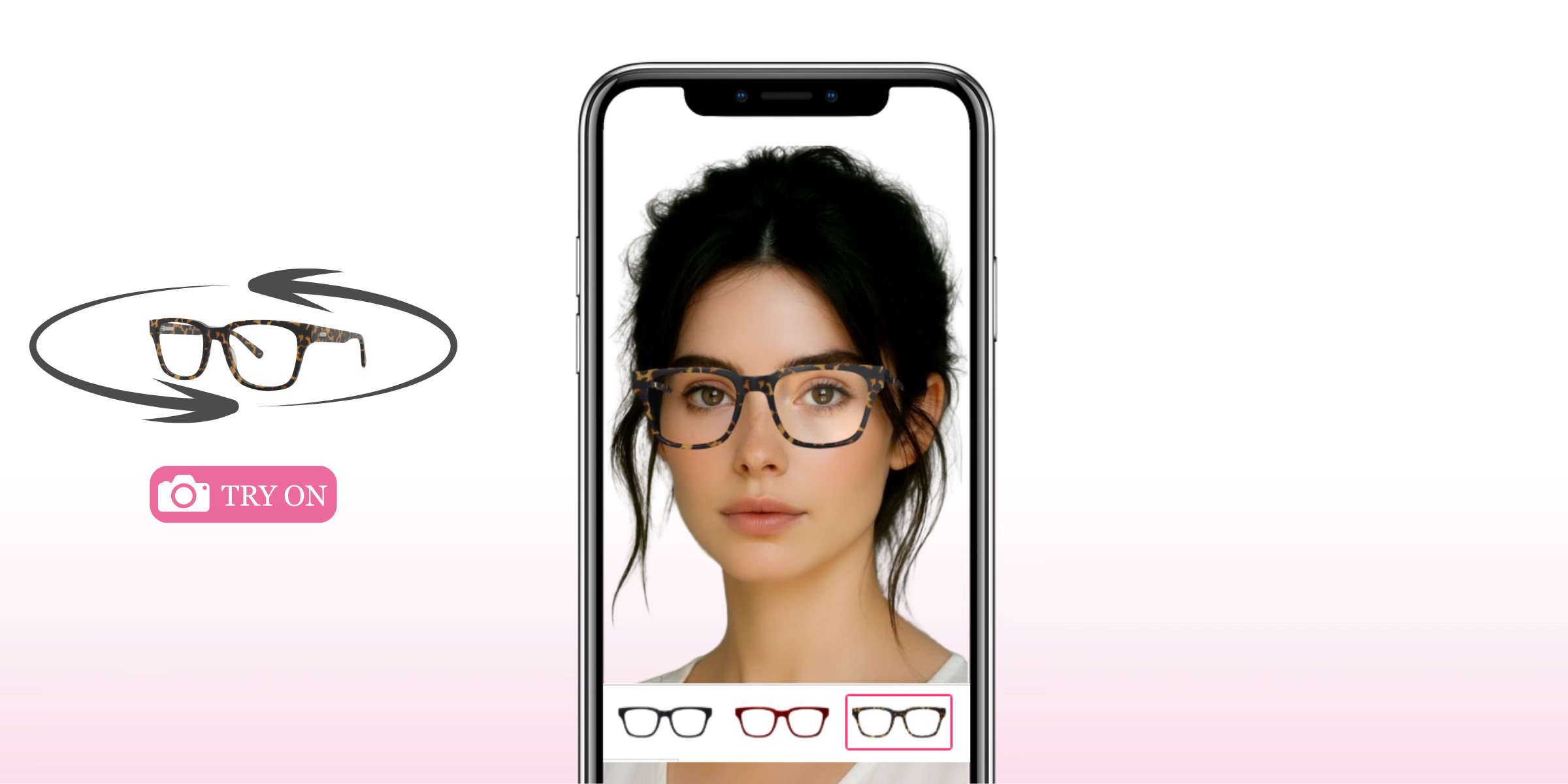
The eyewear industry is evolving rapidly with the help of new technological advancements, which include various new technologies, such as virtual reality, augmented reality, 3D modeling, and 360-degree preview. By using all these technologies, eyewear brands and sellers can provide their customers with an engaging and personalized shopping experience by offering them features like virtual try-ons, 3D models, 360-degree viewers, and product configurators.
One of the most crucial and impactful technologies that eyewear brands are using is virtual try-ons, because it helps them to provide their customers with a real-time experience by enabling them to visualize the product using AR overlays and 3D models. Due to these advancements and features, the global eyewear market size was valued at USD 171.56 billion in 2024, and is projected to grow from USD 181.75 billion in 2026 to USD 285.44 billion by 2032, exhibiting a CAGR of 6.7% during the forecast period.
Using a virtual try-on solution brings multiple benefits for a brand, but selecting the best one is still a cumbersome process because it requires lots of research to study their features, offerings, and pricing plans. Therefore, I will provide you with some tips and pointers that you can consider, and these will help you select the virtual eyewear try-on for your e-commerce platform.


What is a virtual eyewear try-on, and what are its key features?
A virtual eyewear try-on is an online tool that helps end-users explore various eyewear products with real-time AR overlays and 3D models, providing them with an engaging and interactive shopping experience. With the help of this online tool, users will get a realistic visualization of the products on their face by overlaying digital 3D models of glasses onto their faces, which will help them select the best-suited glasses according to their facial features and structures.
It also allows them to customize eyewear products in different styles, colors, and sizes with the help of their device's camera, providing them with a tailored experience while sitting comfortably at home. It will also help brands and sellers to increase their engagement, conversions, and sales, as it offers some exciting features, such as real-time face tracking, to help their customers ensure that the frames align properly on their face.
Key features
- Real-time face tracking: It provides users with a real-time shopping experience by performing facial mapping of the user's facial features to ensure that the virtual glasses move naturally with their head, enabling them to maintain correct alignment and a sense of realism.
- AI-powered personalization: It also helps brands to provide their customers with a personalized shopping experience by offering them AI-powered tailored recommendations, which will depend on their face shapes and features, so that they can select the glasses that are more likely to look good on them.
- Customization and real-time rendering: It allows users to customize glasses in different styles, colors, and sizes without having to physically try on multiple pairs, while offering them the help feature of realistic rendering of how light reflects off the frames and lenses to give a highly lifelike preview.
Technologies associated with the working of a virtual eyewear try-on

The working of a virtual eyewear try-on depends on multiple technologies, such as augmented reality, artificial intelligence, 3D modeling, and more, which will help brands to provide their customers with a better experience. However, have you ever wondered how these technologies are associated with the virtual try-on feature and how it helps businesses to provide their customers with engaging experiences?
In this section, I will tell you about the technologies that are associated with the working of a virtual eyewear try-on and how it helps brands and businesses to increase their sales and conversions.
1. Augmented reality
One of the most crucial technologies used to provide users with a virtual try-on of multiple eyewear products is augmented reality, which helps brands to provide their customers with the facility of AR overlays, enabling them to visualize the virtual products in the real world. It enables brands to offer their customers features, like virtual try-ons and 360-degree previews, that will help them to overlay digital content on a realistic environment and boost their confidence during online shopping.
2. Artificial intelligence
With the help of artificial intelligence technology, brands will be able to understand customer preferences and choices because it provides them with data-driven insights on different products and items. It will also help the brand to provide its customers with personalized recommendations and tailored services, which will offer them a more customized experience, along with assisted product suggestion engines, virtual assistants, and customer service tools.
3. Computer vision
To provide users with a realistic experience, the virtual try-on feature uses computer vision technology that provides them with enhanced features like recognition and tracking of real-world objects. It also provides users with a precise placement of the object during virtual try-on, enabling them to understand and visualize the item in the real environment with the help of visual data and the device’s camera.
4. 3D modeling
To allow users to explore products and provide them with an in-person-like experience, it is necessary to provide them with interactive and engaging 3D models of products. With the help of 3D modeling technology, brands can create engaging and interactive 3D models of their products, enabling them to represent their products using these models and allowing their customers to explore and examine items from different angles and perspectives.
5. Virtual reality
While less common than AR, virtual reality can help brands build immersive virtual showrooms or walk-in stores for experiential marketing. It will also help the brand to provide its customers with personalized and interactive experiences during online shopping, which will help them build their trust and loyalty towards the brand.
6. E-commerce integration
With the help of e-commerce integration, brands can provide their customers with more back-end support by connecting the AR, 3D, and VR experiences with the product catalog and payment gateways. By using the e-commerce platform, brands can manage their customer database, orders, inventory, and shopping carts in one place and provide their customers with real-time payment updates according to configurations.

Tips to consider while choosing a virtual try-on solution for eyewear brands and sellers
When choosing a virtual eyewear try-on solution, always look for the one that helps you to build stronger relationships with your customers by offering them a real-time experience. Make sure that you look for some important features, such as realism and accuracy, rendering, performance, and compatibility, making sure it works across various devices and e-commerce platforms.
These are some of the factors that you must look for while choosing the VTO feature because it will help you to increase online sales, conversions, and more. In this section, I will tell you more about some of the crucial tips that you should consider while selecting a virtual try-on for your eyewear brand or business.
1. Realism and accuracy
It helps brands to provide their customers with a hyper-realistic rendering of the product so that they can provide them with a lifelike shopping experience. It can be done by obtaining matching colors, sizes, and styles, along with the tracking and mapping of the facial features for a better experience.
2. Provider and support
While selecting the virtual try-on SDK, always select the provider that offers proper documentation and team support, which will also help you to get a seamless and intuitive experience to keep users engaged and increase their chances of product purchase. With virtual try-on solutions, you can use various features such as rotate, zoom, and move to check the eyewear products from every angle.
3. Compatibility and integration
Always look for a virtual try-on that offers cross-device compatibility for various devices, including mobile phones, tablets, and desktops, which will help you reach wider audiences. Also, select the try-on solution that supports iOS, Android, and web browsers, enabling you to perform easy integration using SDKs or APIs to e-commerce and online store sellers on platforms like Shopify, WooCommerce, and Wix.
4. User experience
To provide your customers with an engaging and interactive user experience, always look for a solution that will help you keep your customers engaged with the help of 3D models, 360-degree viewers, and more, increasing their chances of product purchase. Also, choose a solution that offers exciting features such as rotate, zoom, and move, enabling them to explore products from different angles with lesser loading time.
GlamAR’s virtual eyewear try-on for online businesses
If you are looking for a reliable virtual eyewear try-on solution for your e-commerce business, then you are at the right place because GlamAR is a leading brand that deals in various technologies, such as virtual try-ons, 3D product configurators, and 360-degree viewers. It helps brands and businesses from different industries, including furniture, eyewear, makeup, and accessories, enabling them to increase their engagement by 94%, reduce returns by 40%, and drive more conversions by 45%.
Among its various products and solutions, the virtual eyewear try-on is one of the best solutions for eyewear brands and sellers that use online platforms, such as websites or apps, to attract customers and increase sales. It will help online eyewear brands to provide their customers with advanced features, such as real-time facial detection, 3D configurators, and PD measurement, providing their clients with an immersive experience on various platforms, including web browsers, tablets, and mobile devices.
It provides businesses with a seamless integration of the online tool by using a software development kit (SDK), enabling them to access high-quality renders and 3D models to help them showcase their products with stunning realism. Apart from that, it will help businesses to increase their conversion rate by 94% and boost user engagement as e-commerce users spend 2 minutes more on your website.
It will also provide your customers with a real-time shopping experience by offering them the feature of facial feature detection, as it can detect up to 20 precise anthropic measurements while offering you a user-friendly design crafted for your brand, featuring a clean, white-label interface. Therefore, using GlamAR’s SDK will help you to provide your customers with an engaging and personalized experience while increasing your conversion rates, sales, and engagement rates on the e-commerce platform.
Benefits of using virtual eyewear try-on for brands and businesses
By using the virtual try-on for an eyewear e-commerce platform, businesses will get multiple advantages, such as higher engagement, increased sales, enhanced conversions, and reduced returns, which will help them reach a wider audience and increase their revenue. It will also help brands to build stronger customer relationships by providing them with engaging and interactive online shopping experiences, increasing their satisfaction, trust, and loyalty towards them.
Have you ever wondered how a virtual try-on helps businesses to increase their online sales and conversion rates? In this section, I will provide you with detailed information about the benefits that online eyewear brands get by using virtual try-on on their website or app.
1. Increased sales and conversion rates
With the help of virtual eyewear try, brands will see an increase in their sales and conversion rates because it helps them to boost the likelihood of their customers buying a product by offering them 3D models and AR overlays for a real-time experience. It also helps businesses to provide their customers with real-time visualization of products by using facial mapping and tracking to place the product accurately and help them make informed choices related to size, color, and style.
2. Reduced product return rates
With the help of the virtual try-on technology, brands experience a decrease in their product return rate because it helps them to make confident and informed decisions while reducing their uncertainty about the product. By using the 3D models and 360-degree previews, users can explore products from different angles and perspectives, fostering their trust, loyalty, and satisfaction towards the brand.
3. Enhanced customer engagement and brand identity
It helps brands to increase their user engagement and brand awareness by providing their customers with engaging experiences and reaching a wider audience without any geographical limitations. It also helps brands and businesses to obtain consumer attention and active participation by keeping them engaged on the website or respective product pages, resulting in higher engagement rates, stronger brand recall, and improved product sales.
4. Cost savings and streamlined operations
With the help of virtual eyewear try-on, brands can reduce the need for physical sampling because now they can provide their customers with a real-time experience using AR overlays and 3D models. It will also help businesses to save the cost of store space and inventory management, which will enable them to make their brand cost-effective and sustainable.
Conclusion
The eyewear industry is growing with the help of new technologies and exciting features because it helps brands and businesses to attract customers and reach a wider audience anytime and anywhere. By using virtual try-on for an eyewear brand, you can provide your customers with an interactive shopping experience by using advanced technologies, such as augmented reality, artificial intelligence, 3D modeling, and computer vision.
However, selecting the best virtual eyewear try-on is not an easy task because it requires lots of research and comparison to understand their features, offerings, and pricing plans. To provide your customers with immersive experiences, you can use GlamAR’s virtual try-on for eyewear because it will help you to increase your conversions and sales while reducing product returns, helping you to increase your business revenue and customer base.










