AI skin analysis for fine lines


Personalized product recommendations

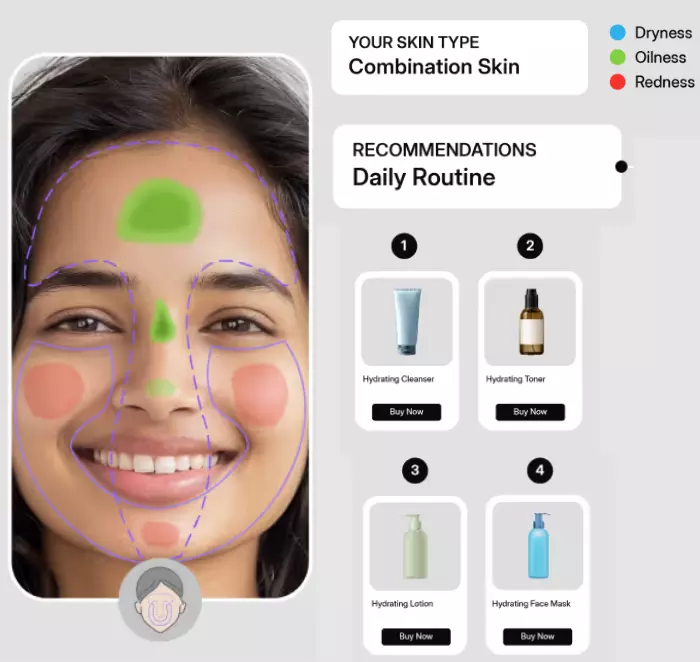
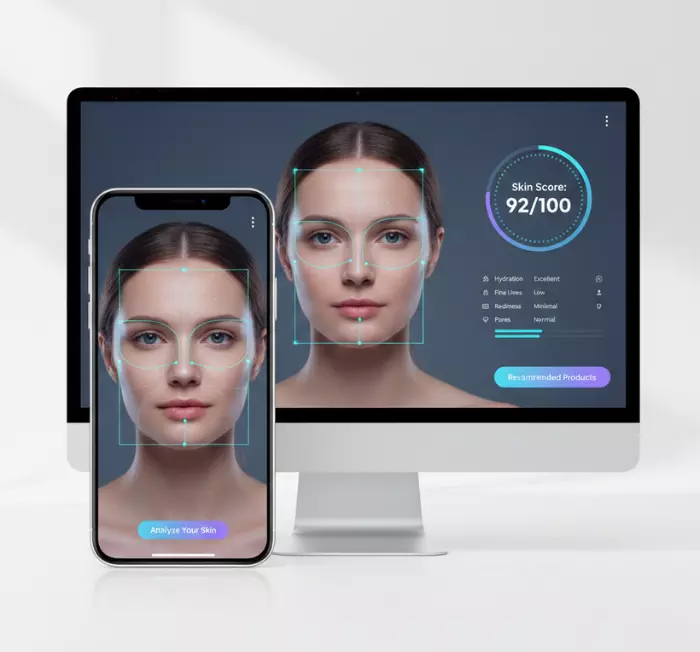
Suitable for e-commerce integration
Personalized skin report
.gif)
Frequently asked questions
An AI analysis for skin lines is a skincare-based software tool that can scan for skin lines, wrinkles, and other skin issues. This tool checks using an uploaded or scanned facial appearance to find any sign of skin issues, provides a skin rating score, and also recommends skincare products. Based on the analysis, it generates personalized skincare reports and suggests product recommendations and the possible outcomes to expect after engaging with those products in real time.
The tool uses AI-driven tech, computer vision, and deep learning machines. It can scan the users’ facial appearance to detect skin issues such as pigmentation, dark spots, whiteheads, eye bags, fine lines, and other related issues. The tool starts by scanning the patterns of fine lines and afterward, highlights the affected area. After this process, the tool generates a personalized skin rating score report for your users. It will also recommend personalized skincare products to help improve their skin issues.
Users may face some challenges in using AI skin analysis for skin lines due to poor image quality or uneven lighting, which will affect the authenticity of the analysis results. The major challenges for brands are in protecting customers' photos and their personal information. Brands might need to follow some strict ethical and cyber rules and regulations while implementing the AI tools.
It depends. Certain factors can stand as determinants of whether the report of the AI skin analysis will be accurate or not. Such examples are the lighting conditions, the quality of the camera lens of the user's device, the quality of the image uploaded, and the internet connection coverage of the user's device network. The majority of the AI skin analysis SDK engine uses a dermatology-based dataset, which has been tested on thousands of training images.
Generally, the AI skin analysis enables users to scan and analyze their skin for possible defects. After this, the tool tends to suggest some of your products that can improve those defects for them. Hence, your customers will get personalized product recommendations based on their skin needs. Also, brands can gather customer data from the analysis tool to improve their products and other offerings. This data will help brands to know the exact products that are bringing more sales and, hence, tend to generate more of them for productivity.
All skin analysis accuracy thrives on the quality of the image uploaded. If the image uploaded is blurry or not clear enough, the result tends not to be accurate or fail. The uploaded image should be an image with good lighting, no makeup if possible, taken with a good camera lens. The face of the customer must also be centered and be forward-looking. This will help the AI for proper scanning and accurate analysis.
Discover how AR, VR and 3D can drive revenue growth in 2026
Schedule a call with our team

.avif)