Analyse du visage


Transformer l'analyse en informations sur les données


Interaction fluide en temps réel
Cartographie faciale alimentée par l'IA
Frequently asked questions
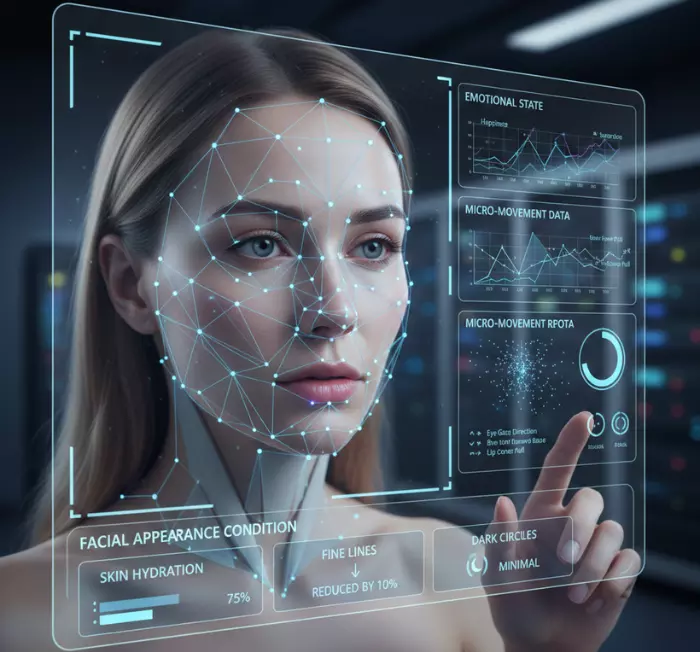
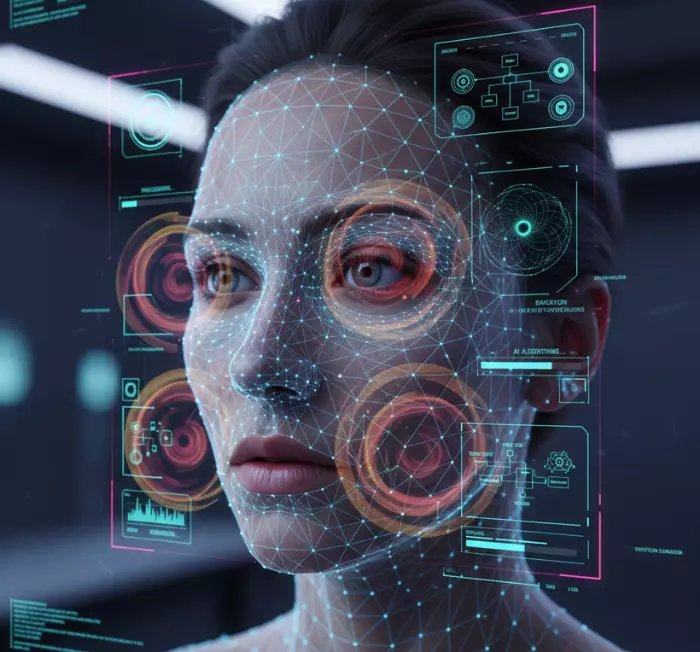
L'analyse du visage est un processus basé sur l'IA qui trouve, cartographie et analyse les caractéristiques du visage sur des photos ou des vidéos en direct pour en savoir plus sur l'apparence et les sentiments d'une personne. Les traits du visage (comme la géométrie des yeux, du nez et de la bouche), les traits de la peau (comme la texture, les pores, les ridules et la pigmentation) et les signes émotionnels (comme le bonheur ou la surprise) sont quelques-uns des résultats habituels. Certains systèmes tentent de deviner l'âge, le niveau d'attention et la position de la tête de la personne. D'autres utilisent des images pour obtenir des mesures de la peau, comme des modèles d'hydratation ou des indices de couleur. Il est important de noter que l'analyse du visage n'est pas la même chose qu'une évaluation médicale. Il ne vous donne que des indices et des tendances, pas des opinions professionnelles. La plupart du temps, les fournisseurs affichent les résultats via des écrans, des PDF ou des champs d'API que vous pouvez stocker dans un EHR ou un CRM avec autorisation.
Capturer, identifier, analyser et générer des rapports sont les quatre étapes de la plupart des processus. Pour commencer, un appareil photo enregistre des images RGB et parfois des images IR/UV ou polarisées. Un modèle de vision par ordinateur trouve le visage et ses marqueurs, tels que les yeux, les pupilles, l'arête nasale et le contour des lèvres. Il rend ensuite l'image normale en termes de taille et d'éclairage. Les modèles d'apprentissage profond (CNNS/Transformers) extraient des traits pour classer les émotions en groupes, deviner l'âge ou le type de peau d'une personne, ou diviser des zones (comme le visage ou les joues) pour des lectures plus précises. Les résultats sont additionnés, les résultats vidéo sont lissés au fil du temps et des chiffres de confiance sont attribués afin que les opérateurs puissent choisir à quoi faire confiance et quand effectuer un autre scan.
Sa précision dépend de la caméra, de l'éclairage, du nombre de tons de peau différents dans les données d'entraînement, de la pose de la tête et du fait que la personne porte du maquillage, des lunettes ou un masque. Voici quelques exemples de bons systèmes qui signalent des erreurs : erreur absolue moyenne pour estimer l'âge, F1 pour les classes d'humeur et IoU au niveau du pixel pour la segmentation de la peau. Vous pouvez être plus sûr de votre visage s'il regarde vers l'avant, s'il est bien éclairé (lumière diffuse et uniforme) et s'il est photographié à 720p ou plus. En cas de flou de mouvement, d'ombres nettes, d'angles extrêmes ou d'exposition trop importante, la précision diminue. Pour éviter de prendre la mauvaise décision, vous devriez toujours examiner vos chiffres de confiance et configurer des flux de travail tels que « re-scanner si le niveau de confiance est inférieur à 0,7 ».
La plupart des outils basés sur l'IA peuvent être utilisés avec un smartphone, une tablette ou une webcam. Pour un usage professionnel, des kiosques équipés de feux annulaires et de fonds uniformes doivent être disponibles. Pour les recherches sur la peau, les résultats sont meilleurs lorsqu'il y a une distance constante (30 à 50 cm) et un éclairage diffus (une boîte à lumière ou un anneau lumineux). Certains fournisseurs proposent des appareils multispectraux ou UV qui permettent de mieux détecter les dommages causés par le soleil ou la pigmentation. Un cadre stable (trépied ou support), un fond neutre et des objets qui réfléchissent la lumière doivent tous être retirés. Si vous analysez constamment des objets, comme dans un magasin, placez les caméras à un endroit où les gens peuvent les voir et décidez de la quantité de lumière qui entre de l'extérieur.
Soyez prudent avec les informations sur le visage. Donnez toujours une autorisation claire indiquant ce qui est enregistré, pourquoi, pendant combien de temps et qui peut le voir. Vous devez respecter le droit des personnes d'accéder à leurs données et de les supprimer (GDPR/CCPA) et de collecter le moins de données possible (dans la mesure du possible, stockez des mesures dérivées au lieu d'images brutes). Si le cas d'utilisation inclut des données de santé américaines, assurez-vous qu'elles sont protégées par la loi HIPAA (BAA, chiffrement au repos et en transit, pistes d'audit). Si le traitement doit être effectué dans le cloud, utilisez des centres de données régionaux, des règles de conservation strictes et une pseudonymisation. Le traitement sur l'appareil ou les fichiers temporaires sont préférables. Pour les opérations à haut risque, publiez un DPIA ou un PIA.
Certains modèles peuvent ne pas être précis pour tous les tons de peau, tous les âges ou tous les sexes s'ils ont été entraînés sur des ensembles de données qui ne sont pas représentatifs de la population dans son ensemble. Demandez au fournisseur ou au vendeur de vous donner des résultats de performance ventilés par groupe démographique et des tests d'équité entre ces groupes. Des données équilibrées, une réévaluation continue et un ajustement des limites par groupe peuvent tous être utiles. Si vous n'êtes pas sûr d'un choix ou s'il est délicat, demandez à quelqu'un de l'examiner. De plus, n'utilisez jamais l'inférence émotionnelle pour obtenir des résultats à enjeux élevés (comme l'embauche) sans une validation solide et des conseils juridiques. Informez les utilisateurs finaux de leurs doutes.
Découvrez comment la réalité augmentée, la réalité virtuelle et la 3D peuvent stimuler la croissance des revenus en 2026
Planifiez un appel avec notre équipe

.avif)