Análisis facial


Convertir el análisis en información sobre los datos


Interacción fluida en tiempo real
Mapeo facial con tecnología de inteligencia artificial
Frequently asked questions
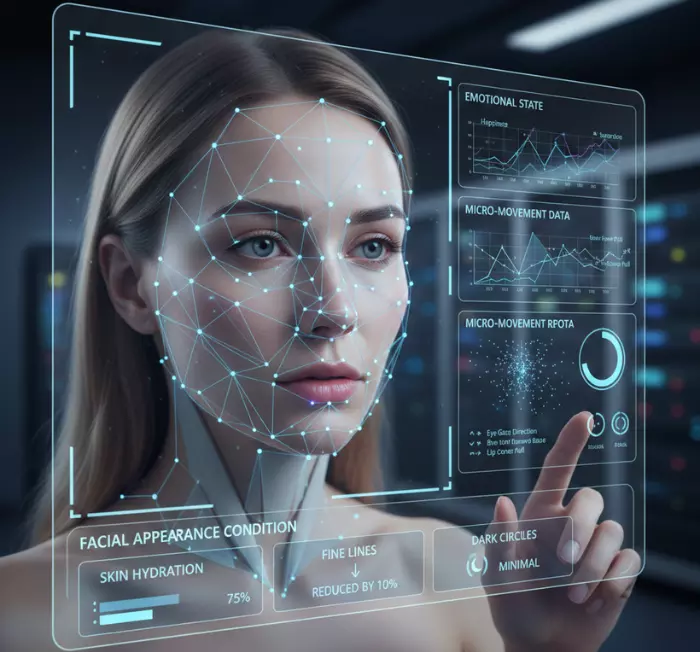
El análisis facial es un proceso impulsado por inteligencia artificial que encuentra, mapea y analiza las características del rostro en fotos o vídeos en directo para obtener más información sobre cómo se ve una persona y cómo se siente. Algunos de los resultados habituales son los rasgos faciales (como la geometría de los ojos, la nariz y la boca), los rasgos de la piel (como la textura, los poros, las líneas finas y la pigmentación) y los signos emocionales (como la felicidad o la sorpresa). Algunos sistemas intentan adivinar la edad, el nivel de atención y la posición de la cabeza de la persona. Otros utilizan imágenes para obtener medidas de la piel, como modelos de hidratación o índices de color. Es importante tener en cuenta que el análisis facial no es lo mismo que una evaluación médica. Solo te da pistas y tendencias, no opiniones profesionales. La mayoría de las veces, los proveedores muestran los resultados a través de pantallas, archivos PDF o campos de API que puedes almacenar en un EHR o CRM con permiso.
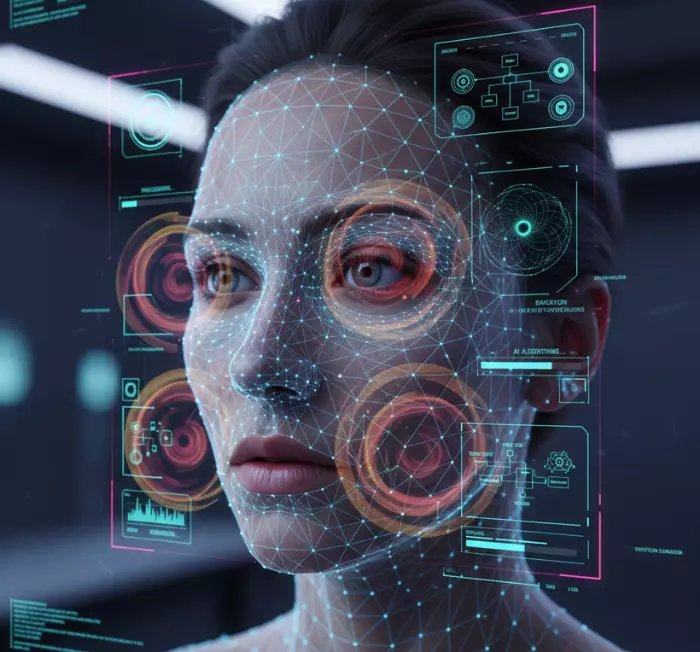
Capturar, identificar, analizar e informar son los cuatro pasos que siguen la mayoría de los procesos. Para empezar, una cámara graba imágenes RGB y, a veces, también imágenes IR/UV o polarizadas. Un modelo de visión computarizada localiza el rostro y sus marcadores, como los ojos, las pupilas, el puente nasal y el contorno de los labios. Luego hace que la imagen sea normal en términos de tamaño e iluminación. Los modelos de aprendizaje profundo (CNNS/Transformers) extraen rasgos para clasificar las emociones en grupos, adivinar la edad o el tipo de piel de una persona o dividir áreas (como la cara o las mejillas) para obtener lecturas más precisas. Los resultados se suman, los resultados del vídeo se suavizan con el paso del tiempo y se asignan números de confianza para que los operadores puedan elegir en qué confiar y cuándo realizar otro escaneo.
La precisión depende de la cámara, la iluminación, la cantidad de tonos de piel diferentes en los datos de entrenamiento, la postura de la cabeza y si la persona lleva maquillaje, anteojos o una máscara. Algunos ejemplos de buenos sistemas que notifican errores son el error absoluto medio para estimar la edad, el F1 para las clases anímicas y el IoU a nivel de píxel para la segmentación de la piel. Puedes estar más seguro del rostro si miras hacia adelante, si está bien iluminado (luz difusa, uniforme) y si se toma a 720p o más. Cuando hay movimiento borroso, sombras nítidas, ángulos extremos o demasiada exposición, la precisión disminuye. Para evitar tomar una decisión equivocada, siempre debes revisar tus números de confianza y configurar flujos de trabajo como «volver a escanear si la confianza es inferior a 0,7».
La mayoría de las herramientas basadas en inteligencia artificial se pueden usar con un teléfono inteligente, una tableta o una cámara web. Para uso profesional, es necesario disponer de quioscos con luces anulares y fondos uniformes. Para la investigación de la piel, los resultados son mejores cuando hay una distancia constante (30 a 50 cm) y una iluminación difusa (una luz suave o anular). Algunos proveedores ofrecen dispositivos multiespectrales o UV que permiten ver más fácilmente el daño causado por el sol o la pigmentación. Se deben retirar todos los objetos que reflejen la luz, un marco estable (trípode o soporte), un fondo neutro y otros objetos que reflejen la luz. Si analizas cosas constantemente, como en una tienda, coloca las cámaras donde la gente pueda verlas y decide cuánta luz entra desde el exterior.
Ten cuidado con la información facial. Siempre dé un permiso claro que diga qué se está grabando, por qué, durante cuánto tiempo y quién puede verlo. Debes respetar el derecho de las personas a acceder a sus datos y eliminarlos (GDPR/CCPA) y recopilar la menor cantidad de datos posible (siempre que sea posible, almacena las medidas derivadas en lugar de imágenes sin procesar). Si el caso práctico incluye datos de atención médica de EE. UU., asegúrese de que estén protegidos por la HIPAA (BAA, cifrado en reposo y en tránsito, registros de auditoría). Si el procesamiento debe realizarse en la nube, utiliza centros de datos regionales, normas de retención estrictas y seudonimización. El procesamiento en el dispositivo o los archivos temporales son mejores. Para operaciones de alto riesgo, utilice un DPIA o PIA.
Es posible que algunos modelos no sean precisos para todos los tonos de piel, edades o géneros si se entrenaron con conjuntos de datos que no son representativos de la población en su conjunto. Pídele al proveedor o proveedor que te dé resultados de desempeño desglosados por grupo demográfico y pruebas de imparcialidad entre esos grupos. Los datos equilibrados, la reevaluación continua y el ajuste de los límites por grupo pueden ayudar. Si no estás seguro acerca de una elección o si es delicada, pídele a una persona que la revise. Además, nunca utilices la inferencia emocional para obtener resultados de alto riesgo (como la contratación) sin un sólido asesoramiento legal y de validación. Informe a los usuarios finales sobre la duda.
Descubra cómo la realidad aumentada, la realidad virtual y el 3D pueden impulsar el crecimiento de los ingresos en 2026
Programa una llamada con nuestro equipo

.avif)