Why skincare brands and salons are adopting live skin analysis tools (and how you can too)


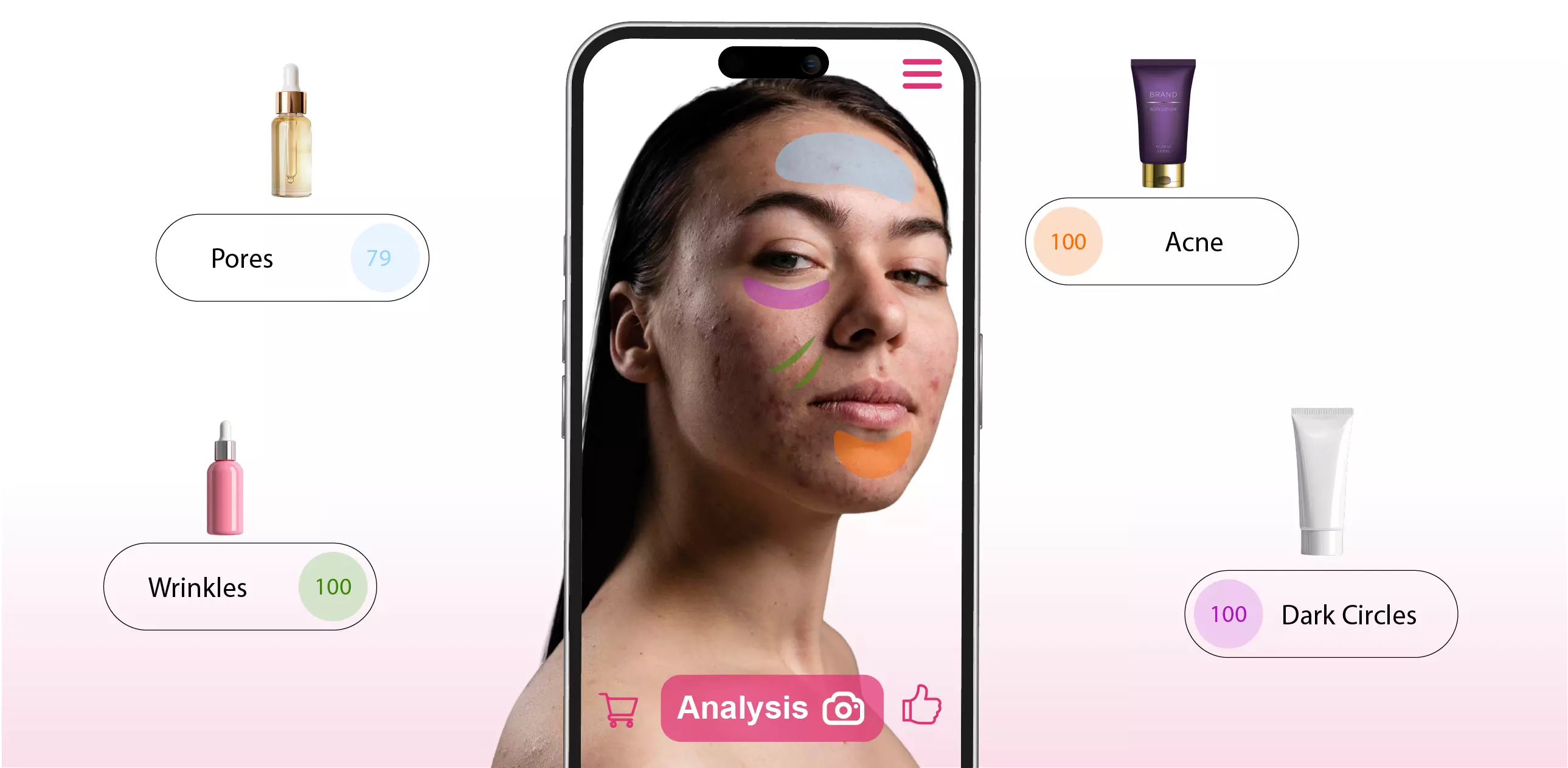
The skincare industry has been evolving a lot day by day, and one of its crucial factors for growth is personalization, which has helped brands to provide their customers with the confidence to select the best products according to their needs and requirements. When we talk about the global skincare industry, various businesses and salons have been providing their customers with an engaging experience by integrating the skin analysis tool on their website or app, offering their clients a tailored skin health report and customized recommendations.
According to a report published by Fortune Business Insights, the global skincare market size in 2024 was valued at USD 115.65 billion, which is projected to grow from USD 122.11 billion in 2026 to USD 194.05 billion by 2032, exhibiting a CAGR of 6.84% during the forecast period. It shows how using the advanced technology has helped the entire industry, brands, and salons to grow and provide their clients with recommendations of moisturizing, hydrating, and cleansing products by using the data and assessment report generated by the skin analysis tool.
But have you ever wondered, despite having professionals and experts, what the need is for using a skin analysis tool for brands and salons to provide their clients with product and treatment recommendations? In this blog, I will help you understand the need for a skin analysis tool and how you, as a brand or salon, can use it to get maximum results.
What is a skin analysis tool?

A skin analysis tool is an online tool that uses advanced technologies, such as artificial intelligence and imaging, which will help users understand their skin health and condition. It provides users with a complete skin assessment by analyzing more than 14 skin issues, such as fine lines, acne, pores, wrinkles, dryness, and spots, by using the image uploaded by them or using the live camera.
With the help of advanced AI algorithms, users will also get tailored recommendations of skincare products depending on their facial features and skin conditions, which will help them make more informed purchasing decisions during online shopping. Apart from that, some online providers also help users track their skin progress over time by offering them a user-friendly interface and enabling them to upload their images to keep their treatment history.
Key features
- Detailed analysis: It provides users with a detailed skin assessment report by analyzing multiple aspects of skin health, including wrinkles, pores, texture, pigmentation, and redness, which will help them select the best-suited products so that they can treat their skin.
- Progress tracking: Some skin analysis tools provide users and professionals with the ability to track their changes during treatment by enabling them to upload their reports or skin images, which will help them to measure the effectiveness of products and treatment over time.
- Personalized recommendations: It provides users with a tailored experience by offering them personalized recommendations of skincare products by taking a data-driven approach to suggest specific skincare regimens based on their unique skin concerns.
- User-friendly interface: It provides users with a user-friendly approach by offering them an accessible platform through a mobile app or online platform, which will make skin analysis tests convenient for them while sitting at home.
How does it work?
- Image capture: It provides users with the ability to take a selfie or a high-resolution photo of their face with the help of their smartphone or a dedicated device camera, while providing them with real-time guidance to ensure the image is clear and properly framed.
- AI analysis: It uses advanced artificial intelligence algorithms so that the tool can process the image and analyze skin texture, pores, color variations, and other biomarkers, providing users with a skin analysis report and helping them understand their skin issues.
- Condition assessment: It helps users to perform a condition analysis of their skin condition and issues by enabling them to identify various skin issues, such as wrinkles, fine lines, dark spots, redness, and pores.
- Reporting and recommendations: It helps users to understand their skin health by generating a personalized report with their skin score and provides them with tailored recommendations for skincare products, treatments, and routines based on the analysis.


What is the need for a skin analysis tool for skincare salons and brands?

With technology advancements, using a skin analysis tool is an important advantage for skincare brands and salons because it helps them to provide their customers with a personalized experience by generating reports and offering product recommendations. It also helps them to increase their engagement, sales, and conversion rates by providing their customers with an instant skin analysis report and offering solutions according to their skin issues and conditions.
However, using artificial intelligence technology to analyze skin conditions like dryness, acne, and wrinkles will help the brand and salon to provide their customers with tailored advice that builds their trust and loyalty while creating a convenient and data-driven shopping experience. In this section, I will tell you why brands and salons feel a need to use a skin analysis tool and how it will help them to increase their customer base and foster their trust and loyalty.
1. Personalized treatments and product recommendations
It helps salons and brands to provide their customers with tailored treatment and product recommendations based on their needs, which will lead to better results and increased customer satisfaction. It will also help their customers understand their skin condition and select the product accordingly, which will increase their confidence and can lead to higher conversion rates and fewer returns.
2. Increased sales and conversion rates
With the help of the skin analysis tool, brands and salons will be able to generate a skin assessment report according to the customer’s skin condition and issue, which they can use to help them understand their skin health. Due to this, the skincare brand and salon often observe an increase in their sales and conversions because it helps their customers to make more informed and confident decisions during online shopping.
3. Enhanced customer engagement and experience
By integrating and implementing the skin analysis tool, brands and salons can provide their clients with an engaging and immersive experience because it offers them personalized product and treatment recommendations, according to their skin health and score. Apart from that, businesses can also integrate the virtual try-on technology to help them simulate possible improvements of using a product on their skin with the help of AR overlays and 3D models.
4. Sustainable practice and cost-effectiveness
It helps businesses to reduce the need for physical sampling by promoting advanced technologies, such as augmented reality and artificial intelligence, enabling them to opt for more sustainable and environmentally friendly practices. Apart from that, it also reduces the unnecessary costs of operation and logistics by helping customers make fewer incorrect purchases and mismatched products.
How can you use the skin analysis tool for your skincare brand or salon?
Skincare brands and salons can use skin analysis tools in multiple ways, such as offering personalized skincare routines, recommending specific products, and visualizing potential results, which will help them to enhance both online and in-store customer experiences. Apart from that, it also helps skincare businesses to increase customer loyalty through customized recommendations; on the other hand, it helps salons to improve treatment plans and product sales.
In this section, I will tell you how you can use the skin analysis tool as a skincare brand or salon to provide your customers with better experiences.
1. For salons
- Improved client consultations: It provides professionals with detailed data that can be used to perform more informed and targeted conversations with clients, which will help them understand their skin's specific needs, such as moisture, oiliness, or elasticity.
- Increased overall sales: With the help of the skin analysis, salons and professionals can provide their customers with specific recommendations for products and in-salon treatments, which will help them to increase their overall sales.
- Customized treatment recommendations: It provides customers with personalized recommendations of treatment options according to the data provided by the skin analysis, which will help professionals to create effective treatment plans by combining professional advice and visual inspection with skin assessment results.
2. For brands
- Personalized recommendations: By using the AI-powered analysis, brands can provide their customers with product and routine suggestions customized according to their unique skin concerns, which can be accessed through an app or website.
- Enhanced online shopping experience: By integrating the skin analysis tool with the e-commerce platform, brands can easily connect analysis results directly to product pages and provide their customers with a seamless shopping journey.
- Showcase product effectiveness: With the help of the skin analysis feature, brands can simulate how a customer's skin might look after using a product, which can increase customer confidence and excitement about potential results.
GlamAR’s skin analysis tool for skincare brands
GlamAR is a leading 3D, AR, and VR solution provider for e-commerce sellers and manufacturers, helping them to provide their customers with an enhanced and personalized experience. It provides brands with various solutions, such as virtual try-ons, 3D configurators, 3D viewers, and a skin analysis tool, helping users to experience products in a transformative way by using 3D, AR, and VR technologies.
I tried the AI skin analysis tool that helps users generate a comprehensive report of their skin condition and helps them build a personalized skincare routine by offering them tailored product recommendations. It allows users to perform a detailed skin analysis by using the device's camera and offers them an in-depth analysis of more than 14 skin health and beauty metrics. It uses 94 advanced AI-based algorithms to provide users with customized skincare product recommendations according to their needs and preferences.
With the help of this skin analysis SDK, brands can provide users with accurate product suggestions and best-suited alternatives, which will help the brand to foster its trust and loyalty. It provides the brand with an average increase of 4 times in the conversion rate and customer retention, providing them with growth in overall sales and brand awareness. Apart from that, it also helps the brand to decrease the product return rate by 62% because it provides users with personalized recommendations.


Benefits of using a skin analysis tool for skincare brands and salons
By using a skin analysis machine, brands or professionals will get multiple benefits, such as providing accurate analysis, helping in treatment planning, and offering tailored recommendations. By using a skin analysis machine, practitioners can provide their clients with an enhanced experience and boost their confidence by increasing their satisfaction during treatment planning.
In this section, I will tell you some more advantages that brands and professionals get by using a skin analysis machine while performing skin analysis of their clients’ skin conditions and underlying issues.
1. Accurate and objective diagnosis
With the help of a skin analysis machine, professionals can help their clients assess their skin conditions and issues by providing them with an accurate and objective assessment of their skin health. It helps them to analyze and visualize multiple issues, including wrinkles, pores, pigmentation, fine lines, and more, offering a detailed and unbiased assessment of their skin condition.
2. Personalized treatments
It helps practitioners to provide their clients with detailed information on their skin issues by using multispectral lights to underline hidden issues. It will enable them to understand the cause of skin problems and help them plan their treatment according to their needs and requirements. The skin analysis machine will also provide some tailored suggestions for clients according to individual needs and requirements.
3. Early skin disease detection
With the help of a skin analysis machine, practitioners can help their clients get an early detection of skin diseases. It will help them to identify and visualize the skin issues by using some advanced technologies, such as artificial intelligence and augmented reality, allowing them to perform preventive measures and timely intervention to stop damage from worsening.
4. Identify hidden skin issues
Using some advanced technologies, such as artificial intelligence and multispectral imaging, helps professionals assess the user’s skin condition for underlying skin issues. It enables them to detect some underlying causes, such as UV damage, blocked pores, and uneven skin texture, which cannot be seen with the naked eye or during visual examination.
Foxtale: A brand providing its customers with personalized recommendations using a skin analysis tool
Foxtale is a skincare brand that provides its customers with various products, such as sunscreens, face masks, and serums, according to their skin needs and concerns. To provide its customers with personalized experiences, it uses GlamAR’s skin analysis tool on its website and app, which will provide its consumers with the ability to detect skin concerns with clinical-grade precision in under five seconds.
The brand has faced multiple challenges, such as a skin literacy gap, decision paralysis, and more, which have created an issue for them in building stronger relationships with their customers while fostering trust and loyalty. After using the skin analysis tool, the brand has provided its customers with multiple benefits, including instant AI analysis, insightful skin results, and contextual education, providing them with advanced facial mapping and skin concern detection technology in their iOS and Android applications.
After starting to use the facial skin analysis tool, the brand is able to increase its customer experience and engagement by providing them with an engaging and immersive experience. It also helped the brand to provide its customers with localized AI parameters so that they can ensure reliable results across diverse complexions and lighting conditions, making it accurately optimized for Indian skin tones.
Conclusion
Using a skin analysis tool provides brands and salons with the ability to provide their customers with a tailored shopping experience, which will foster their trust and loyalty. Therefore, various skincare brands and salons are opting for skin analysis tools for their e-commerce websites and apps, as they provide them with multiple benefits by increasing their sales and conversions while reducing product returns.
In this blog, I provided you with detailed information about how you can use a skin analysis tool and how it will help you to increase your customer reach and base while boosting their trust, loyalty, and satisfaction. To provide your customers with a complete analysis of more than 14 skin issues, you can opt for GlamAR’s skin analysis tool, which will also offer you data-driven insights to personalize marketing campaigns.