
Augmented reality furniture design


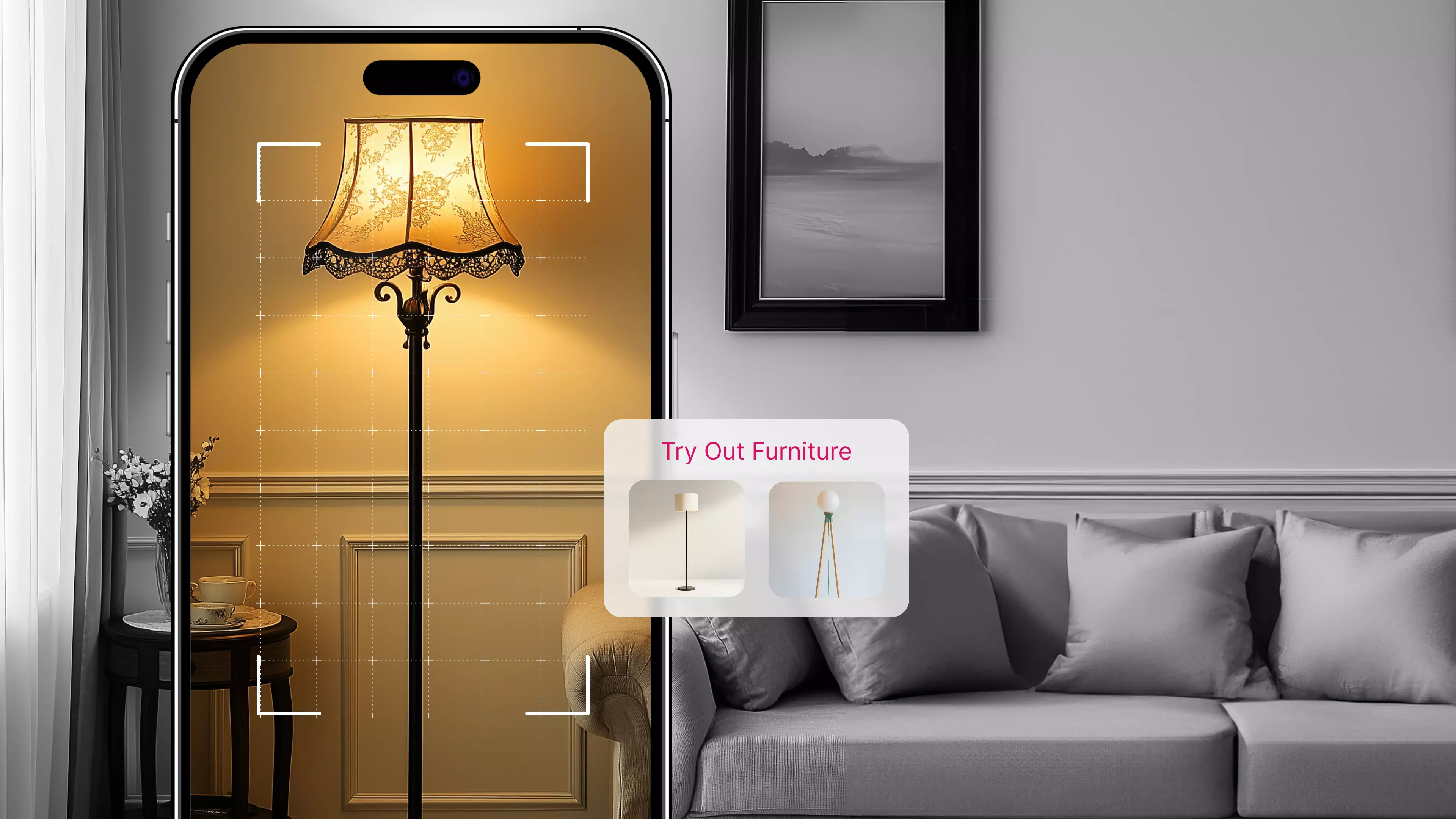
Have you heard of how technology can influence online shopping for furniture? Augmented reality has gained ground in the furniture industry to bring an interactive experience for customers while they shop in the comfort of their homes.
With the use of devices with AR features like smartphones and tablets, customers can creatively set up their homes with the use of AR apps while they view each product in their intended positions. This method provides the best experience for users as they view their surroundings in the real world despite not being physically present. That is why 60% of customers express their desire to use AR in purchasing their furniture products.
In the furniture business, the view that augmented reality provides makes it easy for your customers to see how it would look if it were situated at a particular location. It limits the barrier of not being able to view the different angles of the furniture because it merges digital images with 3D models. The usage of AR apps in the furniture design business will certainly change some things as time goes on. In this blog, you will learn more about AR furniture design and other vital information about it.


What is AR furniture design?
AR is a technology used in sectors like the healthcare, education, and construction industries. In 1968, AR was created by Ivan Sutherland. It is a technology that industries have keyed in to transform the marketing performance of their businesses.
It creates an opportunity for you as a furniture business owner to bring your products to reality. AR was first introduced in 1992, and since then, it has grown rapidly across various industries. Industries that adopt this technology help their customers to get the best experience while shopping.
Types of AR furniture design
1. Marker-based AR
Virtual reality is an approach that makes use of a physical marker, which could be an image, text, video, or 3D object. The device with the AR app scans the marker and displays the virtual images on it. For instance, the marker could be a bunk at home; the user can scan the bunk with the AR app already on the device and visualize the bunk the company has available.
So the device displays the virtual image, not the physical one, but the user can change position to view the object from different dimensions as it would look like in the real world.
2. Markerless AR
This approach does not need a physical marker like the marker-based AR. It utilizes the physical environment to position the virtual object. The virtual object appears on the surface after scanning the physical environment.
The material surface must have textures or corners to be able to operate effectively. This flexible and convenient method is expensive to set up, but most online shopping stores use it.
3. Projector-based AR
This approach stands out because it does not display moving images. Companies primarily use these images for their presentations. Movies can benefit from animating these images. In this approach, there is no need for smartphones or tablets; it makes use of hardware called a projector to display its images on a flat background, usually two-dimensional.
For instance, there are some adverts you see on an electronic billboard that display images; these images can be static at times, like when watching a movie. This view would make customers gain interest in such products.
4. Superimposition-based AR
The superimposition-based AR combines the marker-based AR and the markerless AR in that it merges digital images with real life. It could scan a physical marker and replace it with a digital object on the device used to view it for the user. It can provide extra and detailed information about the physical marker.
It relies on visual recognition, unlike location-based AR, which relies on location recognition. For example, while shopping, superimposition-based AR can help customers identify the price of the product, the dimension, or extra details that might not be provided on the products physically.
5. Location-based AR
The location-based AR makes use of the geographical location to gather information, and it does not need a physical marker to function, unlike other types. The devices needed for this approach may not include a camera but GPS, a compass, and an accelerator. These devices help in finding the exact geographical location.
This approach is best used for gaming, but it can also be used in tourism, travel, and sports. It functions in the tourism sector as users can view the location virtually. Its key features are versatility and adaptability because it can be used not only in urban areas but in isolated areas like mountains. It is also called geo-based augmented reality.

Benefits of augmented reality in furniture design
Augmented Reality (AR) is the way people purchase furniture through a process that is more engaging and accurate. Instead of relying on imagination or visiting showrooms, your customers can now use and engage AR-powered apps or web apps and websites to visualize furniture in their actual living spaces.
This technology is already reshaping the experiences of customers by eliminating guesswork, and it increases purchases. This has really helped many companies leverage the power of technology to drive sales more than ever before. An increased adoption of ARs will surely increase profits. The following benefits illustrate how augmented reality has revolutionized furniture design:
1. Customer shopping experience:
AR allows customer to virtually place your furniture products in their homes, offices, or other locations before making a purchase. All they have to do is simply examine their space with a smartphone camera. Then, compare how your furniture piece can fit their physical location. This feature has eliminated the uncertainty of whether an item will fit and match the room’s layout, size, and style.
2. Reducing product returns:
A major problem for online furniture retailers is dealing with the regular high return rates. This is because of incorrect sizing and unmet expectations. AR helps solve this issue by allowing your customers to accurately view furniture in their space before finally purchasing it. There is a reduction in the return rate of products as buyers can make informed decisions. This saves the businesses time and money. AR is now the game changer in the furniture industry.
3. Increment in sales and customer engagement:
With AR, your brand can offer a more interactive shopping experience that keeps your customers engaged. Buyers can see personalized options such as changing colors, materials, and sizes. This process leads to more engagement. The level of engagement often results in a high conversion rate and sales because your customers will feel more confident in their choices.
4. Saves time and money for customers:
Your customers can see thousands of options from the comfort of their homes without visiting multiple furniture stores. AR removes the need for physical showroom visits. This has made it easy for shoppers to view and purchase your furniture products. Not everyone would want to go through the hassle of going to a showroom; now the AR has changed the traditional pattern that was in use. If time and money are saved, then profit is maximized by the brand. In fact, many furniture brands are making giant sales even without a physical showroom.
5. Giving retailers a competitive edge:
Furniture brands that embrace AR technology have a significant advantage in the market. Offering AR-powered visualization tools attracts tech-savvy consumers, enhances brand trust, and improves marketing efforts. In the following years, the adoption of AR would grow significantly, and so would the decline of the traditional visiting of showrooms. Brands that adapt now will ride on this wave of growth and profit.
Top 11 AR furniture design apps
AR furniture design apps have made buying easier by allowing users to visualize furniture in their homes before making a purchase. These apps are changing the furniture industry totally. A study by Statista predicts that the AR market in retail and e-commerce will reach $17.86 billion by 2028. This report highlights how immersive shopping experiences are becoming the new standard. Listed below are ten AR furniture design apps that are changing the way people buy furniture.
1. IKEA Place
Launched on the 12th of September 2017, IKEA’s AR app allows users to scan their room and place IKEA furniture in their space using true-to-scale 3D models. This feature will help your customers determine whether a piece will fit their room, eliminating the stress of manual measurements and the uncertainty of guesswork.
According to IKEA, their AR app has led to a 35% increase in customer confidence when making purchasing decisions, thus reducing return rates significantly by a greater margin than ever recorded. This newly introduced technology has driven demand for products more than before.
2. Houzz
Houzz is a home design app created in 2009 by Adi Tatarko and her husband, Alon Cohen. It provides furniture businesses with AR visualization, home improvement ideas, and a marketplace for furniture and decorations of different interests. It allows users to see how different items will look in their space before making a purchase.
A report by Houzz & Home found that 89% of homeowners consistently use technology like AR to plan their renovations, and many have said that it helps them avoid costly design mistakes. The ease of placing the right furniture in the home or office space has made Houzz an in-demand app.
3. Amazon AR view
Amazon’s AR view brings AR technology into the online shopping experience. The tool enables your customers to preview furniture items in their actual environment. This feature makes online shopping more engaging and precise. It was first introduced in November 2017. AR-powered previews have gained significant popularity on the site. The shopping experience has become much easier.
4. Wayfair AR
Introduced in 2023, Wayfair’s AR app will help your customers to visualize and customize furniture selections before purchasing. It offers realistic furniture placement, rotation, and size adjustments to ensure an accurate fit within a space.
5. Ashley furniture
Ashley Furniture’s AR tool allows your furniture brand to present its products virtually. With this, customers can position digital furniture models in their homes to test the fit, color, and style. It was launched in January 2019. Ashley simplifies the decision-making process and enhances the online shopping experience. Buying furniture that was literally sized in real life ranges from a device that would reduce the return rates.
6. Planner 5D
Planner 5D is a design and floor-planning app that includes an AR-based furniture preview. It was created in 2011 by Alexey Sheremetyev and Sergey Nosyrev. The app helps furniture businesses present their products in a way that users view with physical room arrangements before buying.
The fact that users can easily experiment with the different sizes, colors, and materials they want at their convenience before purchasing the furniture further raises the acceptability of AR-powered furniture visualization.
7. Roomy
Roomy is a virtual interior design app that provides AR-powered home staging. It enables users to place digital furniture within a space, helping them decide on styles and arrangements before making a purchase. Roomy has consistently provided furniture businesses with an excellent digital view of furniture previews. It’s a platform that can be considered among many others.
8. DecorMatters
DecorMatters, founded in 2016, is an interior design app that combines AI and AR capabilities. It allows users to visualize furniture, collaborate on design projects, and even access professional design services. The combination of AI and augmented reality capabilities enhances the effects of the visualized services they offer customers.
9. Home design 3D
Home Design 3D allows your customers to build 3D floor plans, decorate spaces, and integrate AR for real-time furniture previews. Anuman Interactive released the app in October 2011. It’s a great tool for home renovation and redesign projects. The DIY idea behind the tool makes it engaging, resourceful, and very useful—even for newbie customers.
10. Homestyler
Homestyler is a user-friendly interior design app that leverages Augmented Reality (AR) and 3D modeling to help users create their ideal living spaces. It was founded in 2009 by Autodesk; in 2016, Alibaba and Easy Home bought the app.
Be that your customers want to redecorate a single room or design an entire home, Homestyler makes the process easy by allowing customers to place virtual furniture, experiment with different styles, and visualize the final look before making any purchase from them.
11. PLNAR
Founded in 2012, PLNAR is an AR-powered measurement and documentation app that streamlines home improvement projects, insurance claims, and remodeling jobs. Instead of using manual tape measurements, customers can use their smartphone's camera to scan a space, which automatically generates precise 3D models, floor plans, and measurements in real time, thereby reducing work time.
These furniture design apps have changed the furniture industry dramatically. Experts predict that augmented reality-powered apps will shape the industry's future.
How AR furniture design works
AR in furniture design works by joining digital 3D models with real-world environments. The technique also allows users to view furniture in their space before buying. We explain how it works below.
- Scanning the room: The process begins with users over-laying their room through a smartphone camera or AR-compatible device. Then, the app captures key details like room dimensions, lighting conditions, and spatial layout. As it captures these details in the space where the camera focuses, it then processes the information.
- Placing 3D models: The AR software then overlays true-to-scale 3D furniture models into the examined environment. This is after it has processed the information obtained from the camera. Customers can move and adjust placement to see how various pieces fit their space.
- Interaction: Many AR apps allow customers to change furniture colors, materials, and sizes in real-time. This ensures that buyers can match furniture with their home decoration before making a purchase.
- Realistic lighting and shadows: Advanced AR technology copies real-world lighting and shadows; it then provides an accurate representation of how a piece will look under different lighting conditions. This is dependent on the space features.
- Seamless shopping integration: Once users have made their selection, they can then proceed to purchase directly from the AR app. Some platforms even offer in-app checkout options. This functionality makes the shopping process smooth and problem-free.
AR vs VR furniture design
- Immersion of users: The use of headsets and VR goggles makes the user cut off from the real world and integrated into a virtual universe. In AR, the customer is not cut off from the real world but is presented with an enhanced version of it.
- Devices used: AR usually makes use of cell phones with cameras and screens through AppAR or WebAR. VR tends to make use of VR goggles and a headset, visually isolating the user. Other devices like gloves, headphones, remotes, and haptic suits can also be used, increasing the sense of freedom of movement.
- Differences in usage: AR is used to digitize a physical environment, making it relevant for experiential marketing. This is because of its availability on cell phones. This makes it more relevant in the furniture industry. VR is more relevant for intensive industrial and educational training where concentration is absolutely required.
- Experiential limits: In AR, customer experience is within the screen limits of the digital devices used, while in VR, customers have a 360-degree experience accompanied by the illusion of being taken to other worlds. VR achieves a more detailed level of interaction. However, in AR, customer can easily refer back to videos using their mobile devices.
The future of augmented reality furniture design
1. Furniture sales
Interior Define stated that customers who engage with AR are 8 times more likely to convert. Interestingly, every furniture industry wants to make a profit, so augmented reality is no longer an option but an enabling platform that will be used more in the upcoming years.
2. Wearable AR
In years to come, wearables, which would provide real-time information about buildings and furniture, would be produced. Wearable AR devices could take the form of glasses or contact lenses, and they might even come with a headset. These devices will help your furniture brand ascertain the purpose of clients' infrastructure as well as the right measurements of furniture that would fit the infrastructure. Such an arrangement would put a customized touch on the client's furniture.
3. Virtual assistant
AR would serve as an able virtual assistant for your furniture brand. It will help the industry with research on recent trends in furniture design. Through the use of wearable devices, professionals would be able to instantly ascertain the right furniture to construct and in what measurement. It would also help your customers to see for themselves the furniture that is best for them, thus saving valuable time.
4. Adoption of AI
The adoption of artificial intelligence with augmented reality would be a remarkable leap toward the next level. The outcome would positively impact the industry. In the furniture industry; for instance, AI would help in analyzing your customer behavioral patterns and preferences. AI would also offer potential measures, solutions, and services to meet the needs of these customers.
Why GlamAR for your furniture design?
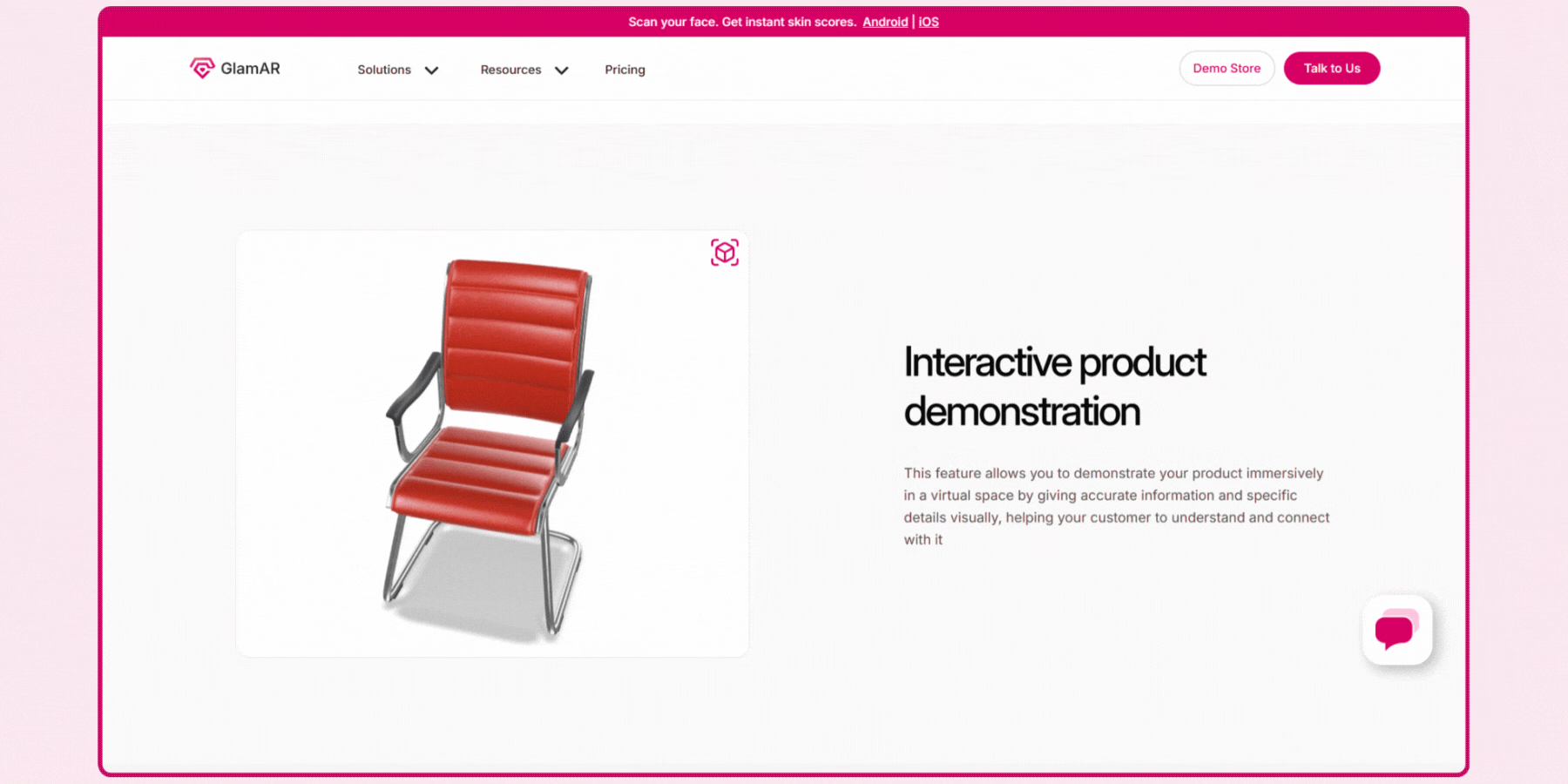
GlamAR is an AI-driven AR furniture software that will help you as a furniture business owner to showcase your products uniquely. Firstly, it allows your customers to see how various furniture pieces can fit into their space. It provides high-quality 3D model creation where customers get to see furniture in a 360° manner. This feature ensures a realistic experience. The GlamAR also has virtual try-on features for your business to rely on.
This functionality allows your customers to test the compatibility of any furniture products with their physical spaces before making a purchase. The immersive 3D and AR experiences that GlamAR has will give your customers confidence in their purchases. Therefore, this leads to increased conversion rates for your furniture business. So, instead of using different apps, try GlamAR for all your furniture home design purposes and get a seamless service.
Conclusion
AR makes furniture shopping more interactive, personalized, and convenient. It provides real-time visualization and customization. Moreover, AR-powered furniture design apps help customers make more confident purchasing decisions and enhance an overall shopping experience. And for businesses, there is a possibility of low return rates.










