
Augmented reality in furniture industry: Uses, advantages, benefits, tools


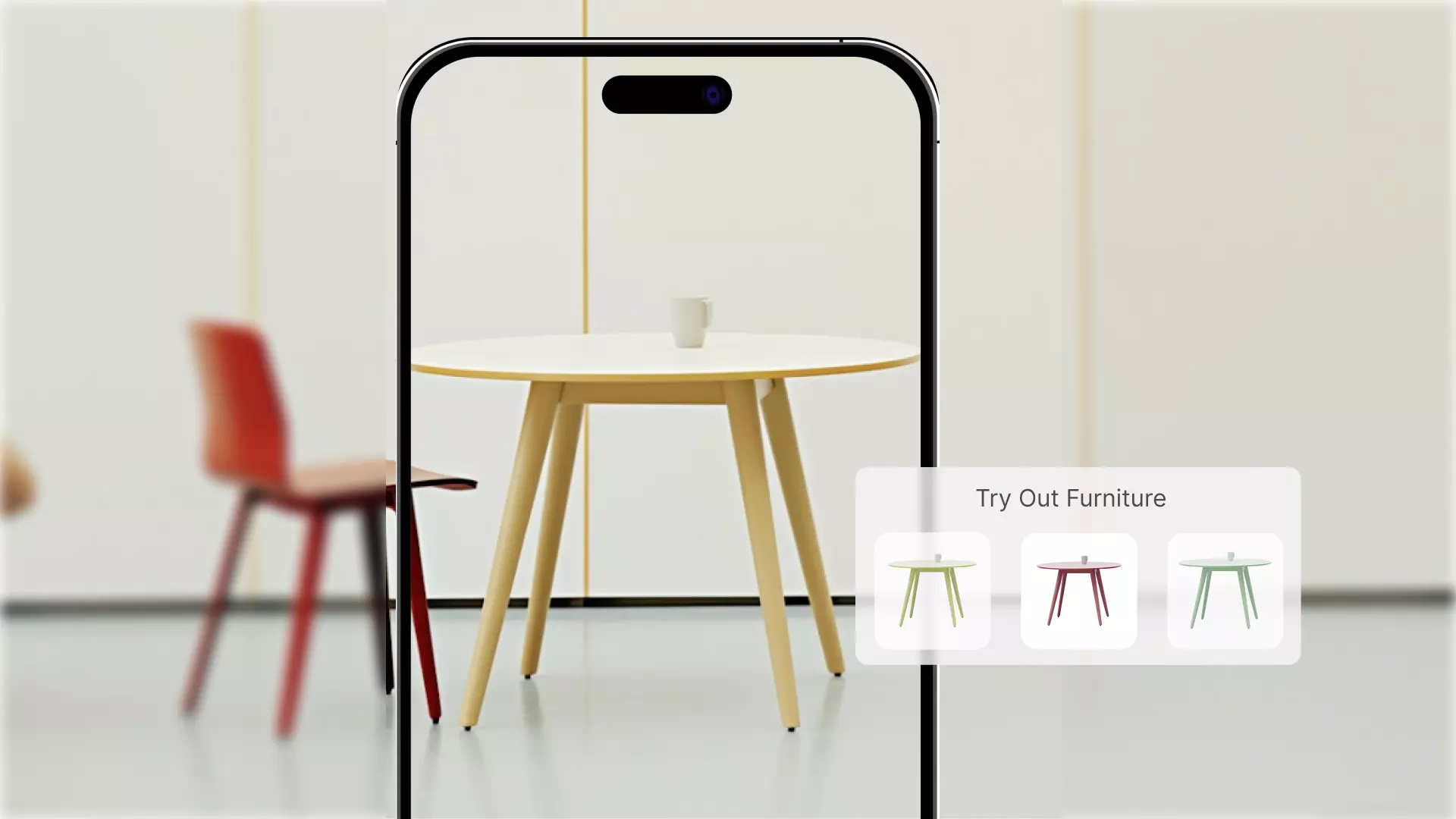
People are moved by what they see. You have seven seconds to attract your customers, and you don't just want to settle for passersby and onlookers; you want buyers who are drawn into the new world of your online store.
It was predicted that 88% of small-size businesses make use of AR for their product development and sales. It shows that many business owners are seeing the usefulness of AR. With AR, you break customers' walls of defense of doubt and close that sale. It will provide a captivating scenery for your customers that helps them visualize your furniture in the real world. Are you skeptical about how this technology can transform your online furniture store?
In this blog, you will get comprehensive information and insight on how augmented reality (AR) can unlock the power of sight and enable your customers to have a real-time experience with your furniture as your sales increase.


What is augmented reality in the furniture industry?
The world of the furniture industry is getting better due to augmented reality. Talking about augmented reality is a technological tool that deals with the ability to enable users to get a visualized view of any digital object from a real-world perspective. AR integrates digital information or objects into the user's environment. AR features leverage on devices like smartphones, tablets, smartphones, and AR projectors. All these devices use sensors, cameras, and other display elements.
Additionally, AR serves as a bridge,e filling the gap between virtual and physical stores, as customers have the opportunity to purchase their goods in their comfort zone. Instead of undergoing the stress of visiting a physical store, buyers can leverage the company’s AR feature. With the feature, the buyer can focus the phone camera at a desired spot in the house to see if the product fits the desired spot.
How does AR technology work?
Augmented reality makes use of devices with cameras to collect data (images, videos, or 3D models). These devices could be a smartphone, a tablet, or smart glasses. It collects information from the physical object and its environment and the real environment and uploads it to the cloud. It then downloads the information from the cloud and merges the real and the virtual environments with the use of a marker.
AR can use a physical marker (like a QR code) that customers can position on the floor where they want to place their chosen item. Then, they survey the marker, making use of their smartphone or mobile tablet; the app overlays the chosen item over the marker.
Benefits of augmented reality in the furniture industry
The world is evolving, technology is emerging, and it's best to maximize this innovation, called augmented reality. Using this technology would benefit both parties, as it would immerse your customers in the experience and allow them to make choices with maximum satisfaction while also increasing your sales. Are you still doubting the usefulness of augmented reality? These benefits would erase those doubts:
1. Serves as an assurance for customers
There is a popular saying that seeing is believing. Consumers are rational and would love to make the best decision in their choice of products. Augmented reality can enable consumers to purchase their desires with the confidence of getting what they asked for.
With AR in the furniture industry, buyers can have a solid view of the different dimensions of the furniture. Thereby, enabling furniture industries to display their products virtually without bothering about having a physical store.
2. Captivating consumer experience
First impressions last longer, and people are moved by what they see. A customer should be able to patronize a seller more than once, and such issues can be taken care of to ensure their first experience was worth it. AR helps unlock the power of sight and gives customers a memorable experience that keeps them trooping in again.
Augmented reality makes it possible to generate high-quality visuals that merge with real-life spaces, which would encourage reliability, increase patronage, and promote the brand’s credibility. This feature gives the brand an advantage over others in the marketplace.
3. Greater engagement
Research reports by Forbes show that 56% of customers prefer augmented reality shopping to traditional shopping because it boosts their confidence in a product's quality. Due to the invention of this technology, customers would rather engage with an online store that can provide a real-life perspective of their furniture than waste their time and money getting to a physical location.
Statistics show an increased browsing time on AR websites and applications. Customers would want to examine their products closely to ensure they are according to their needs, thereby increasing the time spent engaging the AR online stores.
4. A reduction in the rate of returns
One major reason customers return products is because they got something different from what they ordered. It might be in the area of size, color, shape, and other features. AR tools reduce the tendency to return products because you can visualize the furniture the exact way it would look in reality. Customers can buy their desired product with utmost satisfaction.
Because customers have tried it before buying, furniture manufacturers can be sure that consumers place orders with the right expectations. Such behavior has a way of improving the company’s credibility and making it stand out among its competitors.
5. Higher sales
During the wworldwideandemic that everyone was mandated to stay indoors. Guess who made sales during this period? Those who had access to online platforms made the most sales. And who made more sales? More sales went to those who could meet customer needs.
Augmented reality technology places you ahead of your competitors because you have higher chances of patronage due to the ease of convenience and accessibility of desired products. Due to their greater understanding of the product, AR users are more likely to buy.
6. Promotes creativity
Augmented reality makes it possible to explore the virtual world and try different options. It gives the user the ability to express ideas, shuffle between different choices, draw objects from one position to another, view various dimensions of the object, and change color until the best result is obtained.
It gives you the freedom to bring your idea into reality in the comfort of your home. It brings out the creativity in us as we wander in a world of virtual objects and images.
7. Prevent avoidable mistakes
Imagine purchasing a bunk for your kids only to get to the doorway, and it doesn't fit in. That would be a very terrible mistake. By allowing you to inspect the product before use, augmented reality helps prevent mistakes.
Before buying, check the bunk's length, height, and access to your home. Such information would reduce the mistakes you make during your purchases and give you confidence in getting the right product.
8. Easy and accessible
Augmented reality is not complicated, and there are no restrictions. It is easy to operate and accessible to all. All you need is your AR tool, which can be your smartphone or tablet. You don't need any formal knowledge to operate it.
Once you install the mobile app or open the web browser, you can view your virtual images from a real-world perspective. Most companies make use of a unique mobile app that allows you to take a tour around the room with ease.
Uses for augmented reality in the furniture industry
Below are the use cases of augmented reality applications in the furniture industry.
1. Room design
Just like the function of a physical showroom, it displays the products for customers to view and check out, but this time, not physically. With the use of room design tools, customers can place furniture where they desire in the virtual environment without being there physically.
Customers can vary their choice from the color to the position and the fabric. They also design the product to suit their taste, which helps increase trust in the brand's reliability and credibility. It also reduces the rate at which people return products since they are able to visualize them from a real-world perspective. The tools available make it possible to move your furniture from one position to anothe,r just like you would have done in a physical showroom.
2. Customization
Customers are pleased to make purchases where they have a wide variety of options available. Augmented reality allows customization that cannot be done in a store because the products are finished. Customization involves picking your desired options and changing some unique features about them to make them stand out.
Customers can ensure that the furniture products suit their needs before making payment. Buyers have access to customize the color, fabric, texture, or even the size of the furniture. This feature ensures maximum satisfaction of the customer with the product, and it shows that the company has its customer's interests at heart.
3. Marketing materials
You can include physical material strategically to give you an edge over your competitors. This could be a business card, catalog, magazine, or brochure. This would give customers additional information about your company and answer their questions even before they have any doubts. You can also make your app accessible with a code to scan to lead to a website, or it can be downloaded. To generate QR codes with ease, you can make findings on Shopify.
This would help your customers stay updated with the new developments they ought to know. It would allow customers to have an interactive session with your brand each time they come around. You wouldn't want them to leave anything soon, so you do anything to keep them around for a long time.
4. Showrooms
Finding your exact option might be a task in a physical showroom where there are innumerable varieties of options. It would be overwhelming to try to find a unique item among other similar ones. Augmented reality provides customers with assistance. AR helps customers find their way in physical showrooms. It might be through a tracking device or a map that contains the location of items in the store, just like libraries that use tags to identify the sections where to find a particular subject or scan a QR code.
This helps ease the experience of the customers and ensure they get their desired product without going through a strenuous process while transitioning from physical to virtual space using a 3D model.
5. Assembly assistance
It can be so frustrating when you buy a product and try to assemble it in the right order. Even the manual guide may not help. But imagine you had the opportunity to watch someone assemble it right in front of you; you would do the same with ease. Furniture most times needs one or two things to be kept in place and augmented reality can help with it.
All you need to do is access the app or website where the furniture is displayed in a 3D model and watch how the virtual object is assembled from a realistic perspective. Adam Pickard was the developer who created the Assemble AR app to show furniture companies how to use AR in the assembly process.
Advantages and disadvantages of AR in the furniture industry
Advantages
The advent of AR in the furniture industry is impressive. Today, furniture shoppers don't necessarily have to walk into a store to get the perfect furniture that fits their interior. Here are five benefits AR brings to the furniture industry:
- Personalized shopping experience: Augmented reality changes the experience game in the furniture industry. While physical shopping can be stressful, AR gives shoppers that amazing experience that brings them back.
- Virtual showroom: This compels customers to make purchases due to the compelling visuals used for the displays.
- Competitive edge: AR is changing the furniture industry. As a business utilizing AR in your business can set you apart and give you an edge over your competitors.
- Realistic experience: Unlike physical shopping, AR gives you a more realistic and better shopping experience. Shoppers can easily know if a piece of furniture will fit into their apartments without guessing.
- Improved sales: With AR, the fear of purchasing a piece of furniture that doesn't fit into one's interior is eliminated. Shoppers can now make more purchases without the fear of future regrets as they get to carefully select an item before making a purchase.
Disadvantages
While AR is revolutionizing the shopping experience in the furniture industry, it isn't without certain challenges. They include:
- Complexity: AR requires certain technological devices to make the most out of the experience. However, some customers may lack the technical know-how of such devices, their use and operation, hindering them from getting the best experience.
- Limited access: Not all customers have access to the technical devices for AR, which may cause some customers to opt for physical shopping
- Limited adoption: AR is still an evolving field with little awareness leading to little adoption. Furniture Industries may, however, find it difficult to integrate AR into their business.
- High cost: The process of creating 3D images and integrating AR into your furniture business requires high financial costs. As a result, AR may not fit into some furniture businesses' budgets.
- Dependence on technology: Even with the visible benefits AR brings to the furniture industry, some shoppers still appreciate the physical shopping experience.
What are Webar and AppAR?
While businesses can deliver AR through either the web or app, the experiences from each are not the same. WebAR delivers augmented reality through a browser. With WebAR, customers do not have to go through the steps of downloading an app as they would in AppAR. WebAR, however, offers users a better experience and convenience.
AppAR, on the other hand, may be inconvenient. It offers AR through an app. Shoppers, before purchasing an item, would have to download and sign up on the app. This may be unrealistic as furniture items are not like food and clothes that are frequently purchased. Hence, having to download an app for a one-time experience may not sit well with some shoppers. Moreover, due to some devices' functionality, certain apps may not be compatible with a device.

Popular brands that use augmented reality for their furniture sales
1. IKEA
IKEA is one of the first home furnishing brands in the world to announce the arrival of augmented reality to people by launching its AR app in 2017 called IKEA Place. The app has a 98% accuracy of room dimensions while it positions the product automatically. The visuals are high quality, which makes the texture of the fabric visible.
2. Scanliving
They specialize in making beds for children and teenagers, considering the age and height of the child. Scanliving decided to use augmented reality so as to allow parents to know if the bed would fit into their children's room. With the use of AR, parents can purchase their children's bed with confidence.
3. George chibi
The brand has been in operation for 20 years and has gathered a wealth of knowledge on providing the ideal furniture. After seeing the need to take the brand to the next level, they got inspired by other brands like Shopify and made use of augmented reality to display their furniture.
4. Clawz
Clawz is a brand located in the United States and specializes in cat furniture. To prove to their customers the quality of their furniture, they needed a captivating visual display. To make this a reality, they decided to adopt the augmented reality option that would enable customers to find out which products work best for them.
5. Jofran Inc
This company has been in operation since 1975. It has stood the test of time due to the fact that they fully incorporated augmented reality technology in their e-commerce, which provides options like a 360° spin with gathered experience from brands that make use of AR. Their format is compatible with both iOS and Android.
Best tools for augmented reality in the furniture industry
1. GlamAR.io
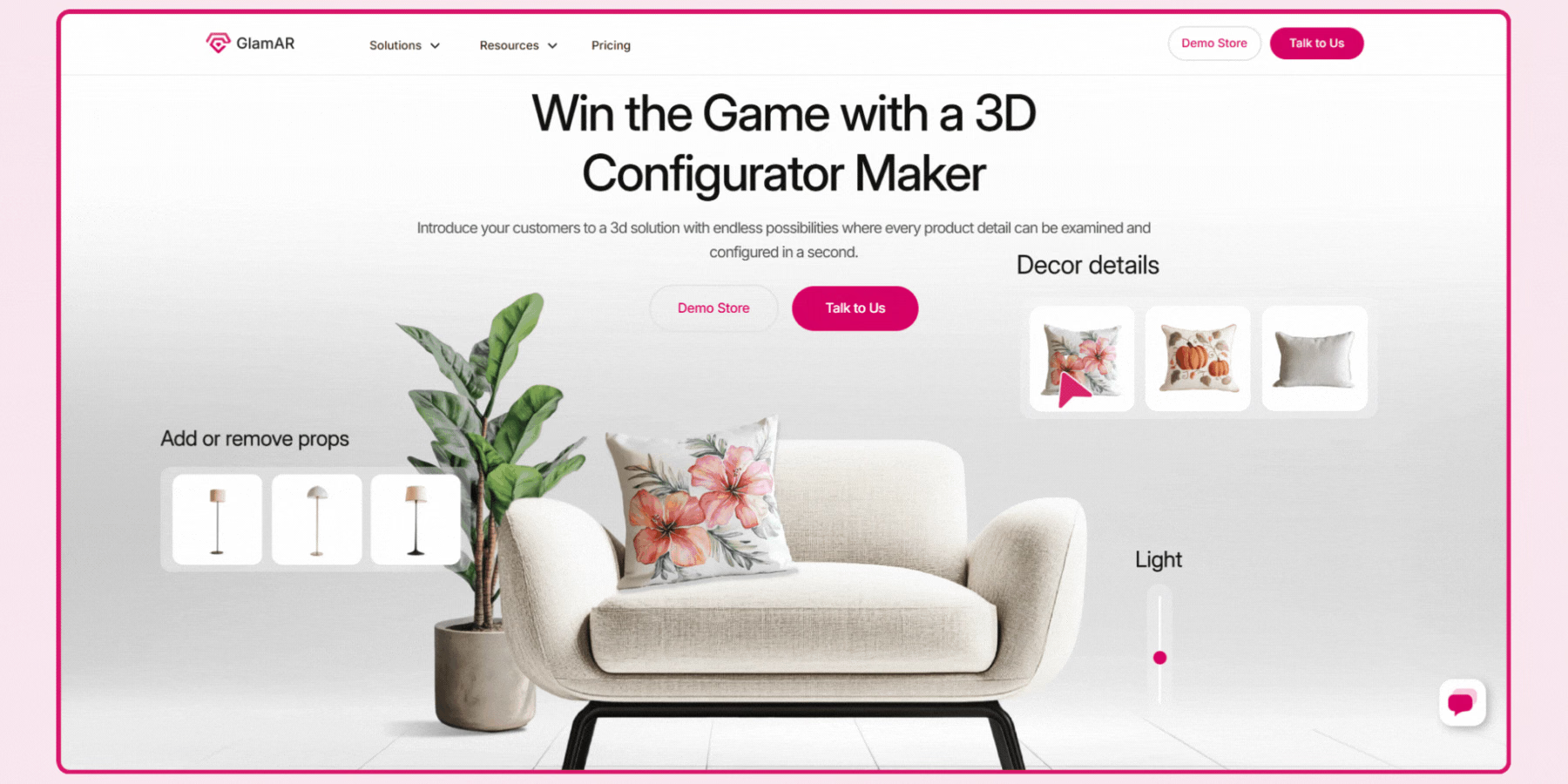
GlamAR.io is an innovative platform that uses augmented reality (AR), virtual reality (VR), 3D, and Artificial Intelligence (AI) to provide seamless online shopping options in beauty/ cosmetics and other industries. It gives room for customers to try out beauty products, jewelry, furniture materials, and other accessories with AR. This helps customers to make realistic, enjoyable, and informed purchase decisions. Businesses have the opportunity to showcase their products in a detailed and interactive manner.
This platform helps furniture brands to give an instant visualized presentation of the furniture materials for a customer to get a personalized experience. With GlamAR, customers can virtually view different furniture items from multiple angles with interactive rotation and zoom functionalities. This will help them to get valuable insights into what they want to purchase.
2. Build.com: Room Visualization
This is an online retailer that specializes in home improvement products and services. It creates an avenue whereby businesses can display their products, ranging from items like lighting, plumbing fixtures, furniture replacement, decor, etc.
This app provides users with personalized recommendations and innovative e-commerce technologies that enable intuitive navigation. Lastly, customers can access any business furniture products through the company's website and get necessary support through the phone.
3. PLNAR: AR Floor Plans
With the app, customers can make accurate floor plans and project reports using their mobile devices. The app helps users make an accurate calculation of their indoor space without leaving their comfort zone. Additionally, the app has a simple interface that can help users navigate through the process of measuring rooms.
Thus, creating models makes it suitable for both professionals and DIY enthusiasts. In essence, this app embraces augmented reality (AR) solutions to measure the room dimensions and creates detailed 3D models of interior spaces.
4. Wayfair: See in AR
Wayfair is another tool that employs augmented reality (AR) to allow customers to visualize furniture and decor in their own homes. Even before making a purchase, buyers can get a real-time experience of how the furniture products will look within their home environment. This feature helps to ensure customers have an interactive experience with the product before making payment.
Moreover, the tool addresses the issue of size, style, accurate dimensions or measurements, and compatibility that any user might have before making a purchase. Moreso, users have the unlimited opportunity to test multiple furniture products with a picture of their space.
5. Amazon: “Room Decorator”
This is an Amazon shopping app that has the built-in feature of augmented reality (AR), which enables online shoppers to explore furniture products before making a purchase. With the opportunity to view one item at a time, users can view images of the furniture in their house using their phone cameras.
Amazon's Room Decorator feature gives the liberty to view similar items at once, add them to a cart, and review recommendations of similar items for making informed decisions. Moreso, users can move, rotate, and combine various products to create a cohesive room design.
6. Inhaabit: AR RugsFurthermorecarpet, rug
This is another tool that leverages augmented reality (AR) technology to help create interactive experiences for users. Through this, users can visualize how home decor, carpet, and rug products will look in their homes.
Before making any means of purchase, users can explore the issues of size, design compatibility, color and realistic reviews. With augmented reality visualization, businesses can improve their e-commerce experience so customers can get a realistic experience.
7. Ikea Place
Ikea Place is another augmented reality (AR) application used to create realistic experiences for users. Users have access to virtually view the furniture designs that match their needs.
Through AR technology, furniture buyers can see and explore the structures, price, color, type, style, and texture of the intended products to buy. Most importantly, you can explore furniture such as mattresses, sofas, armchairs, kitchen appliances, and other related products with adequate precision.
8. Anwis
Here is another tool for augmented reality that makes provision of furniture for households and for official purposes. Anwis offers augmented reality curtains and blinds, whereby customers will be able to choose the preferred textures, materials, lengths, and finishes.
Businesses that leverage Anwis can place their products (curtains and blinds) on virtual windows for customers to make an accurate judgment on whether it will match their specific needs.
Future and trends of augmented reality in the furniture industry
Augmented reality is certainly going to enhance the furniture industry greatly. This is because, with AR technology, furniture industries can now showcase and sell their products without having any physical stores. Augmented reality allows businesses to virtually display their furniture products for potential customers to explore with real-time experience in their comfort zone.
Moreover, AR is going to shape the user shopping experience with the provision of virtual try-on experiences, personalized product recommendations, data analysis of the products to be purchased, enhanced brand storytelling, interactive product demonstrations, and help to increase the rate of loyalty for brands.
For businesses, there is going to be a reduction in the rate of return items as customers will experience a blend of online and physical reality of the products to be purchased before the actual purchase. Increments in sales, increases in marketing, brand awareness, reaching larger audiences, and continuous innovation like webAR are the features that businesses will benefit from leveraging AR.
Conclusion
Without much doubt, it can be denoted that augmented reality is changing the world of furniture products and making marketing easy for businesses. The unique features of augmented reality range from generating virtual-try-ons, personalized customization, and personalized product recommendations, among others.
Hence, as time goes on, more unique features will emerge from the evolving augmented reality (AR) technology. As a result, both furniture businesses and potential customers will continue to get a better e-commerce experience seamlessly.










