


Role of virtual try-on technology to transform the shopping experiences of luxury brands


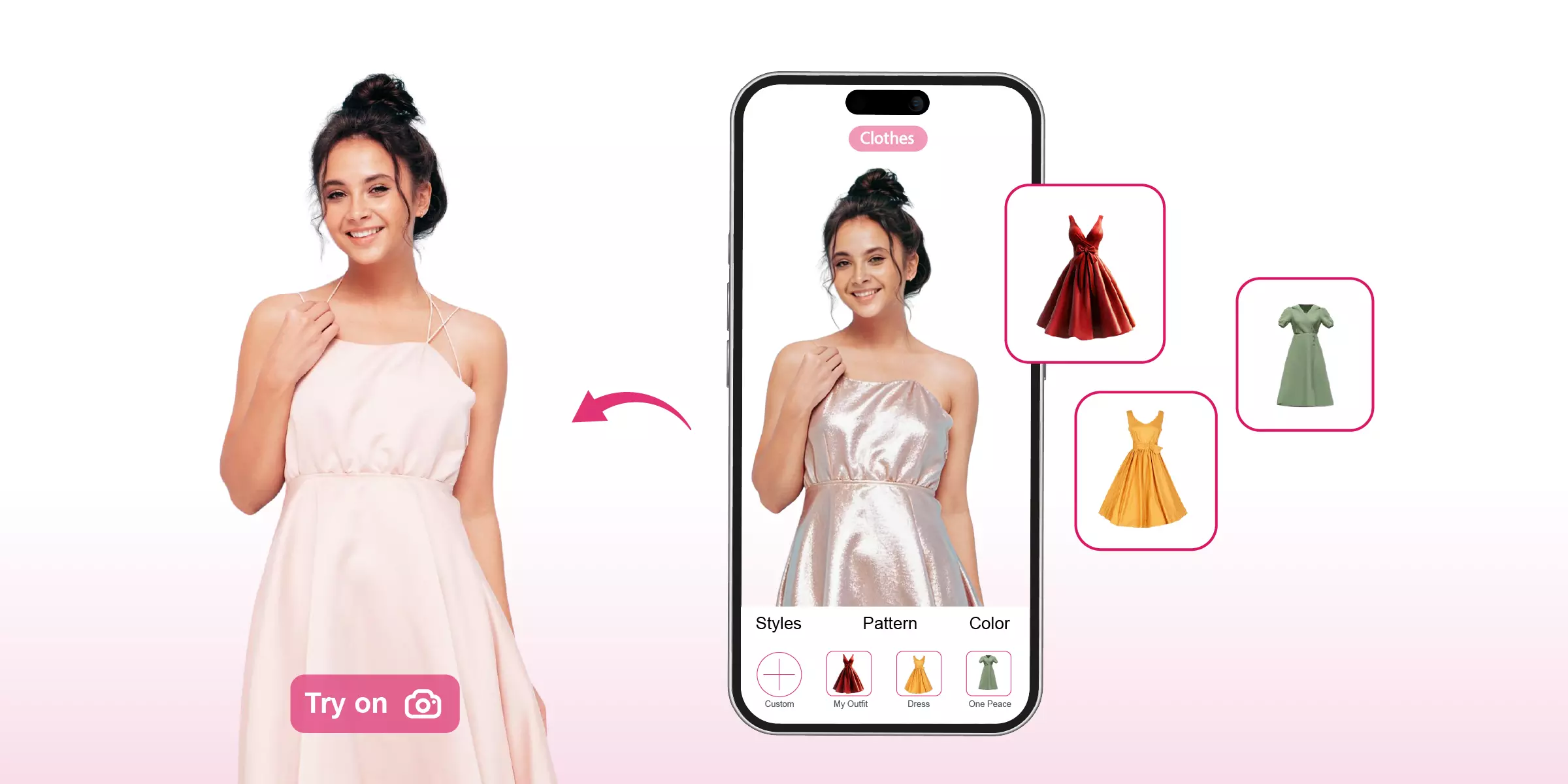
The luxury fashion and beauty industry is shifting towards online shopping, as consumers are becoming dependent on e-commerce platforms to make purchases. Sometimes, misleading size charts, measurements, etc., can result in increased return rates and customer dissatisfaction. It may negatively impact your sales.
Now, many customers are hesitant to buy a $5,000 gown without understanding how the fabric drapes on their bodies or if the color suits them well. So, it has become a challenge for luxury brand owners to meet their customers’ evolving expectations. This is where virtual try-on technology excels.
It takes years to build a brand’s reputation. But customer disappointment can damage it within seconds. According to a McKinsey survey, 68% of shoppers are more likely to buy from retailers with virtual try-on. So, many customers find AR try-on features not only experimental but also essential for shopping.
If you don’t want to lose a sale due to a poorly rendered material or unrealistic fit, you need to integrate virtual try-on solutions into your brand’s platform. In this blog, I will walk you through how luxury brands are using virtual try-on technology to transform the shopping experience:
{{component="/internal/widgets"}}
What is a virtual try-on solution?
A virtual try-on solution is a transformative digital technology. It allows your customers to see how a particular product, such as makeup, jewelry, accessories, clothing, etc., would look on them without a physical touch. It uses AR or computer vision to overlay the product on the consumer's image to create a realistic virtual experience.
Therefore, e-commerce shoppers will get the opportunity to try on the products remotely and make well-informed purchasing decisions. The virtual try-on technology offers precise color matching and application visualization in beauty and cosmetics. In this way, you can fill the gap between online and in-store experiences.
In the fashion sector, virtual fitting rooms show detailed garment previews. On the other hand, eyewear applications provide frame visualization from multiple angles. Implementing virtual try-ons can help your luxury brands offer real-time shopping experiences.
Different types of virtual try-on solutions
Virtual try-on solutions are transforming various industries, from beauty to fashion. It aims to make shopping interactive, personalized, and convenient for consumers. Have a glance at different types of virtual try-on solutions for luxury brands:
- Makeup try-ons: It allows your customers to try on lipsticks, foundations, eyeshadows, eyeliners, etc., in real time, with AR and face-tracking technologies. Thus, they can find their specific shades. It may help you reduce product returns.
- Jewelry & accessories try-on: Virtual try-on tools allow consumers to try on accessories, like hats, caps, watches, bags, scarves, etc. On the other hand, they can explore jewelry items through their smartphones and computers. So, they can see how different designs and styles suit them. It can enhance their purchasing confidence.
- Eyewear try-on: It allows consumers to experiment with different eyeglasses, sunglasses, etc., in real time. In this way, they can experience how the eyewear products look on them before making a purchase.
- Fashion try-on: Virtual fitting rooms use AI-powered avatars and body scanning. It can help shoppers find clothing that is more likely to fit well. Also, they will get virtual size recommendations. It may reduce uncertainty in online shopping.
- Footwear try-on: It uses 3D scanning and AR. It can help shoppers see how shoes fit and look from different angles. Its motion tracking technology can enhance realism. Thus, you can minimize the risk of perceived sizing uncertainty.
Benefits of using virtual try-on solutions for brands
Virtual try-on shows how you can use AR to offer your customers interactive and personalized shopping experiences online and in-store. Here are the benefits of this technology for luxury brands:
1. Confident shopping journey
Consumers want to be sure before making a final purchase when it comes to luxury products. Integrating virtual try-on technology can allow your customers to view intricate details of high-end jewelry, clothing, and accessories.
They can try on and compare product variations. Thus, the realistic product visualization makes shoppers feel assured of their purchases. This, in turn, can reduce return rates. For brands, it can improve conversions.
2. Interactive AR experiences
Virtual try-ons allow the luxury brands to create interactive product experiences for consumers. They can use interactive AR filters on social media to engage customers. Apart from this, they can offer virtual pop-up experiences or integrate virtual try-on into influencer campaigns. It can enhance their global customer reach.
3. Convenient purchasing
Still today, many consumers value in-store shopping experiences. But a growing number of people find online shopping convenient. Virtual try-on technology can combine online and in-store shopping experiences. It can help shoppers try on and buy products from the comfort of their home.
Also, they can visit your offline store and use the smart beauty mirror to experiment with products before purchasing. Most importantly, in-store kiosks give them a hygienic shopping experience. Apart from this, you can handle delicate products while selling with the help of virtual try-on technology.
4. Personalized approach
Luxury brands prioritize customization. So, they can implement virtual try-ons to allow their customers to see how jewelry, a foundation shade, or designer sunglasses look on them in real time. For clothing, you can offer more realistic digital fittings through tailored shopping experiences.
According to your customers’ facial features, body type, or previous shopping behavior, you can offer them personalized product recommendations through AR integration. Thus, virtual try-ons make your customers’ shopping journey personal and easy.
5. Sustainability & cost-cutting
Virtual try-on tools can save you on expenses on physical space, samples, and inventory. It allows luxury brands to invest more resources in people, knowledge, and customer satisfaction.
Plus, virtual testing won’t require physical products or traditional retail practices and can minimize return rates. Thus, you can reduce waste and contribute to sustainability.

How luxury brands are using virtual try-ons
Personalization, exclusivity, and premium customer experience have a strong bond with the development of luxury brands. Now, consumers demand convenience with quality. So, luxury brands are shifting towards digital shopping solutions, especially virtual try-ons. I am going to reveal how luxury brands are using the virtual try-on technology to grow their businesses:
1. Gucci

Snap Inc. introduced AR shoe try-ons. Gucci partnered with Snapchat and launched its footwear-friendly Snapchat AR Lenses. Gucci created two lenses, each displaying two pairs of its latest shoes, for a total of four styles: Gucci Ace, Gucci Rhyton, Gucci Tennis 1977, and Gucci Screener.
Snapchat users can select Gucci’s shoes onscreen through their smartphones’ cameras and virtually try them on their feet. They can buy their favorite shoes directly from the lens. Snapchat’s Shoppable AR technology allows consumers to immediately purchase by hitting the “shop now” button.
Gucci added a virtual try-on feature in its branded iOS app. It enables consumers to virtually overlay Ace sneakers over the camera view of their feet. Gucci joined hands with Wannaby. Its app offers try-ons for lipstick, eyewear, and other products.
I tested and tried Gucci’s eyeglasses in real time and captured my experience. On this platform, I improved my glass fitting by giving my pupillary distance. Consumers can scan the QR code to see Gucci’s beauty products on their mobile devices.
2. Burberry
Partnering with Wanna, Burberry has launched a virtual scarf try-on experience. It is a part of the ‘Wrapped in Burberry’ holiday campaign. It uses web 3D and augmented reality technology to allow shoppers to try on scarves with different colors and styles.
They can get purchase options from the same try-on window. They can use their mobile phone cameras or computers to experiment with Burberry’s scarves in real time via live camera view.
3. Chanel
As a luxury French brand, Chanel invested in a beauty try-on tool: Dubbed Lipscanner, the in-house app. It allows consumers to scan a color on social media, magazines, or clothing items. Then, Chanel will match it with the brand’s closest shade from its 400-strong lipstick line.
Chanel is offering virtual makeup try-on experiences on its website. Consumers can try on CHANEL lipsticks, eyeshadows, and eyeliners. They can create their own looks or recreate the CHANEL makeup collections' look at a selection of shades, finishes, and textures. Shoppers can also experiment with Chanel’s other products, like sunglasses, fine jewelry, accessories, etc.
4. Louis Vuitton
Perfect Corp collaborated with Louis Vuitton. It has brought AI- and AR-powered experiences to consumers across 33 countries via web, mobile app, and WeChat. It aims to elevate the luxury beauty experience for customers.
Now, they can experience La Beauté Louis Vuitton from the comfort of their homes. They are able to compare several colors and finishes directly on their lips. Plus, they can combine them with their eyes to create a perfect makeup look.
5. Fendi
Fendi provides virtual try-on solutions for luxury clothing and accessories. So, consumers can experiment with Fendi outfits before making a purchase. They need to upload their photos to create their digital twins.
Then, they can instantly see how any outfit looks on them. From wedding gowns to casual dresses, customers can explore clothing through virtual try-ons on Fendi's platform.
Best virtual try-on SDKs
With more than a dozen virtual try-on tools out there, I tested each one over the course of a few weeks. Based on my experience, here are the best 5 virtual try-on providers for luxury brands:
1. GlamAR
If you own a luxury brand, GlamAR’s virtual try-on solutions can help you engage customers with your products in an interactive way. They can try on jewelry, makeup, accessories, etc., before buying. Integrating the AR try-on SDK into your e-commerce platforms, you can allow shoppers to see how different products look on them in real time. They can use a live camera, photo mode, or a model to try on products.
It can eliminate guesswork and help consumers make a confident purchase. As a result, return rates may decrease since your customers can find the right one with ease. It may lead to improved sales. I tried and tested its virtual try-on tools. To my surprise, I discovered the customization features during the try-on session, designed for every product.
Plus, I can save my try-on experience via the ‘download’ option. Some implementations enabled me to compare various products so that I could get my desired one without any confusion. The best part is that consumers can get the virtual try-on experiences through their web and mobile browsers. Apart from the online platform, you can introduce this AR try-on solution in-store to give your customers an innovative and hygienic shopping experience.
{{component="/internal/widgets"}}
2. Perfect Corp
Perfect Corp offers AR and AI-powered beauty tech solutions. Luxury brands can integrate their makeup, hair, jewelry, eyewear, and accessory try-on solutions into their online or in-store platforms. Your customers can get a virtual mirror-like experience while shopping. Perfect Corp’s web SDK can work with major browsers across all platforms.
Apart from easy integration into your brand’s sites, you can create your own makeup virtual try-on mobile app for a consistent customer experience. No matter if you have a small, medium, or big brand, you can choose from a range of flexible pricing options to meet your brand’s unique requirements. Brands can quickly create virtual SKUs using Perfect Corp’s streamlined onboarding tools. Then, they can activate the AR "try & shop" experience on all channels.
Thus, you can deliver a realistic AR try-on experience with minimal coding and resources. The 3D AR engine of Perfect Corp uses face detection technology to generate true-to-life simulations and accurate try-on results on live cameras. I tried its makeup try-on tool and found ‘comparison,’ ‘zooming,’ and ‘download’ options for convenience.
3. Banuba
Banuba provides advanced AR solutions to help luxury brands increase their sales. It has launched a virtual try-on platform: TINT. For a quick e-commerce integration, you can install the plugin via the CMS marketplace with no coding. Then, you can upload SKUs. Now, you can select AR features—colors, textures, shapes, etc., for your product experience. Thus, you can enable customizable experiences for various products, such as makeup, eyewear, jewelry, and so on.
You can offer your customers realistic product visualizations and personalized shopping experiences through Banuba’s easy-to-integrate virtual try-on plugin. It is designed for eCommerce platforms like Shopify, WooCommerce, and WordPress. Your customers can achieve AI-driven product recommendations along with real-time AR effects.
Finally, you can choose a subscription plan tailored to your business needs and test the virtual try-on tool during the free trial. Banuba’s self-service product digitization facilitates product updates without delays. Its multilingual user interface can help you reach global customers. Plus. Banuba SDK has opened up new try-on possibilities with in-store smart mirrors.
4. MirrAR
MirrAR can make the online shopping experience highly personal for consumers. It can fill the gap between digital and physical shopping with its virtual try-on tools. Its AR solutions can display your brand’s jewelry, beauty, skincare, eyewear, and other fashion accessories from every angle. Therefore, customers can choose the one that reflects every aspect of their personality and make an informed purchasing decision.
As the AR software can allow them to see what shape, color, size, and pattern suits them, they can buy with confidence. It may lead to lower return rates and increased customer satisfaction. Its omnichannel compatibility enables you to offer virtual try-on solutions via your e-commerce website, mobile app, and in-store fitting mirror.
Recently, I tested MirrAR’s makeup and jewelry try-on tools. I chose the live try-on option to experience the real-time effects of different products. Apart from this, I can pick a model or upload my image to see the results of virtual try-ons. Also, I can capture my try-on experiences instantly.
5. DeepAR
If you want to create augmented reality makeup try-ons and advanced beauty effects for your brand, you can integrate DeepAR SDK. It allows your customers to generate any makeup look in real-time with its mirror-like AR try-ons. They can experience a photo-realistic Makeup, Hair, Skin, and Accessories simulation through a live camera or their uploaded images.
For your watch and wrist jewelry brands, you can transform your physical products into interactive AR experiences to enhance sales and customer retention. Precise wrist mapping technology can help consumers achieve realistic watch and wrist jewelry renderings. It detects wrist position and orientation to place AR watches and jewelry realistically and create an interactive shopping experience. The good news is that luxury brand owners will get ‘pay as you go’ convenience.
DeepAR offers a virtual makeup try-on experience with accuracy. It is optimized for all genders, ages, and ethnicities. So, consumers can try on makeup, hair colors, glasses, and watches on your website or app. The DeepAR beauty plugin has a simple API for beautification and makeup adjustments.
How to choose the best virtual try-on SDK for your luxury brand?
When you are selecting a virtual try-on SDK, you should ask yourself a few questions: Do you want to transform your customers’ shopping experiences? Do you need to go for cost savings and sustainability? Do you want to make your brand stand out and build customer loyalty?
Almost every SDK on my list offers a free demo or trial that lets you test it out. I recommend you pick the one that seems the most appropriate to you and give it a try. Based on my personal testing, I ranked GlamAR first because of its easy integration and cross-platform compatibility. You can explore its demo and talk to their sales team directly.
If it is not designed for your brand, move along to the next platform. Therefore, you should check the realistic results of the virtual try-on platforms and how they can display your luxury products in an interactive and innovative way to improve customer experience.
Conclusion
Virtual try-on tools can help you maintain your brand’s luxury positioning while delivering tangible business results. For this, you need to follow a principle: technology should serve your brand’s experience, never define it. It should allow your products and brand to take center stage. So, you need to invest in AR solutions in a strategic manner that can give you a competitive advantage.
Thus, virtual try-ons are no longer a trend. Rather, it is a tool to elevate customers’ purchasing confidence, reduce returns, and strengthen brand differentiation. You can create the balance between technology and timeless luxury values with the right virtual try-on provider—such as GlamAR or any platform that aligns with your brand’s values. Above all, quality implementation of AR try-on features can make your brand unique in the e-commerce and retail space.
For luxury brands, virtual try-on SDK integration comes with several challenges. It is hard to keep the exclusive, high-end feel because customers can’t touch or feel the products or see how fabrics really drape. Also, the technology has to look perfect on all types of phones and devices. Any glitches can hurt your brand’s image. Making accurate 3D models of detailed, high-quality products is expensive and complicated. On the other hand, handling facial or body tracking data requires strong privacy protections, even if the data is processed locally. Most importantly, the virtual try-on experience should be smooth and flawless. It is important not to make your brand feel cheap or less luxurious with poorly executed VTO.
The future of virtual try-ons for luxury brands is about making online shopping feel realistic and personal. The technology will use AI to recommend styles, let people share their try-ons on social media, and work smoothly on all devices. It will make shopping more sustainable by reducing returns and sample waste, and more accessible to people everywhere. Luxury products, from watches to furniture, will feel like a mix of real craftsmanship and high-tech digital experience. Thus, you can give your tech-savvy customers an engaging and immersive way to shop.
Virtual try-on tools don’t always need a separate app. Many can work right in consumers’ phones or computer browsers using AR or AI. Some brands offer app-based VTO for a more immersive experience. The main thing is whether the store adds VTO to their website or app or uses a platform that works on both. In this way, your customers can try on items easily with just a click or by using their camera-enabled devices.
As a luxury brand owner, you can use virtual try-ons to help your customers shop with confidence. It can reduce returns and create personalized experiences for consumers. VTO allows shoppers to see how expensive items like jewelry or high-end clothing look on them. It allows customers to see how makeup, glasses, or jewelry look on them. It supports sustainability and can encourage social sharing.
Virtual try-on works really well for seeing how items look and fit your style, like glasses or makeup, using AI to make it feel realistic. It is less perfect for clothing, where the way the fabric feels, drapes, and fits exactly matters. Though VTO helps shoppers make confident purchases and reduce returns, it can’t perfectly show textures or every detail of body shapes.
Yes, brands can offer virtual try-on (VTO) in physical stores with the help of smart mirrors and augmented reality (AR). It allows your customers to see how clothes, makeup, glasses, or jewelry look on them right away. It makes shopping more fun, helps them choose with confidence, reduces returns, and combines the convenience of digital tools with the in-store experience. Shoppers can try many items virtually without touching them. It can increase sales and customer satisfaction.
Discover how AR, VR and 3D can drive revenue growth in 2026
Schedule a call with our team

.avif)