


Why is virtual try-on necessary for your eyewear business?


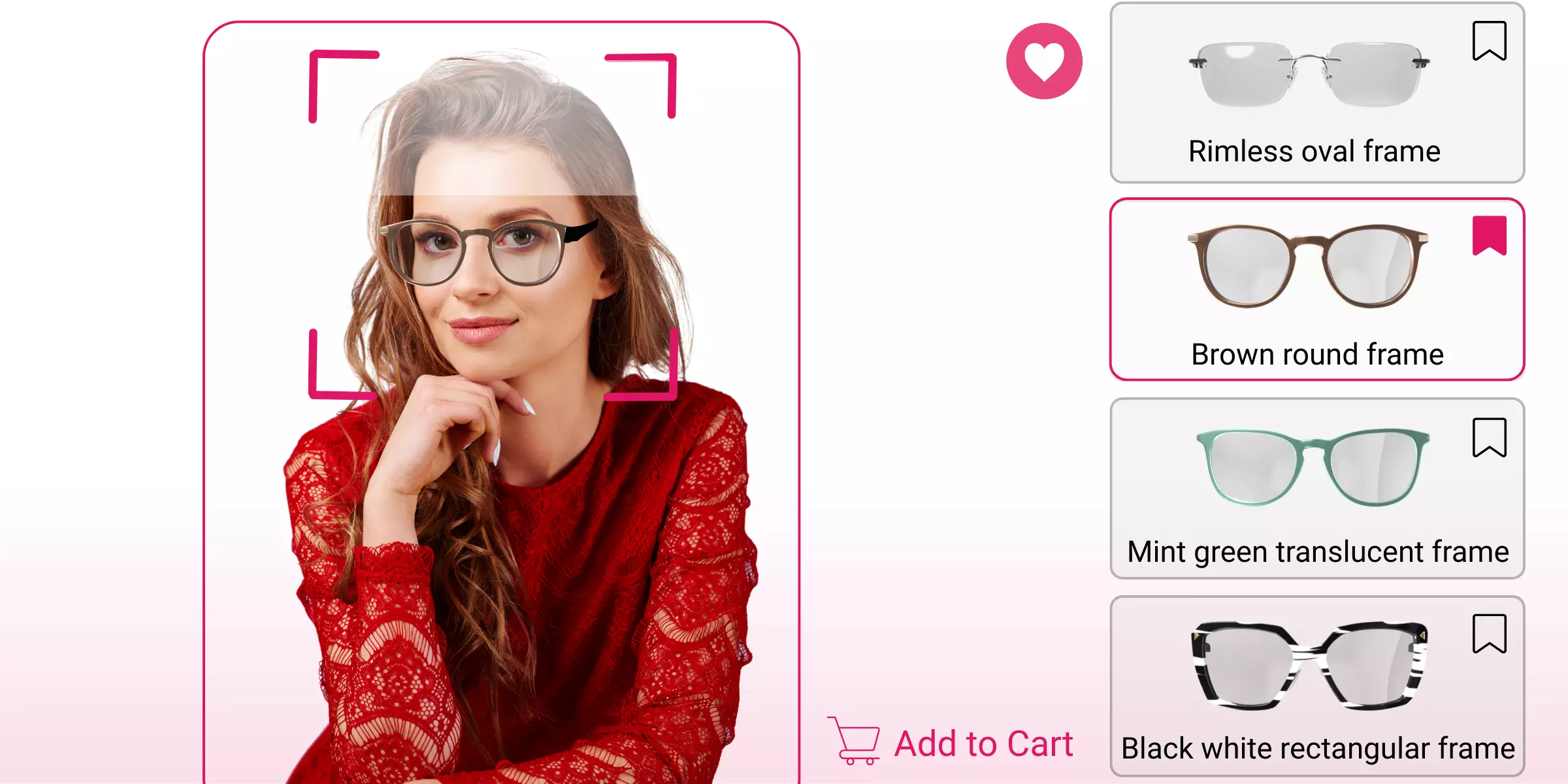
It’s a common struggle for consumers to choose suitable eyewear products for themselves, as there are countless pairs of glasses. It may result in hesitation, endless scrolling, and faulty purchasing decisions. A study shows, “Nearly half of prescription spectacles delivered directly by online vendors did not meet either the optical requirements of the patient's visual needs or the physical requirements for the patient's safety.”
As an eyewear retailer, you need to understand the pain points of your customers. So, it is essential to embrace the technology necessary to offer them an interactive eyewear shopping experience. Now, your shoppers are looking for virtual options to avoid large crowds at your physical store.
For their convenience, you require virtual try-on tools to allow your customers to see which glasses suit them the most. With the radical shift in their shopping habits, you should incorporate this advanced technology into your business website or app. The virtual try-on technology can eliminate the second-guessing hassle for consumers and provide them with real-time, personalized shopping experiences.
Thus, it can transform the game of eyewear shopping. Following this, the global virtual try-on market size is growing at a CAGR of 26.4% from 2024 to 2030. In this blog, I will walk you through why and how virtual try-on technology is transforming the eyewear shopping experience for your customers:
What is virtual try-on for eyewear shopping?
Virtual try-on can change the way your customers shop for eyeglasses. They can see how the eyeglasses suit and fit their style and personality. It offers interactive eyewear shopping experiences for consumers with AR and AI. Most importantly, it simplifies their eyewear selection procedure and can enhance customer satisfaction.
Virtual try-on tools can show your customers how frames would look before making a purchase. It allows your customers to try on your eyewear products through smartphones or desktops. Virtual try-on improves appearance accuracy but cannot guarantee physical fit.
How is virtual try-on transforming the eyewear shopping experience?
With the advent of virtual try-on technology, your customers can explore and experience eyewear products in a whole new way. It enables them to try on eyeglasses right from their comfort zone. Thus, it plays a crucial role in transforming the eyewear shopping experience. According to a study, the eyewear market in the US is growing at a CAGR of 3.0% through 2029. Virtual eyewear try-ons may contribute a significant part to this growth.
In e-commerce, sometimes hesitation may result in abandoned cart rates. Adopting virtual try-on technology can reduce this decision friction. Apart from online platforms, you can integrate it into in-store kiosks. The interactive displays can enhance customer engagement and create an innovative shopping experience. Overall, virtual try-on works as a revenue driver with the resulting effects of increased conversion rates and minimized returns.
When your customers can see how their eyeglasses look from different angles, they are more likely to purchase. The enhanced experience also reduces the perceived risk of buying eyewear online. Thus, the eyewear try-on experience can remove a major barrier to traditional online shopping. If you value customer satisfaction, you can ensure convenience and accuracy with the try-on solution. Plus, you can make the purchasing process smooth and establish your brand loyalty.

Benefits of virtual try-on in eyewear shopping

The e-commerce world has been going through a remarkable transformation with virtual try-ons. If I were an eyewear store owner, I would implement virtual try-on technology to stay competitive. Let's have a look at the advantages it can offer:
1. Increase customer experience
Virtual try-ons offer dynamic shopping experiences that can bridge the gap between physical and online retail. It allows your customers to try on your eyewear products. They can experience how frames will look before making a purchase. Apart from this, they can compare multiple frames side by side. They can switch between different styles, colors, and designs without physical touch. In this manner, you can select frames that best complement their facial features and personal style. The good news is: they can save time and buy with confidence.
2. Unique brand engagement
When your eyewear brands are looking for innovative strategies to make the brand stand out and engage consumers. Integrating virtual try-on technology into your business platforms will deliver tailored experiences for your customers. Thus, you can create a lasting impression among consumers with the help of interactive buying experiences.
3. Social shopping
You can extend the virtual try-on solutions to the social platforms of your business. It enables your customers to share different frame options with friends and family and receive instant feedback. They can create polls, get opinions from their social media, and see how others with similar facial features look in the frames they have selected, using some virtual try-on platforms. Therefore, it adds a collaborative dimension to a solo shopping experience.
4. Enhancing sales
Virtual try-on experiences can convert website visitors into your loyal customers. It can satisfy them with customized features, such as pupillary distance measurement, color swapping, etc. They can try on the glasses directly from your website and visually experience how the products will fit them. So, they are more likely to purchase your products. It will help you increase sales.
5. Data-backed insights
Virtual try-on generates significant data for eyewear retailers. It can show client preferences and habits. You can use this information to find out popular products and styles. It will help you detect potential holes in your inventory. Using the data-driven insights, you may improve their marketing tactics, optimize inventories, and update their product offerings to meet your clients’ demands.
Challenges of implementing virtual try-on in eyewear shopping
Though virtual try-on technology has immense potential for eyewear retailers and consumers, you may encounter some challenges while implementing it. I am presenting the obstacles here:
- The virtual try-on technology uses AR to display an eyewear product onto an image. But some virtual try-on apps can’t generate photorealistic results that your customers often expect.
- It is difficult to test the functionality of virtual try-on technology across different platforms. You need to evaluate its final result on the high-end phones to determine its device compatibility.
- You need to mitigate the prominent issue of data privacy while building virtual try-on platforms for your eyewear brand. Nowadays, many consumers have data awareness. So, they can hesitate while uploading or sharing their photos on your virtual try-on platform. Therefore, you should align your platform with data security rules and regulations.
- 3D modeling or 3D product creation may seem challenging for you. It requires a 3D scanner with proper software or a professional 3D artist to do this task. It may lead to more expenses and consume much time.
Best SDK providers of eyewear try-ons
I have tested and tried many AR try-on platforms for eyewear brands. After evaluating their features, you can choose the right one for your business. Here, I am presenting some of them that can enhance conversions and reduce returns:
1. GlamAR
GlamAR offers them to improve your customers’ online shopping experiences. It allows them to try and test many pairs of eyeglasses without visiting physical stores. Integrating real-time AR try-ons can help your shoppers get personalized purchasing options. It may increase your conversions and reduce returns.
I experimented with different eyeglasses of various styles, shapes, colors, etc., on GlamAR’s platform. Its comparing, positioning, and scaling tools surprised me and enabled me to make a perfect fit for the pair of eyeglasses. I found its customization features really amazing to enhance eyewear shopping experiences.
Features:
- Compatible solution: GlamAR’s eyewear try-on solutions appear to support web and mobile experiences. You can easily add AR VTO solutions to your brand’s website or other e-commerce platforms.
- Face detection tools: GlamAR has real-time face-detection technology. It can analyze your customer’s face. Most importantly, it can provide the PD number, including PD measurements and width. Thus, your customers will get a proper eyeglass styling experience. Finally, it will give them ultimate satisfaction and a lower tendency to return.
- Easy-to-use platform: Consumers can try on your eyewear products through the live camera or photo mode. After picking the right one, they can save the image for future purchase. Also, they can share it on social media for others’ opinions.
{{component="/internal/widgets"}}
2. Perfect Corp
Perfect Corp offers AI-powered virtual try-on for your eyewear products. So, your customers can experience real-time eyeglasses try-ons. It is easy to introduce virtual eyeglass try-ons on your online websites, following the step-by-step guide available in Perfect Corp’s AR try-on platform. I tried wearing different types of virtual glasses with a live camera or in photo mode.
There are different frames, lenses, and tints that shoppers can experiment with. The convenient part is that they can try on glasses from their mobile or desktop browsers before buying. It can help you reduce return rates and improve conversions.
Features:
- PD measurement tool: It will provide automatic, accurate, and instant PD measurements based on your customers’ face shapes. It can automatically measure the distance between pupils. Consumers will get a precise frame size for trying on glasses. It has accurate face-tracking technology. So, you can offer a fast and easy online glasses try-on experience for your shoppers.
- Customizable AI glasses: Your customers can customize AI glasses. They can adjust the frame color, frame size, frame reflection, lens tint & density, and lens reflection during virtual eyeglasses try-ons.
- Realistic 3D view: Your customers will need no expensive or time-consuming 3D product scanning or modeling to try on eyeglasses online. Perfect Corp's eyewear try-on allows you to create lifelike 3D virtual AI glasses with 2D images with ease.
3. MirrAR
If you are an eyewear brand owner, you can provide virtual eyewear try-on solutions for your customers with MirrAR. It delivers advanced AI and AR solutions to enhance your customers' shopping experiences. The best part is they can try on different glasses frames, lenses, and tints on mobile and desktop browsers.
After digitizing and uploading your product inventory, you can allow your customers to hit the ‘try on’ button. They can experiment with both prescription glasses and sunglasses in real time. Most importantly, they are able to compare one frame to another, side by side, in the same virtual try-on window. Then, they can add their best products straight to the cart.
Features:
- AI-powered PD measurement tool: It can measure the binocular PD, the distance between the center of your customer’s pupil on one eye and the center of the pupil of the other eye. It calculates from the size of your customer’s pupil to the camera lens captured for further measurement optimization. The relative dimensions are automatically aligned with the 3D product visual parameters. The good news is that it enables the realistic-size display of your eyewear products.
- Product suggestions: The plugin allows suggestions of similar items based on product properties or consumer behavior within the try-on window. Thus, you can improve sales of desired products.
- AR glasses try-on: You can embed this try-on feature with your brand’s website, app, or social media platform. Plus, you can introduce it to your offline stores. Also, your customers can try on glasses without removing their prescription glasses. It will help them get a clear view of the virtual try-on experience.
4. DeepAR
It offers AR shopping for glasses. You can create realistic AR glasses try-on experiences for your customers. I tested and tried on a range of eyewear products from renowned brands. As a brand owner, you can improve your product offerings on your e-commerce website or app with Deep AR’s virtual try-on solutions.
You can enhance your e-commerce website with its 3D and AR features. It allows your customers to achieve an engaging and interactive shopping experience. DeepAR SDK enables them to try on different types of eyeglasses.
Features:
- AR glasses try-on: DeepAR.ai has AR tools and solutions. It gives your consumers an instant experience of glasses and sunglasses anywhere, anytime. Your online shoppers can pick from more color options, zoom in on frame details in 3D, and try them on using AR.
- User-friendly solution: You just require 6 lines of code to integrate DeepAR’s 3D and AR solutions into your website or app. Plus, you can customize the integration to present your eyewear products in the 3D AR mode.
- Data-backed insights: The ShopAR dashboard will help you track insights, compare them to industry benchmarks, and make any necessary adjustments. You can learn customer engagement, the average order value, your brand’s most popular products, and conversions.
5. TINT by Banuba
Banuba is a face software company. It works with AR, computer vision, and machine learning. Banuba has introduced the ‘TINT’ platform for AR try-on solutions. TINT’s virtual try-on technology for eyewear helps many brands expand their business and enhance customer engagement. It is a web-based solution that you can add to your brand's website.
As a result, your online shoppers will get a visual-fitting experience, lifelike product looks, easy selection, and a smooth checkout. I tested and tried on different pairs of eyeglasses to see which one suits me best. Here, I got an option to remove the glasses. Also, your customers can customize their chosen eyeglasses' frames.
Features:
- Multi-platform support: Banuba SDK supports Web, iOS, Android, Mac, and Unity. SO, your customers can access TINT’s virtual glasses try-on from various platforms, such as desktop, mobile, and in-store smart mirrors. Apart from this, its in-store AR mirror combines a physical and digital shopping experience. Here, they can try on multiple eyewear products without any help.
- Glasses try-on: Banuba enables the accurate placement of your eyewear products with advanced face tracking technology. Your customers can visually try on eyeglasses and prescription lenses. They will achieve a camera-based virtual try-on experience. It can simulate realistic looks, gravity, lighting, and motion.
- Easy-to-use platform: Consumers will not require special devices or reference items to measure PD (pupillary distance) on TINT's virtual try-on platform. So, it is a safe, convenient, and accessible solution for virtual glasses try-ons.
Popular brands that are transforming the eyewear shopping experience with the virtual try-on technology
Nowadays, eyewear brands are seeking innovative and trendy ways to outperform their competitors. Virtual glasses try-ons are offering convenience and innovation to transform the way your customers shop. Let’s discuss some of the brands that are adopting eyewear try-ons:
1. Lenskart
Lenskart uses AR try-on technology on its platform. It offers 3D virtual eyewear try-ons. It allows your customers to try on different prescription glasses or sunglasses online. Its AR solution overlays virtual eyeglasses on their face in real time.
With no physical touch, they can browse through multiple frames from the comfort of their own home. Thus, Lenskart delivers an interactive and convenient way to shop for eyewear.
2. Warby Parker
Warby Parker has introduced a virtual try-on tool for eyewear. It may help you increase sales. So, their customers can find their favorite frames and often eye care solutions. They can experiment with their huge collection of glasses, sunglasses, and contact lenses. Also, they can save their best styles, see recommended frames, and track orders. It can offer PD measurement tools if you don’t have a prescription.
In this way, your customers will have a perfect-fitting experience. Warby Parker aims to make their shoppers’ journey “even more intuitive and engaging,” according to its Co-Founder and Co-CEO Neil Blumenthal.
3. Ray-Ban
Ray-Ban provides its customers with a virtual try-on solution for various sunglasses. They can customize their eyeglasses using the ‘get face shape’ and ‘improve fit’ (with PD) options. They can try on glasses online.
Then, they can select a perfect pair that suits their face shape and style preferences through photo or live camera mode. After that, they can add to their favorite eyewear products for future purchase.
4. Zenni Optical
Zenni Optical offers an instant tool for trying on eyeglasses and sunglasses. Consumers can easily switch between different frame styles and achieve a real-time experience. The accurate biometric scaling and easy PD measurement provide the perfect fit along with flawless lens alignment.
Shoppers need to upload their prescriptions for prescription glasses, then customize and order. Plus, they can capture a snap after trying on eyeglasses. Then, they can share it with their friends and family.
5. Prada
Many retailers offer Prada eyewear with virtual try-on. The AR try-on tool can measure the consumer’s face or body. It can ensure the accurate positioning of the eyewear product.
Their customers can use this VTO solution to try on different sunglasses and accessories before making a purchase. Following the instructions for face positioning and removing prescription glasses, they can experiment with Prada’s sunglasses. Also, they can customize their fitting via a live camera or photo mode.
How to choose the best virtual try-on for eyewear shopping?
To get everything you want out of an AR try-on tool right now, based on your needs and budget, you may need to use more than one platform. If you are willing to invest the top dollar, providing a smooth virtual try-on experience may be a daunting task. So, I have played around with some AR try-on platforms to facilitate your eyewear brand so that you can reduce returns and increase conversions.
I have recommended GlamAR and some virtual eyewear try-on platforms. They hit on a lot of the important features and almost made the list. Apart from them, there are a few more platforms, such as Auglio, Fittingbox, Camweara, etc. They are emerging ones that can help your eyewear brand enhance the customer experience and boost sales.
You should select the best virtual try-on solution for your brand based on your specific needs and budget. Also, you need to test every reliable AR try-on platform and how they are updating themselves to be relevant. Yes, it’s a little messy. But as a forward-thinking brand owner, you should find a platform that resonates with your brand.
Conclusion
For eyewear retailers: virtual try-on is not just a novelty. Instead, it may become a necessity for transforming eyewear shopping. Therefore, it can set up a new standard for online and in-store shopping. It offers personalization, confidence, and inclusivity that reflect the remarkable shift in today’s consumer expectations.
Many shoppers no longer seek tried-and-true brands or a free return policy while purchasing products. Rather, they want to opt for the brands that provide virtual try-on experiences. So, if you are willing to enhance the visual experience of consumers, you should choose a reliable eyewear try-on SDK, like GlamAR. Interested eyewear brand owners can call their sales team directly.
{{component="/internal/widgets"}}
Virtual eyewear try-on lets customers see how glasses will look on their face without touching or wearing anything. Their device’s camera takes a live video of their face. Then, the AI scans their features and identifies the eyes, nose, facial landmarks, etc. After that, AR places a digital 3D pair of glasses on their faces. The glasses move with them in real time. So, they can turn your head and see how the frames really look from every angle. It gives them a realistic preview before they buy.
Virtual try-on has been making eyewear shopping easy. It allows your customers to see how different glasses look on their faces from anywhere. This can help shoppers feel more confident, reduce mistakes, and make online buying more fun and personal. The technology can remove the style guesswork of choosing frames online. It uses AR to place digital glasses on their faces. So, you can check the style, size, and color in real time. It can keep shoppers engaged, help brands increase sales, and make it simple for anyone to find the perfect pair without visiting a store.
Virtual try-on is usually very accurate when it comes to how glasses look on your face: the style, the shape, etc. But it cannot ensure physical fitness. It can’t fully show how the bridge or arms of the glasses will feel in real life, and those details often need an in-person check. The technology uses facial landmark tracking to scan your customers’ faces and place the virtual glasses in the right position. Some VTO tools can even remove your current glasses on camera so you get a clear and realistic preview.
Virtual eyewear try-on is not just for online shopping. Many physical stores use it too. While it’s very popular on websites to help people see how glasses look on their face, some retail shops use smart mirrors or special screens that let customers try on frames virtually in the store. The practice makes the in-store experience faster, easier, and more fun.
Virtual try-ons can make eyewear shopping for glasses easy and comfortable for consumers. It helps your customers feel confident, as they can see how different frames look on their face without going to a store. They can try on various styles in just a few seconds. Then, they can choose what they like the most. It reduces confusion and guesswork. Also, it helps them make informed buying decisions. For businesses, it may lead to happy customers and successful sales.
No, virtual eyewear try-on does not work on every device. But it works on most modern smartphones, tablets, and computers. The devices should have a front-facing camera or a webcam. The main thing you need is a device with a working camera and enough power to run the feature smoothly. It may work best on devices with newer software, like iOS 11 or later and Android 7.0 or later.
Discover how AR, VR and 3D can drive revenue growth in 2026
Schedule a call with our team

.avif)