
How virtual try-on helps jewelry brands reduce returns & boost trust


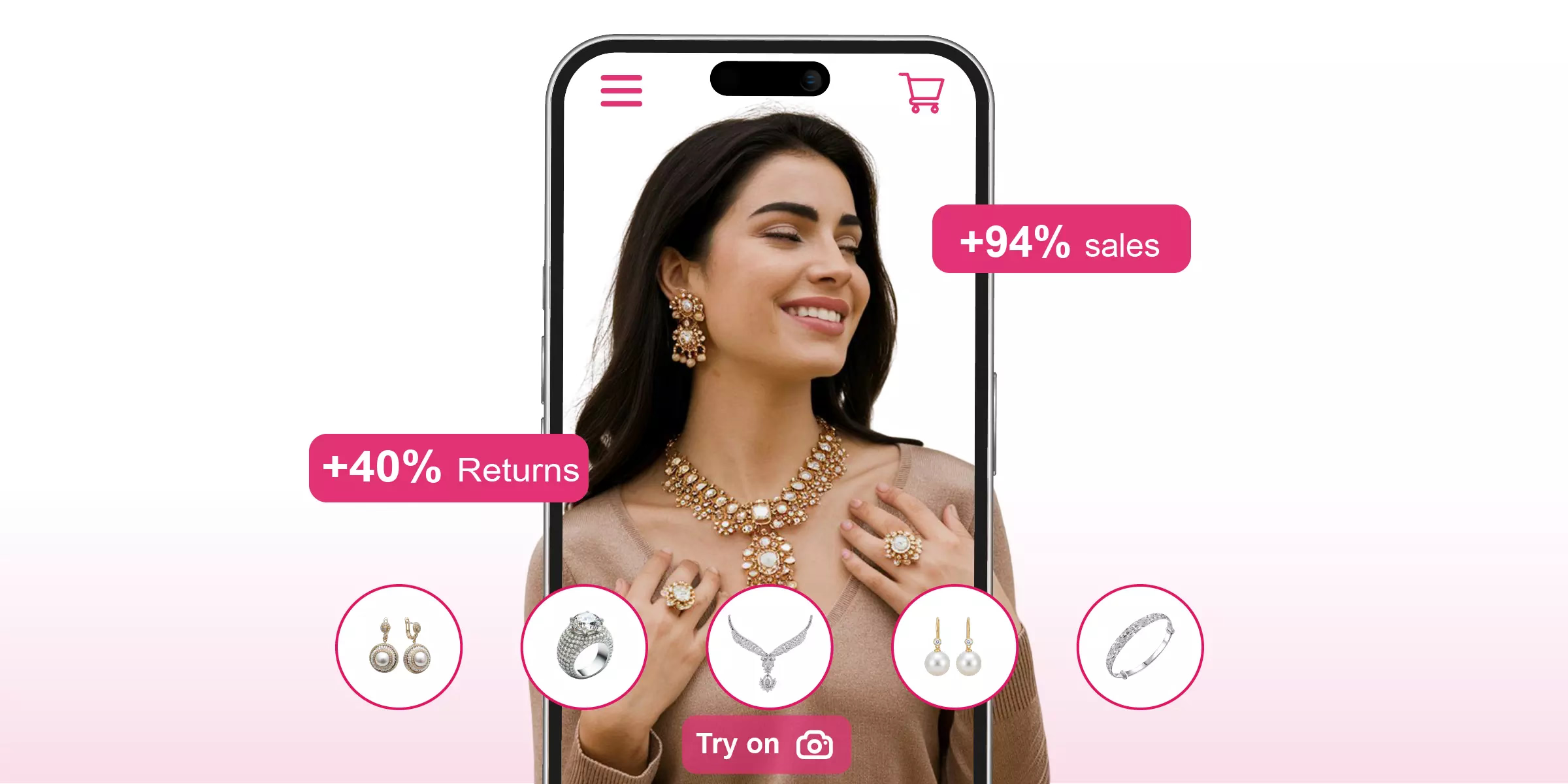
With the help of virtual try-on technology, the global VTO industry has seen a worldwide growth of USD 1.2 billion in 2024 and is expected to reach USD 4.5 billion by 2033 at a CAGR of 16.5% from 2026 to 2033. It shows the positive impact of advanced technologies on online businesses and how they have helped them to build a stronger relationship with their customers.
Among various industries, jewelry is one of the major industries that has used AR and AI technology to improve user experience and boost engagement. In the upcoming years, the jewelry industry is expected to grow at an annual growth rate of 4.90%, according to the compound annual growth rate (CAGR) for the period 2026-2030, with the implementation of the virtual try-on feature.
For a very long time, I have been studying virtual try-on SDKs to understand how they help businesses enhance customer experience and reduce product return rate. In this blog, I will provide you with a brief overview of how a virtual jewelry try-on helps businesses and sellers to reduce their product return rates and increase their customer trust.

What is a virtual jewelry try-on?
Several online brands and sellers use the virtual jewelry try-on SDKs for their pre-existing website or app to increase revenue and conversion rate. It helps online businesses to provide their customers with an engaging and interactive way to explore different types of jewelry, such as bracelets, necklaces, rings, and earrings, to help them make more informed decisions and build their confidence during online shopping.
It allows users to virtually try on different jewelry products using the device's camera during online shopping to provide them with a real-time, in-store-like shopping experience. It provides customers with a real-time shopping experience, helping them make more informed decisions that will enable brands to increase overall sales and reduce product return rates.
Key features
- AR integration: It provides customers with a real-time application of the jewelry item by using their device's camera, which will help them make more informed decisions and have an in-store-like shopping experience.
- High-quality 3D models: It provides users with accurate and real-time 3D models of jewelry items, available on the website, to mimic the in-store shopping experience and provide them with a lifelike visualization of products.
- Customization options: It provides brands with various customization options that allow them to maintain their image and identity throughout the website. It offers customers a tailor-made experience according to their needs and branding.
- User-friendly interface: It provides users with a simple and intuitive interface that allows them to navigate throughout the website quickly so that they can explore various products in different designs and help them select the accurate design.
- Extensive catalog: It allows brands to add a wider range of jewelry items in different styles, materials, and designs to provide customers with a lifelike shopping experience by enabling them to try multiple options.
Benefits of using a virtual try-on for jewelry brands and sellers

With the help of the virtual try-on feature, e-commerce businesses can provide their customers with better experiences and help them increase their trust, enabling the brand to boost its revenue and user satisfaction rate.
It also helps brands to increase their business revenue and growth by reducing product returns, driving more conversions, and increasing sales. In this section, I will tell you in brief about the advantages of using a virtual jewelry try-on for brands and businesses.


1. Reduced product return rate
With the help of a virtual try-on feature, brands can provide their customers with a real-time shopping experience by using advanced technologies, such as augmented reality and 3D modeling. It helps their customers to make more informed decisions by providing them with AR overlays and 3D models of various products, reducing the uncertainty of product mismatch in terms of appearance, style, and proportion.
It also enables the brand to opt for a sustainable and cost-effective way by helping their customers make more informed and confident decisions during online shopping. Therefore, using this tool will help the brand to reduce the product return rate and increase customer satisfaction.
2. Enhanced user experience
By integrating the virtual try-on tool into the e-commerce platform, brands can provide their customers with an enhanced online shopping experience. It also provides them with a real-time and personalized experience by enabling them to select the product in different styles, sizes, and colors, according to their needs and requirements.
Apart from this, brands can also provide their customers with an in-person-like shopping experience by enabling them to explore products in 3 different ways, including model, live camera, and image, enabling them to virtually try different products before making any online purchase.
3. Streamlines inventory management
It helps the brand to streamline its inventory management by helping the brand manage its jewelry products according to the product selection made by its customers and providing them with accurate information depending on their inquiries.
With the help of this tool, brands can also reduce the product return rates, which will help them to opt for a sustainable and cost-effective way to manage their inventory, helping them to reduce the cost of physical sampling and product returns.
Impact of using a jewelry try-on on product return rate
A virtual jewelry try-on helps an e-commerce business to provide its customers with better services and an enhanced shopping journey by enabling them to try different products in available sizes, colors, and styles, providing them with a lifelike experience and realistic visualization. According to various studies and reports, it is seen that using a virtual jewelry try-on helps businesses to reduce their product return rate by 20% by enabling customers to make more confident purchases during online shopping.
However, various factors lead to higher product return rates, which include mismatched expectations, size and fit concerns, and the inability to make informed decisions. In this section, I will help you understand how using the virtual try-on helps businesses to reduce their product return rates while fostering trust and loyalty.
1. Eliminates mismatched expectations
It helps businesses to reduce the uncertainty among customers related to the product mismatch, which is one of the most common reasons that lead to product returns. It helps the brand to provide its customers with real-time visualization of products in different sizes, styles, and colors, which will eliminate the guesswork and help them make more informed decisions.
2. Increases buyer confidence
It provides users with the ability to virtually see, rotate, and examine jewelry from various angles and perspectives, enabling them to make more informed and confident decisions. It also helps users to make purchases with greater confidence because it provides them with a real-time experience and lifelike visualization of products by reducing buyer's remorse and the likelihood of post-purchase dissatisfaction.
How does virtual try-on help businesses to build customer trust?
The virtual try-on technology helps businesses to build customer trust and satisfaction by reducing the guesswork because it offers them a lifelike representation and real-time visualization of products during virtual shopping. Apart from that, it also reduces the uncertainty of product mismatch, which will increase their confidence and trust towards the brand, enabling them to confidently assess a product's fit and appearance before purchasing.
The increased purchasing confidence helps businesses to increase their customer base by making more satisfied customers who are more likely to make a purchase and become loyal to the brand, while also reducing product returns. In this section, I will help you understand how using a virtual try-on helps jewelry sellers to increase their customer trust and satisfaction.
1. Reduces uncertainty
With the help of the virtual try-on feature, brands can provide their customers with the ability to make more informed and confident decisions by offering them AR overlays and 3D models. It reduces the uncertainty and guesswork by enabling their customers to visualize and explore products from different angles and perspectives, along with real-time customization updates according to their needs and requirements.
2. Increases confidence in purchases
It helps brands to provide their customers with a real-time and in-person-like online shopping experience by enabling them to visualize and interact with products using 3D models and AR overlays. It helps customers to make more informed and confident shopping decisions by enabling them to preview products from different angles and perspectives with the help of 360-degree previews, which will help them to purchase their desired items with stronger willpower and intent.
3. Enhances engagement and satisfaction
It helps brands to provide their customers with an engaging and interactive online shopping experience with the help of 3D models and AR overlays, which will increase customer engagement on the website or app. By providing their customers with interactive virtual try-ons, brands make shopping more engaging and enjoyable, which can lead to higher customer satisfaction that will enable them to return and recommend the brand.
4. Personalized shopping experience
It helps brands to provide their customers with a personalized and real-time shopping experience by allowing them to try products in different styles, colors, and designs to see what suits them best. It also provides their customers with personalized product recommendations according to their needs, which will help the brand to bridge the gap between their online and offline shopping journey, and help them build a stronger connection with their clients.
GlamAR’s virtual jewelry try-on for online sellers and businesses
GlamAR is an AR-based solution provider that helps online sellers and brands provide their customers with an engaging shopping experience and enable them to explore various products by 3D models and AR overlays during online shopping. It offers virtual try-ons for different jewelry products, including necklaces, bracelets, earrings, and rings, which will help online jewelry brands build stronger customer relationships and boost their confidence.
With the help of the virtual jewelry try-on, e-commerce jewelry brands and businesses can help their customers explore different types of jewelry items, which are available in various styles and fits, through the device's camera. It also allows users to try products using a live camera, select a model, or upload an image, which will provide a 3D visualization to users in a real-time environment.
With the help of the virtual try-on SDK, brands can reduce the product return rate by decreasing the product mismatch uncertainty among customers. It also provides easy integration of the software into the pre-existing e-commerce platform to provide a simplified and enhanced interface to users. Therefore, brands can use the try-on feature to boost overall sales, generate conversion rates, and enhance user engagement on the website or app.
Key features
- Real-time AR simulation: It uses the digital images of different jewelry products, which will help businesses enable their users with the ability to explore different items in various styles using the device's camera, providing them with an instant preview of the bracelets, rings, earrings, and necklaces.
- Unmatched realism: It provides users with high-resolution visuals and 3D modeling that will provide them with a real-time visualization mimicking the in-store shopping experience and offering them the precision of real jewelry.
- Real-time customization: It provides users with the ability to customize products in different sizes, styles, and colors, which will provide them with a personalized shopping experience by offering them a realistic visualization of products according to their needs and preferences.
Conclusion
Using a virtual try-on for your jewelry brand or business will help you build stronger and trusted relationships with your customers by helping them make more informed and confident decisions during online shopping. It provides them with 3D models, 360-degree previews, and AR overlays, enabling them to explore products from different angles and perspectives to understand each and every detail precisely.
Apart from that, it also offers customers a personalized and real-time shopping experience by enabling them to customize products in various styles, sizes, and colors, along with realistic visualizations with the help of augmented reality technology. Therefore, using the virtual try-on will help you decrease your return rate and increase customer satisfaction by offering them engaging, satisfactory, and tailored shopping experiences.










