
Why eyewear brands are adopting AR try-on technology (and how you can too)


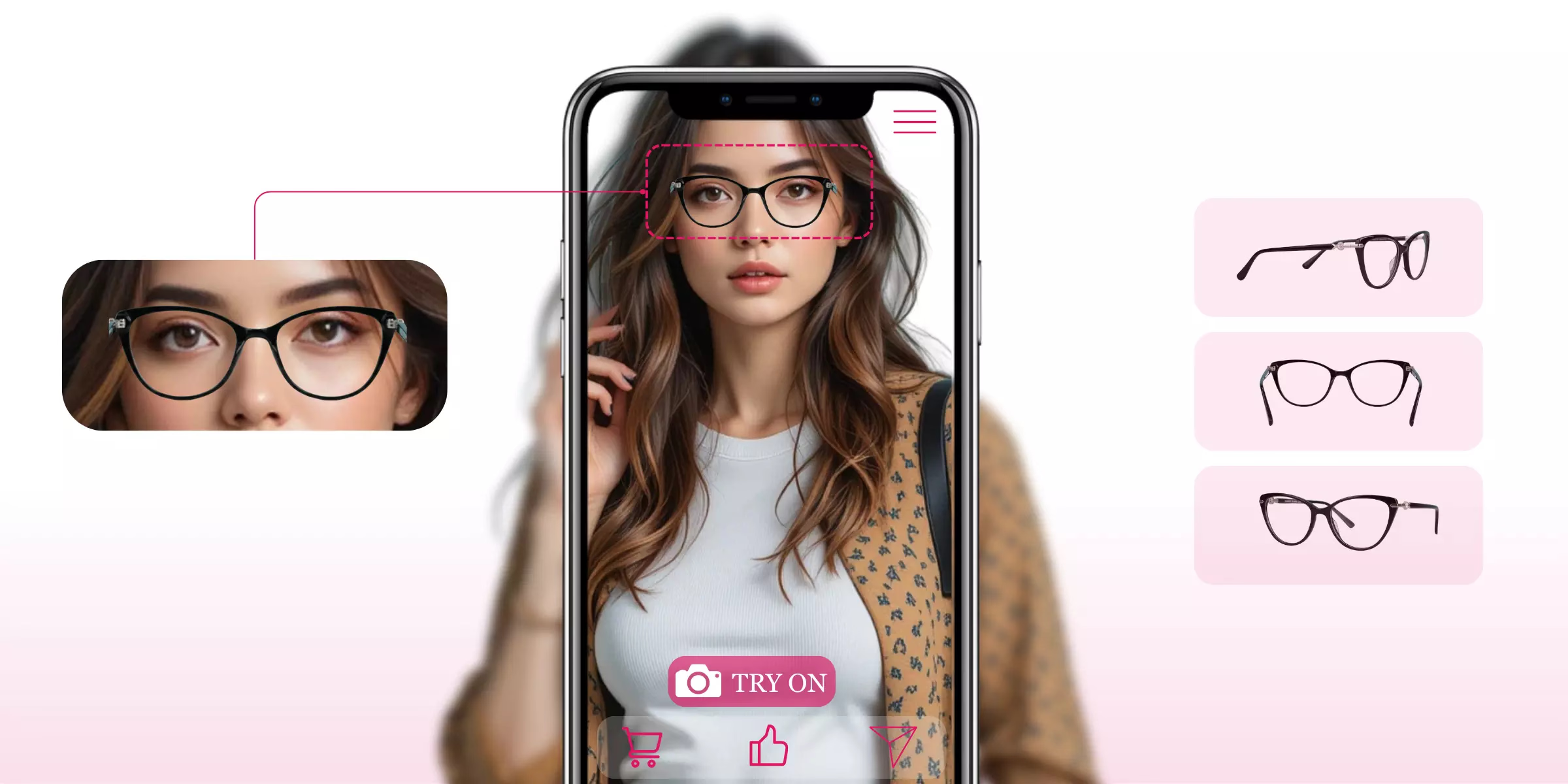
Augmented reality technology has been playing a crucial role in the growth of eyewear brands in the e-commerce industry because it helps businesses to provide their customers with an engaging and lifelike shopping experience. After the implementation of the AR technology, the global smart glasses market size was estimated at USD 1.93 billion in 2024 and is projected to reach USD 8.26 billion by 2030, growing at a CAGR of 27.3% from 2026 to 2030.
With the help of this advanced technology, the market has seen significant growth and an increase in consumer demand for wearable technology. Apart from that, the rising trend of remote work and virtual collaboration tools has also created a greater need for devices that facilitate seamless interaction, further boosting the appeal of smart glasses in both personal and professional contexts.
However, using the AR technology for eyewear brands and businesses offers multiple benefits and advantages, which you can also experience by integrating the technology on the e-commerce platform. In this blog, I will tell you about the benefits of using an AR try-on for an eyewear brand and how you can get those advantages by implementing the try-on feature on your website or app.
What is AR try-on technology for eyewear brands?
AR try-on technology is an online tool that uses advanced technology, like augmented reality, which will provide users with a real-time online shopping experience for eyewear products. With the help of this online tool, brands help their customers to virtually "wear" glasses by using their smartphone or computer camera so that they can make more informed and confident decisions.
It uses 3D models to display products on the e-commerce platform, providing users with 3D models and 360-degree previews that will enable them to explore products from different angles. Using AR overlays will provide users with a digital frame that they can try virtually by placing it onto their live video feed, allowing them to see how different styles and colors look on their face and compare options before making any purchasing decisions.
Key features
- Real-time AR fitting: It provides users with an in-person-like shopping experience by using advanced facial mapping so that the eyewear product can detect the user's face precisely and superimpose the 3D model of the eyewear frame, so that they can select the appropriate design, size, and color, depending on their facial features and structure.
- Interactive experience: It provides users with an engaging and immersive shopping experience by tracking their facial movement and moving the frame with the movement to help them see the frames from all angles without removing them.
- Realistic rendering: It provides users with accurate and lifelike representations of eyewear products, including their details like textures, materials, and lighting effects, by offering them an advanced feature of real-time rendering for a better experience.
- Multi-platform compatibility: It provides users with a similar shopping experience by offering cross-device compatibility for various devices, such as smartphones, tablets, and desktops, which will provide them with the accessibility to explore products across various devices.

How does it work?
- Live camera feed: It uses the live camera feed by accessing the device’s camera so that users can try on eyewear products available in different sizes, colors, and styles, enabling them to make more informed purchasing decisions.
- Facial mapping: With the help of the augmented reality technology, it will provide users with a lifelike experience by mapping their facial features and movements so that they can understand the placement of the eyewear products.
- Virtual overlay: It provides users with a real-time online shopping experience by superimposing the live video feed onto their face with the help of AR overlays and 3D models of eyewear products, which they can also adjust automatically while moving their head during try-on.
- Customization options: It allows users to personalize products by virtually switching between different frames, colors, and sizes, which will enable them to select the product according to their needs and requirements by finding the right fit and style that suits them.
What is the need for AR try-on technology for eyewear brands?

AR try-on technology is a need of today’s e-commerce industry because it helps brands to build stronger customer relationships by offering them an enhanced and engaging customer experience.
But have you ever wondered how it helps eyewear brands, or what the need is for an AR try-on for eyewear brands? In this section, I will help you understand why eyewear brands need AR try-on technology for their e-commerce websites or apps.
1. Boosts customer confidence
It helps brands to build stronger customer confidence by providing them with a realistic preview of available frames in different styles, colors, and sizes, enabling them to select the eyewear products according to their needs and requirements.
It also eliminates the guesswork that customers experience while doing online shopping, which will increase their confidence directly and will lead to a higher likelihood of purchase and increased sales conversion rates.
2. Reduces product returns
It helps brands in decreasing the product return rate by enabling their customers to make informed purchases during online shopping and increasing their satisfaction rate by reducing their dissatisfaction with the fit or style of glasses after receiving them.
Apart from that, AR try-on also minimizes this issue by helping customers make a more informed decision before buying, which in turn lowers return rates and the associated costs.
3. Offers personalization
It provides users with a personalized and tailored shopping experience by enabling them to choose from different styles, colors, and sizes, helping them to select the appropriate eyewear product according to their facial features and structures.
Apart from that, it uses artificial intelligence technology to provide users with personalized recommendations based on mapping their facial features, which will offer them a realistic, personalized view of how different frames will look on them.
4. Enhances customer experience
It will help e-commerce brands to provide their customers with an interactive and personalized experience by enabling them to explore and try on eyewear products in various styles, colors, and sizes.
It also helps the business to reach a wider audience by offering them cross-device compatibility so that they can provide their customers with a similar shopping experience on various platforms and devices, with the accessibility to shop from anywhere, turning a typically static online process into an engaging activity.
5. Increases brand awareness and visibility
By implementing AR try-on features on the e-commerce website or app, brands can increase their digital presence and visibility on various platforms because it provides their customers with the ability to share the images on social media platforms, allowing them to get feedback from friends and family, which increases brand visibility and engagement.
It will also help the eyewear brand to stand out in a competitive market and build long-term brand loyalty by providing its customers with an innovative and immersive experience.
6. Supports sustainable practices
With the integration of the AR try-on feature or technology, the brand can opt for sustainable and cost-effective practices, which will reduce the need for sample stock and minimize returns.
Apart from that, the augmented reality try-on will help the brand to contribute towards nature by enabling it to be a more sustainable retail model and reducing the need for physical sampling, which will align with the growing demand for eco-friendly options.
How can you use the AR try-on technology for your brand?
In the earlier section, I told you about the need for having an AR try-on for eyewear brands and how it helps them in increasing their sales and conversions. However, to get a boost in sales and conversions, it is very important to understand the use of the AR try-on technology appropriately for your brand. To get maximum benefits, you can use the AR try-on technology in various methods, such as for websites or e-commerce, and building brand awareness.
In this section, I will help you understand how to use the AR try-on technology for an eyewear brand to help them increase their sales and conversion rates while boosting customer satisfaction rates.
1. For website and e-commerce
- Virtual rooms: Many solutions provide customers with a replica of a physical store by creating a virtual room to help them try on various eyewear products available on the e-commerce website, providing them with the benefit of the in-store fitting room experience virtually.
- Personalized product recommendations: It helps customers to select the eyewear item according to their facial structure and features by offering them tailored recommendations using advanced AI algorithms, making it easier to find the right fit and style.
- Visualize product placement: It helps customers to visualize the products with the help of AR overlays by using the device’s camera to use the digital 3D content on the user’s live feed, providing them with a lifelike shopping experience.
- Integrate 3D models: It uses realistic 3D models of the eyewear products to help businesses provide their customers with a better understanding of size, function, and quality, providing them with a 360-degree preview of the product and increasing their confidence before making any purchase decisions.
2. General brand building
- Promote the technology: With the help of the AR try-on feature, brands can attract more customers across various marketing channels and platforms by promoting the AR try-on technology, enabling them to highlight their brand's innovative approach.
- Build customer loyalty: With the help of the AR try-on feature, brands can build customer loyalty in a fun, interactive, and pressure-free way that will help their customers to explore products, which will build a stronger connection to the brand.
- Improve customer relationships: It helps businesses to provide their customers with a positive and engaging AR experience, leading to a better customer journey and making their clients more likely to enjoy the process and become loyal customers.
GlamAR’s AR try-on technology for eyewear brands and sellers
GlamAR is a solution provider for brands dealing in the beauty, makeup, clothing, eyewear, and furniture industries to help them increase customer satisfaction and engagement. It provides brands with multiple solutions, including virtual try-ons, 3D configurators, 360-degree viewers, and virtual stores, offering their customers an engaging and immersive experience.
To help eyewear brands provide their customers with an engaging experience, it offers a virtual eyewear try-on that allows users to try different frames and glasses using the AR overlay technology before making any purchase decisions. It provides users with multiple features, including PD measurement, virtual store, and product configurator, enabling them to explore and customize multiple products through their device’s camera.
It helps brands to increase their conversion rate by 94%, as it provides their customers with a real-time experience with the help of 3D models and AR overlays. It also enables them to make their online catalog by offering them seamless integration and multiple customization options to help them maintain their image and identity throughout the website or e-commerce platform.


Benefits of using GlamAR’s AR try-on for businesses
By using the virtual try-on for an eyewear e-commerce platform, businesses will get multiple advantages, such as higher engagement, increased sales, enhanced conversions, and reduced returns, helping them to reach a wider audience and increase their revenue. It can help online sellers to strengthen their customer relationships by providing them with immersive online shopping experiences, increasing their satisfaction, trust, and loyalty towards them.
In this section, I will help you understand how using GlamAR's AR try-on technology will provide benefits to online eyewear brands and help them increase their customer database with increased engagement and experience.
1. Seamless integration
It offers brands seamless integration on multiple platforms and devices, including Android, iOS, web browsers, and more, to provide customers with a similar and engaging experience across various platforms. It also allows brands to customize the virtual try-on SDK according to their image and identity, enabling them to provide their customers with a similar experience throughout the platform or website.
2. Enhanced personalized experience
It helps businesses to provide their customers with a personalized and realistic experience during online shopping by allowing them to customize products according to their needs and preferences. It also enables them to explore new products and try them before buying by using AR overlays, which will help the brand to bridge the gap between online and offline shopping experiences.
3. Increased conversion rates
It helps brands or businesses in increasing their overall sales and conversion rates by offering their customers unmatched realism and accuracy. It allows customers to explore new products and helps them make more informed purchasing decisions by enabling them to use virtual try-on and augmented reality technology while exploring products before buying.
4. Reduced product returns
With the help of this online tool and advanced technology, customers can try products online before making any purchasing decisions, which will help them make more informed buying decisions and reduce uncertainty due to color mismatch. Therefore, it will help the brand to reduce the product return rate and enable it to increase customer satisfaction and trust in the business.
Conclusion
By using the AR try-on technology, brands and businesses can provide their customers with better and tailored experiences with the help of advanced AI and AR algorithms, enabling them to reach a wider audience without any geographical limitations. However, using an AR try-on provides businesses with multiple advantages, such as higher conversions, increased sales, reduced returns, and enhanced brand awareness, which will help them build stronger and more trusted relationships with their customers.
You can also use the AR try-on technology to provide your customers with a customized experience and increase revenue by integrating the try-on SDK on the e-commerce website or app, providing you with seamless and cross-device integration. You can also use GlamAR’s try-on technology for your eyewear brand or business, which will help you to increase conversion rates and sales, reduce product return rates, and boost user engagement and experience.










