


Want to improve ROI on the Shopify platform: Use virtual try-on and 3D viewer for better results


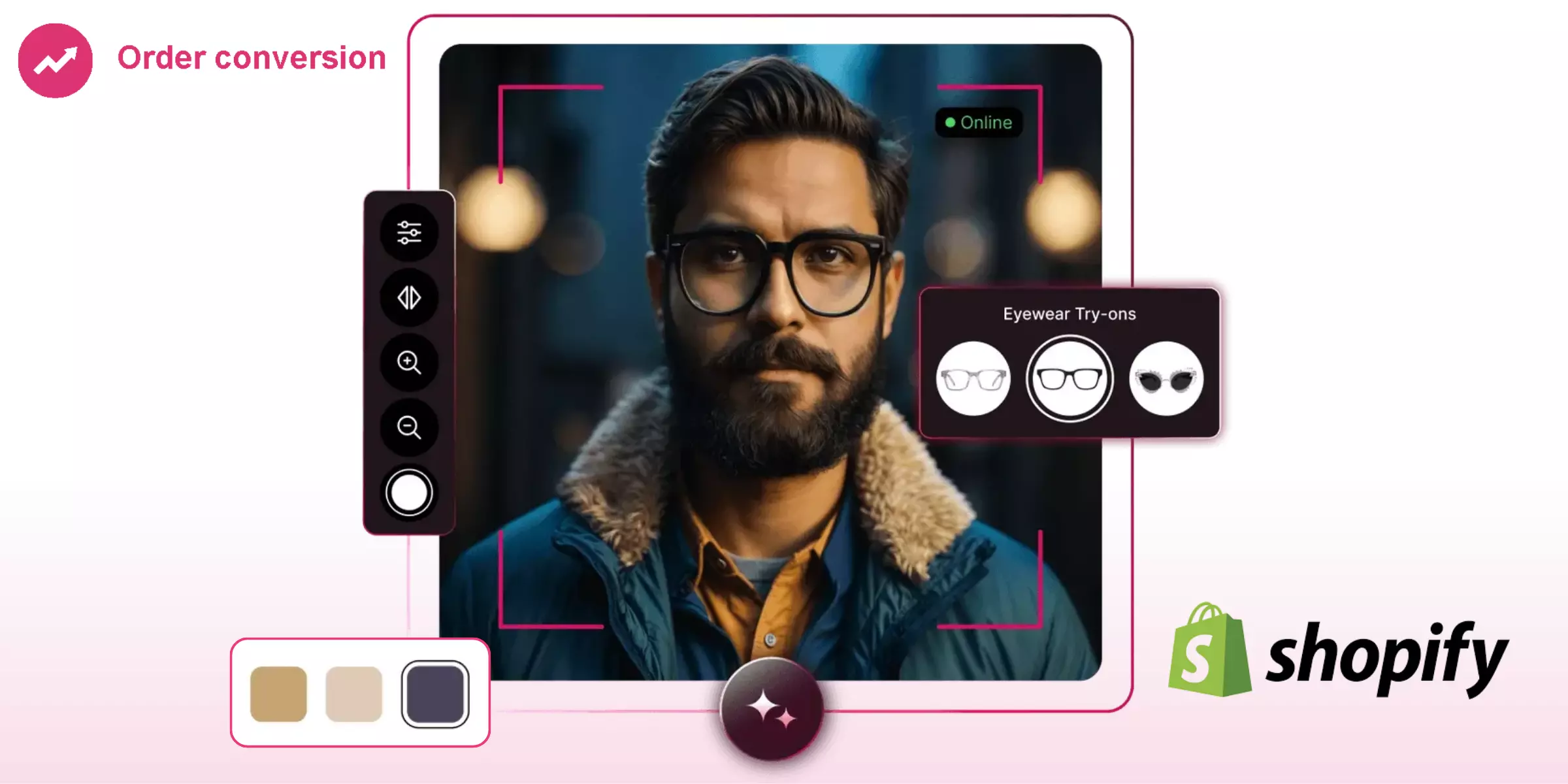
When it comes to understanding the return on investment (ROI) for e-commerce businesses, brands face a lot of challenges, such as rising customer acquisition costs, inefficient ad spend, privacy and cookie deprecation, high cart abandonment, and lower conversion rates. Due to this, it becomes difficult for them to calculate their return on investment or profit because it becomes difficult to achieve profitable growth through paid channels alone, while the rising digital advertising expenses (CPMs and CPCs) are shrinking profit margins.
By using advanced technologies, such as augmented reality, artificial intelligence, and 3D modeling, online brands and businesses can potentially improve their ROI because they help them to provide their customers with an engaging experience while addressing core hurdles, such as a lack of tactile interaction, fit uncertainty, and high return rates. Therefore, using tools like virtual try-ons and 3D viewers can help businesses improve their ROI by contributing in several ways, including higher conversion rates, reduced return rates, enhanced customer engagement, and realistic visualization.
In this blog, I will provide you with detailed information on how an online business can improve its return on investment (ROI) on its Shopify-based e-commerce store by using the combination of virtual try-on and 3D viewer tools. Let’s get started!
{{component="/internal/widgets"}}
What is return on investment, or ROI, for an online business?
Return on investment, or ROI, is a crucial performance metric that online businesses can use to understand the profitability of their online spending, such as ads, SEO practices, and website tools, relative to their cost and expressed as a percentage. Some of the key aspects of calculating return on investment for an online business are calculation, aspects, measurement metrics, and components, which will provide them with a clear picture of which digital channels are most profitable, allowing for better budget allocation.
Online businesses can calculate their return on investment, or ROI, by using the following formula:
ROI = (Net Profit/Cost of Investment)*100
It will help businesses to understand whether their digital investments are performing virtually and how spending on different online tools is helping them to grow their business or not, while helping them to potentially improve their online presence across various platforms.
Points to remember while calculating ROI for an online business on the Shopify platform

While calculating the return on investment, businesses have to look for different aspects of costs and revenues, which will help them to understand their spending and earnings simultaneously, as it depends on various factors. Some of the factors that brands can consider while calculating their return on investment are tracking total, not just ad costs, against revenue, while focusing on customer acquisition cost (CAC), lifetime value (CLV), average order value (AOV), and conversion rates, which they can track by using UTM parameters and Shopify analytics.
In this section, I will provide you with detailed information on several factors that online brands and businesses can consider while calculating their return on investment, or ROI, on their Shopify platform.
1. Define total cost
Before calculating the ROI, it is important for the brand to define its total investment cost on the business or the project for which they are calculating the return on investment.
While calculating the ROI, brands have to consider various factors, which are product COGS, marketing spend (ads), Shopify subscription/app fees, and, importantly, shipping and return costs, as it will help them to understand their spending and calculate profit in the future.
2. Track key metrics
After calculating and understanding the spending on the business or project, the brand has to track some key metrics, such as customer acquisition cost, average order value, customer lifetime value, and conversion rate, which will help measure profitability, customer behavior, and long-term revenue potential, and understand its bond with customers.
In addition to that, these metrics also help online businesses to understand total marketing cost, long-term valued customers, the number of visitors turning into shoppers, and the improvement in the average order value through upselling and bundling strategies, enabling them to understand their growth with increasing customer count.
3. Utilize tracking tools
Another factor that businesses consider while calculating their ROI is where the larger number of shoppers is coming from, which will help them to consider whether they are investing their money in the right platform or not.
Brands can implement this practice by using the UTM parameters on different pages of their website or app, which they can track or measure by using Google Analytics 4, by surveying and asking questions of their customers on “How did you hear about us?" during the checkout process, or by sending their personalized survey link through emails or SMS.
4. Account for time
While calculating the return on investment, brands and businesses have to be patient because most of the marketing tasks, such as search engine optimization, need long-term commitments and efforts to show positive results on ROI.
Therefore, brands have to take a time period of 3-6 months or longer to calculate their return on investment if they have used different SEO and SMO strategies to improve their online presence across various platforms and search engines.
Why is it difficult for online brands to calculate the ROI?
While calculating the return on investment, online brands and businesses encounter various challenges, such as a combination of complex, multi-touch customer journeys, data privacy regulations, and the difficulty of isolating the impact of specific marketing activities, which makes it difficult to attribute revenue to specific marketing activities accurately, complicating ROI measurement. Since the online marketing industry provides businesses with extensive data, it often creates "data overload" or "vanity metrics,” which sometimes do not correlate with the bottom line of revenue.
In this section, I will provide you with detailed information on different challenges that online brands and businesses encounter while calculating their return on investment for their e-commerce platforms.
1. Complex multi-channel attribution
One of the major reasons why brands struggle is with accurate multiple-channel attribution, which makes it difficult for them to understand where the most customers are coming from on their e-commerce website or app.
Another reason is that customers engage with the brand across various channels or platforms, which include Instagram, Google search engine, and more, due to which they experience last-click bias when calculating their ROI, because analytics tools tell them about the final click, ignoring the crucial awareness campaign across different platforms.
2. Privacy regulations and data loss
Another reason why e-commerce businesses fail to calculate their ROI is due to privacy regulations and data loss, as with strict privacy laws, such as GDPR and CCPA, it becomes difficult for them to track user behavior, while a significant amount of data disappears, and they create less accurate rendering attribution models.
In addition to that, cross-device inconsistency also creates issues while calculating ROI because it becomes difficult to calculate the ROI for a user who switches from a smartphone to a laptop before buying, leading to fragmented data.

Use cases of how brands are using AR try-on and 3D viewer on the Shopify platform
E-commerce brands can use the AR try-on and 3D viewer tools on their Shopify platform in different ways, such as virtual photography, product visualization, customization, and configuration, which will provide their customers with better shopping experiences. Apart from that, it will also help businesses in bridging the gap between online and offline shopping experiences while offering them a realistic visualization of products along with lifelike try-on experiences with the help of 3D models, 360-degree viewers, and AR overlays.
In this section, I will help you understand the applications of both AR try-on and 3D viewer, along with how they help businesses in improving their return on investment while offering their customers an engaging experience.
1. Virtual photography
The first and foremost application of AR try-on and 3D viewer is reducing the need for certain types of traditional product photoshoots to create high-quality visuals of products for better display on the e-commerce website or app.
With the help of these two tools, online brands can use virtual photography to provide their customers with an engaging and interactive display of products on the online store by using features such as 3D models, 360-degree viewers, and AR overlays, enabling them to explore and try different products to understand their intricate details with virtual exploration.
2. 3D product visualization
Another application of 3D viewers and AR try-on is providing users with a realistic visualization of products using 3D models and 360-degree viewers, which will help them to explore products from different angles and perspectives using features like rotation, zoom, and spinning.
In addition to that, it also helps businesses to improve their user engagement rate on their e-commerce website or app by increasing user session time on the platform, as it provides them with the accessibility to explore different products in multiple variations while sitting at home comfortably.
3. Product customization and configuration
One of the most significant use cases of AR try-on and 3D viewers is product customization and configuration, which provides users with a personalized shopping experience by enabling them to customize products according to their needs and preferences.
By integrating these two tools with artificial intelligence algorithms, online businesses can provide their customers with personalized recommendations depending on their buying behavior and patterns, which will help them make more informed and confident purchasing decisions during online shopping.
4. Augmented reality placement
Another important use case of AR try-on is providing users with an idea of product placement with the help of augmented reality technology for various categories, such as makeup products on the face, jewelry items on different body parts, furniture for the home, and some fashion items accordingly.
It also helps users to select the best-suited products according to their skin tone and body type, which will help the brand to improve the customer satisfaction rate and reduce the product return rate while fostering trust and loyalty among their customers.
What is a virtual try-on, and what are its key features, benefits, applications, and core technologies?
Virtual try-on is an online tool that works on augmented reality and computer vision technologies to provide users with an engaging shopping experience by enabling them to try different products virtually through their device’s camera. It can be used for various categories, such as jewelry, eyewear, makeup, hair and nail accessories, and some fashion items, which will help online or e-commerce sellers to provide their customers with an in-person-like shopping experience.
With the help of the virtual try-on tool, e-commerce businesses can bridge the gap between online and offline shopping experiences by enabling their customers to try different products virtually while sitting comfortably at home. Apart from that, it also provides users with a personalized shopping experience by enabling them to select the best-suited products according to their needs and preferences while offering them personalized recommendations when integrated with advanced AI-powered technologies.
Key features
- Real-time face tracking: It provides users with a real-time shopping experience by performing facial mapping of the user's facial features to ensure that the virtual products move naturally with their head, enabling them to maintain correct alignment and a sense of realism.
- AI-powered personalization: It helps brands to provide their customers with a personalized shopping experience by offering them AI-powered recommendations when combined with artificial intelligence, which will depend on their face shapes and features, so that they can select the best-suited products that are more likely to look good on them.
- Real-time rendering: It allows users to customize products in different styles, colors, and sizes without having to physically try on multiple products or items, while offering them the help feature of realistic rendering of how light reflects off the products to provide them with a highly lifelike preview.
Core technologies
- Augmented reality: It helps brands to provide their customers with the facility of AR overlays, which will help them to visualize products in the real world while sitting comfortably at home. It helps users to overlay digital content on a realistic environment and boost their confidence during online shopping.
- Artificial intelligence: It helps brands to understand customer preferences and choices by providing them with facial recognition and personalization options for different products and items. It provides customers with personalized recommendations and tailored services, along with assisted product suggestion engines, virtual assistants, and customer service tools, offering them a more customized experience during online shopping.
- Computer vision: It provides users with a realistic shopping experience with enhanced features like recognition and tracking of real-world objects. It also provides users with a precise placement of the object during virtual try-on, enabling them to understand and visualize the item in the real environment with the help of visual data and the device’s camera.
What is a 3D viewer, and what are its key features, benefits, applications, and core technologies?
The 3D viewer is an interactive online tool that helps e-commerce brands and businesses to provide their customers with an engaging shopping experience by enabling them to view and rotate products in three dimensions on a website. It helps online sellers and brands to enhance the online shopping experience for their customers by helping them preview items from different angles and perspectives using 3D models or 360-degree image viewers.
It provides users with various engaging and interactive features, such as zooming, panning, and rotating, which will enable them to look at the intricate details of products using an image or video, enabling them to explore products from different angles and perspectives. In addition to that, it also helps online brands and businesses to enhance their conversion rate and user engagement by helping them reduce product uncertainty and make satisfactory decisions.
Key features
- Interactive 360-degree rotation: It helps online sellers to build trust among their customers by enabling them to explore products from different angles and perspectives by using interactive features, such as rotation, spin, and zoom. It also provides them with a comprehensive understanding of the product, which can help the brand increase its user engagement rate and conversion rate on the website or app.
- Zoom and detail inspection: It helps users to understand the detailing of products by enabling them to zoom in and out on the product during virtual shopping to explore their features, textures, and details. It allows customers to reduce the uncertainty of style and size mismatch, which will also help the brand to opt for a sustainable option by reducing the return rates.
- Seamless integration: It allows the brand to perform easy integration of the software with the popular e-commerce platforms. It provides a smooth user experience for both customers and businesses, which will also enhance total user session time, leading to enhanced user engagement.
- Mobile and cross-device compatibility: To increase the audience reach and connectivity, it provides cross-device compatibility for mobile phones, tablets, and desktops, which allows users to be consistent and have an engaging user experience during online shopping.
Core technologies
- 3D modeling: It uses 3D modeling technology that allows online brands and sellers to provide their customers with engaging 3D models of their products during display on the e-commerce website or app, which will enable them to explore the intricate details of products before making any purchasing decisions.
- 360-degree viewer: It provides users with various engaging features, such as rotation, zoom, and spin, which will enable them to explore products from different angles and perspectives, along with a 360-degree view of products for a better viewing experience during online shopping.
- AI-powered algorithm: When integrated with artificial intelligence, it helps users to customize products according to their needs and preferences while offering them personalized recommendations depending on their previous purchase and browsing history, which will help them to select the best-suited products.
Introducing GlamAR’s virtual try-on and 3D viewer SDK for the Shopify platform
GlamAR is an AR- and AI-based solution provider that provides users with engaging shopping experiences by enabling them to use AR overlays, 3D models, and 360-degree viewers on the brand’s website or app. It provides online businesses with multiple solutions, such as jewelry, eyewear, furniture, and skincare, which can help them enhance user experience and engagement on the e-commerce website and app while enabling them to build stronger relationships with their customers.
Since GlamAR offers multiple solutions for various industries and for different purposes, in this section, I will provide you with detailed information about two of its solutions, including virtual try-on and 3D viewer, which brands can use to improve their return on investment, online sales, conversions, and engagement rate.
Virtual try-on
Virtual try-on is an AR-based online tool that helps online businesses to provide their customers with try-before-you-buy experiences by superimposing AR overlays onto their face or body with the help of face mapping and augmented reality technologies. It helps several brands dealing in various categories, including makeup, jewelry, watches, hair, nails, and eyewear, which can provide their customers with an engaging and immersive shopping experience.
With the help of augmented reality and face mapping technology, the tool provides users with a realistic experience by enabling them to try different products on their face and body while detecting their facial and body movements to help them understand the product placement. Apart from that, using the virtual try-on will help the brand to improve its engagement rate on the website or app by up to 94%, as it keeps users engaged on the e-commerce store for a longer period of time and turns passive browsers into active shoppers.
Features
- Real-time 3D rendering: It helps users to explore products from different angles and perspectives by offering them a realistic rendering of products, which will help them to see how the product will look by supporting real-time rendering for realistic visualization, providing them with a realistic product visualization during online shopping.
- Cross-device compatibility: It provides brands with the ability to integrate the virtual try-on with the e-commerce platform for various devices and platforms, including AR/VR devices, mobile devices, web browsers, desktops, and in-store screens, which will help businesses reach a wider audience on both online and offline platforms.
- Seamless integration: It provides businesses with a seamless integration process via API, SDK, or a Shopify-based application, allowing them to easily integrate the tool with the e-commerce platform with minimal coding knowledge, while offering them developer support and documentation to simplify integration.
- Customizable 3D asset: It helps brands to display their products on the e-commerce store with the help of 3D assets, which they can customize according to their products by customizing their color, pattern, and finish, providing their customers with a similar shopping experience throughout the store.
- Easy catalog onboarding: It provides businesses with easy catalog onboarding so that they can sync their products' information and list with the tool, which will help their customers to discover, explore, and try new products effortlessly while enabling them to understand the details of products more proficiently.
3D viewer
A 3D viewer is another GlamAR SDK that helps online brands to provide their customers with the ability to explore products using a 3D model or 360-degree viewer, enabling them to explore product details from different angles and perspectives. It offers various engaging features, such as rotate, spin, and zoom, which will help users to have a closer look at the intricate details of products effortlessly during virtual shopping, which can also increase their session time on the website or app.
Apart from that, it also provides users with various customization options, so that they can tailor products according to their preferences by changing their color, texture, size, and design, providing them with a wide range of products along with high-quality visuals. It also helps brands to elevate the user shopping experience by enabling them to integrate the 3D viewer with AR try-on, so that they can provide their customers with the ability to visualize products in real time.
Features
- 360-degree spin: It provides users with a 360-degree view of products, including various features, such as rotate, spin, and zoom, which will help them understand product detailing using a 3D model before making any purchase decisions.
- Photorealistic render: It helps brands to create thumbnails and marketing visuals because it supports WebGL technology, which they can use to display their products in their e-commerce store with high-quality visuals while using real-time photo renders for a lifelike product visualization.
- Customization option: It provides users with personalized shopping experiences by enabling them to customize the color, design, specification, and pattern of products according to their needs and preferences with the help of a wide range of configurators, while offering them real-time customization updates during virtual shopping.
- Augmented reality integration: It helps brands to provide their customers with an engaging and immersive shopping experience by enabling them to integrate the 3D viewer with AR try-on, which will help users try and explore various products using 3D models and AR overlays.
- Multiple industry solutions: It provides brands with multiple category solutions by enabling them to use the 3D viewer for various products, including jewelry, eyewear, nails, hair, and furniture, which will provide their customers with an engaging shopping experience.
{{component="/internal/widgets"}}
Benefits of using GlamAR’s SDK for a Shopify-based online brand
GlamAR is an SDK provider that provides online sellers and businesses with AR try-ons and 3D viewers, which will help them improve their engagement rate, conversions, and sales for multiple categories. It also provides online businesses with multiple benefits, such as improved user experience, personalization options, seamless integration, cross-platform compatibility, and improved conversions, which will provide their customers with an engaging and immersive shopping experience.
In this section, I will provide you with detailed information on the benefits that online brands and businesses will get by using the GlamAR SDK AR try-on and 3D viewers while building stronger and more trusted customer relationships.
1. Enhanced personalized experience
It helps businesses to provide their customers with a personalized and real-time online shopping experience by allowing them to customize products according to their needs and preferences. It also enables them to explore new products and try them before buying by using AR overlays and 3D models, which will also help them to bridge the gap between online and offline shopping experiences for their customers.
2. Increased conversion rates and sales
It helps online brands or businesses in increasing their overall sales and conversion rates, along with product page engagement rate, by providing their customers with unmatched realism and accuracy. Apart from that, it also allows customers to explore new products and helps them make more informed purchasing decisions by enabling them to use AR try-on and 3D viewer technology while exploring products before buying.
3. Reduced product returns
With the help of this online tool and advanced technology, customers can try and explore products online before making any purchasing decisions, which will help them make more informed buying decisions and reduce uncertainty due to color mismatch. Therefore, it will also help the brand to reduce the product return rate and enable it to increase customer satisfaction and trust in the business while increasing their session time on the product page.
4. Seamless integration
It provides businesses with the ability to perform seamless integration of the virtual try-on into the e-commerce platform by using an SDK or API, which will reduce the need for an experienced developer during the integration process. It also provides businesses with detailed documentation of the try-on SDK, which they can use to understand the integration process and fix bugs in a timely manner using the tutorials or seeking assistance from experts.
Brands that are using GlamAR’s SDK on their website or app
GlamAR is an online AR- and AI-based solution provider that helps brands from different industries to provide their customers with engaging and interactive shopping experiences, which will help them explore and try on products interactively. With the help of its AR try-on and 3D viewer, it allows users to explore products using engaging features, such as rotation, zoom, and spin, which will enable them to explore products from different angles and perspectives.
In this section, I will provide you with some use cases of the AR try-on and 3D viewer and how it can help several online brands and businesses potentially improve their return on investment while improving online sales, conversions, and engagement rate on the e-commerce website or app.
1. White Cut Diamonds
White Cut Diamonds is a lab-grown jewelry brand that uses GlamAR’s virtual jewelry try-on and 3D product viewer on its website and app to provide its customers with an engaging and interactive shopping journey. It provides users with exciting features, such as virtual try-ons, 360-degree viewers, and 3D model creators, which will help them to try and explore different products interactively from different angles and perspectives.
It also helps the brand bridge the gap between the online and offline shopping journey by enabling them to replace static 2D images with interactive 3D models to help their customers make more informed purchasing decisions.
2. Low-Cost Glasses
Low Cost Glasses is an eyewear brand that uses GlamAR’s AR try-on and 3D viewer SDK to provide its customers with a realistic shopping experience by enabling them to try different eyewear products while sitting comfortably at home.
It provides users with different engaging features, such as virtual try-ons, 3D model creators, and 360-degree viewers, to provide users with some interactive features, such as spin, zoom, and rotate, to help them explore products from different angles and perspectives. Apart from that, it also helps the brand reduce the product return rate by helping its customers make more informed and confident purchases during online shopping.
Conclusion
With the help of the AR try-on and 3D viewer, online brands and businesses can improve their return on investment because it helps them to provide their customers with an engaging shopping experience while enabling them to try and explore more products virtually using AR overlays and 3D models. By using the combination of these two tools, brands can bridge the gap between online and offline shopping experiences for their customers, providing them with multiple options, such as rotation, spin, and zoom, so that they can explore intricate details of products during virtual shopping.
With the help of GlamAR’s SDK for virtual try-on and 3D viewer, businesses can provide their customers with a seamless shopping experience, along with customizable 3D models and AR try-ons according to their needs and preferences, which will help brands to improve their sales, conversions, user engagement, and experience on the website or app. Therefore, using the combination of AR try-on and 3D viewer will help businesses in multiple ways while enabling them to understand how to prove and enhance their return on investment for better customer relationships.
Virtual try-on and 3D viewers can help businesses to improve their ROI by helping them to improve their conversion rates, reduce product returns, and boost average order value. Apart from that, it also helps their customers to visualize products in a realistic manner while helping them to make more confident purchase decisions. These two tools will also help businesses to lower customer acquisition costs by improving on-site engagement and decreasing post-purchase dissatisfaction, which will help them to increase lifetime customer value.
There are various categories for which online brands and businesses can use the virtual try-on and the 3D viewer, which will help them to rely heavily on fit, appearance, and detail, benefiting them the most. Different categories for which brands can use the virtual try-on and 3D viewer are eyewear, jewelry, makeup, footwear, apparel, watches, and furniture, enabling them to customize products for their size, style, or color. Apart from that, it also helps users to understand the placement of products, which has helped brands in potentially improving their engagement rate and reducing product return rates because customers can better understand how items will look or fit before purchasing.
3D visualization will help brands to increase their customer engagement by encouraging interactive exploration, as it allows shoppers to spend more time during product exploration by offering some exciting features, such as rotation, zoom, and spinning, enabling them to explore products from multiple angles. With the help of this, brands can provide users with deeper interaction, which improves product understanding while building trust, which can lead to longer session durations, lower bounce rates, and stronger emotional connections with the brand.
Brands can potentially measure and track some metrics, such as conversion rate uplift, return rate reduction, average order value, customer engagement time, and cart abandonment rates, which will help them to understand the impact of AR try-ons and 3D viewers on their e-commerce store. Brands can also perform A/B testing of product pages with and without these tools, which will help them to perform a clear comparison of performance while analyzing repeat purchases and customer satisfaction scores, enabling them to quantify long-term impact on the website or app.
While implementing virtual try-ons and 3D viewers, brands have to follow some steps and ensure accurate sizing and color calibration, optimize the performance of tools for mobile devices, and integrate seamlessly with existing e-commerce platforms, which will help them to provide their customers with better experiences. Apart from that, they can also provide their customers with clear user instructions and fast loading speeds, providing them with a better experience during online shopping. Brands can also conduct A/B testing, collect user feedback, and regularly update 3D assets to maintain realism and relevance, which will help them understand how the 3D assets and AR overlays work on their e-commerce store or app.
Virtual try-ons and 3D viewers help businesses to enhance product display on their e-commerce website or app. Still, they don’t replace traditional photography completely because the use of high-quality lifestyle images remains essential for storytelling and branding. However, using 3D and AR tools on the e-commerce platform will provide businesses with functional benefits like interactive viewing and fit visualization; however, most of the effective strategies use the combination of professional photography with immersive digital experiences.
Discover how AR, VR and 3D can drive revenue growth in 2026
Schedule a call with our team

.avif)