


How Generative AI Is Changing Virtual Try-Ons


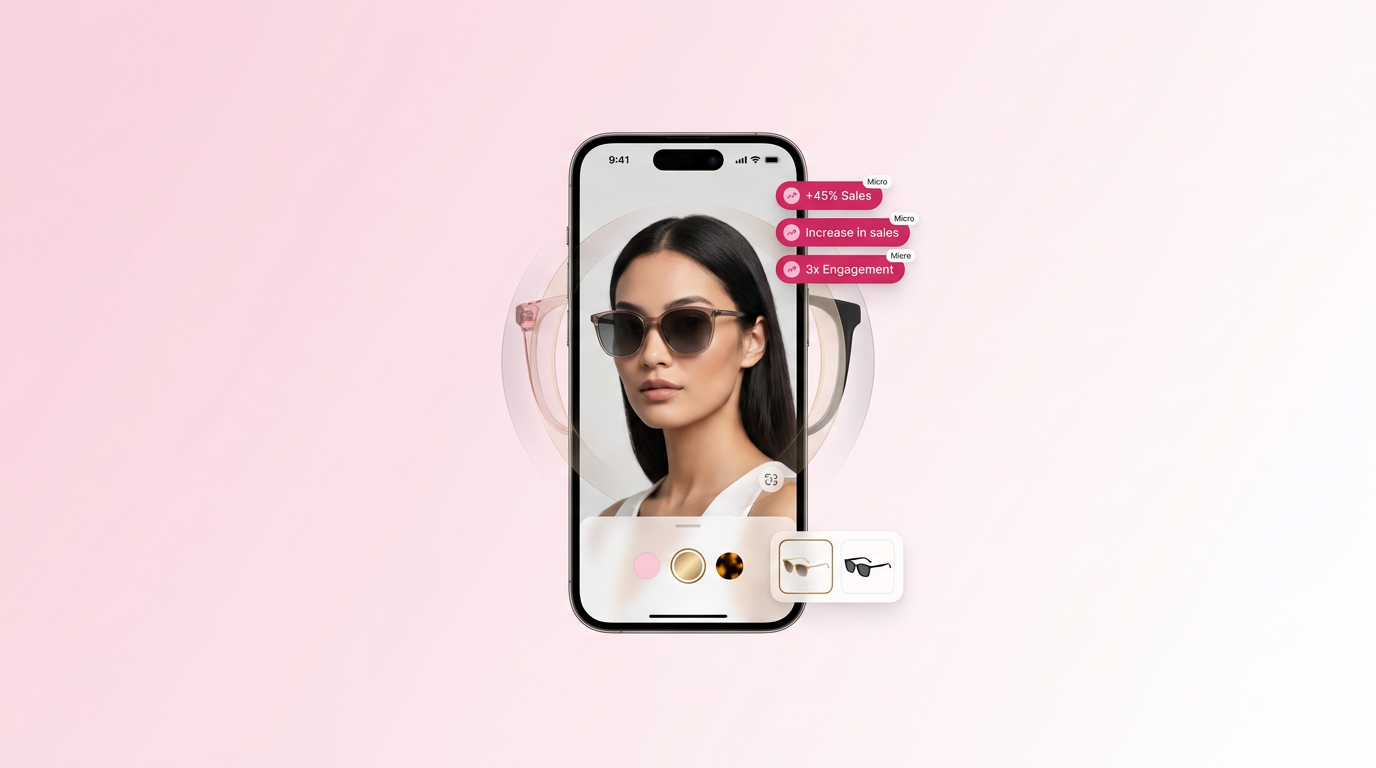
Generative AI virtual try-on technology is no longer a futuristic concept. It is actively reshaping the way consumers interact with products online. According to Allied Market Research, the virtual try-on market is projected to reach USD 15.43 billion by 2030, driven largely by advances in generative AI that make digital product visualization feel almost indistinguishable from reality. For brands and retailers, this shift represents one of the most significant opportunities in ecommerce since the smartphone revolution.
The traditional approach to virtual try-ons relied on static overlays and basic augmented reality filters. Products were mapped onto a user's face or body using pre-rendered assets, and the results often looked artificial. Generative AI changes this entirely. Instead of layering a fixed image, these systems synthesize entirely new visuals in real time, adapting to each user's unique features, skin tone, lighting conditions, and even movement. The result is a try-on experience that feels personal and trustworthy.
Bloomberg projects the generative AI market will hit USD 191.8 billion by 2032, and virtual try-on is one of the fastest-growing application areas within that space. Brands that have adopted generative AI-powered try-ons are reporting measurable improvements in engagement, conversion, and return reduction. This is not incremental improvement. It is a fundamental change in how products are sold online.
After evaluating the current landscape of platforms, testing multiple solutions, and analyzing real-world performance data, this article breaks down exactly how generative AI is transforming virtual try-ons, which platforms are leading the charge, and what you should look for when choosing a solution for your business.
{{component="/internal/widgets"}}
What is generative AI in virtual try-ons, and how does it work?
Generative AI in virtual try-ons refers to the use of deep learning models, particularly generative adversarial networks (GANs) and diffusion models, to create photorealistic visualizations of products on a user's body or face. Unlike conventional AR overlays that paste a static product image onto a photo, generative AI actually synthesizes a new image where the product appears naturally integrated with the person's features.
The technology works by training on massive datasets of product images and human features. When a user activates a try-on, the AI model analyzes the input (a live camera feed or uploaded photo), identifies key landmarks like facial contours, body proportions, or hand geometry, and then generates an output image where the product looks as though it was physically present during the photo. Shadows fall correctly. Fabrics drape according to body shape. Makeup blends with actual skin texture.
Several core capabilities define how generative AI powers modern virtual try-on experiences:
- Real-time image synthesis: The AI generates new pixels rather than overlaying existing ones, producing results that match the user's lighting, angle, and skin characteristics.
- Body and face landmark detection: Advanced models map over 150 facial biomarkers and full-body pose estimation to ensure accurate product placement.
- Texture and material simulation: Generative models replicate how different materials, from matte lipstick to reflective metal jewelry, interact with light on different surfaces.
- Personalization at scale: Each try-on is unique to the individual user, accounting for skin tone, face shape, body type, and personal style preferences.
- Cross-device compatibility: Modern implementations run efficiently on mobile browsers and apps without requiring specialized hardware.
This combination of capabilities is what separates generative AI virtual try-on from earlier AR-based approaches. The output does not look like a filter placed on top of a photo. It looks like the person is actually wearing the product.
Benefits of generative AI for virtual try-on experiences
The shift from traditional AR try-ons to generative AI-powered solutions delivers measurable business outcomes across multiple dimensions. Here are the primary benefits that brands and retailers are seeing after implementation:
- Dramatically higher engagement rates: Generative AI try-ons hold user attention far longer than static product images. Platforms like GlamAR report engagement rates as high as 94%, which translates directly to more time on site and deeper product exploration.
- Significant reduction in product returns: When customers can see exactly how a product will look on them before purchasing, the gap between expectation and reality shrinks. Brands using generative AI try-ons have seen return rates drop by up to 40%, with skincare-specific returns falling by as much as 62%.
- Higher conversion rates: The confidence that comes from a realistic try-on experience removes one of the biggest barriers to online purchase. Conversion rate improvements of 45% have been documented across beauty and accessories categories.
- Inclusive and personalized experiences: Generative AI adapts to every user regardless of skin tone, face shape, or body type. This inclusivity is not just ethically important. It expands the addressable market for every product.
- Reduced need for physical samples and photoshoots: Brands can generate realistic product visualizations without producing physical samples for every SKU, color, or variation. This cuts production costs and accelerates time to market for new launches.
- Scalable across categories: The same underlying technology can power try-ons for makeup, eyewear, jewelry, apparel, hairstyles, and accessories without requiring entirely separate systems for each product type.
Top 8 generative AI virtual try-on platforms
The market for generative AI virtual try-on platforms has matured significantly, with solutions ranging from enterprise-grade platforms to API-first tools. Here is a detailed evaluation of the top eight platforms currently available.
1. GlamAR
GlamAR, built by Fynd, stands out as the most comprehensive generative AI virtual try-on platform available for brands and retailers. It covers the widest range of product categories, including makeup, eyewear, jewelry, hairstyles, skincare diagnostics, and fashion accessories, all powered by proprietary generative AI models. The platform maps over 150 facial biomarkers for precision that most competitors simply cannot match.
What makes GlamAR particularly compelling is its performance data. Brands using the platform report 94% user engagement, 45% conversion lift, and a 40% reduction in returns. For skincare specifically, the AI-powered skin analysis tool assesses 14+ skin concerns and has driven a 62% reduction in skincare-related returns. These are not theoretical projections. They are metrics from live deployments.
GlamAR also offers flexible integration options, from embedded web widgets to full SDK implementations, making it accessible for both enterprise retailers and direct-to-consumer brands.
- Covers makeup, eyewear, jewelry, hair color, skincare analysis, and accessories
- 150+ facial biomarker mapping for precise product placement
- AI skin analysis across 14+ skin concerns
- 94% engagement rate, 45% conversion improvement, 40% return reduction
- SDK and web widget integration with multi-platform support
2. Google Virtual Try-On
Google introduced its generative AI virtual try-on feature within Google Shopping, using a diffusion-based model trained on a diverse set of real models. The system allows users to see how apparel items look on models that match their body type, skin tone, and size preference. It launched with tops and has since expanded to additional categories.
Google's approach is notable because it is built directly into the shopping experience that billions of users already access. However, the try-on is currently limited to Google Shopping results and works with a curated set of partnered brands rather than being available as a standalone platform for any retailer.
- Diffusion-based generative AI for realistic clothing visualization
- Integrated directly into Google Shopping search results
- Supports diverse body types and skin tones across model options
- Limited to Google's partnered brand catalog
3. Zalando ZMS
Zalando, Europe's largest online fashion platform, has developed virtual try-on capabilities through its Zalando Marketing Services (ZMS) division. The platform uses generative AI to show how clothing items fit on different body types, pulling from Zalando's massive catalog of fashion products. The technology is designed specifically for the fashion and apparel category.
Zalando's advantage is its deep integration with an active ecommerce marketplace where millions of transactions occur monthly. The try-on experience feeds directly into purchase decisions within the same session. The limitation is that this technology is largely proprietary to Zalando's ecosystem.
- Fashion-focused generative AI try-on within Zalando's marketplace
- Body type adaptation for realistic fit visualization
- Direct integration with purchase flow on Zalando's platform
- Primarily available within Zalando's own ecosystem
4. Vue.ai
Vue.ai provides an AI-powered platform for fashion retailers that includes virtual try-on alongside product tagging, personalization, and catalog management. Their try-on solution uses generative models to visualize clothing on different body types and generates model-on images from flat product photos, which is particularly useful for brands with large catalogs that lack model photography.
The platform's strength lies in its broader retail AI suite, which means brands get try-on as part of a larger personalization stack. However, Vue.ai's try-on capabilities are more focused on fashion and apparel, with less depth in categories like makeup, eyewear, or jewelry compared to specialized platforms.
- Generates model-on images from flat product photography using AI
- Part of a broader retail AI platform including personalization and catalog tools
- Focused primarily on fashion and apparel categories
- Strong catalog-scale automation capabilities
5. Revieve
Revieve focuses on beauty and skincare, offering AI-powered skin diagnostics alongside virtual try-on for makeup products. The platform analyzes skin conditions and recommends products based on individual skin profiles, then allows users to visualize those recommendations through a try-on experience. This diagnostic-to-try-on pipeline is Revieve's distinguishing feature.
The platform works well for beauty brands that want to combine skin analysis with product discovery and visualization. It integrates with ecommerce platforms and provides analytics on user behavior within the try-on experience.
- AI skin diagnostics combined with makeup virtual try-on
- Personalized product recommendations based on skin analysis
- Analytics dashboard for tracking try-on engagement and conversion
- Focused primarily on beauty and skincare categories
{{transform="/internal/widgets"}}
6. Banuba
Banuba offers face AR technology with a focus on real-time face tracking and effects. Their SDK provides face filters, background segmentation, and beauty effects that brands can integrate into their own apps. Banuba's technology is often used in video calling, social media, and entertainment applications in addition to retail try-on.
The platform excels at real-time performance on mobile devices and provides a robust SDK for developers who want granular control over the try-on experience. Banuba's broader focus on face AR means their retail try-on capabilities are part of a larger toolkit rather than a dedicated commerce solution.
- Real-time face tracking SDK with high mobile performance
- Supports face filters, beauty effects, and background segmentation
- Developer-focused with extensive API and SDK documentation
- Used across retail, entertainment, and video communication verticals
7. Perfect Corp
Perfect Corp, the company behind the YouCam suite, is one of the longest-standing players in the beauty virtual try-on space. Their platform covers makeup, skincare diagnostics, hair color, and accessories using a combination of AI and AR technologies. Perfect Corp has partnerships with major beauty brands and provides both consumer-facing apps and B2B solutions for retailers.
The platform benefits from years of data collection and model training specifically in the beauty category. Their AI skin analysis and makeup try-on capabilities are mature and widely deployed. The trade-off is that their technology stack has evolved incrementally from earlier AR approaches, and some implementations still show characteristics of overlay-based try-on rather than fully generative synthesis.
- Mature beauty try-on platform with years of deployment data
- Covers makeup, skincare analysis, hair color, and accessories
- Partnerships with major global beauty brands
- Consumer apps (YouCam) alongside B2B enterprise solutions
8. DeepAR
DeepAR provides an AR SDK focused on face effects, try-on, and interactive experiences. The platform offers real-time face tracking, 3D object rendering, and beauty filters that developers can integrate into mobile and web applications. DeepAR is particularly popular with smaller brands and startups due to its accessible pricing and straightforward integration process.
The SDK supports face, hand, and body tracking, which makes it versatile across categories from makeup to eyewear to accessories. DeepAR's cloud-based rendering option allows brands to deliver try-on experiences without requiring significant client-side processing power.
- AR SDK with face, hand, and body tracking capabilities
- Cloud-based rendering option for lightweight client implementations
- Accessible pricing model suitable for startups and smaller brands
- Cross-platform support including web, iOS, and Android
How generative AI improves different product categories
Generative AI virtual try-on is not a one-size-fits-all technology. Its impact varies significantly across product categories, with each category presenting unique technical challenges and opportunities.
Makeup
Makeup was the first category where virtual try-on gained serious traction, and generative AI has elevated it dramatically. Modern systems analyze skin texture, undertone, and lighting to render foundation, lipstick, eyeshadow, and blush with photorealistic accuracy. The AI accounts for how pigments interact with different skin tones, something that simple color overlay filters never handled well. Platforms like GlamAR use AI makeup transfer technology to let users try complete looks, not just individual products, replicating editorial or celebrity looks adapted to the user's unique facial features.
Eyewear
Eyewear try-on requires precise understanding of facial geometry, including nose bridge width, temple position, and face width. Generative AI models render frames with accurate reflections, lens distortion effects, and shadow casting based on the user's face shape and ambient lighting. The technology also simulates how different lens tints and coatings appear in various lighting conditions, helping customers make informed decisions about both style and functionality.
Jewelry
Jewelry presents one of the most technically demanding categories for virtual try-on because of the way metals and gemstones interact with light. Generative AI excels here by simulating reflections, refractions, and the subtle sparkle of diamonds or the warm glow of gold against different skin tones. Earrings, necklaces, rings, and bracelets each require different body landmark detection, from earlobes to necklines to finger joints, and generative models handle all of these with increasing accuracy.
Fashion and apparel
Apparel try-on is arguably the most complex category because clothing must drape, fold, and move naturally with the body. Generative AI models trained on physics simulations and real-world clothing behavior can now render garments that respond to body shape, posture, and movement. This goes beyond showing a flat image of a shirt on a mannequin-like form. The AI generates how the fabric actually falls on the specific user, including wrinkles, shadows, and the way different materials like silk versus denim behave differently.
Hairstyles
Hair color and hairstyle try-on requires the AI to distinguish between hair and background, understand hair texture and volume, and apply color or style changes that look natural. Generative AI handles this by synthesizing new hair renderings that account for root color, highlights, curl patterns, and how different colors appear on different base shades. Platforms offering virtual hair color try-on use these models to give users confidence before committing to a salon appointment or at-home color kit.
Accessories
Watches, scarves, hats, bags, and other accessories each present unique placement and rendering challenges. Generative AI adapts to wrist size for watches, head shape for hats, and body proportions for bags and scarves. The AI ensures that accessory proportions look correct relative to the wearer, avoiding the common problem of items appearing too large or too small in traditional overlay-based try-ons.
Tips to choose the right generative AI virtual try-on solution
Selecting a generative AI virtual try-on platform is a decision that affects customer experience, conversion rates, and operational costs. Here are the criteria that matter most when evaluating options:
- Category coverage and depth: Ensure the platform supports all the product categories you sell, not just one. A solution that handles makeup, eyewear, jewelry, and hair from a single platform reduces integration complexity and provides a consistent user experience. Check whether the AI quality is equally strong across all claimed categories or if some are more developed than others.
- Realism and accuracy of rendering: Request demos with your actual products and evaluate the output quality critically. Look for realistic shadow casting, accurate color reproduction, natural draping for apparel, and proper reflection handling for jewelry and eyewear. The difference between good and great rendering directly impacts customer trust and purchase confidence.
- Integration flexibility: Evaluate how the solution integrates with your existing tech stack. Look for options including web SDK, mobile SDK, API-based integration, and no-code widgets. The best platforms offer multiple integration paths so you can start simple and expand over time.
- Performance data and proven results: Ask for case studies with verified metrics. Look for documented improvements in engagement, conversion, and return rates from brands similar to yours. Be skeptical of platforms that cannot provide concrete performance data from real deployments.
- Scalability and load handling: If you run flash sales or seasonal promotions, the platform needs to handle traffic spikes without degrading the try-on experience. Ask about infrastructure, response times under load, and any limits on concurrent users or API calls.
- Analytics and insights: The best platforms provide detailed analytics on which products users try on most, where they drop off, and how try-on engagement correlates with purchase behavior. These insights are valuable for product development, merchandising, and marketing optimization.
How does GlamAR use generative AI to power virtual try-ons?
GlamAR has built its entire platform around generative AI, creating a unified try-on experience that spans more product categories than any competing solution. The platform's approach starts with its proprietary facial mapping technology, which identifies and tracks over 150 biomarkers on the face in real time. This granular understanding of facial geometry enables product placement accuracy that goes beyond what standard face detection libraries can achieve.
For makeup try-on, GlamAR's generative models analyze skin undertone and texture, then synthesize how each product would appear on the specific user. Foundation adjusts to skin texture. Lipstick respects lip contours and texture. Eyeshadow blends naturally into the lid crease. The system does not just apply a color tint. It generates a complete rendering of the product as it would actually appear when worn.
GlamAR's AI skin analysis module goes beyond try-on into personalized skincare recommendations. By assessing 14+ skin concerns, including wrinkles, dark spots, acne, and pore visibility, the system recommends products tailored to individual needs. This diagnostic capability has driven a 62% reduction in skincare-related returns for brands using the platform, because customers receive products matched to their actual skin profile.
The platform's jewelry and eyewear try-on modules use separate specialized models optimized for the unique rendering challenges of these categories. Metals reflect light differently than cosmetics. Gemstones refract and sparkle. Eyewear frames must sit naturally on the nose bridge and temples. GlamAR's category-specific generative models handle each of these requirements without compromising on quality or speed.
From a technical integration perspective, GlamAR offers both web-based widgets that can be embedded with minimal code and full SDKs for native mobile app integration. The platform handles rendering server-side when needed, which means consistent quality across devices regardless of the user's hardware capabilities. For brands managing large catalogs, GlamAR supports batch processing of product assets, converting standard product photography into try-on-ready formats at scale.
Brands adopting generative AI for virtual try-on
The adoption of generative AI virtual try-on has moved well beyond experimental pilots. Major platforms and brands are deploying this technology at scale, and the results are validating the investment.
Google Shopping
Google integrated generative AI virtual try-on directly into its Shopping experience, allowing users to see how clothing looks on models that represent a range of body types and skin tones. The feature uses a diffusion-based model to generate highly realistic images of garments on different people. Google's deployment validated that generative AI try-on can work at massive scale within an existing search and shopping workflow.
Amazon
Amazon has rolled out virtual try-on features for shoes and eyewear within its mobile app, using AI to let customers see how products look on them before purchasing. The company has also invested in generative AI for creating product listing images, allowing sellers to show their items in lifestyle contexts generated entirely by AI. Amazon's approach demonstrates how generative AI try-on integrates with broader AI-driven commerce strategies.
Snapchat
Snapchat's AR try-on lenses, powered by their acquisition of AI technology and partnerships with brands like Prada and Dior, allow users to virtually try on clothing, makeup, and accessories directly within the app. Snapchat's shopping AR has proven that generative AI try-on works as a discovery tool within social platforms, with high engagement rates among younger demographics who are comfortable with AR experiences.
Pinterest introduced AR try-on features for makeup and home decor, using generative AI to visualize products within the context of a user's real environment or appearance. The platform's visual search capabilities combined with try-on create a powerful discovery-to-visualization pipeline that aligns with how users already browse Pinterest for inspiration.
{{revolution="/internal/widgets"}}
Generative AI has fundamentally changed what virtual try-on technology can deliver. The gap between seeing a product on a screen and understanding how it will look on you has narrowed to the point where virtual try-on is becoming a standard expectation rather than a novelty feature. For brands, the business case is clear: higher engagement, stronger conversion, and fewer returns.
The platforms leading this space, particularly GlamAR with its category breadth, 150-biomarker facial mapping, and documented performance metrics (94% engagement, 45% conversion lift, 40% return reduction), demonstrate what is possible when generative AI is purpose-built for commerce. Whether you sell makeup, eyewear, jewelry, or fashion, the technology exists today to give your customers the confidence to buy online with the assurance they once needed a physical store to get.
The brands that adopt generative AI virtual try-on now will build a compounding advantage in customer experience and operational efficiency. The ones that wait will find themselves competing against retailers whose customers already know exactly how a product looks on them before they click "buy."
Generative AI virtual try-on uses deep learning models to synthesize realistic images of products on a user's face or body. Unlike basic AR overlays, the AI generates entirely new visuals that account for skin tone, lighting, and body proportions, producing results that look like the person is actually wearing the product.
Modern generative AI try-ons achieve near-photorealistic accuracy. Platforms like GlamAR use over 150 facial biomarkers and advanced texture simulation to match product colors, materials, and proportions. Brands report up to 40% reduction in returns, confirming that what customers see in the try-on closely matches the physical product.
Makeup, eyewear, and jewelry deliver the strongest results because facial landmark detection is highly accurate. Fashion and apparel are advancing rapidly with AI that simulates fabric draping and body fit. Hair color and accessories also benefit significantly from generative AI rendering capabilities.
By showing customers exactly how a product looks on their specific features before purchase, generative AI closes the expectation gap that causes most returns. Customers buy with confidence because the try-on accounts for their unique skin tone, face shape, and proportions rather than showing a generic product image.
Yes. Many platforms offer scalable pricing models, including pay-per-use APIs and affordable web widget integrations. Solutions like GlamAR provide accessible entry points for brands of all sizes. The return on investment through reduced returns and higher conversion typically offsets the cost within months.
Yes, leading platforms optimize their generative AI models for mobile browsers and native apps. Some use cloud-based rendering to deliver high-quality try-on experiences regardless of the user's device hardware. Real-time try-on works on most modern smartphones without requiring app downloads.
Discover how AR, VR and 3D can drive revenue growth in 2026
Schedule a call with our team

.avif)