


Top Brands Using AR in Retail: 10 Case Studies That Work


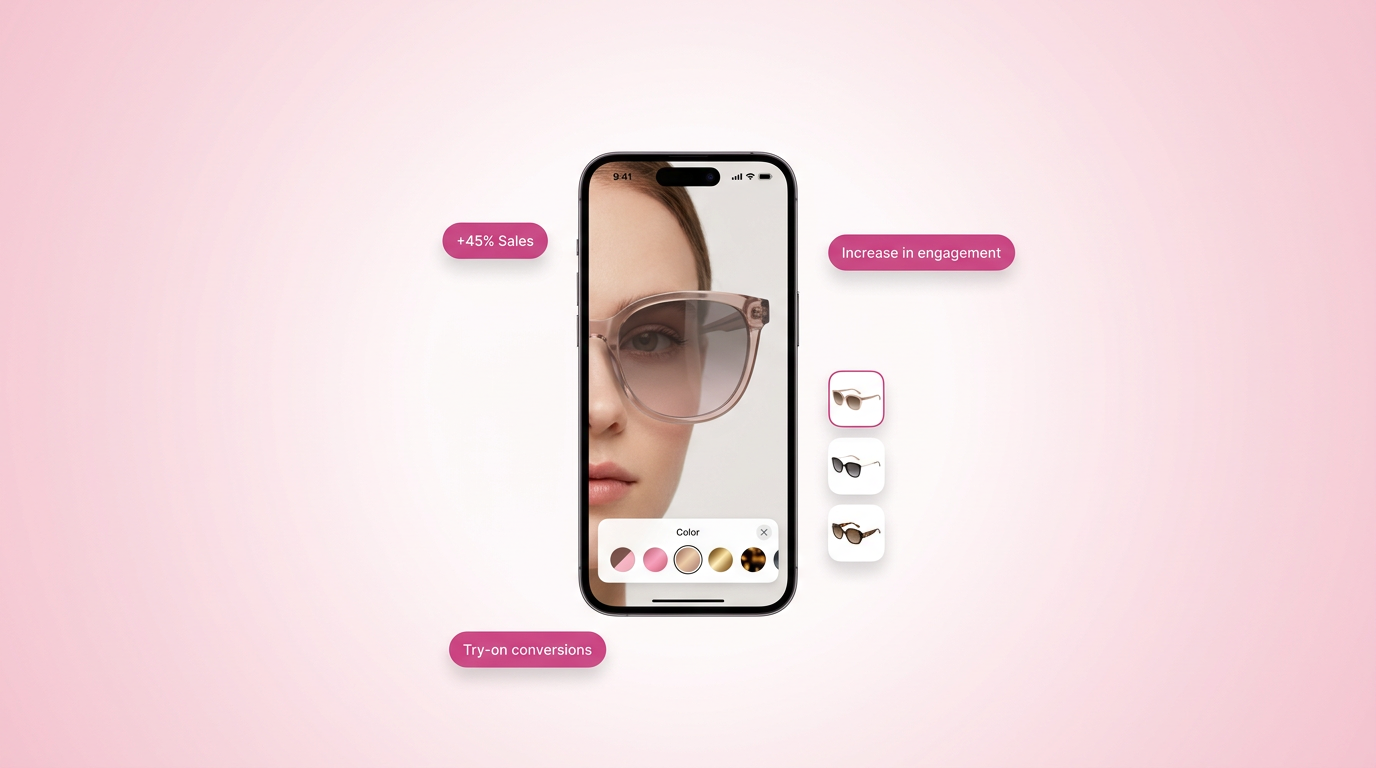
Brands using AR are no longer running small experiments. They are making it a core part of how customers shop. The global AR market hit USD 149.57 billion in 2025 according to Precedence Research, and a big chunk of that growth is coming from retail. I have spent months tracking how major brands are rolling out augmented reality across beauty, eyewear, furniture, and fashion. The results are not hype. They are measurable.
What caught my attention is the consistency of the data. Whether it is L'Oreal reporting 2-3x higher conversion rates or IKEA cutting furniture returns by 35%, the pattern is clear. AR reduces friction between browsing and buying. And 61% of consumers now say they prefer retailers that offer AR experiences, according to NielsenIQ.
I have curated 10 case studies of brands that are actually doing this well. Not just launching a gimmick and calling it innovation, but building AR into the buying journey in ways that move real business numbers. Let me walk you through what each of them did, the tech behind it, and the results they got.
If you are a brand or retailer evaluating AR, this breakdown should give you a clear picture of what works, what does not, and where the biggest returns are coming from.
{{component="/internal/widgets"}}
What Is AR in Retail, and Why Are Brands Adopting It?
Augmented reality in retail is the use of camera-based technology that overlays digital products onto a customer's real environment or body. Think of it as a virtual fitting room. A shopper points their phone camera at their face and sees how a lipstick shade looks on their skin, or places a 3D sofa in their living room before clicking "buy." The technology runs through smartphone apps, web browsers, and in-store smart mirrors.
The reason brands are adopting AR is straightforward. Online return rates in categories like fashion and beauty sit between 20-40%. Most of those returns happen because the product did not look or fit the way the customer expected. AR closes that expectation gap before the purchase happens. It also keeps shoppers on the page longer, which search and conversion data both reward.
Here is what AR typically enables in a retail context:
- Virtual try-on: Lets customers see makeup, eyewear, jewelry, or clothing on themselves using their device camera
- 3D product visualization: Places true-to-scale 3D models of furniture, electronics, or accessories in the customer's real space
- AI skin and face analysis: Scans the user's skin to recommend products based on actual skin concerns and facial features
- Interactive packaging: Triggers digital content when a customer scans a physical product label or box
- In-store smart mirrors: AR-powered mirrors in physical stores that let shoppers try products without touching inventory
Benefits of AR for Retail Brands
The benefits of AR for retail brands go beyond novelty. Every metric that matters to an e-commerce or omnichannel business improves when AR is implemented correctly. Here is what the data consistently shows across the case studies I reviewed.
- Higher conversion rates: Shoppers who use AR try-on features convert at significantly higher rates. L'Oreal's ModiFace integration delivered 2-3x conversion lift across their brand portfolio. When customers can see the product on themselves, hesitation drops.
- Lower product returns: Returns are the silent killer of e-commerce margins. IKEA's AR placement tool cut furniture returns by 35%. GlamAR's AR solutions have shown a 40% return reduction across client deployments.
- Longer session times and engagement: AR features keep users on the page. Sephora's Virtual Artist drove a 200%+ increase in engagement. Customers who interact with AR spend more time exploring products, which directly correlates with higher average order values.
- Better customer confidence: The biggest barrier in online shopping is uncertainty. AR removes the "will this work for me" question. This is especially important in categories like eyewear, makeup, and furniture where fit and appearance are everything.
- Reduced dependency on physical stores: Brands with strong AR tools give customers a store-quality experience from their couch. This expands the addressable market beyond customers who live near a physical location.
- Data-driven personalization: AR interactions generate rich data about customer preferences, skin tones, face shapes, and style choices. Smart brands feed this data back into recommendation engines to personalize future interactions.
Top 10 Brands Using AR for Shopping
These are the brands using AR in ways that have produced documented, measurable results. I have ranked them based on the breadth of their AR implementation, the quality of the experience, and the business impact they have reported.
1. GlamAR (by Fynd)
GlamAR is the platform that powers AR for many of the brands on this list. Built by Fynd, it provides virtual try-on for makeup, eyewear, jewelry, and furniture AR as a plug-and-play solution. I am listing it first because it is the underlying technology layer that makes AR accessible to brands of all sizes, not just the ones with billion-dollar R&D budgets.
What sets GlamAR apart is the combination of AR try-on with AI facial skin analysis. The skin analysis tool maps over 150 facial biomarkers and detects 14+ skin concerns, which means product recommendations are backed by actual data. Across deployments, GlamAR has delivered a 94% engagement uplift, a 45% conversion boost, and a 62% reduction in skincare returns.
The platform integrates directly into existing e-commerce sites and apps. Brands do not need to build their own AR engine from scratch.
- Technology: Proprietary AI-powered AR engine with facial mapping, 3D rendering, and skin analysis
- Key result: 94% engagement uplift and 40% return reduction across client brands
- Standout feature: 150 facial biomarkers and 14+ skin concern detection for personalized recommendations
- Retention impact: 4x customer retention for brands using the full AR and AI suite
2. L'Oreal (ModiFace)
L'Oreal acquired ModiFace in 2018 and turned it into the backbone of their digital beauty strategy. ModiFace uses AI and AR to let customers virtually try on makeup, hair color, and skincare products. The technology is now integrated across L'Oreal's entire brand portfolio including Maybelline, Lancome, NYX, and Garnier.
The numbers are hard to argue with. L'Oreal reported 2-3x higher conversion rates on product pages that feature ModiFace virtual try-on compared to those without it. The technology works on mobile apps, brand websites, and even through social media filters. L'Oreal has also deployed ModiFace in physical stores through AR-enabled mirrors.
- Technology: ModiFace AR engine with AI-driven skin tone matching and real-time rendering
- Key result: 2-3x higher conversion rates on pages with virtual try-on
- Standout feature: Cross-platform deployment across 30+ brands, web, mobile, and in-store
3. Sephora
Sephora was one of the earliest beauty retailers to go all-in on AR. Their Virtual Artist tool lets customers try on thousands of lip, eye, and face products using their phone camera. They also built a Color Match feature that scans a photo and finds the closest matching Sephora product, which is a smart way to convert inspiration into sales.
The engagement numbers tell the story. Sephora reported a 200%+ increase in engagement from customers who used the Virtual Artist feature. Users who interacted with AR were also more likely to add products to their cart and complete the purchase. The tool became a key differentiator that separated Sephora from every other beauty retailer.
- Technology: AR-powered Virtual Artist with Color Match AI
- Key result: 200%+ engagement increase from AR users
- Standout feature: Color Match scans any photo and recommends the nearest product in Sephora's catalog
4. Nykaa
Nykaa brought AR beauty try-on to the Indian market through their mobile app. Customers can virtually try lipsticks, foundations, and eye makeup before purchasing. For a market where online beauty shopping was historically held back by shade-matching anxiety, this was a significant move. India's diverse skin tone range makes virtual try-on especially valuable.
Nykaa's AR adoption is growing steadily as smartphone penetration and camera quality improve across India. The AR in beauty trend is particularly strong in the Indian market where customers are increasingly comfortable shopping online but still want confidence in color accuracy.
- Technology: Mobile app-based AR try-on for beauty products
- Key result: Growing adoption in the Indian market with improved shade-match confidence
- Standout feature: Localized AR experience designed for India's diverse skin tone spectrum
5. IKEA
IKEA Place was one of the first AR apps to prove that augmented reality could solve a real business problem at scale. The app lets customers place true-to-scale 3D models of IKEA furniture in their homes using their phone camera. You can see exactly how a sofa fits in your living room, whether a bookshelf clears the ceiling, and how a table looks against your existing decor.
The business impact was immediate. IKEA reported a 35% reduction in furniture returns from customers who used the AR placement tool before purchasing. For a category where returns are expensive to process (shipping a couch back is not cheap), that reduction translates directly to margin improvement.
- Technology: ARKit-powered 3D product placement with true-to-scale rendering
- Key result: 35% fewer returns on furniture purchased after using IKEA Place
- Standout feature: Accurate room-scale rendering that accounts for real lighting and shadows
{{transform="/internal/widgets"}}
6. Warby Parker
Warby Parker built their virtual try-on feature directly into their mobile app. Customers can see how different frames look on their face before ordering. The technology uses Apple's TrueDepth camera to create a precise face map, which means frames sit naturally on the face rather than floating awkwardly. The experience feels accurate enough that customers trust it to make a purchase decision.
Warby Parker reported a 27% increase in conversion rates from customers who used the virtual try-on feature compared to those who browsed product photos alone. For an eyewear brand that built its reputation on the home try-on box model, AR became a faster and cheaper alternative that delivers a similar level of confidence.
- Technology: Apple TrueDepth face mapping for realistic frame placement
- Key result: 27% conversion increase from virtual try-on users
- Standout feature: Precise face mapping that accounts for nose bridge width and face shape
7. Nike
Nike Fit is an AR foot scanning tool that measures your foot size and shape using your phone camera. The problem it solves is simple but massive. Wrong-size shoe returns cost the footwear industry billions every year. Nike Fit scans both feet (because most people have slightly different sized feet), measures 13 data points, and recommends the right size for each specific shoe model.
The results were dramatic. Nike reported a 60% reduction in wrong-size returns after rolling out Nike Fit. The tool also collects valuable data about foot dimensions across their customer base, which feeds back into product design and sizing decisions for future shoe lines.
- Technology: AR foot scanning with 13-point measurement and AI size recommendation
- Key result: 60% reduction in wrong-size returns
- Standout feature: Model-specific sizing that adjusts recommendations per shoe design
8. Gucci
Gucci took a different approach to AR by meeting customers where they already spend time. They launched an AR shoe try-on experience through Snapchat, letting users see Gucci sneakers on their feet through the Snapchat camera. This was a deliberate move to drive social commerce. Users could try on shoes, share the look with friends, and purchase directly through the experience.
The Snapchat partnership gave Gucci access to a younger demographic that might not walk into a Gucci store but is very comfortable interacting with AR filters. The campaign drove significant social engagement and moved product directly through the app. Gucci has since expanded AR into their own app for watches and accessories.
- Technology: Snapchat AR Lens with real-time foot tracking and 3D shoe rendering
- Key result: Strong social commerce conversions and viral engagement on Snapchat
- Standout feature: Social sharing loop where trying on shoes naturally became shareable content
9. MAC Cosmetics
MAC rolled out virtual try-on across their website and in physical stores through AR-powered smart mirrors. Online, customers can try on lipsticks, eyeshadow, and foundation shades using their webcam or phone camera. In-store, smart mirrors let customers test full looks without touching any product, which became especially important during and after the pandemic when hygiene concerns changed how people sample cosmetics.
MAC's approach is notable because they committed to AR across both digital and physical channels. The in-store mirrors reduced the need for testers and helped sales associates guide customers to the right shades faster. The online try-on tool kept customers on product pages longer and reduced the "I ordered the wrong shade" return problem that plagues every beauty brand.
- Technology: AR virtual try-on on web, mobile, and in-store smart mirrors
- Key result: Reduced shade-mismatch returns and replaced physical testers in stores
- Standout feature: Omnichannel AR experience that works identically online and in physical locations
10. Lenskart
Lenskart built a 3D virtual try-on feature that has become central to how Indians buy eyewear online. Their technology creates a 3D model of the customer's face and renders frames on it with realistic lighting and proportions. This is not a flat 2D overlay. The frames rotate and adjust as you move your head, giving you a genuine sense of how they will look and fit.
Lenskart dominates the Indian eyewear market, and their AR try-on tool is a big reason why. It removed the biggest objection to buying glasses online: "how will they look on my face?" The tool is available on their app and website, and the quality of the 3D rendering is on par with what much larger global brands offer. It has become a benchmark for how eyewear virtual try-on should work.
- Technology: 3D face modeling with realistic frame rendering and head-tracking
- Key result: Market dominance in Indian online eyewear driven by try-on confidence
- Standout feature: Full 3D rotation and real-time head tracking for accurate fit preview
Different Industries Where Brands Use AR
AR in retail is not limited to one product category. Different industries are adopting augmented reality to solve category-specific problems. Here is how AR is being used across the major retail verticals.
Beauty and Cosmetics
Beauty is the most mature AR category in retail. Virtual try-on for lipstick, foundation, eyeshadow, and hair color is now standard for major brands. AI skin analysis adds another layer by recommending products based on actual skin conditions rather than self-reported preferences. The combination of try-on and analysis makes beauty AR a complete purchase decision tool.
Fashion and Apparel
Fashion brands use AR for virtual fitting rooms and outfit visualization. Customers can see how clothing items look on their body type without physically trying them on. Some brands are also using AR to create interactive lookbooks where customers point their camera at a catalog page and see the outfit come to life.
Eyewear
Eyewear is a natural fit for AR because frames need to match face shape, size, and style. 3D try-on tools that render frames with accurate proportions and realistic lighting have become the standard for online eyewear retailers. Brands like Warby Parker and Lenskart have proven that AR try-on directly drives conversion.
Jewelry
Jewelry brands use AR to let customers try on rings, necklaces, earrings, and bracelets virtually. This is particularly useful for high-value purchases where customers want to see how a piece looks against their skin tone and outfit before committing. AR reduces the anxiety of buying jewelry online, where return logistics are complicated and expensive.
Furniture and Home Decor
AR furniture placement tools like IKEA Place let customers see how items fit in their actual space. This goes beyond aesthetics. Customers can check dimensions, clearances, and color coordination with existing furniture. The 35% return reduction IKEA reported shows how much value this adds to the purchase process.
Automotive
Car brands use AR to let customers customize vehicles, explore interiors, and visualize different color and trim options. Some dealerships have deployed AR tools that overlay the car in your driveway so you can see how it looks before visiting the showroom. While still earlier in adoption than beauty or furniture, automotive AR is growing fast.
Tips for Brands Looking to Adopt AR
AR implementation works best when it is driven by a clear business problem rather than a desire to appear innovative. Here is what I would recommend based on the patterns I have seen across successful deployments.
- Start with your highest-return category: If returns are eating your margins in one product category, that is where AR will deliver the fastest ROI. Focus on the products where customers are most uncertain about fit, shade, or size.
- Choose a platform that integrates with your existing stack: Building AR from scratch is expensive and slow. Platforms like GlamAR let you plug AR into your existing e-commerce site without rebuilding your tech stack. Look for solutions with SDK and API options that work with your CMS and app framework.
- Measure everything from day one: Track conversion rates, return rates, session duration, and engagement for AR users vs non-AR users. You need this data to justify expanding your AR investment and to optimize the experience over time.
- Prioritize mobile-first experiences: Most AR interactions happen on smartphones. Make sure the AR experience loads fast, works on mid-range devices, and does not require a separate app download. Web-based AR that runs in the browser will reach more customers than app-only solutions.
- Do not treat AR as a standalone feature: The best implementations integrate AR into the existing product page flow. The try-on button should be right next to the product image, not buried in a separate section. Make it part of the natural shopping journey.
- Test across skin tones, face shapes, and lighting conditions: AR that only works well on fair skin or in bright lighting will frustrate a large portion of your customer base. Make sure your solution is trained on diverse datasets and tested across real-world conditions.
How Does GlamAR Help Brands Implement AR?
GlamAR is built specifically to solve the "how do we actually do this" problem that most brands face when they decide to adopt AR. It is a full-stack AR and AI platform by Fynd that handles everything from virtual try-on to AI-powered skin analysis, without requiring brands to build any of the underlying technology themselves.
The platform supports makeup virtual try-on, eyewear try-on, jewelry try-on, and furniture AR visualization. Brands can integrate GlamAR into their existing websites and apps through a simple SDK. The skin analysis module maps 150 facial biomarkers and detects 14+ skin concerns, which powers personalized product recommendations that are backed by actual data rather than self-reported skin type.
What I find most compelling about GlamAR is the results it delivers at scale. Across client deployments, the platform has produced a 94% uplift in engagement, a 45% boost in conversions, a 40% reduction in returns, and 4x improvement in customer retention. For brands that want AR results like the case studies in this article but do not have the R&D budget of a L'Oreal or Nike, GlamAR is the fastest path to get there.
Whether you are a beauty brand, an eyewear retailer, or a furniture company, GlamAR provides the AR infrastructure so you can focus on your products and customers. The platform handles the hard parts: face mapping, 3D rendering, skin analysis, and cross-device compatibility.
{{revolution="/internal/widgets"}}
The brands using AR in retail are not experimenting anymore. They are scaling it. From L'Oreal's 2-3x conversion lift to Nike's 60% reduction in wrong-size returns, the case studies all point in the same direction. AR closes the confidence gap between browsing and buying, and brands that implement it well see measurable improvements in every metric that matters.
The technology has matured to the point where you do not need a massive R&D team to get started. Platforms like GlamAR make it possible for brands of any size to deploy virtual try-on, 3D visualization, and AI-powered skin analysis with minimal technical overhead. If you are still relying on static product images to sell products where fit, shade, or size matters, you are leaving conversions and margin on the table.
The brands I covered in this article started at different points and in different categories, but they all arrived at the same conclusion. Letting customers see the product on themselves or in their space before they buy is not a nice-to-have. It is the new baseline for a competitive retail experience.
AR in retail uses camera-based technology to overlay digital products onto a customer's real environment or body. It includes virtual try-on for makeup, eyewear, and jewelry, plus 3D product placement for furniture and home decor items.
Major brands using AR include L'Oreal (ModiFace), Sephora (Virtual Artist), IKEA (IKEA Place), Nike (Nike Fit), Warby Parker, Gucci, Nykaa, MAC Cosmetics, and Lenskart. GlamAR by Fynd powers AR for many retail brands globally.
Yes. L'Oreal reported 2-3x higher conversions with virtual try-on. Warby Parker saw a 27% conversion increase. Sephora's AR drove 200%+ engagement gains. GlamAR clients see a 45% conversion boost on average across deployments.
AR lets customers see how products look on them or fit in their space before buying. This reduces shade mismatches, wrong-size orders, and furniture that does not fit. IKEA cut returns by 35%, and Nike reduced wrong-size returns by 60%.
Yes. Platforms like GlamAR offer plug-and-play AR solutions that integrate into existing e-commerce sites without requiring custom development. Brands do not need to build AR technology from scratch or hire specialized engineering teams.
Beauty and cosmetics lead in AR adoption, followed by eyewear, furniture, fashion, jewelry, and automotive. Any product category where customers need to see fit, color, or scale before buying benefits significantly from AR technology.
Discover how AR, VR and 3D can drive revenue growth in 2026
Schedule a call with our team

.avif)